Will SpaceX overtake NASA?
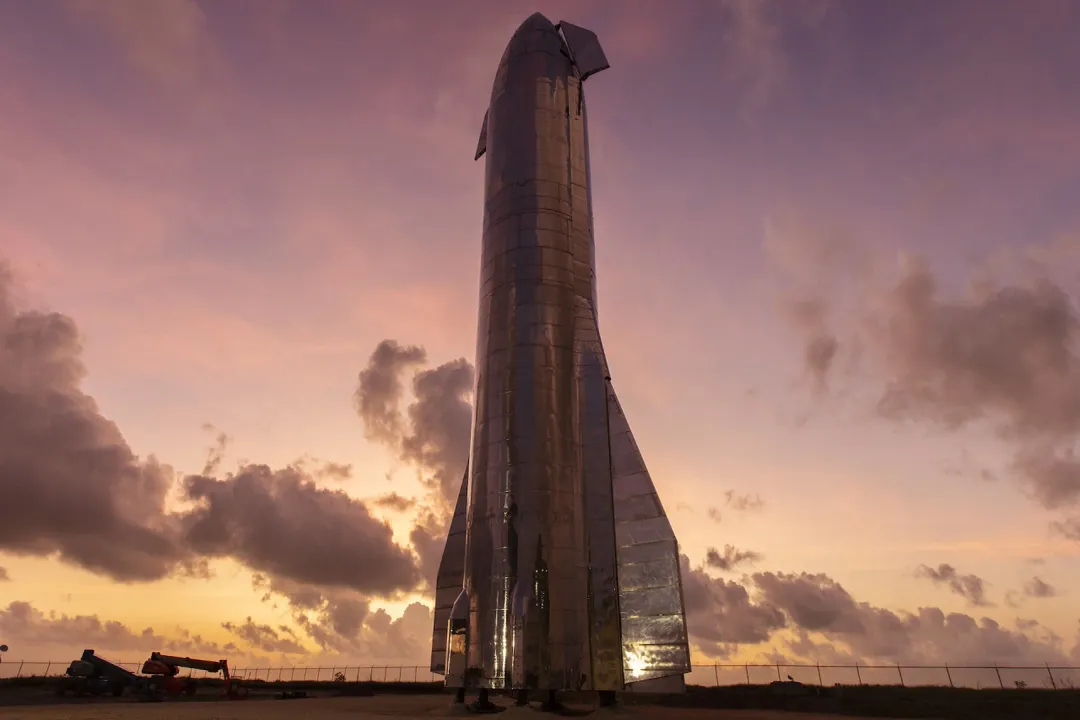
The dynamic surrounding space exploration has fundamentally shifted in the past decade, moving away from a near-monopoly held by government agencies toward a competitive, dual-track system dominated by private enterprise. Discussions frequently arise about whether commercial entities, primarily SpaceX, are set to eclipse the foundational role once exclusively held by organizations like NASA. This comparison isn't simply about who lands on the Moon next; it involves comparing organizational speed, financial models, and the definition of success in reaching for the stars.
# Hardware Supremacy
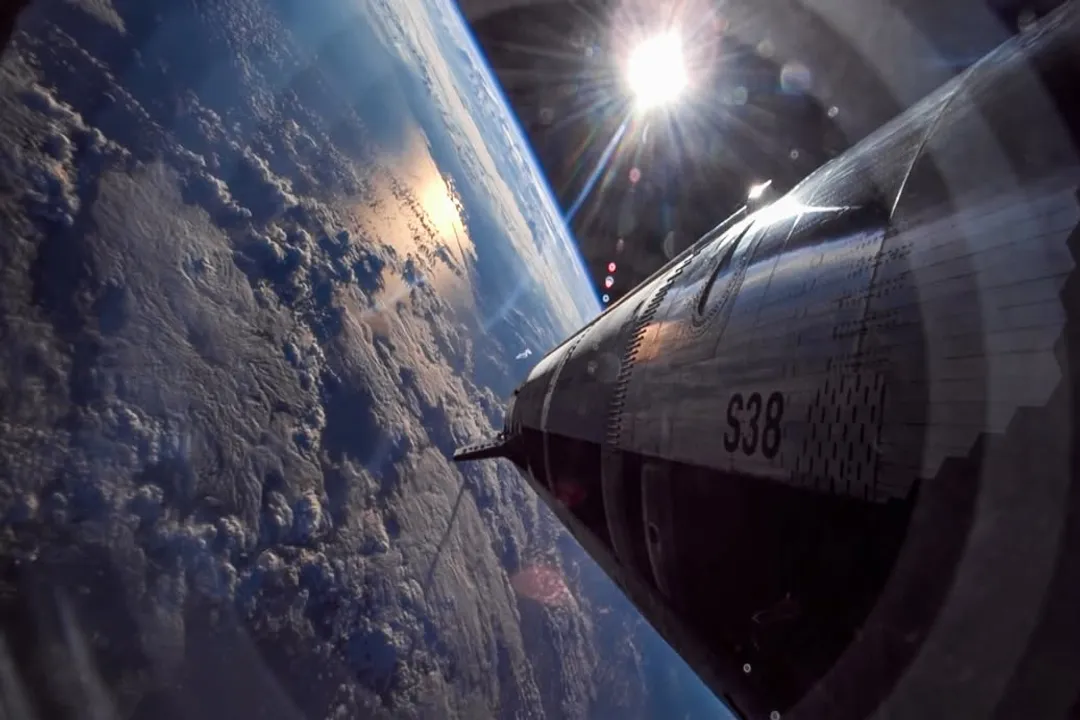
The most tangible evidence presented in this evolving landscape is the sheer capability of the hardware being developed by private industry. SpaceX’s Starship, for instance, is frequently highlighted as potentially the most powerful rocket ever constructed. This vehicle represents a generational leap in proposed payload capacity and, critically, reusability, which directly attacks the historical cost structures of spaceflight. NASA, while maintaining its own Artemis program and developing the Space Launch System (SLS), operates under a different set of developmental rhythms, often tied to congressional appropriations and a more traditional, incremental engineering process.
When contrasting the two approaches, it becomes clear that SpaceX prioritizes rapid iteration—often tolerating spectacular failures as necessary data points—while NASA’s approach necessitates higher initial reliability due to the significant political and budgetary implications of failure. For the general reader tracking these developments, the difference is stark: SpaceX’s iterative testing schedule provides a more visible, faster-moving narrative of progress, even when tests do not go perfectly. The successful orbital tests of Starship, for example, mark a significant technical milestone, demonstrating hardware nearing operational capability that directly impacts heavy-lift ambitions for both civil and commercial clients.
# Budgetary Pressure
The financial aspect introduces a sharp point of contention and comparison. Elon Musk has publicly posed challenges regarding NASA's budget, suggesting that SpaceX could achieve comparable or superior results for a fraction of the cost. This claim strikes at the heart of the perceived inefficiency often associated with large government programs. NASA, by its nature, must manage taxpayer funds across a vast array of essential scientific missions, technology demonstrators, and international partnerships, which necessitates layers of oversight and reporting that add overhead.
Consider a simplified comparison of procurement methods. NASA often contracts for services and hardware, which involves extensive cost-plus agreements designed to mitigate risk for contractors. SpaceX, conversely, operates under fixed-price contracts for many services, incentivizing internal cost control and vertical integration. The resulting efficiency differential is what allows Musk to propose audacious challenges, like managing a significant portion of NASA’s 2026 budget for certain objectives. This disparity forces a necessary internal re-evaluation within government agencies about how quickly and cost-effectively advanced hardware can be procured and deployed.
One insightful way to view this fiscal divergence is through the lens of opportunity cost. Every dollar NASA spends developing proprietary, bespoke hardware is a dollar that cannot be spent on deep-space science or astronaut training; conversely, every contract awarded to SpaceX accelerates the commercialization of access to space, potentially lowering the long-term cost basis for everyone, including NASA itself. The private sector’s success is increasingly becoming a measure of what the public sector could achieve if it restructured its acquisition strategy.
# Defining Success
The question of whether SpaceX will truly "overtake" NASA depends entirely on how one defines the finish line. If "overtaking" means launching more tons to orbit per year, achieving higher launch cadence, or building larger rockets, then private companies like SpaceX are already leading or rapidly closing the gap. Their focus appears razor-sharp: establishing reliable, high-cadence access to low Earth orbit (LEO) and beyond, primarily driven by the Starlink constellation and eventual Mars settlement goals.
However, NASA’s mandate extends far beyond launch statistics. It encompasses pure scientific discovery, operating flagship observatories like the James Webb Space Telescope, leading international space station operations, and executing complex planetary science missions that have no immediate commercial return but advance fundamental human knowledge. No private company is currently tasked, or financially incentivized, to send a probe to the outer solar system to study an icy moon’s ocean, for example.
This leads to an analysis where the two entities are not true competitors aiming for the same outcome, but rather two different necessary components of a functioning space ecosystem. SpaceX excels at transportation and infrastructure build-out. NASA excels at exploration, science, and stewardship of the international domain. Overtaking, in this context, might not be a total victory for one side, but rather a successful division of labor where the government agency shifts its focus from being the sole operator to being the primary customer and regulator of high-speed, low-cost transport.
# The Partnership Model
It is vital to remember that the perceived rivalry often obscures a deep, mutually beneficial partnership. SpaceX does not operate in a vacuum; it is one of NASA’s most critical contractors. The Commercial Crew Program, for instance, demonstrated SpaceX’s capability to take on the responsibility of ferrying astronauts to the International Space Station (ISS), a mission critical to U.S. access to space. NASA relies heavily on SpaceX's capabilities, such as the Falcon 9 and Dragon capsule, for cargo and crew resupply missions.
When looking at the Moon missions, NASA has selected Starship as the Human Landing System (HLS) for the Artemis III mission. This is perhaps the clearest indication that NASA views Starship not as a competitor it needs to beat, but as an indispensable tool necessary to achieve its own stated goals of returning humans to the lunar surface. The private sector’s agility is being intentionally injected into the government’s long-term exploration plan.
My second observation stems from observing historical precedents in technology adoption. Government agencies, by their nature, are often slow adopters of disruptive technology until that technology is proven reliable and standardized enough to manage regulatory risk. The current situation—where NASA is funding the development of a private vehicle (Starship HLS) that promises performance exceeding its own legacy systems—is a testament to NASA's trust in the process, but also an admission of their own limitations in rapid prototyping. This creates a state where NASA gains the technological leap without absorbing the complete internal risk of the R&D schedule, a highly effective, if slow, way of outsourcing innovation.

# Trajectory and Future Focus
The divergence in long-term vision also separates the two bodies. While NASA’s mandate is to lead scientific exploration across the solar system and support Earth science, SpaceX’s stated long-term goal, largely driven by its founder, centers on making humanity multi-planetary, specifically targeting Mars. This existential goal fuels SpaceX’s aggressive development timeline and resource allocation toward Starship, which is designed as the architecture for that future.
This difference in ultimate focus—science vs. colonization—means their priorities will naturally diverge. If SpaceX achieves its goal of establishing a sustained presence on Mars, that achievement will dwarf nearly all other singular achievements in space history, effectively "overtaking" NASA in terms of historical significance on that specific frontier, even if NASA continues to operate dozens of robotic science missions simultaneously.
Ultimately, the most probable scenario is not a clean "overtake" where one organization ceases to matter, but a maturation of the space industry. NASA will continue to set the ambitious scientific targets and provide oversight, much like the FAA oversees commercial aviation. SpaceX, meanwhile, will provide the foundational, low-cost transportation layer upon which those government missions, and countless commercial ventures, will be built. The competition has certainly injected velocity and cost reduction into the system, but the agency established to advance exploration for the public good remains irreplaceable for pure scientific endeavor.
#Videos
Something very Big happening with NASA & SpaceX in 2026, Better ...
Elon Musk: "SpaceX JUST REPLACED NASA & Ends All Competition!"
Related Questions
#Citations
Is there a conversation about SpaceX overtaking NASA for moon ...
Something very Big happening with NASA & SpaceX in 2026, Better ...
Will SpaceX ever surpass NASA? - Quora
Elon Musk has a SpaceX 'challenge' for NASA's entire budget for 2026
Why Elon Musk's Starship rocket is beating Nasa in the space race
Will Starship beat SLS Artemis to the moon? - Facebook
Updates - SpaceX
Starship: SpaceX will soon overtake NASA to have the world's most ...