What caused the failure of SpaceX Starship?
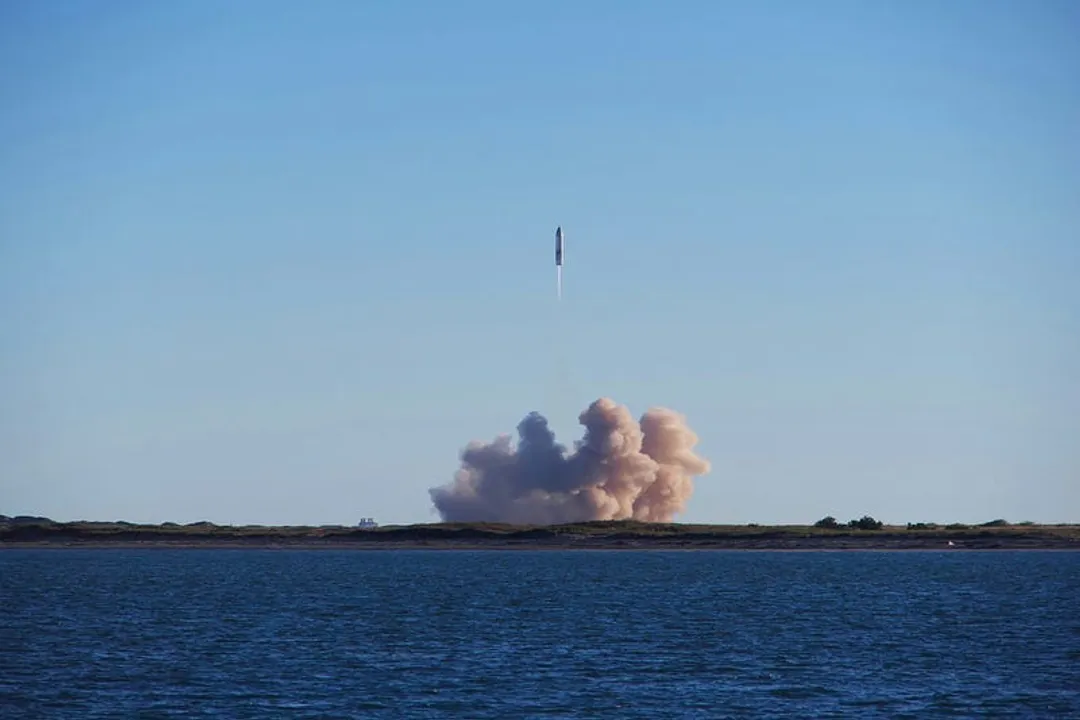
The path to operational status for SpaceX’s Starship program has been punctuated by highly visible, unplanned rapid deconstruction events, leading many observers to question the root causes behind these setbacks. Understanding why Starship has not yet achieved a fully successful flight requires looking past the general term "explosion" and dissecting the specific anomalies that have occurred during integrated flight tests and ground operations. [2] Unlike many traditional aerospace programs where tests are conducted in isolation, Starship’s integrated testing approach means that a failure in any single subsystem—be it propulsion, avionics, or ground support—can lead to the loss of the vehicle, providing immediate, high-stakes data for the next iteration. [9]
# Engine Hardware
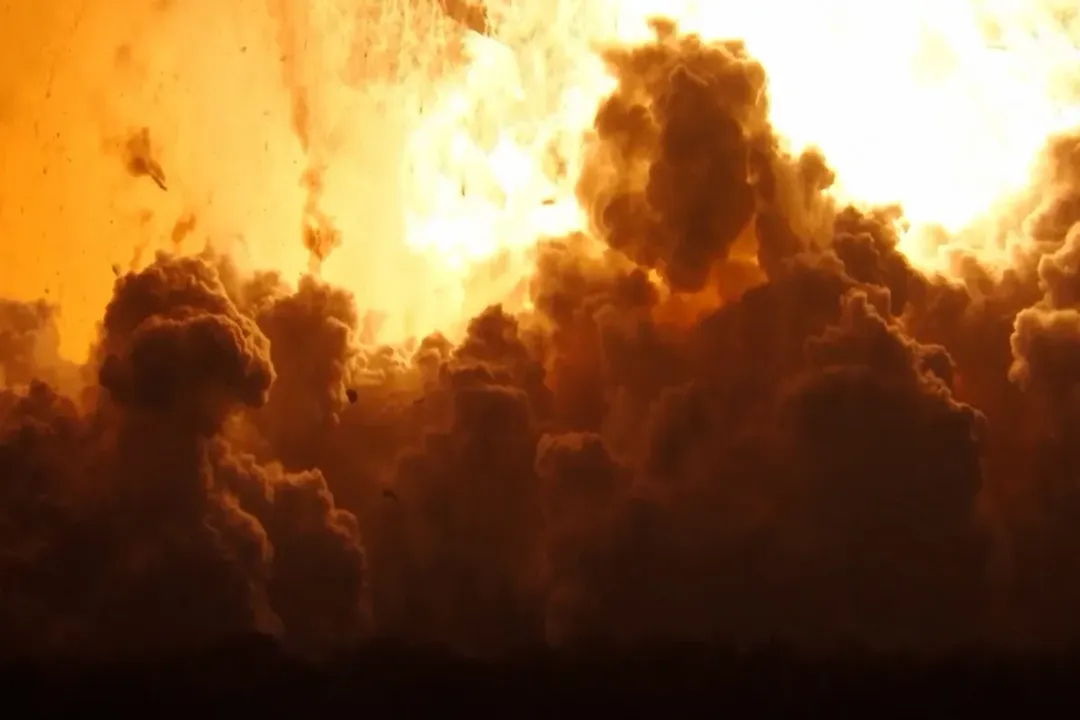
One of the most significant in-flight failures, the anomaly during Integrated Flight Test 8 (IFT-8), was traced back to issues within the propulsion system itself. [4] SpaceX analysis determined that the mishap stemmed from a failure involving engine hardware. [4] When an integrated flight test ends prematurely, especially during the ascent phase where the Super Heavy booster is firing, the immediate focus often lands on the most complex and numerous components: the Raptor engines. A single engine failing can trigger a cascade, but in this instance, the investigation pointed toward a specific piece of hardware giving way under the immense stresses of launch and early flight. [4]
The Super Heavy booster relies on a massive cluster of these engines to generate the necessary thrust to escape Earth’s gravity. The complexity inherent in coordinating the ignition, throttling, and shutdown sequences for over thirty engines simultaneously creates numerous potential failure modes. [8] While the exact nature of the hardware failure for IFT-8 was identified by SpaceX, the broader context is that engine reliability remains a critical development area for any large, next-generation rocket. [4] This type of failure, occurring mid-flight, directly impacts the vehicle's structural integrity and flight control authority, leading to the eventual termination of the flight.
# Ground System Flaws
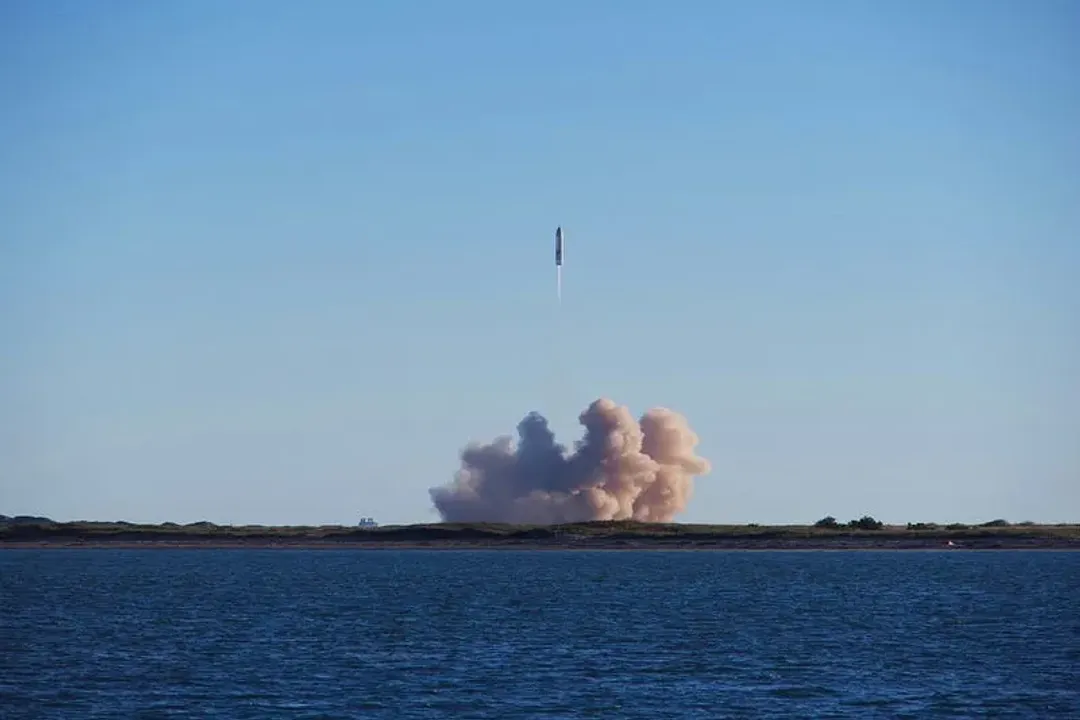
Not all major incidents have occurred thousands of feet in the air; some of the most dramatic explosions have happened right on the launch pad. A notable failure involved the destruction of the very test stand designed to support the massive vehicle during its earliest, most powerful static fire tests. [1] This ground event was distinctly different in its root cause from the in-flight engine hardware issue. Investigators traced this specific pad failure to a breakdown in the ground support equipment—namely, a failure involving a pressurized nitrogen tank. [1]
Nitrogen is frequently used in aerospace systems for pressurization, purging, and sometimes as an inert gas to prevent combustion in sensitive areas. In this scenario, the failure of this ground support component initiated a sequence of events that led to the catastrophic failure of the structure itself. [1] This highlights an often-overlooked aspect of spaceflight: the rocket is only as reliable as the systems built to support it on the ground. A robust launch infrastructure must be just as scrutinized as the flight vehicle itself, particularly when dealing with the extreme energy levels involved in testing a vehicle the size of Starship.
The contrast between the IFT-8 failure (engine hardware in flight) and the test stand failure (nitrogen tank on the ground) illustrates that Starship’s development hurdles are multifaceted, involving both the flight vehicle design and the extensive ground infrastructure required for its operation. [1][4]
# Analyzing Failure Modes
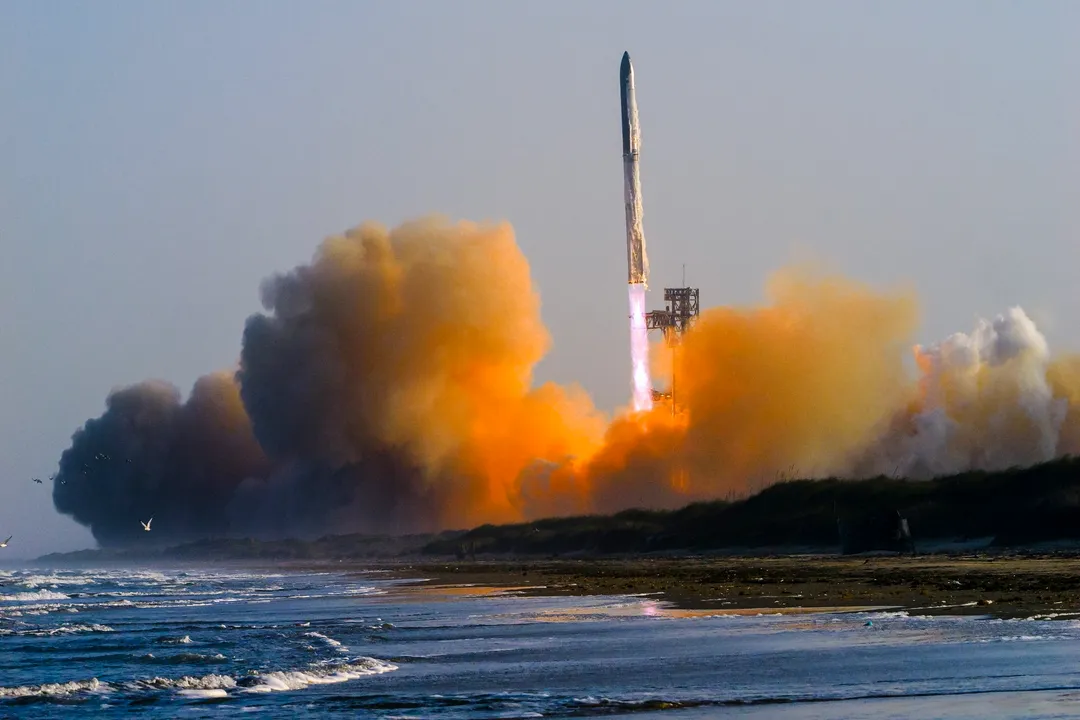
It is useful to categorize these failures to better understand the program's evolution. We can broadly sort them into Propulsion Failures, Structural/Aerodynamic Failures, and Ground Support Failures. [2] While initial tests often result in structural breakups due to aerodynamic loads or control instability, later tests have demonstrated improvements in those areas, shifting the focus—and the resulting failures—to the engine systems or the supporting infrastructure. [4][9]
When viewing the data from a systems engineering perspective, one can construct a simple risk classification matrix based on the observed failure modes from early tests. While official flight data for every single test is proprietary, the public reporting allows for this general grouping:
| Failure Category | Example Incident Type | Primary Component Affected | Implication for Iteration |
|---|---|---|---|
| Ground Support | Test Stand Explosion | Pressurized Nitrogen System | Ground hardware robustness |
| Flight Propulsion | IFT-8 Anomaly | Raptor Engine Hardware | In-flight mechanical reliability |
| Flight Control | (Common Early Mode) | Thrust Vector Control/Avionics | Software and Actuation fidelity |
This comparative view shows that SpaceX is successfully "burning down" the risk associated with one category, which then exposes the next most probable point of failure in the development sequence. For instance, once the Super Heavy booster achieved several successful engine burns, the probability of a failure traced to that specific engine hardware under those conditions increased, which is what was observed in the IFT-8 analysis. [4] This is a classic pattern in rapid prototyping: mitigating known high-probability risks allows less probable, but still critical, risks to manifest themselves.
# Upper Stage Progression
The development of the upper stage, Starship itself, presents its own set of challenges, often involving separation events and the independent operation of its vacuum-optimized engines. Incidents involving the upper stage have often been related to the complex sequence of staging or in-space maneuvers. [7] The testing protocol frequently involves planned engine test firings that sometimes result in an explosion of the upper stage, an event that SpaceX has sometimes anticipated or scheduled as part of the test parameters, depending on the specific objective. [7]
This acceptance of expected failure during early testing is central to their strategy. Unlike legacy programs that might spend years perfecting components on the ground before an integrated flight, SpaceX aims to prove complex interfaces—like stage separation—by executing the maneuver and immediately analyzing the data from the resulting breakup. [9] The investigation following subsequent flights, such as the context surrounding Flight 10, centers on these complex interactions: Did the separation sequence work? Did the Starship stage achieve stable flight on its own engines before its own intended termination point?. [6] The sheer number of interdependent systems means that a minor deviation in one parameter, perhaps a slightly off-nominal thrust level from an engine during coast phase, can place undue stress on a different structure, leading to a failure that appears unrelated at first glance. [8]
The engineering tempo demands speed. While a nitrogen tank failure might seem like a preventable oversight, the rapid turnaround between tests means that the focus is often on implementing a fix for the last failure while the next potential failure mode is being exposed by the current test flight. [2] If SpaceX were to halt testing until every single subsystem, from ground tanks to flight avionics, was statistically proven reliable across thousands of cycles, the development timeline would stretch by years, fundamentally changing the organization's approach to rocketry development. [9]
# Insight into Redundancy and Iteration
One aspect that requires consideration beyond the direct cause is the distribution of redundancy. In many aerospace vehicles, redundancy is built-in: if one pump fails, a backup kicks in. Starship, especially in its early prototypes, prioritized achieving basic functionality and scale over inherent flight redundancy. The failure modes observed—an engine hardware failure leading to loss of control, or a single nitrogen tank leading to pad destruction—suggest that the early test articles were designed with single-point failure tolerance being secondary to simply proving the concept of a fully stacked vehicle launch. [4][1] This engineering choice is a calculated risk. If the vehicle is intended to be highly reusable and produced rapidly, building in complex, heavy redundancy too early can negate the cost and size advantages. The current failures are, therefore, not just data points for repair, but validation that the initial, minimal design could fly, however briefly. The next phase, implicitly, involves bolting on the necessary systems to survive the failure of one component, learning from each high-energy event what truly needs a backup.
# Sustaining Momentum
The public fascination, and sometimes frustration, with Starship’s setbacks often overlooks the immense progress made between these critical events. A failure in one flight often paves the way for the next vehicle to survive longer or achieve a specific milestone that the previous one could not. [9] For instance, if IFT-8 failed due to engine hardware, the next iteration would focus intensely on qualifying that hardware through rigorous static fires or implementing flight-software overrides for engine-out scenarios. [4]
The key takeaway from the documented failures is the iterative feedback loop. The analysis of a test stand rupture due to a nitrogen tank failure demands an immediate and tangible change in ground protocol and hardware strength before the next integrated flight, regardless of the flight's outcome. [1] Conversely, an in-flight engine failure forces a deep dive into material science and component testing for the Raptors. [4] The success of the program is not measured by the absence of explosions, but by the speed at which the next test surpasses the farthest point reached by the previous one.
This leads to a second, perhaps less obvious, area of necessary adaptation: the evolution of the test specification itself. As the vehicle survives longer, the requirements for a "successful" test inherently escalate from "stay on the pad" to "achieve orbit." This shift means that the very definition of failure changes. What constituted an expected, acceptable failure in Test Article 4 might be deemed a critical, mission-ending failure in Test Article 10, simply because the vehicle is now expected to perform more complex tasks, such as managing atmospheric reentry or performing complex in-space maneuvers. [6][7] The causes of failure are therefore dynamically linked to the evolving success criteria set by the development team. The program’s apparent inability to fly perfectly on the first try is, paradoxically, the planned mechanism by which it gains the data required to eventually achieve that perfection over time.
#Videos
Starship's Brutal Booster Failure Exposed New Secrets! - YouTube
Why Did SpaceX's Starship Explode? What does it mean ... - YouTube
Related Questions
#Citations
SpaceX traces Starship test-stand explosion to failure of pressurized ...
Why does SpaceX's Starship keep exploding? : r/SpaceXLounge
Starship's Brutal Booster Failure Exposed New Secrets! - YouTube
SpaceX blames Starship Flight 8 mishap on engine hardware failure
SpaceX reveals why Starship exploded last 2 times ahead of flight 10
SpaceX Starship upper stage explodes during countdown to engine ...
failure - Why did Starship IFT-8 explode again?
Starship: Dead End?. What happened on Test Flight 9? - Will Lockett