Is the SpaceX starship the biggest rocket ever?
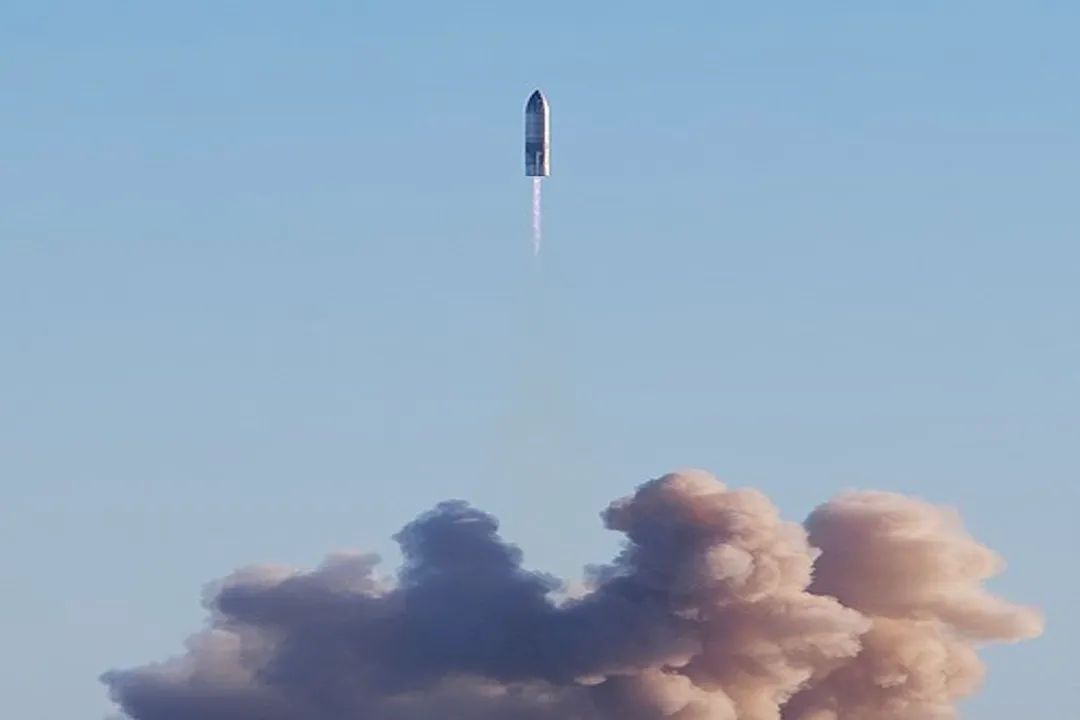
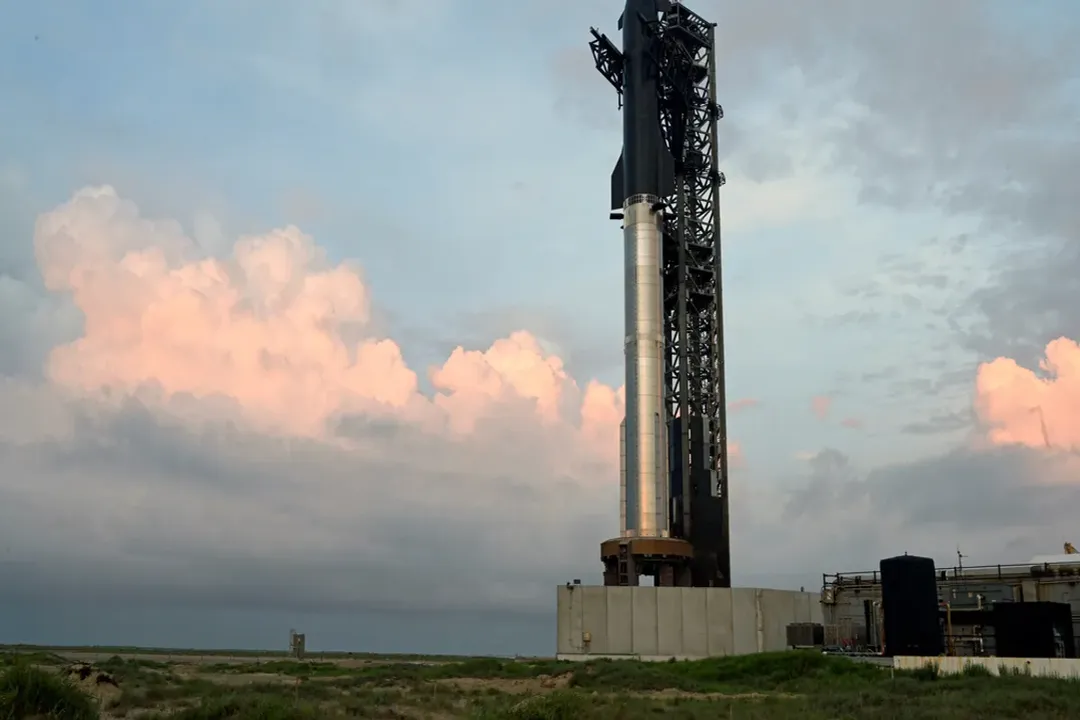
The sheer scale of SpaceX’s Starship fully stacked on its launch mount represents a significant departure from previous eras of rocketry, immediately commanding attention from space enthusiasts and industry experts alike. This massive vehicle, designed for deep space missions and complete reusability, stands as a testament to modern engineering ambition, prompting frequent discussion about its place in the history books of space exploration. Its physical presence alone forces a re-evaluation of what a "super-heavy lift" vehicle actually means in terms of sheer mass and dimensions.
# Measuring Scale
Determining whether any rocket is the "biggest ever" requires defining the metric: is it height, dry mass, propellant mass, or raw thrust? When assessing the fully integrated Starship and its Super Heavy booster, the answer across several key metrics points strongly toward the affirmative.
# Height Record
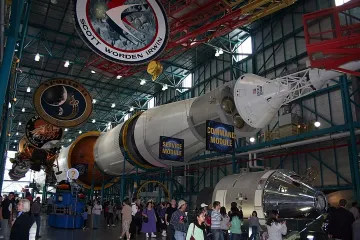
Standing approximately 120 meters (394 feet) tall, the combined Starship vehicle decisively surpasses the previous record holder, the Saturn V rocket used in NASA's Apollo program. The Saturn V topped out at around 110.6 meters (363 feet). This 10-meter difference might seem incremental, but when dealing with structures of this magnitude, every meter adds substantially to the structural challenges and overall volume. The Starship is not merely taller; it is a fundamentally larger structure in three dimensions.
# Thrust Comparison
Thrust, the force propelling the rocket skyward, is arguably the most critical measure of lifting capability. The Super Heavy booster, powered by its array of Raptor engines, generates a staggering amount of liftoff thrust. Preliminary figures suggest the fully operational stack produces over 7,590 metric tons of force (or roughly 16.7 million pounds-force).
Compare this to the Saturn V's first stage, which generated about 3,500 metric tons of force at liftoff. This means the Starship stack generates more than twice the raw thrust of the rocket that sent humans to the Moon. This incredible power is distributed across a much larger number of smaller, yet immensely powerful, engines, a notable shift from the four massive F-1 engines that defined the Saturn V’s base. Furthermore, even comparing it to modern heavy-lift competitors, the difference is stark; the New Glenn rocket, for instance, is designed for significant lift but operates in a lower thrust class than the Starship system.
# Mass and Volume
While specific operational mass figures can fluctuate based on fuel load and mission profile, the Starship system's total mass, fueled and ready for launch, is immense. It’s the sheer volume occupied by the vehicle that often impresses observers most, particularly when viewed next to ground support equipment or personnel. Imagine a structure taller than most skyscrapers’ first 30 floors, yet designed to be thrown away (or landed) after a single flight. The record recognized by Guinness World Records specifically acknowledges the Starship as the largest rocket ever constructed.
# Design Philosophy Shift
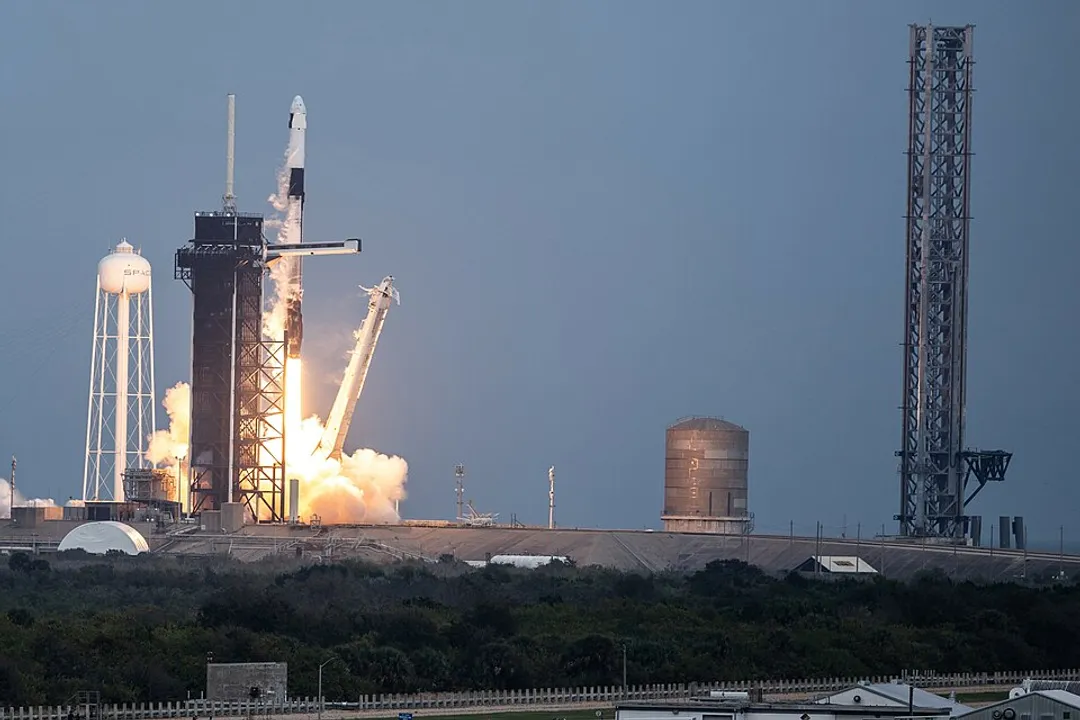
The "biggest" designation is compelling, but the reason for its size reveals a major philosophical divergence from previous record-holders. Rockets like the Saturn V and the Soviet N1 were designed primarily for single-use missions, meaning their entire structure, minus perhaps the command module, was expended on every launch. This meant their size was directly tied to the maximum payload they could carry to orbit or beyond in one shot.
Starship flips this script entirely. Its colossal size is intrinsically linked to its intended full and rapid reusability. The Super Heavy booster must not only carry the massive Starship upper stage to high altitude but must also carry enough propellant reserve to return to the launch site and land vertically. This requirement for return capability necessitates a larger structure and more fuel management capacity than a disposable booster of equivalent payload capability would need.
This design choice leads to an interesting proportional analysis. If we consider the Saturn V’s first stage was designed to push approximately 200 metric tons to low Earth orbit (LEO) before staging, Starship is designed to deliver well over 100 metric tons to LEO after accounting for the fuel needed for the Super Heavy booster to return and land. The upper stage, Starship itself, is essentially a massive, reusable orbital vehicle capable of transporting 100 tons or more to orbit, or carrying crew and cargo to the Moon and Mars. The volume dedicated to propellant in both stages is immense because the propellant is the primary mass fraction that must be brought back and reused, rather than being discarded. This concept—sizing the rocket to bring its own return fuel—is a major contributor to its title as the "biggest".
# Competitors in Size
When discussing the "biggest," context matters, especially when comparing to active or near-future projects.
# SLS versus Starship
NASA’s Space Launch System (SLS), specifically in its Block 1 configuration, is the only other rocket currently flying that challenges the previous generation's giants in terms of raw power and size. The SLS core stage is a massive component, but the fully stacked Starship is significantly taller overall. Crucially, the fully stacked Starship boasts greater total thrust than the SLS Block 1 and is designed for vastly greater payload capacity and inherent reusability, marking a difference in utility alongside sheer size.
# Comparing Contemporary Heavy Lift
Even when looking at vehicles like Blue Origin’s New Glenn, which is designed to be a very powerful, partially reusable heavy lifter, Starship occupies a different tier. While the New Glenn is a substantial rocket, Starship’s 120-meter height and 16.7 million pounds of thrust place it in a class reserved historically for single-use giants like the Saturn V.
Here is a simplified comparison of the primary vehicles in the current and immediate future heavy-lift landscape based on their advertised capabilities:
| Vehicle | Approx. Height (m) | Approx. First Stage Thrust (Metric Tons-Force) | Reusability Status |
|---|---|---|---|
| SpaceX Starship (Super Heavy Stack) | 120 | 7,590+ | Fully Reusable |
| Saturn V (Reference) | 110.6 | ~3,500 | Expendable |
| NASA SLS Block 1 | ~98 | ~4,000 | Partially Reusable (Core Stage) |
| Blue Origin New Glenn | ~98 | ~1,800 | Partially Reusable (Booster) |
Note: Thrust and height figures are subject to variation based on specific mission configuration and measurement criteria.
# Beyond the Numbers: Implications of Scale
The sheer size of Starship isn't just for bragging rights or record books; it dictates its potential role in space infrastructure. Its volumetric capacity allows it to carry significant hardware—whether that is many crew members, large satellite constellations, or components for in-orbit refueling depots—that simply cannot fit within existing rocket fairings.
When observing the stages being mated at the launch site, the scale becomes visceral. One can see the immense diameter of the Super Heavy booster relative to the workers and surrounding gantries, illustrating an industrial scale previously reserved for fictional concepts. This visual impact often translates into public perception that the machine is fundamentally different from its predecessors, which, despite their own record-breaking sizes, still felt constrained by the single-use model.
A unique implication of this size, particularly concerning the stainless steel construction, is its potential for in-situ resource utilization (ISRU) on other celestial bodies. A vehicle this large, designed to land and be refueled on Mars or the Moon using local materials, must possess significant internal volume for the necessary processing equipment, storage tanks, and landing gear—volume that a smaller, disposable rocket simply cannot accommodate while still achieving orbit from Earth. The structure's large surface area also assists in thermal management during atmospheric reentry, a critical factor for a vehicle designed to survive multiple flights.

# The Economics of Gigantism
In the history of rocketry, size often meant cost and complexity, leading to vehicles like the Saturn V being retired after only a handful of flights. Starship aims to invert this historical trend through rapid, cheap refurbishment enabled by its design simplicity—using relatively inexpensive materials like stainless steel and an entirely new landing architecture.
If the stated goal of achieving low-cost, high-frequency flights is met, the sheer size becomes an economic asset, not a liability. A single launch of the fully stacked Starship has the potential to deliver far more mass to orbit than multiple launches of smaller rockets combined, offsetting the complexity of managing one very large vehicle with the reduction in launch frequency and associated ground crew costs. For example, replacing just four Falcon 9 launches per month with one Starship launch requires meticulous planning but offers a significant operational simplification in terms of required launch windows and pad scheduling.
Ultimately, the SpaceX Starship holds the current crown for the largest rocket ever built based on physical dimensions, propellant mass, and liftoff thrust. However, its true distinction lies not just in how big it is, but in the revolutionary mission architecture—full, rapid reusability—that necessitates this unprecedented scale. It is an embodiment of the idea that to achieve the next great leaps in space travel, the vehicles must grow to match the ambition, moving past the constraints of expendable design to become truly reusable space infrastructure.
#Videos
SpaceX Launches Biggest and Most Powerful Rocket Ever Built
Related Questions
#Citations
Starship - SpaceX
SpaceX Starship - Wikipedia
Why is SpaceX Building the BIGGEST ROCKET EVER? - YouTube
How tall is Starship? SpaceX rocket towers over New Glenn, Falcon 9
SpaceX assembles the world's largest rocket for Starship Flight 7 ...
Largest rocket | Guinness World Records
SpaceX pulls off Starship rocket launch in stunning comeback - BBC
How big is the world's biggest rocket? Here's how SpaceX's Starship ...