What is the largest rocket ever used?
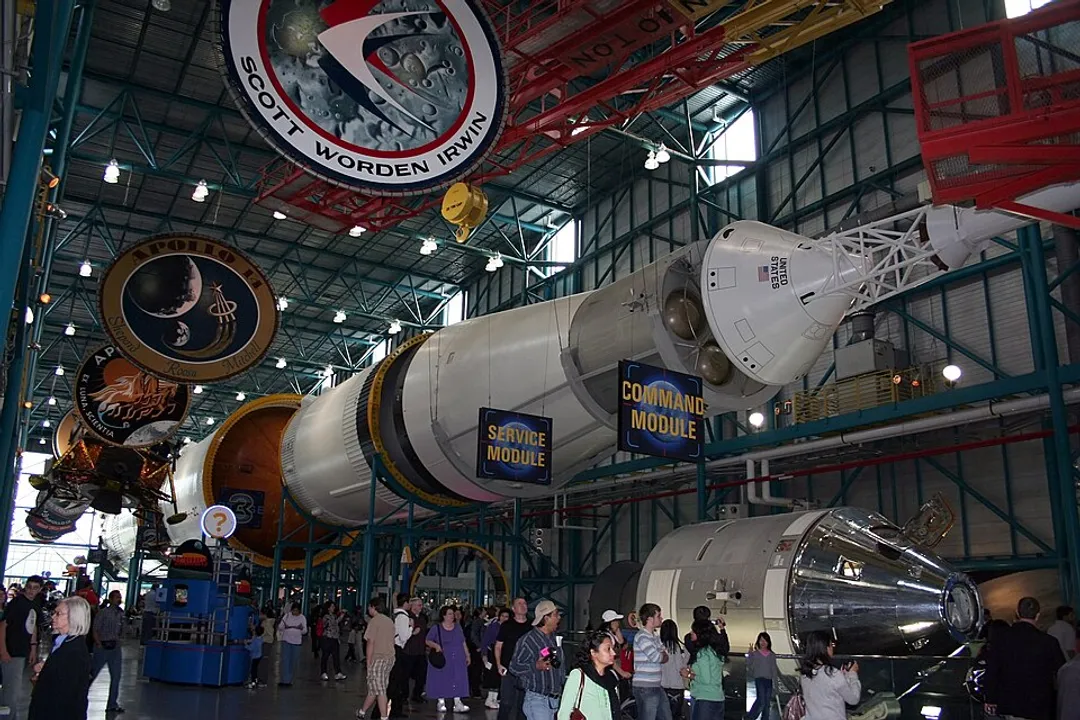
The definitive answer to which rocket holds the title of the largest ever successfully used in flight is the Saturn V. This colossal machine stands as a towering monument to 20th-century engineering, representing the pinnacle of chemical rocket propulsion during the Apollo program. For the general public, the sheer scale of the vehicle often defies imagination, even when standing beside one of the surviving examples. It was not merely large; it was built with a singular, monumental purpose: to transport humans from Earth to the Moon and back again.
# The Champion
The Saturn V was designated as a super heavy-lift launch vehicle, a classification reserved for the most powerful rockets capable of placing significant mass into Earth orbit or on trajectories beyond it. While concepts for even larger rockets have been proposed throughout history, the Saturn V remains the largest rocket to have actually flown successfully. Its operational history was remarkably brief but incredibly impactful, spanning from 1967 to 1973. During that time, it performed flawlessly on all crewed missions, validating its design as one of NASA's greatest engineering achievements.
The need for such an immense vehicle arose directly from the ambitious goal set by President John F. Kennedy: landing a man on the Moon before the end of the decade. Calculating the necessary payload—the Command and Service Module combined with the Lunar Module—and the required escape velocity meant that existing rockets, even powerful ones like the Titan series, were simply insufficient. The Saturn V was the direct, brute-force solution to that complex orbital mechanics problem.
# Sheer Size
To truly grasp the scale of the Saturn V, one must consider its dimensions. Standing at 363 feet (111 meters) tall when topped with its Apollo payload, it was an imposing sight against the Florida sky. This height is equivalent to roughly a 36-story building. Its base diameter measured 33 feet (10.1 meters). When fully fueled just moments before launch, the entire vehicle massed approximately 6.2 million pounds.
The construction of this giant required specialized facilities that were themselves massive feats of engineering. The components, particularly the massive propellant tanks, were constructed in various locations but had to be brought together and stacked vertically in the Vehicle Assembly Building (VAB) at Cape Kennedy. Considering the necessary clearances, assembly bays, and integration processes required just to put the pieces together, the supporting infrastructure almost rivaled the rocket itself in terms of sheer scale and logistical complexity. The vehicle was so large that it needed to be transported horizontally on a specialized crawler-transporter to the launch pad, where massive fixed service structures then raised it to its vertical launch position.

# Power Plant
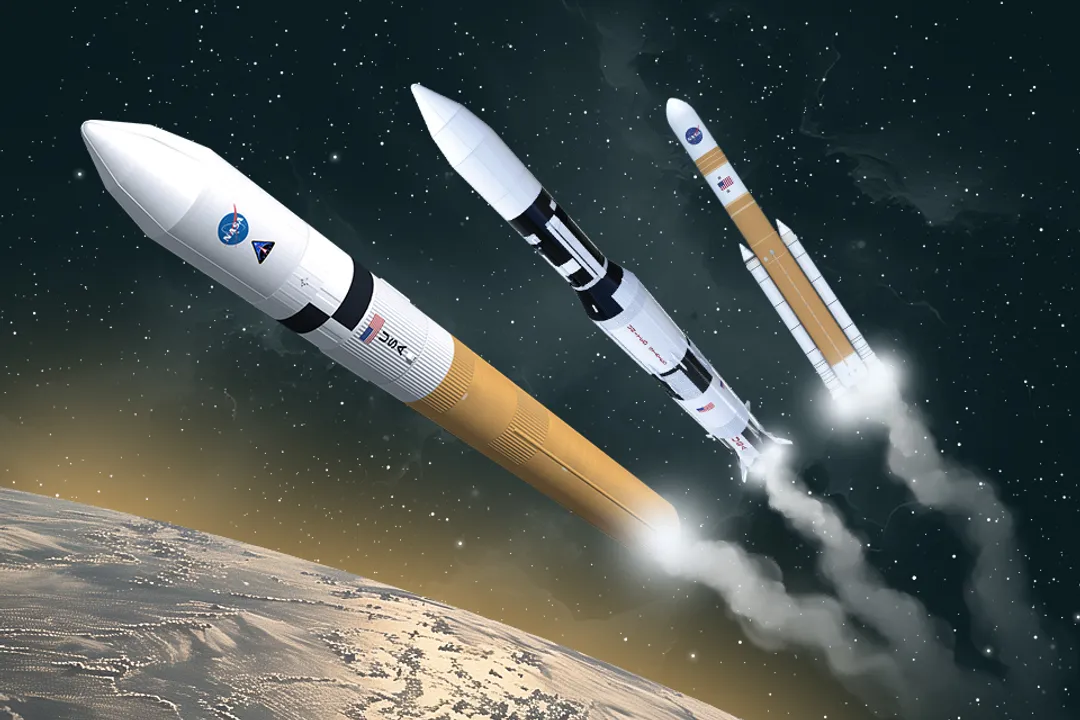
The raw power generated by the Saturn V remains a benchmark in rocketry. This power was concentrated primarily in its first stage, designated the S-IC. This stage was powered by five F-1 engines mounted in a quincunx pattern.
The thrust generated by these five engines at liftoff totaled an astonishing 7.5 million pounds of thrust. To put that figure into a relatable context, if you were to place the weight of 100,000 average-sized cars on a scale, that is roughly the force this single stage generated at its maximum output to overcome gravity and atmospheric drag. The propellants used were RP-1 (a highly refined kerosene) and liquid oxygen (LOX) for the F-1s.
Once the S-IC stage exhausted its fuel, it separated, and the second stage, the S-II, ignited. This stage utilized five powerful J-2 engines burning liquid hydrogen and LOX, optimized for operation in the near-vacuum of high altitude. Finally, the third stage, the S-IVB, which contained a single J-2 engine, performed the crucial Trans-Lunar Injection (TLI) burn that sent the Apollo spacecraft on its path toward the Moon. The sequential firing and staging of these three distinct power modules, all designed to work together perfectly, is a testament to the precision required for this expendable architecture.
# Lifting Class
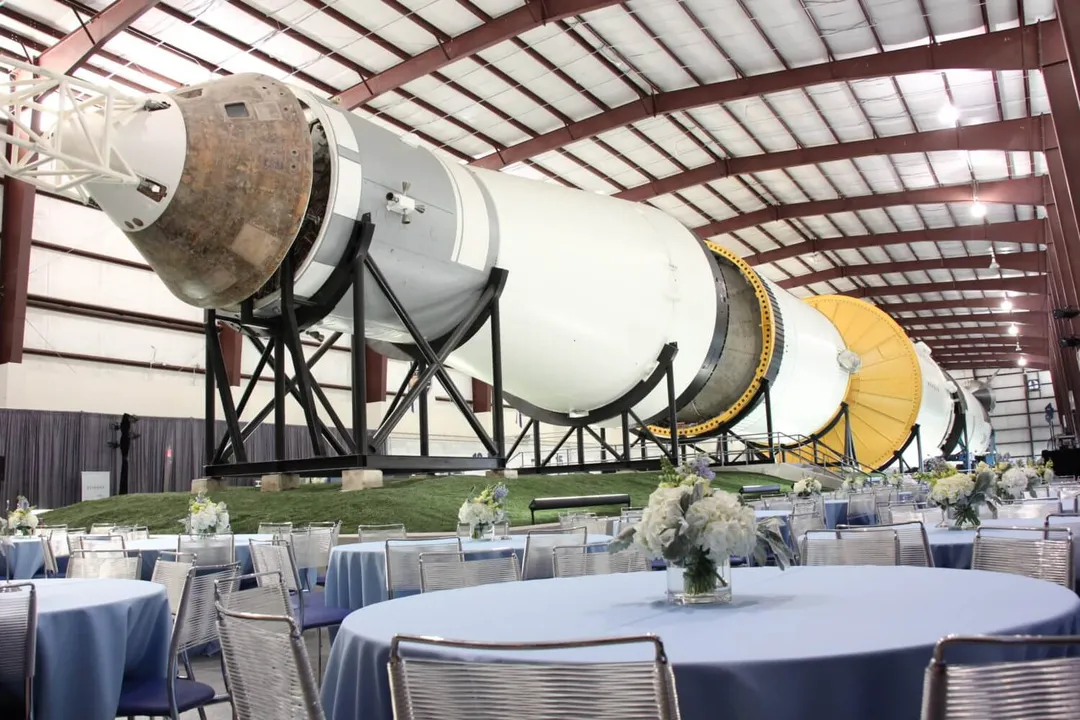
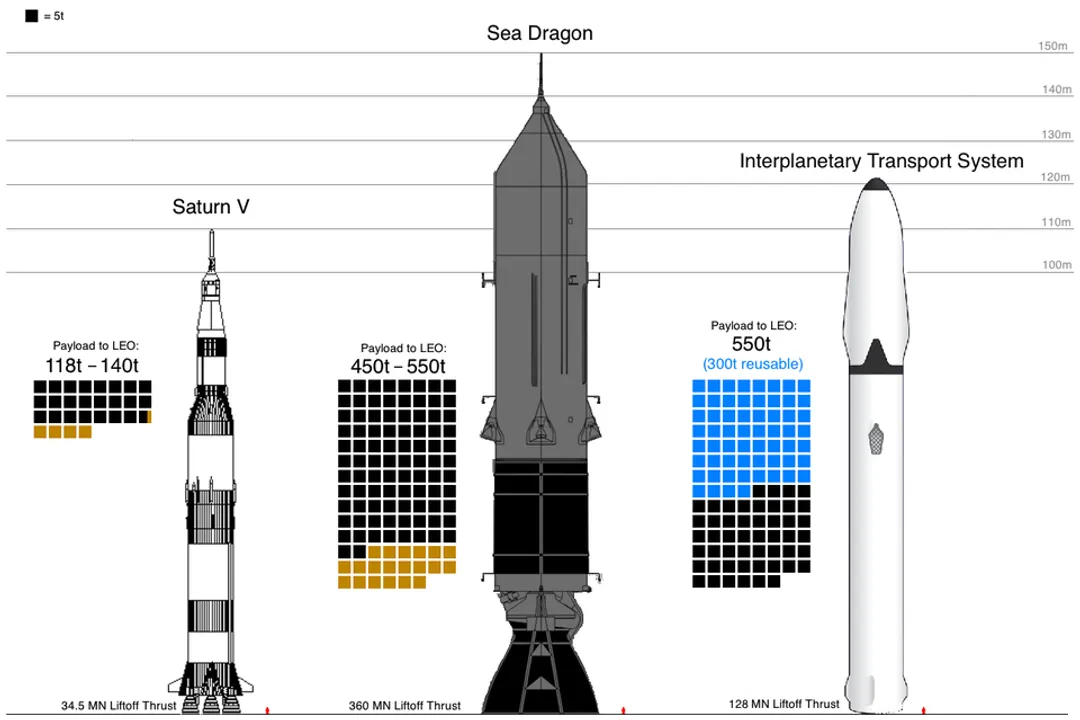
The Saturn V clearly defined the category of super heavy-lift launch vehicles. This class is determined by the vehicle’s ability to send significant payloads, often exceeding 100 metric tons, into low Earth orbit (LEO). While current generation heavy-lift vehicles are aiming to meet or exceed this capability, the Saturn V achieved it decades ago using entirely expendable hardware. This is an interesting point of comparison: modern systems often prioritize reusability, which inherently changes the engineering trade-offs, whereas the Saturn V design focused purely on maximizing lift capacity for a one-way trip to the Moon. The inherent complexity and cost associated with staging and discarding such an enormous piece of hardware after a single use drove the cost of the Apollo missions sky-high, despite the rocket's exceptional performance record.
The specifications below offer a quick snapshot of why the Saturn V remains the gold standard for sheer size and power in flown rockets:
| Feature | Specification | Metric Equivalent |
|---|---|---|
| Total Height | 363 feet | 111 meters |
| First Stage Engines | 5 F-1 engines | N/A |
| Total Launch Thrust | 7.5 million pounds | ~33.4 million Newtons |
| Launch Mass | ~6.2 million pounds | ~2.8 million kilograms |
| Operational Era | 1967–1973 | N/A |
| Classification | Super Heavy-Lift | N/A |
# Apollo's Workhorse
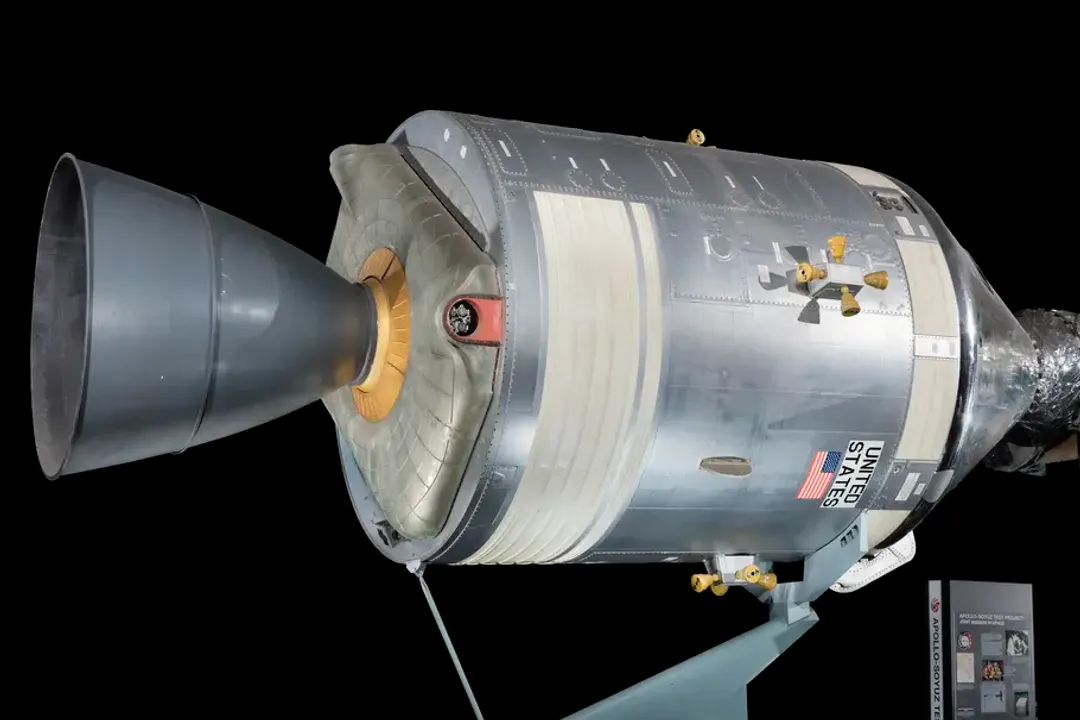
The primary mission profile for the Saturn V was the transportation of the Apollo command module, service module, and lunar module stack. This entire assembly sat atop the three stages, representing the culmination of billions of dollars in development. The first stage (S-IC) was responsible for punching the vehicle through the thickest part of the atmosphere, burning for about 2.5 minutes before separating. The rocket achieved a speed of roughly 6,000 mph (9,656 km/h) by the time the S-IC finished its burn.
The subsequent stages took over, meticulously guiding the craft into a stable parking orbit around Earth before the critical third stage executed the TLI burn, which was necessary to leave Earth's gravitational influence and coast toward the Moon. The reliability was paramount; every single Saturn V launch, including uncrewed tests, was successful, a record that underscores the deep expertise invested in its design and testing procedures.
# Enduring Relics
Although the final launch of the Saturn V occurred in 1973, three complete flight-ready vehicles remain on public display today, serving as tangible reminders of the Moon race era.
One of the most frequently visited examples is located at the Kennedy Space Center Visitor Complex in Florida. Unlike its former launch tower setup, this particular rocket is displayed horizontally, allowing visitors to walk beneath its massive structure. Another surviving vehicle is housed at NASA's Johnson Space Center in Houston, Texas. The third is preserved at the National Air and Space Museum's Steven F. Udvar-Hazy Center near Washington, D.C.. Seeing these machines up close provides an understanding of the material requirements—the sheer quantity of specialized metal, wiring, and plumbing—that went into building something designed to operate only once before being discarded. The engineering documentation and hardware legacy continue to be studied by organizations dedicated to preserving aerospace history.
The enduring presence of these three rockets serves a vital purpose: they illustrate the immense physical commitment required to achieve what, at the time, seemed impossible. They were the largest, most powerful rockets ever flown, and their shadow still looms large over any rocket currently attempting to surpass the capability they demonstrated half a century ago. The Saturn V was not just a vehicle; it was the physical manifestation of a national commitment to reaching another celestial body.The definitive answer to which rocket holds the title of the largest ever successfully used in flight is the Saturn V. This colossal machine stands as a towering monument to 20th-century engineering, representing the pinnacle of chemical rocket propulsion during the Apollo program. For the general public, the sheer scale of the vehicle often defies imagination, even when standing beside one of the surviving examples. It was not merely large; it was built with a singular, monumental purpose: to transport humans from Earth to the Moon and back again.
# The Champion
The Saturn V was designated as a super heavy-lift launch vehicle, a classification reserved for the most powerful rockets capable of placing significant mass into Earth orbit or on trajectories beyond it. While concepts for even larger rockets have been proposed throughout history, the Saturn V remains the largest rocket to have actually flown successfully. Its operational history was remarkably brief but incredibly impactful, spanning from 1967 to 1973. During that time, it performed flawlessly on all crewed missions, validating its design as one of NASA's greatest engineering achievements.
The need for such an immense vehicle arose directly from the ambitious goal set by President John F. Kennedy: landing a man on the Moon before the end of the decade. Calculating the necessary payload—the Command and Service Module combined with the Lunar Module—and the required escape velocity meant that existing rockets, even powerful ones like the Titan series, were simply insufficient. The Saturn V was the direct, brute-force solution to that complex orbital mechanics problem.
# Sheer Size
To truly grasp the scale of the Saturn V, one must consider its dimensions. Standing at 363 feet (111 meters) tall when topped with its Apollo payload, it was an imposing sight against the Florida sky. This height is equivalent to roughly a 36-story building. Its base diameter measured 33 feet (10.1 meters). When fully fueled just moments before launch, the entire vehicle massed approximately 6.2 million pounds.
The construction of this giant required specialized facilities that were themselves massive feats of engineering. The components, particularly the massive propellant tanks, were constructed in various locations but had to be brought together and stacked vertically in the Vehicle Assembly Building (VAB) at Cape Kennedy. Considering the necessary clearances, assembly bays, and integration processes required just to put the pieces together, the supporting infrastructure almost rivaled the rocket itself in terms of sheer scale and logistical complexity. The vehicle was so large that it needed to be transported horizontally on a specialized crawler-transporter to the launch pad, where massive fixed service structures then raised it to its vertical launch position.
# Power Plant
The raw power generated by the Saturn V remains a benchmark in rocketry. This power was concentrated primarily in its first stage, designated the S-IC. This stage was powered by five F-1 engines mounted in a quincunx pattern.
The thrust generated by these five engines at liftoff totaled an astonishing 7.5 million pounds of thrust. To put that figure into a relatable context, if you were to place the weight of 100,000 average-sized cars on a scale, that is roughly the force this single stage generated at its maximum output to overcome gravity and atmospheric drag. The propellants used were RP-1 (a highly refined kerosene) and liquid oxygen (LOX) for the F-1s.
Once the S-IC stage exhausted its fuel, it separated, and the second stage, the S-II, ignited. This stage utilized five powerful J-2 engines burning liquid hydrogen and LOX, optimized for operation in the near-vacuum of high altitude. Finally, the third stage, the S-IVB, which contained a single J-2 engine, performed the crucial Trans-Lunar Injection (TLI) burn that sent the Apollo spacecraft on its path toward the Moon. The sequential firing and staging of these three distinct power modules, all designed to work together perfectly, is a testament to the precision required for this expendable architecture.
# Lifting Class
The Saturn V clearly defined the category of super heavy-lift launch vehicles. This class is determined by the vehicle’s ability to send significant payloads, often exceeding 100 metric tons, into low Earth orbit (LEO). While current generation heavy-lift vehicles are aiming to meet or exceed this capability, the Saturn V achieved it decades ago using entirely expendable hardware. This is an interesting point of comparison: modern systems often prioritize reusability, which inherently changes the engineering trade-offs, whereas the Saturn V design focused purely on maximizing lift capacity for a one-way trip to the Moon. The inherent complexity and cost associated with staging and discarding such an enormous piece of hardware after a single use drove the cost of the Apollo missions sky-high, despite the rocket's exceptional performance record.
The specifications below offer a quick snapshot of why the Saturn V remains the gold standard for sheer size and power in flown rockets:
| Feature | Specification | Metric Equivalent |
|---|---|---|
| Total Height | 363 feet | 111 meters |
| First Stage Engines | 5 F-1 engines | N/A |
| Total Launch Thrust | 7.5 million pounds | ~33.4 million Newtons |
| Launch Mass | ~6.2 million pounds | ~2.8 million kilograms |
| Operational Era | 1967–1973 | N/A |
| Classification | Super Heavy-Lift | N/A |
# Apollo's Workhorse
The primary mission profile for the Saturn V was the transportation of the Apollo command module, service module, and lunar module stack. This entire assembly sat atop the three stages, representing the culmination of billions of dollars in development. The first stage (S-IC) was responsible for punching the vehicle through the thickest part of the atmosphere, burning for about 2.5 minutes before separating. The rocket achieved a speed of roughly 6,000 mph (9,656 km/h) by the time the S-IC finished its burn.
The subsequent stages took over, meticulously guiding the craft into a stable parking orbit around Earth before the critical third stage executed the TLI burn, which was necessary to leave Earth's gravitational influence and coast toward the Moon. The reliability was paramount; every single Saturn V launch, including uncrewed tests, was successful, a record that underscores the deep expertise invested in its design and testing procedures.
# Enduring Relics
Although the final launch of the Saturn V occurred in 1973, three complete flight-ready vehicles remain on public display today, serving as tangible reminders of the Moon race era.
One of the most frequently visited examples is located at the Kennedy Space Center Visitor Complex in Florida. Unlike its former launch tower setup, this particular rocket is displayed horizontally, allowing visitors to walk beneath its massive structure. Another surviving vehicle is housed at NASA's Johnson Space Center in Houston, Texas. The third is preserved at the National Air and Space Museum's Steven F. Udvar-Hazy Center near Washington, D.C.. Seeing these machines up close provides an understanding of the material requirements—the sheer quantity of specialized metal, wiring, and plumbing—that went into building something designed to operate only once before being discarded. The engineering documentation and hardware legacy continue to be studied by organizations dedicated to preserving aerospace history.
The enduring presence of these three rockets serves a vital purpose: they illustrate the immense physical commitment required to achieve what, at the time, seemed impossible. They were the largest, most powerful rockets ever flown, and their shadow still looms large over any rocket currently attempting to surpass the capability they demonstrated half a century ago. The Saturn V was not just a vehicle; it was the physical manifestation of a national commitment to reaching another celestial body.
#Videos
Saturn V: The Largest Rocket Ever Made - YouTube
Related Questions
#Citations
Saturn V - Wikipedia
Saturn V at George W.S. Abbey Rocket Park - Space Center Houston
Saturn V Rocket - Kennedy Space Center Tickets
Space records: Five tallest rockets in history
Looking Closer at the Saturn V | National Air and Space Museum
Saturn V: The Largest Rocket Ever Made - YouTube
The Saturn V Rocket - Cradle of Aviation Museum
Saturn V Rocket - ASME