What type of fuel is used in rockets?

The material that propels a rocket from the launch pad into space is often simply called "rocket fuel," but that term is technically imprecise. What truly powers these feats of engineering is the propellant, a system that must contain two essential components: the fuel itself and an oxidizer. [1][2] Unlike an automobile engine that draws oxygen from the surrounding air to burn gasoline, a rocket must carry everything it needs to initiate combustion, as the thin air, or total vacuum, of space cannot provide the necessary oxygen. [2][4] This fundamental requirement—carrying the oxidizer—is what separates rocketry from almost all terrestrial engines.
# Propellant Basics
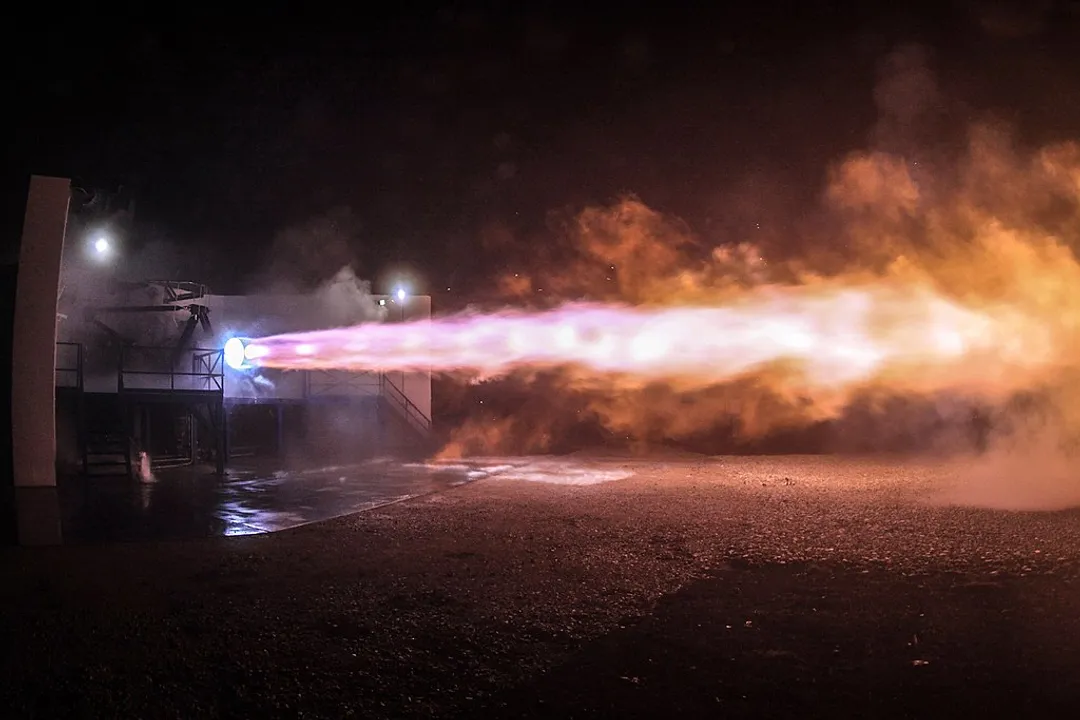
The goal of any propellant combination is to create the highest possible velocity of exhaust gas. The measure of a propellant's efficiency is known as Specific Impulse (), which essentially quantifies how much thrust you get per unit of propellant consumed over time. [2] Higher performance fuels allow a rocket to carry more payload or reach higher velocities with the same amount of mass. The way the fuel and oxidizer are stored and introduced defines the major classifications of rocket propulsion: solid, liquid, or hybrid. [1][6]
# Liquid Systems
Liquid propellants are stored in tanks as liquids, often at very different temperatures, and are pumped into a combustion chamber where they mix and ignite. [1] This system offers the primary advantage of throttling—the ability to control the rate of thrust by adjusting the flow—and, critically, the ability to shut down and restart the engine, which is vital for complex maneuvers or abort scenarios. [6]
# Cryogenic Propellants
The highest performing liquid propellant combinations are typically cryogenic, meaning they must be kept at extremely low temperatures to remain liquid. [1][10] The gold standard for efficiency is liquid hydrogen () used as the fuel, paired with liquid oxygen () as the oxidizer. [1][9] This combination yields incredibly high specific impulse because the exhaust products are very light, primarily water vapor. [9] The downside, however, is the logistical nightmare: liquid hydrogen must be stored at temperatures below (). [10] This necessitates heavy insulation and means the rocket must be fueled very close to launch time, as the fuel boils off rapidly. [10] The main engines of the retired Space Shuttle relied on this powerful, though demanding, pairing. [9]
A less extreme, but still cryogenic, popular combination is liquid oxygen () and RP-1. [1][8] RP-1 is a highly refined form of kerosene, similar to jet fuel. [8] While RP-1 offers lower performance (lower ) compared to liquid hydrogen, it has a much higher density. [1] This density means the fuel tanks can be smaller and lighter for a given energy mass, which simplifies the vehicle's structure and reduces complexity compared to the large, thin-walled tanks required for super-cold hydrogen. [10] SpaceX's Falcon 9 rocket famously uses the combination for its first stage engines. [8] The trade-off here is less efficiency for greater structural simplicity and easier handling relative to .
# Storable and Toxic Fuels
Not all liquid fuels need chilling. Storable propellants remain liquid or gaseous at ambient temperatures, making them excellent for long-duration missions, orbital maneuvering systems (OMS), or satellites that need to sit ready for years. [10] The most common storable fuels are hypergolic, meaning they ignite spontaneously upon contact with their oxidizer, requiring no separate ignition system. [1]
A classic hypergolic pairing involves Aerozine 50 (a mixture of hydrazine and unsymmetrical dimethylhydrazine) as the fuel and Nitrogen Tetroxide () as the oxidizer. [1][9] While exceptionally reliable and storable, these chemicals are highly toxic and corrosive, demanding extreme safety precautions during handling. [1][9] The reliability advantage, however, is often considered worth the hazard for systems that must fire, like descent engines or course corrections far from Earth. [1]
# The Methane Future
A relatively new contender gaining major traction is liquid methane () used with . [8] This combination offers performance that sits nicely between and . [8] SpaceX has selected for its massive Starship program. [8] The primary advantages of methane are that it burns cleaner than kerosene (leaving less soot, which is crucial for engine reuse) and it can potentially be manufactured on Mars using local resources, a concept known as In-Situ Resource Utilization (ISRU). [8] The ability to produce rocket propellant on another planet is a strategic advantage that simple kerosene or hydrogen cannot currently match in the same way.

# Solid Propellants
Solid rocket motors represent the simplest design in principle. [6] In a solid rocket, the fuel and oxidizer are pre-mixed into a single, rubbery or granular compound called the grain. [1] This grain is cast or packed inside the rocket casing, which also serves as the combustion chamber. [1] Once ignited, the combustion is sustained by burning the solid material from the inside out.
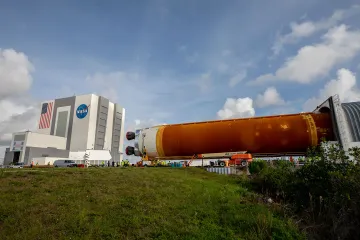
The constituents often include an oxidizer like ammonium perchlorate mixed with a powdered metal fuel (like aluminum) and a binder that also acts as a secondary fuel, often a form of synthetic rubber or polymer. [1] The Space Shuttle’s massive external boosters relied on this technology. [9]
The huge benefit of solid motors is their high thrust-to-weight ratio and relative mechanical simplicity; they have no complex turbopumps or plumbing. [6] However, their key drawback is the absolute lack of control once lit. [6] They cannot be throttled down or shut off mid-burn, making them generally unsuitable for the main propulsion of large, reusable vehicles, though they remain excellent for quick, high-power boosts. [6]
# Hybrid Systems and Small Thrusters
The hybrid system attempts to gain the control benefits of liquids while retaining some of the simplicity of solids. [6] In a typical hybrid setup, the fuel remains a solid (like rubber or plastic), but the oxidizer is supplied as a liquid or gas, such as or nitrous oxide. [1][6] The flow of the liquid oxidizer regulates the burn rate, allowing for throttling and shutdown. [6] While this offers a good compromise, they are less common in large launch vehicles compared to pure liquid or pure solid systems. [1]
For fine control, such as orienting a satellite or making tiny course corrections, small engines known as thrusters employ monopropellants. [1] A monopropellant is a single chemical that decomposes exothermically when passed over a catalyst bed, generating hot gas without needing a separate oxidizer. [1] Hydrazine is a classic example, decomposing catalytically to produce large volumes of hot gas very reliably. [1]
# Oxidizers: The Unsung Heroes
While the fuel component gets most of the attention, the oxidizer is equally critical and often dictates the storage and handling requirements of the entire system. [4][9]
| Oxidizer Type | Primary Usage | Key Property | Example Fuel Pairing |
|---|---|---|---|
| Liquid Oxygen () | Cryogenic (Highest Performance) | Requires extreme cold (must be stored near ) [1] | , Methane, |
| Nitrogen Tetroxide () | Storable (Hypergolic) | Toxic, corrosive, but storable at room temperature | Hydrazine derivatives (Aerozine 50) |
| Hydrogen Peroxide () | Monopropellant or Bipropellant | Relatively safer than , can be decomposed for thrust | Used directly or with kerosene |
Considering the performance landscape, one sees a recurring theme: the lighter the exhaust products, the better the Specific Impulse, assuming enough energy is released during combustion. [2] Hydrogen, the lightest element, yields water vapor—a very light exhaust—when burned with , leading to its unparalleled efficiency. [9] Conversely, using heavier elements or compounds, like those found in solid propellants or , trades peak efficiency for higher density or simpler logistics. [1]
It's interesting to consider that for many of the most complex orbital maneuvers, engineers often prioritize storability and reliability over the highest possible thrust efficiency. [10] An engine that can be reliably ignited once after sitting dormant for five years in the vacuum of space, even if it uses a slightly less energetic fuel, is often preferred over a more efficient cryogenic system that might have degraded seals or suffered from boil-off over that same period. [10] This constant balancing act between maximizing performance (efficiency) and minimizing operational risk (storability and simplicity) defines the selection process for any mission's propellant loadout.
# Choosing the Right Mix
The choice of propellant dictates not just how high a rocket can go, but the entire architecture of the vehicle itself. [10] A vehicle designed around dense, storable can have relatively compact engine bays and propellant tanks, making the airframe shorter. In contrast, a vehicle designed around super-light, low-density must dedicate massive volumes to its fuel tanks, often leading to tall, slender vehicle shapes, like those seen on the Saturn V upper stages. [9] The initial design philosophy—are we prioritizing a quick, high-thrust launch (solid boosters), long-duration deep space travel (storable hypergolics), or maximum payload to Low Earth Orbit (cryogenics)—is established entirely by the fuel combination selected. [6]
#Videos
What are the various types of Rocket Fuels? (For Beginners)
Related Questions
#Citations
Rocket propellant - Wikipedia
What is rocket fuel and how do we get it? : r/askscience - Reddit
Rocket fuels: an overview? - Thunder Said Energy
A Quick Guide to Rocket Fuel - Rexarc
What are the various types of Rocket Fuels? (For Beginners)
Rocket Physics, Extra Credit: Rocket Fuels
What Are the Different Types of Rocket Fuel? Learn About Solid and ...
What Fuels Do SpaceX Rockets Use? | by Johat A. | Predict - Medium
Propellants, Life Support Branch Fuels NASA Missions
What Fluid Is Used in Rocket Propellant? - WestAir Gases