Which is better, solid or liquid rocket fuel?
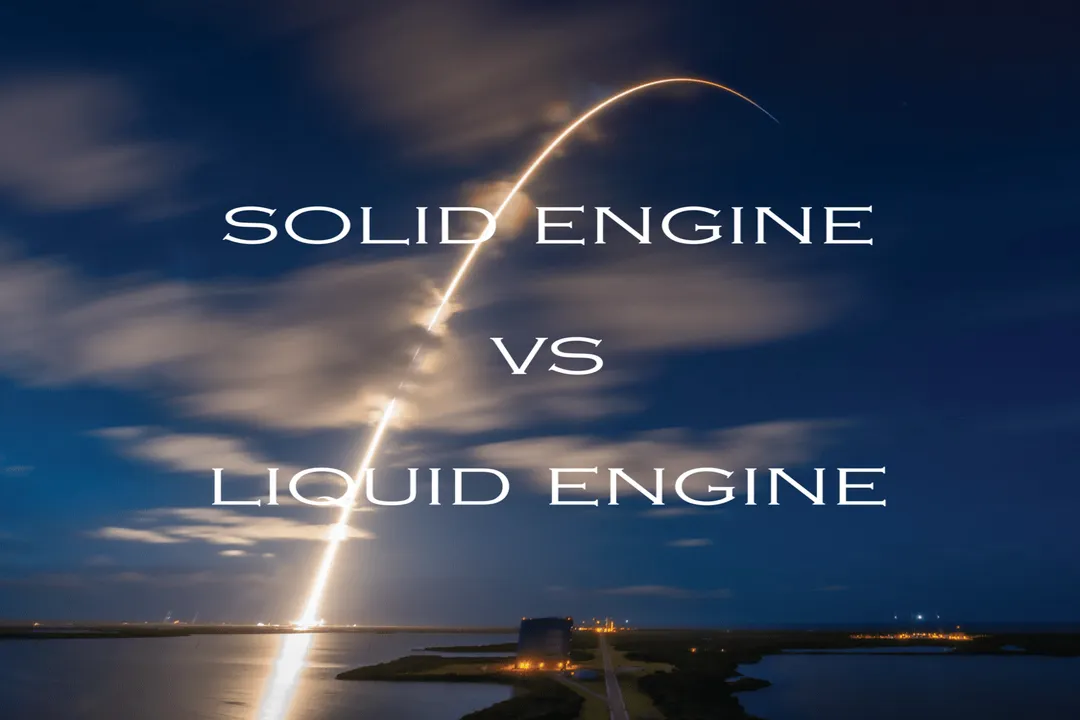
The decision between using solid or liquid rocket fuel is one of the oldest and most persistent debates in astronautics, often boiling down to a trade-off between simplicity and control. Unlike the straightforward mechanics of a common car engine, a chemical rocket must carry everything it needs to generate massive thrust—both the fuel (the reducing agent) and the oxidizer. [2] How these two components are stored and introduced to the combustion chamber defines the engine type: solid or liquid. [3]
# Architecture Simple
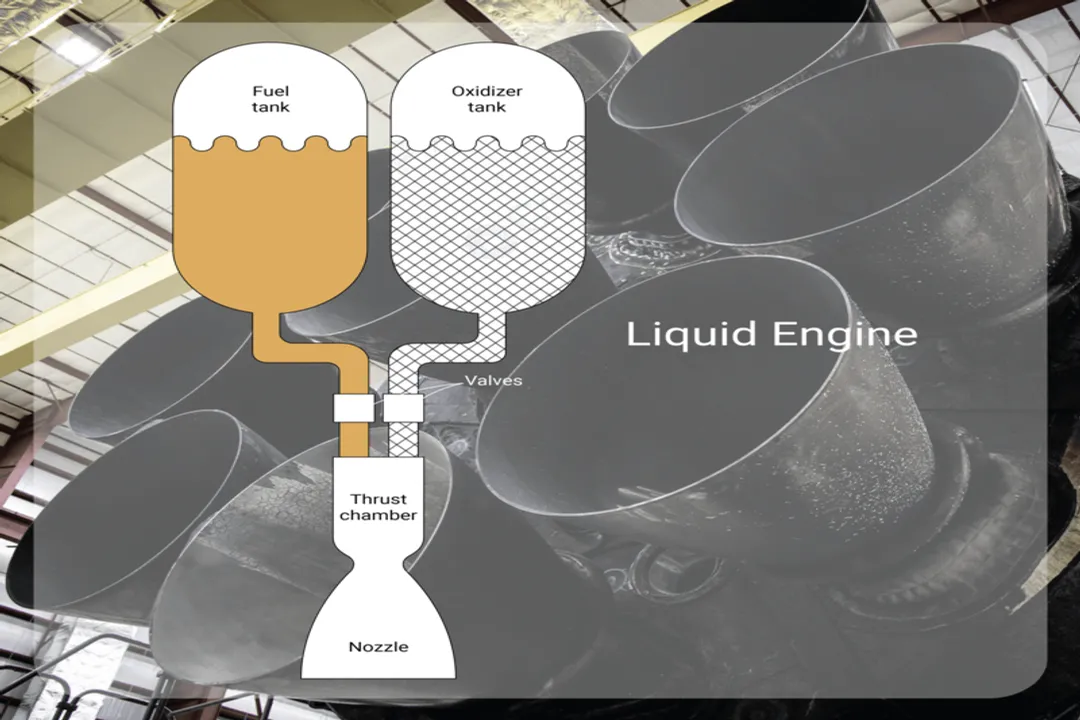
The fundamental difference lies in the physical state of the propellant mixture before ignition. Solid rocket motors are essentially large, pre-packaged devices where the fuel and oxidizer are combined, mixed, and cast into a solid structure, often referred to as the propellant grain, which sits inside the motor casing. [1][2] Because everything is self-contained, the solid engine system lacks complex feed systems or external valves necessary to move propellants around. [1] Once the solid grain is ignited, combustion occurs across its exposed internal surfaces, generating hot gases that exit through a nozzle to produce thrust. [1] The process continues until every bit of propellant is consumed. [1]
Liquid propellant engines, by contrast, keep the fuel and oxidizer in separate tanks, both maintained in a liquid state. [3] To fire the engine, these liquids must be actively pumped under pressure into a thrust chamber where they react. [2] This necessity introduces complexity: liquid engines require precision valves, intricate plumbing, and often powerful turbopumps to overcome the chamber pressure. [1][2] While this mechanical overhead significantly increases the design and manufacturing cost compared to a monolithic solid motor, it unlocks capabilities that solids simply cannot offer. [2]
# Solid Strengths
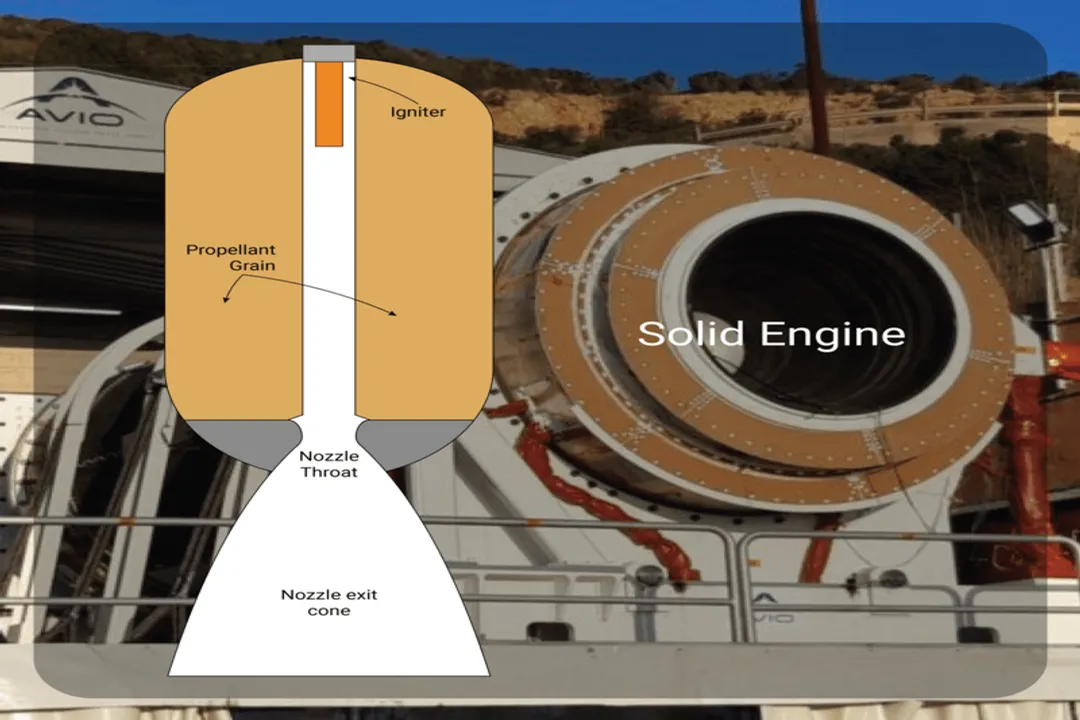
For certain missions, the elegance of simplicity wins out. Solid rocket motors are inherently easier to store and handle than their liquid counterparts. [2] They can sit ready for long durations without the need for constant monitoring, chilling, or complex tank pressurization systems. [2] This long-term storability, combined with high thrust output, makes solids the ideal candidate for military applications or as powerful boosters for orbital launchers that need an immediate, massive push off the launchpad. [2][1] The Space Shuttle’s Solid Rocket Boosters (SRBs) are a classic example of using solid fuel where enormous initial thrust is paramount. [2]
Furthermore, the high density of solid propellants means the engine structure can be very compact for the energy stored, leading to high mass ratios—the ratio of propellant mass to the total structural mass—which is often as good as, or even better than, many liquid upper stages. [2]

# Liquid Advantages
The primary draw of liquid rockets rests entirely on their ability to be commanded. Liquid engines allow for throttling, meaning the thrust output can be adjusted in real time, a capability crucial for managing stress on the vehicle or optimizing trajectory later in the flight. [2][3] Even more significantly, liquid engines can be shut down and restarted at will. [2][3] This on/off capability is essential for upper stages that need to coast in orbit before reigniting to send a payload on a trajectory to another celestial body, or for maneuvering in space. [1] For instance, one upper stage of the European Vega launcher uses a liquid engine precisely because it needs this restart flexibility, even though the lower stages rely on solids. [1]
Another technical benefit stems from how the high pressures and temperatures are managed. In a liquid engine, only the combustion chamber and nozzle have to endure the extreme environment. [2] Using turbopumps, the propellant tanks are kept at a lower pressure than the chamber, which allows the tanks themselves to be built lighter. [2] Furthermore, the liquid propellant can often be circulated around the hot chamber walls before injection—a process called regenerative cooling—which effectively uses the fuel itself to manage the engine's thermal load. [2]
# Efficiency Metrics
When assessing which type is "better," the metric usually discussed is Specific Impulse (), which measures propellant efficiency—how much thrust is generated per unit mass of propellant consumed. [2] In nearly all cases, liquid propellants achieve a higher than solid propellants. [2] This higher efficiency is often attributable to the superior oxidizers available in liquid form, such as liquid oxygen (), which pair better with fuels than the solid oxidizer ammonium perchlorate used in common composite propellants. [2] For example, a comparison between the solid P80 booster and the liquid Merlin 1D engine showed the liquid engine achieving an of approximately versus the solid engine's in a vacuum. [1]
However, the picture is not purely about vacuum performance. The density of the propellant plays a huge, practical role, especially during the initial atmospheric ascent. [2] While liquid hydrogen () offers an exceptionally high , it is extremely low-density, requiring very large tanks, which increases the vehicle's dry mass and hurts overall performance if used for first stages. [2] Conversely, dense propellants like kerosene () paired with are favored for first stages because the smaller tank volume allows for a lighter overall vehicle structure at liftoff, enabling higher initial thrust to overcome gravity drag more effectively. [2] This highlights that performance optimization is highly dependent on the flight phase; upper stages prioritize high in a vacuum, while first stages prioritize density and thrust at sea level. [2]
A fascinating example of balancing these competing needs is seen in vehicles that employ a tripropellant approach or mimic it, like the Space Shuttle. [2] The Shuttle used dense, high-thrust solid boosters for the initial climb, while its main engines burned a fuel-rich mixture of throughout the launch, effectively functioning as a dense fuel system at low altitude and gradually shifting toward the efficiency gains of the lower molecular weight exhaust products at higher altitudes. [2]

# Failure Mode Contrast
Considering the operational mechanics reveals a stark difference in how failure manifests. Liquid rockets involve complex machinery—pumps, injectors, and valves—that can wear out or fail to actuate correctly. A problem here is usually mechanical and might result in an immediate shutdown or degraded performance. [2] However, in a solid rocket, the fuel and oxidizer are locked together in a single structure, and the burn rate is dictated by the exposed surface area of that grain. [2] If internal casting introduces a void or a crack, that imperfection acts as a localized patch of extra surface area. [2] This leads to a positive feedback loop: more surface burns, generating more heat, which accelerates the burn rate even further, potentially exceeding the casing's structural limits and resulting in a catastrophic failure of the motor casing or nozzle. [2] The inherent complexity of liquid systems is an engineering challenge, but the latent structural hazard within a solid motor is a chemical time bomb waiting for the wrong physical flaw.
# Propellant Chemistry Basics
Rocket propellants, for chemical rockets, rely on redox reactions, meaning they must contain both an oxidizer and a fuel. [2] In solid motors, the components are typically formulated as composites, like the well-known Ammonium Perchlorate Composite Propellant (), which mixes a solid oxidizer (ammonium perchlorate) with an aluminum powder fuel, all held together by a rubbery binder that also contributes to the fuel load. [2] These are cured from a thick liquid state into a firm solid. [2]
Liquid propellants fall into two main categories based on storage needs. Cryogenic propellants, like and liquid hydrogen () or liquid methane (), must be kept extremely cold. [2] They offer high performance but require significant insulation and handling infrastructure. [2] Storable propellants, such as nitrogen tetroxide () and hydrazine derivatives, can be kept at reasonable temperatures and pressures for long periods, making them excellent for spacecraft maneuvering systems or deep-space probes, though they are often highly toxic and reactive. [2] The use of hypergolic storable propellants (), which ignite on contact, simplifies the ignition sequence immensely, bypassing the need for a separate igniter. [2]
# The Hybrid Middle Ground
Between these two extremes lies the hybrid rocket, which features a solid fuel grain combined with a liquid or gaseous oxidizer. [2] Hybrids retain the simplicity of having only one fluid component, which typically means fewer pumps and pipes than a full liquid engine. [2] Critically, the fluid oxidizer often allows the motor to be throttled and restarted, borrowing a major advantage from the liquid class. [2] For instance, the vehicle used a hybrid motor employing solid rubber with nitrous oxide as the oxidizer. [2]
Despite these benefits, hybrids face a significant hurdle: propellant mixing. [2] In a solid motor, factory precision ensures perfect mixing; in a liquid motor, injectors manage the mix just before combustion. In a hybrid, the mixing happens at the surface where the liquid oxidizer meets the solid fuel, which is inherently less controlled. [2] This often leaves unburned propellant behind, limiting the motor’s efficiency relative to the pure liquid or pure solid alternatives. [2] Consequently, most development has historically focused on liquid systems for orbital work due to their superior efficiency. [2]
# Operational Nuances
When considering what drives the final choice for a given task, the operational envelope is key. If the requirement is a quick, powerful push—such as a military missile or a heavy-lift initial stage—the low-cost, high-thrust, and easy-to-store solid motor is generally favored. [1][2] The trade-off is accepting a pre-set thrust profile that cannot be altered once the launch sequence begins. [2]
If the mission demands precision, such as fine orbital insertion or a long-duration maneuver far from Earth, the complexity of liquid engines is justified by the ability to manage the engine's output precisely, optimizing the propellant mixture ratio () throughout the burn to favor either maximum thrust at low altitude or maximum efficiency in a vacuum. [2] It is worth noting that even liquid engines run off-stoichiometric—often fuel-rich—not only for performance gains related to lower molecular weight exhaust products but also because running slightly fuel-rich keeps the combustion products cooler, which aids in engine cooling. [2] This level of dynamic control is entirely out of reach for a basic solid motor. The very simplicity that makes solids great boosters also makes them inflexible for nuanced in-flight adjustments.
Related Questions
#Citations
Rocket propellant - Wikipedia
Solid and Liquid Engine - Technical Capsule - impulso.space
What's the difference between liquid and solid-fuel rockets?