Is hydrogen a good rocket fuel?
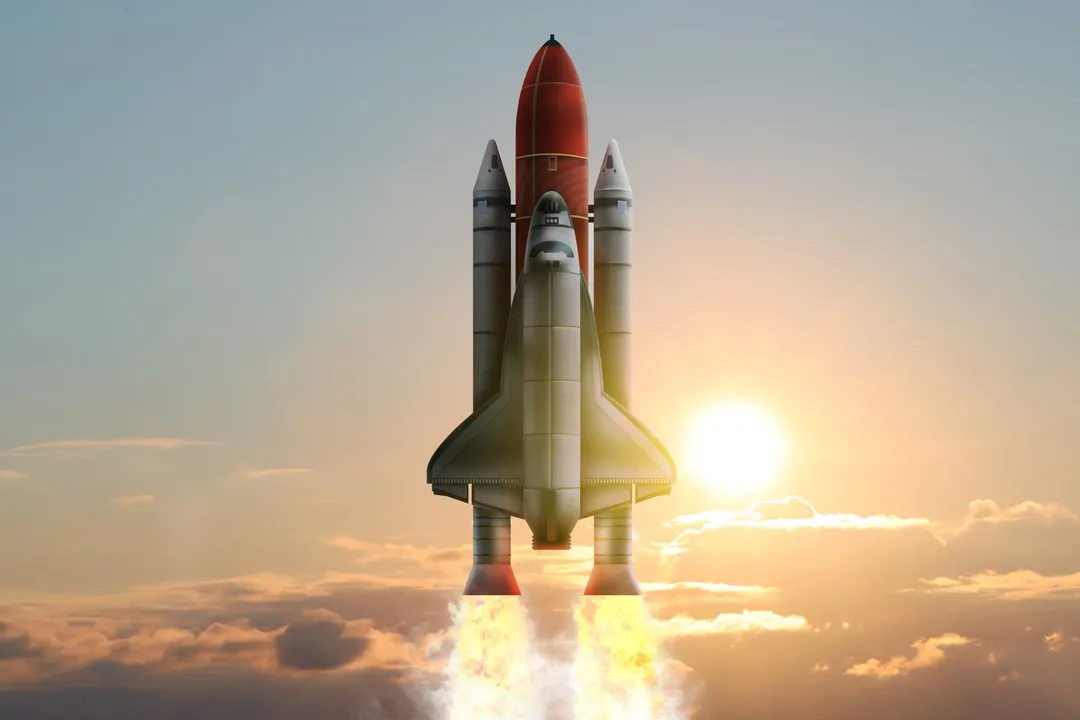
Liquid hydrogen has long held a special status among chemical propellants, often touted as the performance king of rocket fuels, but its widespread adoption remains complex. When looking at the physics, hydrogen stands out because it provides an incredible amount of energy for its weight. [3][5] This high energy content per unit mass, known as specific energy, translates directly into higher exhaust velocity when burned with an oxidizer like liquid oxygen (), which is the key to achieving a high specific impulse (). [3][5]
# High Performance
The efficiency metric that matters most in rocketry is the specific impulse, often measured in seconds, which tells engineers how much thrust is generated per unit of propellant consumed per unit of time. [5] Liquid hydrogen () and liquid oxygen () systems consistently boast the highest values among conventional chemical rockets, sometimes reaching values around 450 seconds in a vacuum. [3][5] For comparison, fuels like (a refined kerosene) achieve lower figures, typically in the 300 to 350-second range. [8] This performance difference is not trivial; in the upper stages of a rocket, where velocity addition is critical for reaching distant orbits or interplanetary trajectories, that extra efficiency means the payload can be heavier or the target destination can be further away. [8]
Another significant advantage, particularly relevant for atmospheric flight and environmental consciousness, is the nature of the exhaust products. When hydrogen burns with oxygen, the only byproduct is water vapor (). [2][5][8] This is undeniably "cleaner" in terms of non-condensable pollutants compared to hydrocarbon fuels like , which produce carbon dioxide, carbon monoxide, and soot. [8]
# Density Limits
The primary physical drawback of using hydrogen as a rocket fuel is its extraordinarily low density. [1][3][4] Even when cryogenically liquefied to about (), it remains far less dense than kerosene or even methane. [5][7] To store enough mass of to power a stage, the resulting fuel tanks must be physically enormous to accommodate the required volume. [1][3][4] This phenomenon has massive implications for vehicle architecture. Where a kerosene tank might be relatively compact, an equivalent-energy tank requires significantly more structural mass and creates a much larger vehicle cross-section. [1] This increased size affects aerodynamics during atmospheric ascent and often dictates the overall diameter of the rocket, creating scaling challenges for vehicles designed to launch from standard pads. [1]
Thinking about vehicle design, the sheer volume required for fundamentally changes the mass fraction equation. While the specific impulse is high (mass efficiency), the resulting volume requirement penalizes the structural efficiency. A larger tank means more tank wall material is needed, adding dry mass that must be lifted, which slightly erodes the initial performance gain from the high . [7] This trade-off is often why engines using denser fuels like are preferred for the massive first stages of launch vehicles, where overcoming Earth's gravity demands maximum thrust packed into the smallest possible structural envelope. [8]

# Cryogenic Complexity
The need to maintain liquid hydrogen at its extremely low boiling point presents engineering challenges unlike those faced by storable or ambient-temperature fuels. [4][5] Liquid hydrogen needs to be kept below . [4] This necessitates heavily insulated tanks, often employing vacuum jackets or multi-layer insulation, which adds weight and complexity compared to tanks holding kerosene or hypergolic propellants. [7]
The inevitable result of this super-cooling is boil-off. [1][4] Because no insulation system is perfect, heat slowly leaks into the tanks, turning small amounts of liquid hydrogen back into gas over time. [4][7] For missions that require long coast phases or significant on-orbit residency—such as deep-space exploration vehicles or upper stages waiting for the optimal launch window—this continuous loss of propellant mass can be critical. [1][7] Engineers must either manage this boil-off through sophisticated venting systems, which means deliberately losing fuel, or carry excess propellant mass initially, which negates some of the performance benefits. [4] This reality often limits the practical use of to applications where the engine fires relatively soon after fueling or where the mission profile allows for specialized cryogenic handling infrastructure on the ground and in space. [7]
# Infrastructure and Cost
Beyond the onboard vehicle challenges, the production and handling of hydrogen introduce significant logistical hurdles and costs. [1][2] While hydrogen is the most abundant element in the universe, generating pure, flight-ready liquid hydrogen on Earth is an energy-intensive process. [6] Most industrial hydrogen today is produced from natural gas (methane) through a process called steam methane reforming, which releases carbon dioxide. [6] To achieve the "clean" propulsion advantage in space, the hydrogen must be produced using electrolysis powered by renewable energy sources (often called "green hydrogen"). [6] This green production pathway is currently far more expensive and less scaled than conventional methods, impacting the overall mission cost. [1][2]
The entire ground support infrastructure must also be designed for cryogenic operations, requiring specialized pumps, plumbing, and storage facilities capable of handling temperatures near absolute zero. [1] This high capital investment in specialized handling equipment further complicates the adoption rate for hydrogen over more conventional, room-temperature fuels like . [1]

# Application Niche
Considering these pros and cons, the selection of as a rocket fuel becomes a strategic decision based entirely on the mission goal. [8]
# Upper Stages
Hydrogen shines brightest in the vacuum environment of upper stages. [8] In space, the issue of boil-off is mitigated (though not eliminated by long coast times), and the high is fully exploited to maximize the final velocity change () delivered to the payload. [8] The Space Shuttle's main engines and the powerful upper stages of rockets like the Delta IV Heavy and the upcoming Vulcan Centaur rely on for this final velocity push. [8]
# First Stages
For the initial, powerful ascent through the thick atmosphere, the density benefit of or denser alternatives often outweighs the superior of hydrogen. [8] A first stage needs brute force—high thrust within a physically constrained diameter—to fight gravity and drag effectively. [1] While the Saturn V's second and third stages were -powered, its massive first stage used the denser combined with liquid oxygen. [8] This historical precedent highlights a critical engineering reality: the optimal propellant choice changes depending on the operational environment, from the dense air near the launchpad to the vacuum of space. [8]
This dual-propellant strategy, using dense fuel for the first stage and high-performance for the upper stage, represents a practical way to gain the best of both worlds. [8] It acknowledges that while hydrogen is theoretically the most efficient chemical fuel by mass, it is not necessarily the best choice when packaging, structure, and infrastructure complexity are factored into the entire system cost and mission profile. [3][1] The very high performance is only truly realized when the penalty of large tank volume and boil-off risk can be managed or overcome by the mission requirements.
Related Questions
#Citations
Why don't more rockets use hydrogen? : r/AerospaceEngineering
Will hydrogen power the future of aerospace? - WHA International
Why is hydrogen considered the most efficient rocket fuel and how it ...
What are the pros and cons of using hydrogen as a fuel for rocket ...
A Quick Guide to Rocket Fuel - Rexarc
Use of hydrogen - U.S. Energy Information Administration (EIA)
What are the advantages and disadvantages of using either liquid ...
The Battle of Rocket Fuels in Space Exploration: RP-1 vs. Liquid ...
Why Do Rockets Use Hydrogen Fuel? - WestAir Gases