How are rockets able to return to Earth safely?
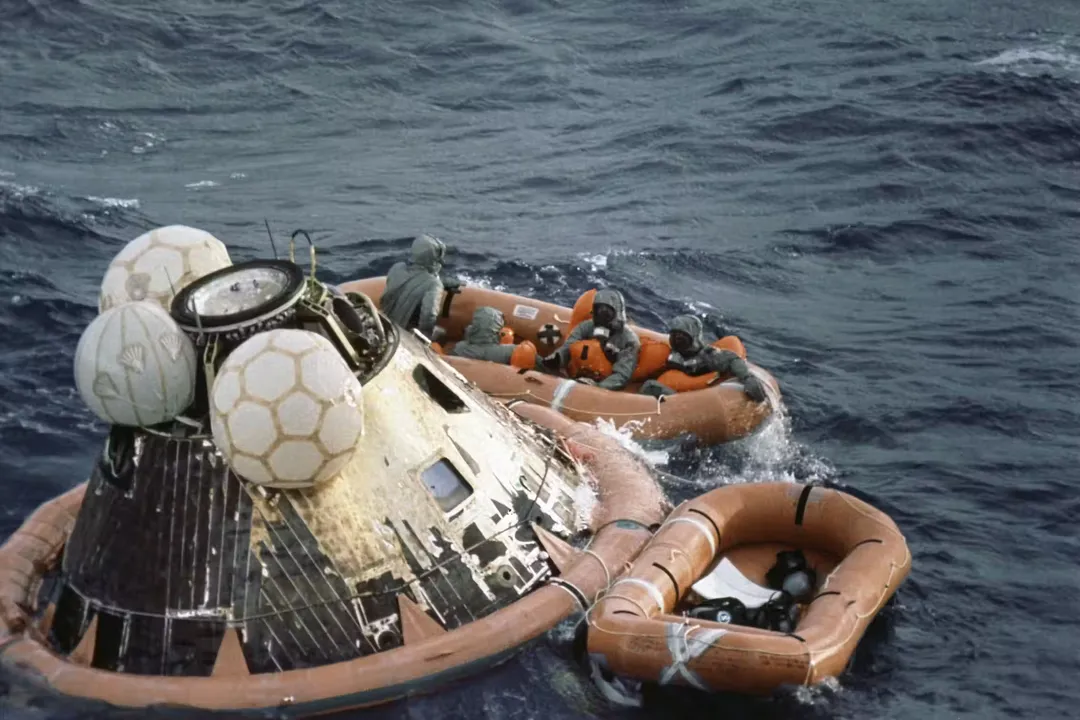
The seemingly simple act of bringing a multi-ton machine from orbital velocity back to a gentle stop on Earth is one of the most complex feats in aerospace engineering. It involves precisely choreographed maneuvers that balance orbital mechanics, extreme thermal physics, and meticulous computer control. There is no single technique; the process is highly dependent on the spacecraft's design—whether it is a capsule meant for a parachute drop, or a reusable booster designed for a vertical landing. [6][7]
# Orbital Departure
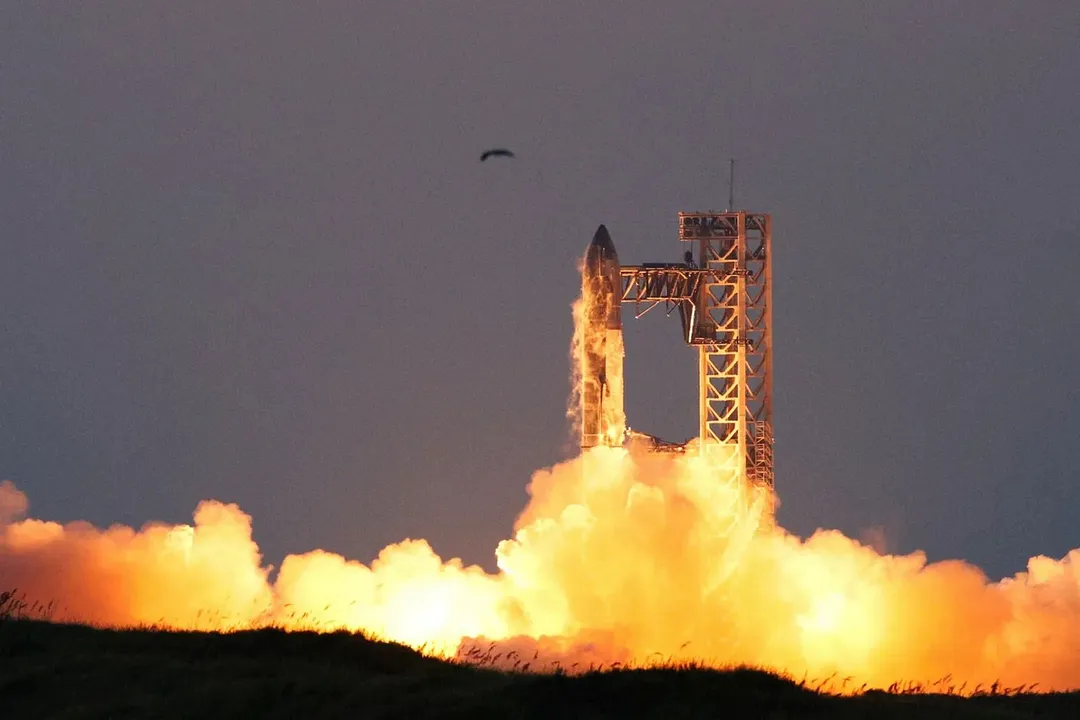
Before any dramatic reentry sequence can begin, the vehicle must intentionally leave its stable orbit. In low Earth orbit, a spacecraft is traveling at roughly 17,500 miles per hour. [3] To return, it needs to reduce that velocity enough so that gravity can pull it down onto a specific atmospheric trajectory—this reduction is known as the de-orbit burn. [3] This burn is performed by firing the main engines or dedicated thrusters against the direction of travel for a specific duration. [6] If this burn is executed too late or too weakly, the vehicle might overshoot the intended landing zone or even miss Earth entirely, resulting in a higher, less controlled reentry or becoming space junk. [3] Conversely, a burn that is too aggressive can cause the craft to hit the atmosphere at too steep an angle, leading to destructive heating and deceleration forces. [3]
# Entry Interface
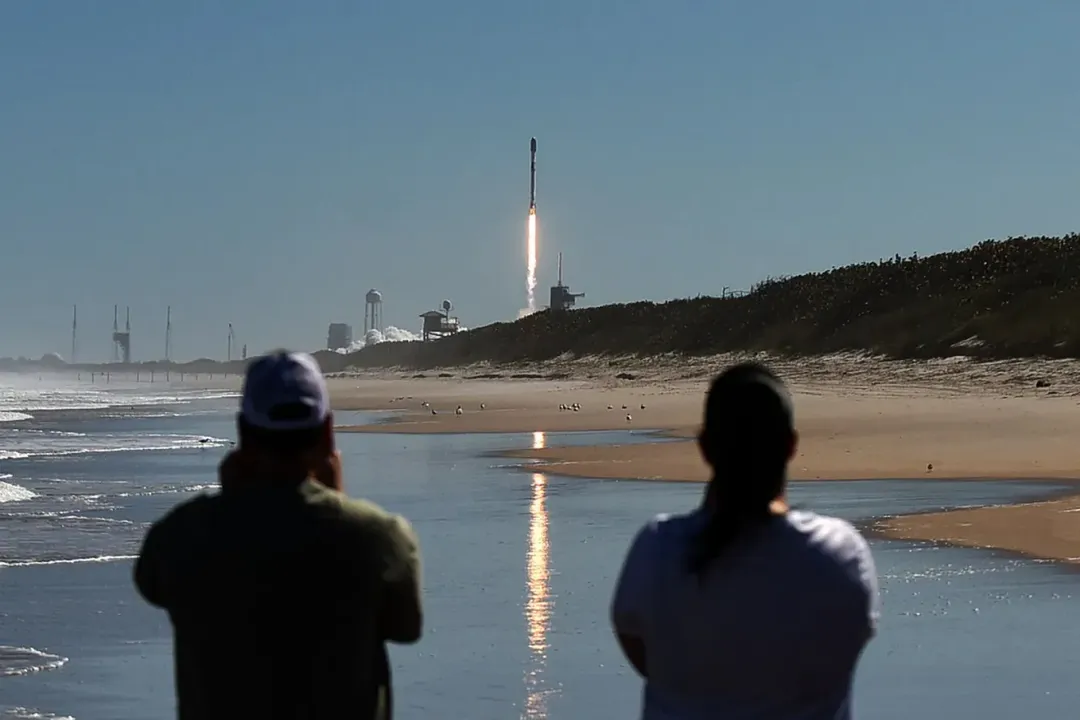
The moment the vehicle meets the outer fringes of the atmosphere, generally around 400,000 feet, the true challenge begins. Atmospheric entry is not a gradual slowdown; it is a violent interaction where kinetic energy transforms rapidly into heat. [8] Because the vehicle is still moving at hypersonic speeds—often exceeding Mach 25—the air in front of it compresses so quickly that it turns into superheated plasma. [8] The temperatures generated can reach thousands of degrees Fahrenheit. [8]
# Thermal Protection
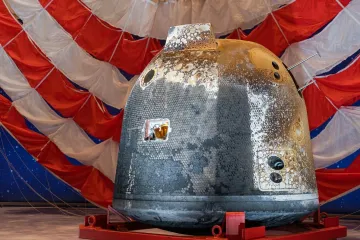
Managing this incredible heat load is the primary engineering hurdle during the initial descent phase. [2] Different vehicles employ different solutions for protection. Capsules, such as those used by NASA's Orion or older Apollo missions, typically rely on a heat shield. [6] The most common type for one-time use is an ablative shield, a specialized material designed to sacrifice itself to save the spacecraft. [2][6] As the outer layer of the shield vaporizes, it carries heat away with the resulting gas and debris, effectively cooling the surface underneath. [6] While ablative shields are highly effective and relatively straightforward to design for a single use, they are consumed in the process. [2]
Reusable vehicles present a different set of requirements. The Space Shuttle, for example, used thousands of specialized ceramic tiles that formed its Thermal Protection System (TPS). [6] These tiles insulate the underlying structure from the extreme heat without being destroyed. [6] While ablative shields are simpler in concept, they are sacrificial, meaning they can only be used once per flight, adding to the cost of expendable missions. Reusable vehicles require meticulous inspection and replacement of tiles, trading immediate mass efficiency for long-term operational savings, illustrating a fundamental design trade-off between mass efficiency and reusability. [6]
# Controlling the Descent
Simply falling through the atmosphere won't guarantee a safe landing spot. The vehicle must maintain a precise orientation, known as the angle of attack, relative to the oncoming airflow. [3] If the angle is too shallow, the spacecraft can experience an aerodynamic skip, where it literally bounces off the denser upper atmosphere and back out into space, potentially stranding the crew or mission hardware. [3] If the angle is too steep, the deceleration and heating become unsurvivable or structurally damaging. [3]
Control during this phase is managed by subtle adjustments to the vehicle’s orientation using its guidance system. [1] For many capsules, small thrusters belonging to the Reaction Control System (RCS) are fired in specific combinations to pitch, yaw, or roll the craft. [1] This allows the onboard computers to steer by bleeding off speed and adjusting the trajectory subtly enough to hit the target landing zone, which might be hundreds of miles away from the initial entry point. [3] The guidance system continuously processes data from sensors like gyroscopes and accelerometers to calculate the required thrust impulse from the RCS thrusters. [1]
# Decelerating to Landing Speed
As the vehicle slows from hypersonic speeds down to subsonic velocities, the extreme thermal phase passes, and the main challenge shifts to managing the remaining momentum and achieving a survivable final impact speed. [3] The atmosphere does the heavy lifting, turning most of the initial orbital energy into heat and drag. [8]
For vehicles designed to land via parachute, once the speed drops sufficiently (often below Mach 1), the system deploys the recovery parachutes. [2][6] This deployment is often staged: a small drogue chute is released first to stabilize the craft and absorb initial shock, followed by the massive main parachutes that slow the descent to the final rate needed for splashdown or ground impact. [2] NASA’s expertise in entry systems covers the development of these precise sequencing and deployment mechanisms. [2]
# Propulsive Return Methods
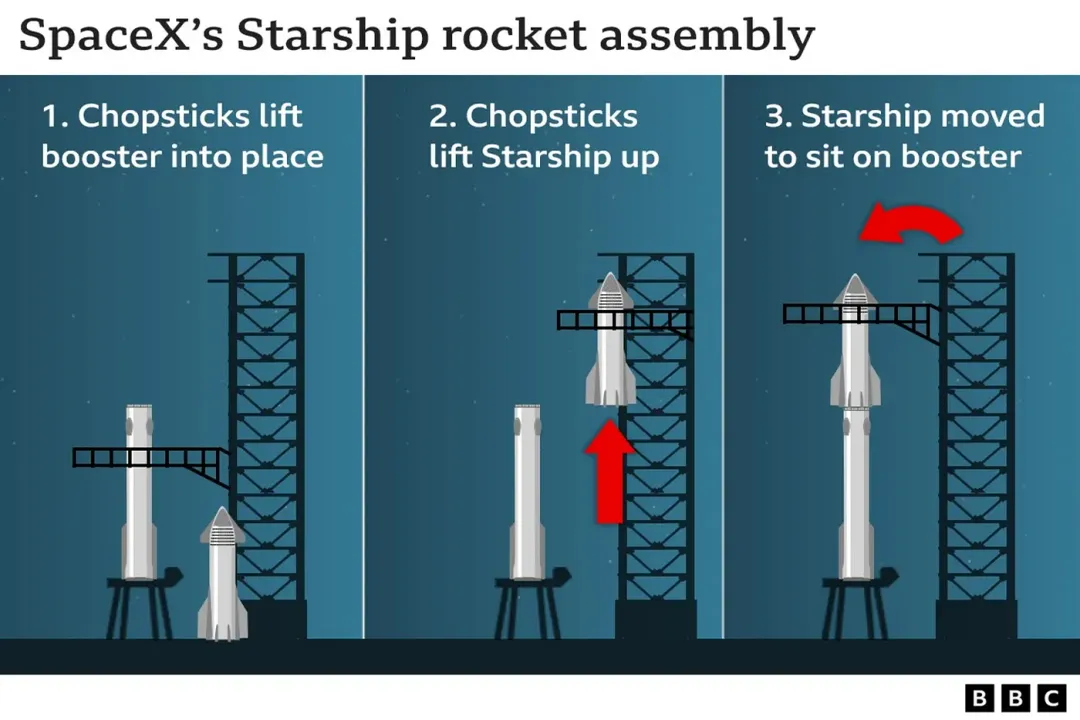
A notable divergence from traditional capsule recovery involves the propulsive return pioneered by SpaceX with its Falcon 9 first stages. [7] Rather than relying solely on atmospheric drag and parachutes, these boosters actively use their engines for the final descent maneuver, known as a landing burn. [7]
This process requires the booster to flip itself around after its separation from the upper stage, reorienting itself so that engines face the direction of travel. [7] It then executes a series of burns:
- Boostback Burn: A small burn shortly after separation to adjust the trajectory toward the landing site. [7]
- Entry Burn: A longer burn as the booster hits denser air to slow down the extreme atmospheric entry speeds. [7]
- Landing Burn: The final, carefully modulated burn executed just moments before touchdown to reduce vertical and horizontal velocity to near zero at the precise moment the landing legs touch the surface. [7]
This method demands incredible precision from the guidance and navigation systems, as the difference between a successful landing and a catastrophic failure can be a matter of milliseconds in engine throttling or a slight miscalculation in aerodynamic modeling. [1][7]
Engineers must account for every variable, from atmospheric density changes to slight variations in the vehicle’s mass distribution as fuel is burned off. [1] The use of gimbaled engines allows the thrust vector to be steered, providing attitude control while simultaneously contributing to deceleration, something not possible with a fixed-nozzle parachute system. [1]
# Navigating the Final Moments
The control systems are the invisible component ensuring mission success across all methods. Whether it is a capsule relying on RCS thrusters to maintain a controlled ballistic entry, or a booster using its main engines for a soft landing, the Guidance, Navigation, and Control (GNC) system is paramount. [1] This system receives real-time telemetry—pressure, altitude, speed, orientation—and compares it to the planned trajectory. [1] If a deviation is detected, the GNC calculates the necessary correction and sends commands to the vehicle's actuators, be they small thrusters or large engine gimbals. [1] The ability of the system to perform these calculations and fire the control mechanisms rapidly creates the closed-loop feedback necessary for success. [1]
Consider the engineering difference between a crewed return and a cargo/booster return. For crewed vehicles, the G-loads during peak deceleration must be kept within strict physiological limits, perhaps around 4-6g, dictating a shallower entry profile which requires more precise orbital adjustments beforehand. In contrast, an uncrewed booster aiming for a pinpoint landing prioritizes fuel efficiency and trajectory correction in the upper atmosphere, accepting higher, faster deceleration rates that would be dangerous for humans, provided the structure can handle it. [3]
# Landing Outcomes
The final phase determines the recovery method. Historically, many capsules, like those from early Mercury missions or even modern Progress cargo craft, conclude their descent with a splashdown in the ocean. [6] Once the vehicle hits the water, it must be buoyant enough to float upright to await recovery teams. [6] Even with parachutes, the water impact is forceful, requiring the vehicle to be designed to absorb this shock without collapsing the crew compartment or breaking seals that would let water inside. [6]
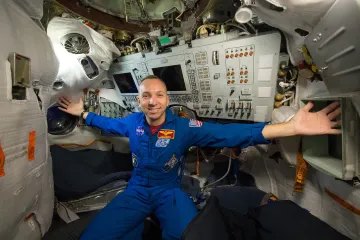
Ground landings, whether via parachutes onto dry land (like the Russian Soyuz capsules) or propulsive vertical landings (like Falcon 9), introduce different hazards, primarily ensuring the vehicle comes to rest without tipping over once on the ground. [6][7] Ground crews are essential for quickly securing the hardware and retrieving any crew members after touchdown. [6] The entire procedure, from the initial de-orbit burn to the moment recovery teams reach the hardware, is a high-stakes ballet between incredible speed and precise mechanical control. [3]
#Videos
How Do Rockets Land Back On Earth? - Physics Frontier - YouTube
Related Questions
#Citations
How are rocket ships controlled and how do they get back to Earth?
Core Area of Expertise: Entry Systems - NASA
How do rockets safely return to Earth and land after reaching orbit?
A Rocket's Secret to Reentry - YouTube
How do booster rockets navigate back to launch site? - Facebook
The science behind splashdown − an aerospace engineer explains ...
How Elon Musk's Rocket Returns to Earth | by Scott Hansen - Medium
Atmospheric entry - Wikipedia