What supercluster is Earth in?
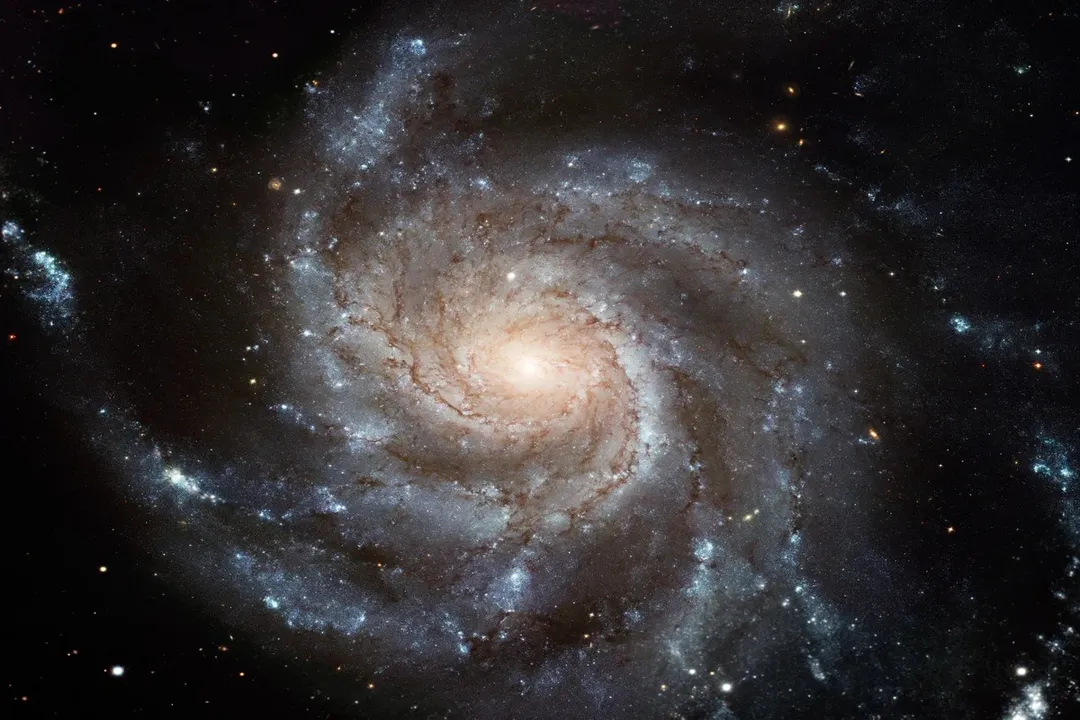
Our place in the cosmos is a hierarchical address, starting much closer to home than many realize. We reside on the third planet orbiting a star we call the Sun, which is merely one of hundreds of billions of stars making up the Milky Way Galaxy. The Milky Way itself is not isolated; it belongs to a small collection of perhaps fifty or so galaxies gravitationally bound together, known as the Local Group. This grouping is dominated by two massive spiral galaxies: our own Milky Way and the Andromeda Galaxy, separated by about 2.5 million light-years.
# Local Structure
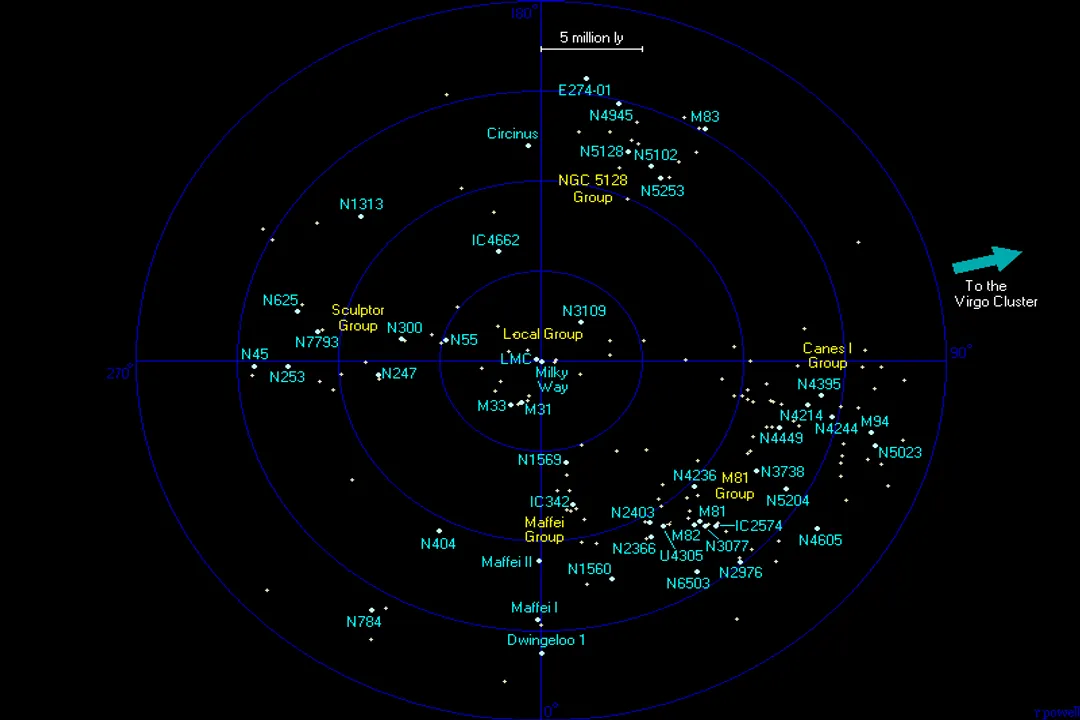
For a long time, the Local Group was viewed as being on the periphery of a much grander structure known primarily as the Virgo Supercluster. This immense collection of galaxies is named after the Virgo Cluster, which sits near its center and contains over a thousand galaxies itself. The Virgo Supercluster is an expansive system, spanning roughly 110 million light-years across. Think of the Local Group as a small, relatively quiet suburb on the edge of a massive, bustling metropolitan area—that metropolitan area being the Virgo Supercluster.
The galaxies within the Virgo Supercluster are not all orbiting a single central point in the neat way planets orbit a star. Instead, the motion is more complex, driven by gravity across a vast structure. Historically, it was believed that the Local Group was moving towards the center of the Virgo Cluster, but as observations improved, it became clear that our local neighborhood is just one component among many within this larger structure. The Virgo Supercluster itself is quite flattened, resembling a gigantic, somewhat irregular disc.
# Galactic Neighborhoods
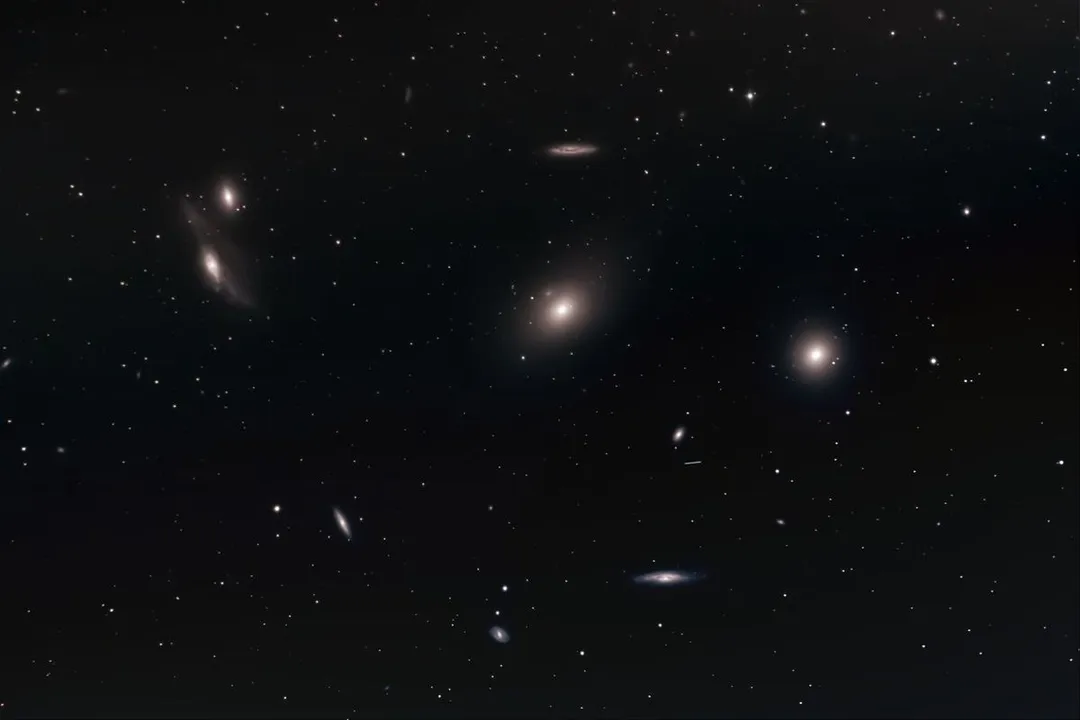
To put this into perspective, the sheer scale of these structures is difficult to visualize. If the Milky Way were the size of a postage stamp, the Local Group would be about the size of a dinner plate. If we scale up again, the Virgo Supercluster, containing thousands of galaxies, would be comparable to a large continent. This hierarchical grouping, where smaller collections are nested within larger ones, is a fundamental pattern throughout the observable universe.
If we look at our address, the progression might look something like this: Earth Solar System Milky Way Galaxy Local Group Virgo Supercluster. This progression shows how astronomical position is built up layer by layer, with each layer being dramatically larger than the one before it. For instance, the diameter of the Milky Way is about 100,000 light-years, while the Virgo Supercluster is over a thousand times wider at 110 million light-years.
# A Newer Definition
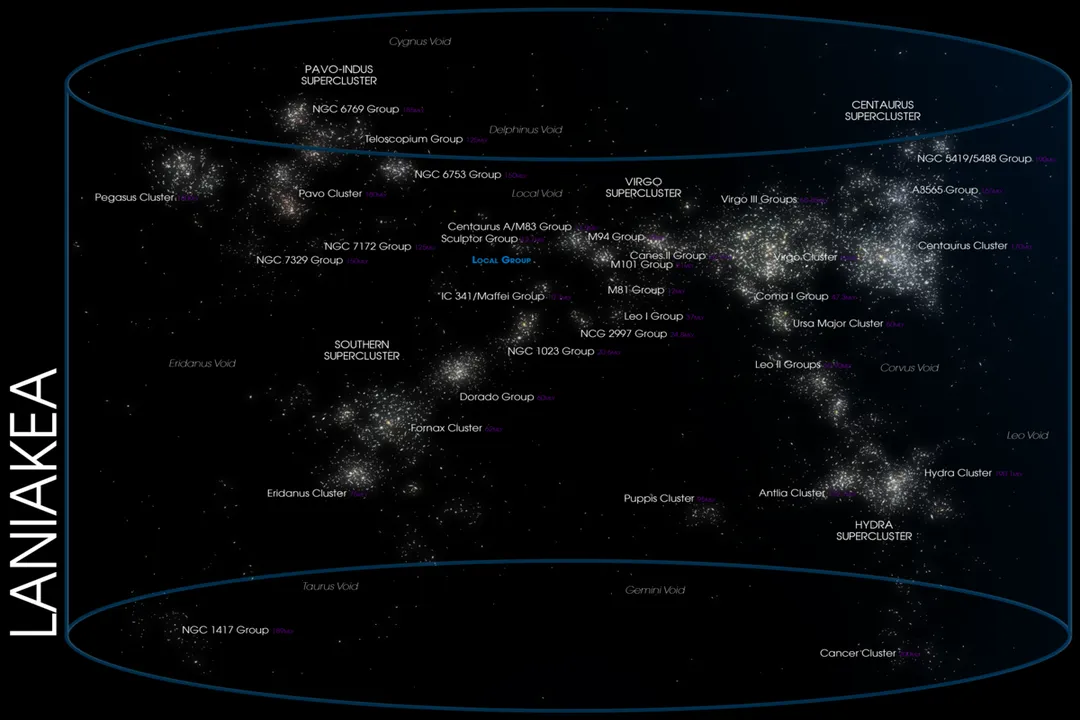
However, the cosmic map has been redrawn in recent years based on a different way of defining these massive structures—not just by gravitational grouping, but by the flow of matter. Scientists began mapping the movement of galaxy clusters, realizing that matter is flowing toward a massive gravitational center, like water draining into a sink.
This new mapping revealed a structure significantly larger than the old Virgo Supercluster designation, one that encompasses the Virgo Supercluster itself, the Local Group, and many other clusters. This massive structure is named the Laniakea Supercluster. The name Laniakea comes from Hawaiian, meaning "immeasurable heaven" or "immense heaven," which seems fitting for a structure containing an estimated 100,000 galaxies.
The Laniakea Supercluster is defined by the gravitational basin that pulls all its constituent parts toward a common point, known as the Great Attractor. This reclassification means that while Earth is in the Virgo Supercluster, the Virgo Supercluster is merely a major component, or perhaps a subgrouping, within the much larger Laniakea Supercluster.
| Structure | Approximate Diameter (Light-Years) | Estimated Number of Galaxies | Defining Feature |
|---|---|---|---|
| Milky Way | $100,000$ | billion (stars) | Our Home Galaxy |
| Local Group | million | Gravitationally bound neighbors of the Milky Way | |
| Virgo Supercluster | million | A massive, flattened collection of galaxy clusters | |
| Laniakea Supercluster | million | Defined by the collective flow of matter toward the Great Attractor |
The transition from the Virgo Supercluster model to the Laniakea Supercluster model highlights a critical aspect of modern astronomy: our understanding of the universe is dynamic and subject to revision as our ability to measure motion improves. The older definition relied more on static proximity; the newer one incorporates the velocity field—how things are actually moving through space. Laniakea is a dynamic entity, constantly being shaped by these flows.
# Scale and Dynamics
Consider the difference in scope. The Virgo Supercluster, while massive, is often considered a relatively flat "pancake" structure. Laniakea, by contrast, is the larger environment where Virgo sits. If we visualize the universe in terms of motion, every galaxy within Laniakea is, in some way, flowing toward the central point, the Great Attractor, which itself resides within a larger structure called the Shapley Supercluster. This means our address is not just about where we are, but where we are going.
This continuous motion provides a fascinating counterpoint to the static maps we often see. When we talk about the Virgo Supercluster, we are defining a boundary based on gravitational influence or proximity at a certain moment in cosmic time. But Laniakea uses the velocity vector—the arrow of motion—to draw its perimeter. An observer looking at the universe a billion years ago might have defined our structure differently, as the boundaries of these immense collections shift as the universe expands and gravity works its magic across vast distances.
For the average stargazer, understanding these scales helps put the night sky into context. The stars we see are all within our Milky Way, a tiny fraction of the whole. The galaxies visible through a decent amateur telescope are usually members of the Local Group or the nearest parts of the Virgo Supercluster. Knowing that all those faint smudges are actually island universes, grouped into superclusters like Virgo, which are themselves merely sub-structures of Laniakea, gives a deeper appreciation for the scale of reality beyond our immediate galactic surroundings.
If you were to try and map this out using only distance, you might get stuck defining the Virgo Supercluster, as it contains many distinct subgroups. But by mapping the inflow of material, Laniakea effectively groups together everything that is gravitationally "connected" by this common flow toward the Great Attractor, creating a more physically meaningful grouping on the largest scale yet measured for our local volume of space. This reliance on bulk flow over simple positional clustering is the key development that led to recognizing Laniakea as our larger home.
# Cosmic Address Summary
So, what supercluster is Earth in? The most accurate, modern answer incorporating current large-scale flow dynamics is the Laniakea Supercluster. However, we must acknowledge the intermediate step: the Local Group, which contains the Milky Way, is a key member of the Virgo Supercluster, which is itself a major component of Laniakea.
It is like giving directions: "I live in Laniakea, in the region near the Virgo tributary, within the Local Group neighborhood, on the planet Earth". This layering acknowledges both the historical, gravitationally-defined structure (Virgo) and the modern, dynamically-defined structure (Laniakea). This dual description is necessary because the older term, Virgo Supercluster, is still widely used in literature to describe the immediate, denser collection of clusters that orbit the Virgo Cluster core.
This understanding of layered cosmic geography is vital for understanding the expansion of the universe. While the universe is expanding overall, local gravity can overcome this expansion, causing structures like the Local Group and the Virgo Supercluster to remain gravitationally bound. Laniakea is the next level up where this binding force—the shared flow toward the Great Attractor—is the organizing principle on a scale hundreds of millions of light-years wide.
#Videos
Classroom Aid - Earth in the Virgo Supercluster - YouTube
Related Questions
#Citations
Virgo Supercluster - Wikipedia
What is Earth's location in space? - Cool Cosmos - Caltech
A beginner's guide to the Virgo Supercluster
Astronomical Address? : r/Astronomy - Reddit
All day Astronomy
Understanding Earth's Location in the Universe - Facebook
Classroom Aid - Earth in the Virgo Supercluster - YouTube
Galaxy Basics - NASA Science