Is it possible to return to Earth from space?
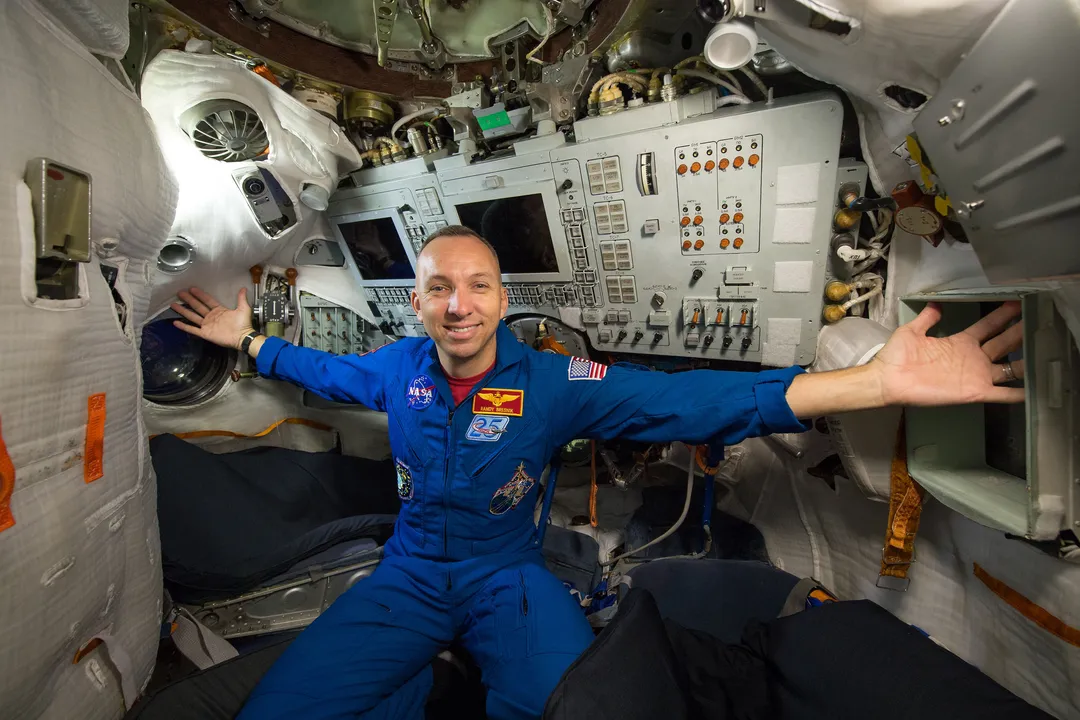
The notion of rocketing away from our planet captures the imagination, yet equally important is the controlled, often fiery, return to solid ground. Yes, coming back to Earth from space is not only possible but is a fundamental requirement for any successful crewed mission, whether to the International Space Station (ISS) or the Moon. [4][5][9] The process is a finely tuned sequence of physics, engineering, and precise timing, relying on specialized vehicles built explicitly for this high-stakes descent.
# Orbital Physics
Understanding the return starts with understanding the orbit itself. Astronauts in low Earth orbit are not floating because gravity has disappeared; rather, they are falling around the Earth continuously because they are moving sideways at incredible speeds—around 17,500 miles per hour. [6] To return, the crew cannot simply cut the engines and wait; they must deliberately slow down to bleed off enough orbital momentum to allow Earth's gravity to pull them back onto a specific trajectory.
If an astronaut aboard the ISS were suddenly stranded and unable to use their pre-docked return vehicle, the situation would be dire, illustrating the dependency on the craft itself. [2][8] While the physics dictates that anything in orbit will eventually decay and reenter, doing so without a vehicle designed to manage the immense energy involved would result in the capsule or spacecraft burning up or impacting uncontrollably, highlighting why the return hardware is as critical as the launch vehicle. [6] The critical first step, therefore, is initiating the controlled fall back toward the atmosphere, a maneuver that requires the spacecraft's propulsion system to fire against its direction of travel. [4][7]
# Descent Path
The journey back is a multi-stage procedure that can take several hours from the initial burn to touchdown, though the most dramatic part—atmospheric entry—lasts only minutes. [3]
# Burn Initiation
The process kicks off with the deorbit burn. This is a precise, short burst of engine thrust executed when the spacecraft is positioned correctly over a specific point on the globe—often the opposite side of the Earth from the intended landing zone—to ensure the resulting trajectory intersects the atmosphere at the right angle. [3][7] If the burn is too short or fired too late, the craft might miss the desired landing zone entirely, perhaps skipping off the atmosphere or plunging into an uncontrolled reentry. [4] Mission control plays an essential role in calculating the precise timing and duration of this burn to place the vehicle on the correct path, often aiming for a specific corridor within the atmosphere. [8]
# Reentry Forces
Once the craft is on a trajectory to hit the atmosphere, the real stress begins. As the spacecraft slams into the upper layers of the atmosphere at hypersonic speeds, the air in front of it compresses rapidly, creating temperatures hot enough to generate a sheath of glowing plasma around the capsule. [4] This plasma shields the crew but also causes a temporary communications blackout because the ionized air disrupts radio signals. [4] The heat shield, often made of ablative materials designed to burn away safely, manages this thermal energy, protecting the internal structure and the occupants. The deceleration forces experienced during this phase are intense, placing significant G-loads on the crew, often peaking around 4 to 6 Gs, depending on the specific capsule design. [4] It is interesting to consider that the energy dissipated during those few minutes of reentry is equivalent to what it took to launch the vehicle upward in the first place, just managed in reverse via atmospheric friction rather than controlled thrust. [6]
# Descent Aids
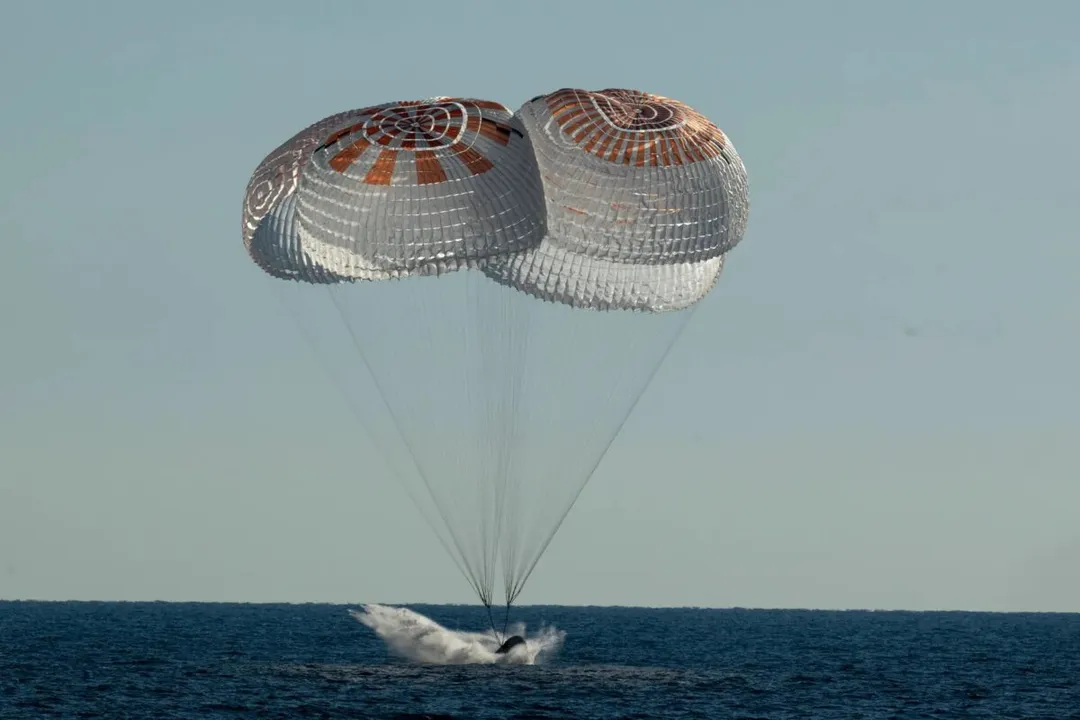
After navigating the intense heat and deceleration of reentry, the vehicle needs to slow down further to ensure a safe landing. This is where parachutes become vital. [4][7] The sequence typically involves deploying a series of increasingly larger parachutes. A drogue chute may be deployed first to slow the capsule from supersonic speeds, followed by the main parachutes to bring the descent rate down to a manageable speed just before landing. [3][4] This sequence is highly automated, though trained astronauts can manage manual deployment if necessary. [8]
# Landing Methods
The final moments of the return determine the recovery operation required. Not all returning vehicles end their flight the same way; this varies based on the design philosophy of the spacecraft. [3]
# Ocean Splashdown
Some vehicles, such as the American Crew Dragon capsule, are designed for a splashdown in the ocean. [3][5] This method provides a relatively soft final deceleration, as the water acts as a large cushion. [4] However, this necessitates immediate, pre-staged recovery forces. Large naval vessels and specialized teams must be prepositioned in the designated recovery zone to secure the capsule, extract the crew safely, and ensure no water ingress occurs before the hatches are opened. [3][5]
# Ground Impact
Other systems, like the Russian Soyuz spacecraft, traditionally target a landing on solid ground, usually in the steppes of Kazakhstan. [3] While the parachute system slows the craft significantly, these landings can still involve high impact forces, often described as feeling like a hard bump or even a crash landing, necessitating specialized seating and training for the crew to brace for impact. [3] Post-landing, specialized recovery teams quickly reach the capsule, often using helicopters, to extract the crew, who may require immediate medical assessment due to the high G-forces experienced during the final seconds. [3][9]
# Contingency Returns
While every return is meticulously planned, the possibility of an emergency return, especially from the ISS, always looms in mission planning. [2] Theoretically, if a crew needed to abandon the station prematurely, they would rely on their pre-docked Soyuz or Crew Dragon vehicle to initiate deorbit and reenter. [2] The greatest hurdle in a true "no ground support" scenario—one where communication or guidance systems were completely lost—is the precision required for the deorbit burn and the execution of the atmospheric entry sequence. [8] Without mission control guiding trajectory corrections or providing real-time atmospheric data, the crew would have to rely entirely on onboard computers and their highly specific training to hit a recovery zone large enough to be survivable, a task made harder by the inability to precisely calculate the effects of atmospheric density on the fly. [2][8]
The capability to return safely is a testament to decades of aerospace engineering, turning a massive kinetic energy problem into a controlled, survivable event that allows our explorers to come home after weeks or months away from our world. [4][5]
#Videos
Astronauts Return To Earth From the ISS. Undocking and Landing
Related Questions
#Citations
Astronauts Return To Earth From the ISS. Undocking and Landing
Could an astronaut go back to earth without spacecraft ? : r/askscience
Here's how astronauts splash back to Earth | Astronomy.com
How Astronauts Return to Earth | National Air and Space Museum
2 NASA astronauts return to Earth after an unexpectedly long ... - NPR
Why can't you come back to Earth after you enter space? - Quora
ESA - How do astronauts return to Earth? - European Space Agency
Would it be possible to get back to Earth from the ISS without any ...
NASA Astronaut Jonny Kim, Crewmates Return from Space Station