How do people get back to Earth from space?
The trip back from orbit is not a gentle float down; it is a violent, high-speed plunge requiring precise navigation to survive the journey through Earth’s atmosphere. Astronauts traveling at orbital velocity—roughly 17,500 miles per hour (about 28,000 kilometers per hour) for Low Earth Orbit missions—must shed nearly all that speed before they ever touch down. [5][7] If they miss the correct entry corridor, they either burn up from excessive friction or skip off the atmosphere like a stone on water, doomed to orbit again or drift into deep space. [7] This return process is broken down into several distinct, incredibly demanding phases, each relying on engineering that manages the extreme physics of atmospheric reentry. [7]
# Orbital Mechanics

The first crucial step for a crew returning to Earth is setting the correct course. Unlike a direct dive, a controlled descent must be initiated precisely while the spacecraft is still in orbit. [1] This is accomplished by executing a deorbit burn. [1][5] This maneuver involves firing the rocket engines backward (retrograde) to slow the spacecraft down relative to its orbital path. [7][5] This slight reduction in velocity—often just a small fraction of the total orbital speed—is enough to drop the spacecraft’s trajectory out of its stable orbit and onto a path that intersects the planet’s upper atmosphere. [5] The timing and duration of this burn are calculated with extreme accuracy because they determine where the vehicle will land, dictating whether the recovery teams will be waiting in the steppes of Kazakhstan or in the Atlantic Ocean. [1]
# Entry Velocity
Once the deorbit burn is complete, the spacecraft begins falling toward the planet, accelerating due to gravity, though its initial entry speed is dominated by its orbital momentum. [7] As the vehicle slams into the fringes of the atmosphere, the real challenge begins: managing the immense thermal energy generated by compressing the air in front of it. [7] At speeds over Mach 25, the air molecules ahead of the spacecraft are compressed so rapidly that they turn into a superheated plasma sheath surrounding the craft. [7] This is not friction alone, but aerodynamic heating—the energy transfer from slowing down that rapidly. [7]
To survive this environment, spacecraft are equipped with specialized heat shields made of ablative material or reusable ceramic tiles. [7] Ablative shields, common on capsules like the Russian Soyuz or SpaceX’s Crew Dragon, are designed to slowly burn away, carrying the intense heat safely away from the crew compartment as the material vaporizes. [7] This process is highly visible from the ground as a spectacular, fiery display. [7] The spacecraft must maintain a precise angle of attack during this phase; if the angle is too shallow, the heat load becomes too great and destroys the vehicle; if the angle is too steep, the G-forces on the crew become dangerously high, or the vehicle could skip out of the atmosphere. [7][4]

# G-Forces Experienced
The forces exerted on the returning astronauts during reentry are significant, pushing them firmly into their seats. [4] For capsules, where deceleration happens quickly over a relatively short distance, peak G-loads can reach several times the force of Earth's gravity, sometimes between 4 and 8 Gs. [4] While humans can survive forces in this range for short periods, it is an intensely taxing experience, requiring specialized training and physical conditioning. [4] The retired Space Shuttle, by contrast, used its winged design to trade speed for distance over a longer atmospheric path, resulting in a more gradual deceleration and generally lower peak G-loads compared to the ballistic reentries of capsules. [6] Considering the intensity, it is understandable why mission control must carefully coordinate the deorbit burn; a slight error in timing means the peak heating and G-loading phase might occur over an unexpected, unmonitored area, which is a significant risk factor that mission planners must always mitigate. [1]
# Parachute Deployment
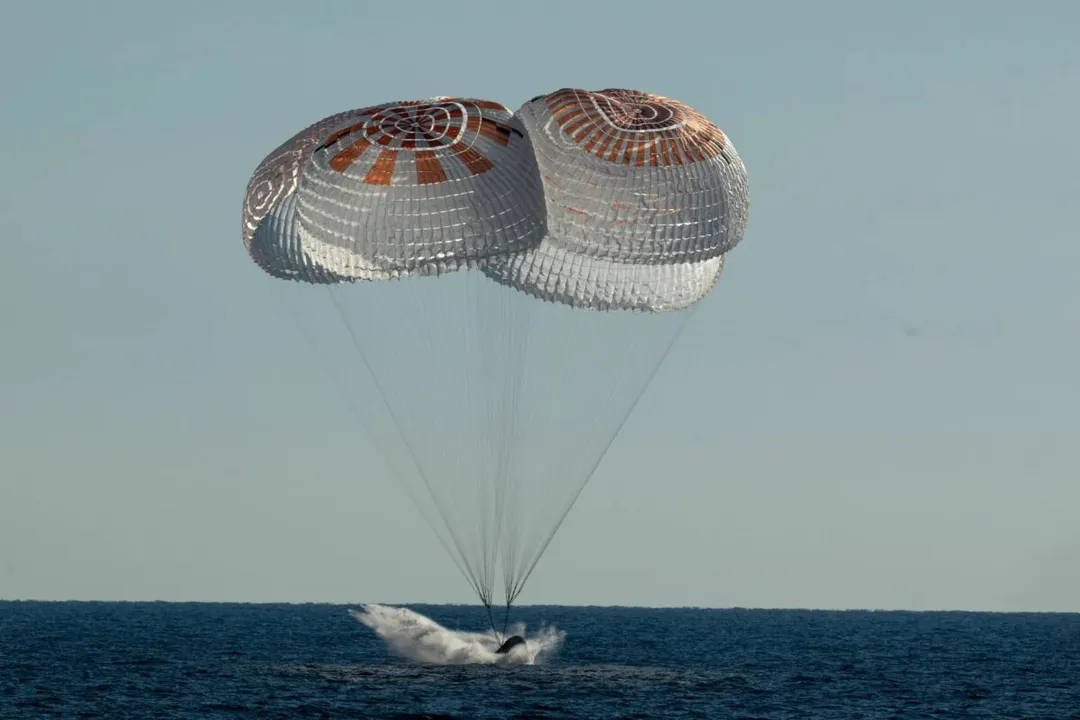
Once the spacecraft has successfully navigated the plasma phase and slowed down substantially—often reaching a speed well below Mach 1—the deployment of parachutes becomes the next automated, high-stakes step. [5] This system is typically multi-staged to handle the remaining speed safely. [5]
For capsule vehicles, the sequence often begins with smaller drogue parachutes to stabilize the craft and slow it further. [5] Following the drogue deployment, the much larger main parachutes are released to gently lower the vehicle for landing. [5] The deployment itself is critical; if the drogue chutes deploy too early or too late, the main chutes could face dangerously high opening forces or deploy into insufficient air density. [5] The descent under these large canopies slows the vehicle enough for a manageable final impact, whether that impact is a splashdown in water or a touchdown on land. [5]

# Landing Environments
The final destination defines the last steps of the recovery operation. Different vehicles are designed for different landing spots, which dictates the composition of the recovery teams. [1]
# Water Landings
Spacecraft like the Apollo capsules, the Russian Soyuz, and SpaceX’s Crew Dragon are designed to splash down in the ocean. [1] Crew Dragon, for example, targets recovery zones in the Atlantic or Gulf of Mexico. [1] Upon water impact, the capsule must remain upright, often relying on small inflatable bags or flotation devices deployed automatically. [1] Recovery crews, usually Navy or specialized maritime teams, then approach the capsule, secure it, and open the hatch to assist the crew members, who are often unsteady after enduring the high G-forces. [1] The recovery time is measured in minutes to ensure the crew is quickly moved to medical care and retrieved from the water environment. [1]
# Land Landings
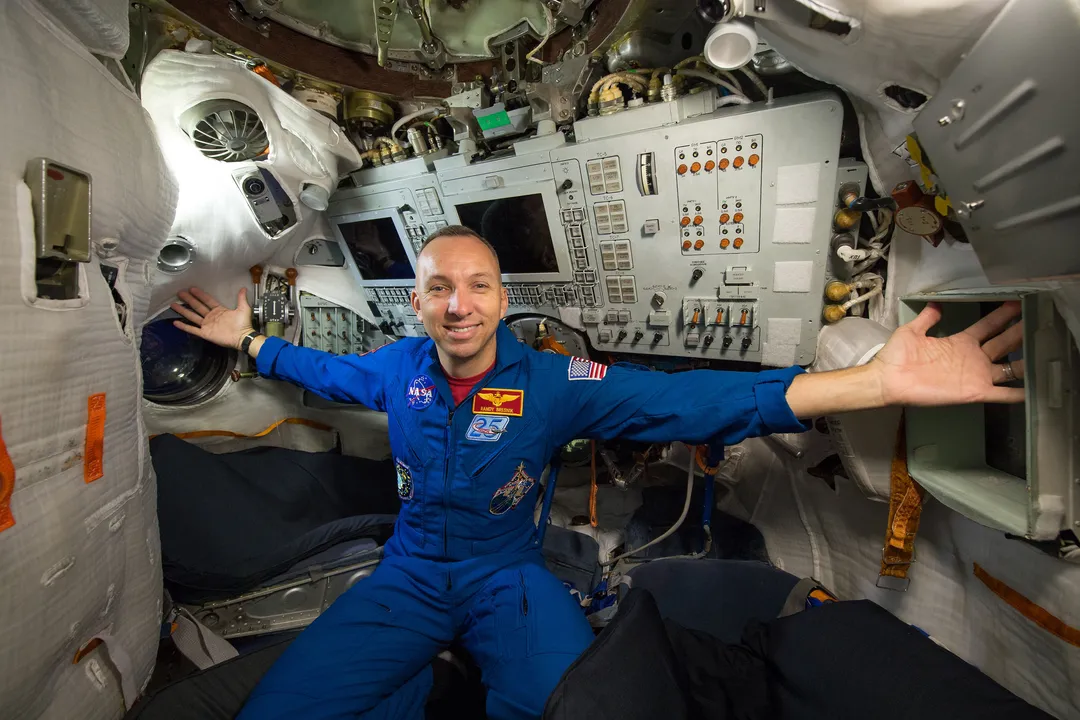
The Soyuz system, while often recovered in Kazakhstan, features a final landing system that is distinctly different from a simple splashdown. [1] After the main parachutes slow the descent significantly, a set of small rocket motors ignite just meters above the ground. [1] These retro-rockets fire to cushion the final impact, resulting in a firm but survivable thud on solid ground rather than a sudden stop in water. [1] This land-based approach means the recovery forces—often helicopters and specialized vehicles—are waiting on solid ground to extract the crew immediately. [1]
# Winged Returns
Historically, the US Space Shuttle program used a different methodology entirely. [6] The Shuttle, designed to glide back to Earth, approached landing sites like the Shuttle Landing Facility at Kennedy Space Center like a conventional high-performance glider. [6] It had no rockets for deceleration and relied solely on aerodynamic control surfaces and massive G-forces experienced much earlier to manage its descent profile, culminating in a landing on a runway. [6] This allowed for a rapid turnaround for inspection and preparation for the next flight, a key operational difference from the "disposable" heat shields of capsules. [6]
# Vehicle Differences
The method of return heavily depends on the vehicle itself, and the evolution from the venerable Soyuz to newer capsules like Crew Dragon shows clear lineage while incorporating modern safety features. [1][3] The Soyuz capsule, which has served for decades, is robust and proven, utilizing the land-landing system with its retro-rockets. [1] Crew Dragon, on the other hand, favors a splashdown, a design choice that influences its recovery logistics. [1] Comparing the two reveals an interesting engineering trade-off: landing on land offers immediate dry extraction but requires the complex, single-use retro-rocket system; landing in water requires specialized maritime recovery but avoids those final engine firings. [1]
If we map the key return characteristics, we see distinct philosophies guiding the engineering choices:
| Feature | Soyuz (Land Landing) | Crew Dragon (Splashdown) | Space Shuttle (Glider) |
|---|---|---|---|
| Final Deceleration | Retro-rockets just above ground | Splashdown in water | Runway landing (aerodynamic) |
| Heat Shield | Ablative | Ablative | Reusable Tiles/Blankets |
| Recovery Location | Kazakh Steppe | Atlantic or Gulf of Mexico | Runway (Florida or California) |
| G-Load Profile | Higher peak Gs (Ballistic) | High peak Gs (Ballistic) | Lower peak Gs (Gradual) |
| Recovery Time | Immediate ground extraction | Maritime recovery required | Standard airfield recovery |
When considering the shift from the retired Shuttle to modern capsules, one critical engineering insight emerges regarding crew safety versus operational cost. The Shuttle’s complex thermal protection system (TPS) was designed for reuse, aiming to lower flight costs over time, but the vehicle itself was expensive to maintain between flights. [6] Capsule designs, like Soyuz and Dragon, intentionally sacrifice reusability for simplicity in the reentry phase by using ablative shields, meaning the shield is destroyed after one use. [7] While this increases per-flight material cost, the overall system complexity is reduced, leading to faster, less resource-intensive turnarounds for the next flight opportunity, especially when considering the tight scheduling of ISS missions. [1]

# Human Factors
The astronaut’s physical state upon return is just as critical as the vehicle’s structural integrity. Coming back from microgravity, where bones lose density and muscles atrophy, means the body is unprepared for even 1 G. [4] The high G-loads during reentry are followed by a period of disorientation and potential nausea as the inner ear re-calibrates to Earth’s gravity. [4] Recovery teams are trained not only to quickly extract the crew but also to support them physically, often helping them walk or supporting them immediately after opening the hatch. [1] The stark contrast in sensation between the weightlessness of space, the crushing weight of reentry, and the sudden return to normal weight is a profound physical adjustment that ground crews must manage with practiced efficiency. [4] This rapid physical transition underscores why the few minutes after landing are arguably the most stressful for the crew members themselves, requiring specialized medical attention immediately upon opening the hatch. [1]
# Precision Recovery Operations
The coordination required for a safe landing highlights a massive logistical effort. For a capsule landing, whether on water or land, the success hinges on the search and rescue (SAR) teams being in the exact right location at the exact right time. [1] Weather conditions, communication checks, and the precise trajectory derived from the deorbit burn must all align. [1] In the case of a water landing, weather impacts the ability of recovery ships to approach safely, while ground landings require ground crews to navigate potentially remote terrain quickly. [1] This entire sequence—from the retro-rockets firing to the hatch opening—is a highly choreographed event spanning dozens of specialized teams spread across hundreds of square miles, all relying on real-time telemetry from a small vehicle descending at terminal velocity. [1] The mastery of bringing humans back safely from orbit demonstrates not just physical science mastery, but an incredible feat of integrated, real-world logistics planning.
#Videos
Astronauts Return To Earth From the ISS. Undocking and Landing
How do astronauts return to Earth? [with Closed Captions] - YouTube
How Space X Crew 10 Transfer & Return to Earth Works? - YouTube
Related Questions
#Citations
Here's how astronauts splash back to Earth | Astronomy.com
Astronauts Return To Earth From the ISS. Undocking and Landing
ESA - How do astronauts return to Earth? - European Space Agency
How do space shuttles and astronauts return from space to Earth?
How do astronauts get home? - BBC Bitesize
How Astronauts Return to Earth | National Air and Space Museum
How Do Spacecraft Re-enter the Earth's Atmosphere?
How do astronauts return from space? - #ESA - TikTok