What is the line from Earth to space?
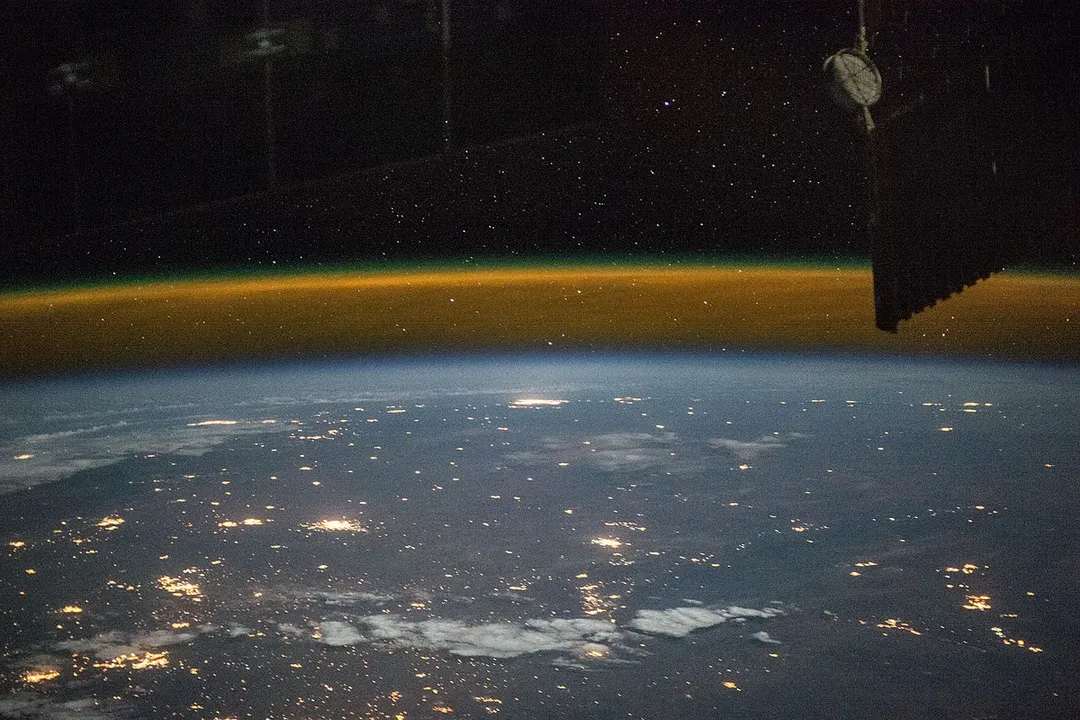
Defining the exact moment one leaves the familiar embrace of Earth and truly enters outer space is surprisingly complicated. It is not like crossing a painted line on a road; there is no sudden, dramatic shift in scenery or physics. Instead, it is a transition, a gradual thinning of the air that eventually leads to an internationally recognized benchmark: the Kármán line. [1][3][7] This conceptual boundary, often cited as the edge of space, hovers at an altitude of 100 kilometers (about 62 miles) above mean sea level. [1][2][3][7][9]
# Defining Altitude
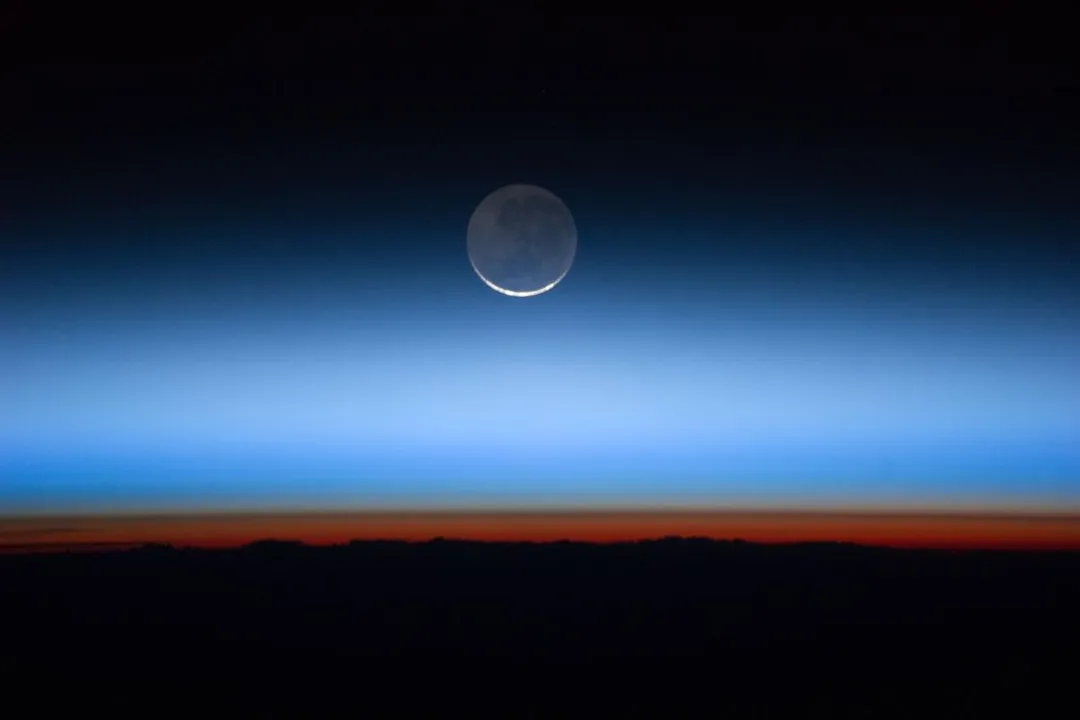
The establishment of this specific altitude is rooted in international consensus rather than a perfect physical marker. The Fédération Aéronautique Internationale (FAI), the global governing body for aeronautical and astronautical records, formally adopted the 100 km mark as the universal standard for defining the start of space in the 1960s. [1][3][7] This decision provided a necessary, albeit somewhat arbitrary, point of reference for classifying achievements in flight and space travel worldwide. [3]
The concept behind the Kármán line is deeply tied to the physics of flight. An aircraft, like the one you might fly on a commercial route, relies on pushing air over its wings to generate aerodynamic lift. As altitude increases, the air density drops precipitously. At a certain point, the atmosphere becomes so tenuous that an aircraft must travel at an unsustainable speed—often approaching orbital velocity—just to keep its wings generating enough lift to stay airborne. [2][3][6][7] Once a vehicle passes this point, it must rely on ballistic trajectories and orbital mechanics rather than atmospheric interaction for support. [2][7] The 100 km mark is the altitude where the air effectively becomes too thin to allow for sustained, unpowered flight using conventional wings. [6]
To put the thinness of the atmosphere at this boundary into perspective, consider that at sea level, the air density is considered 100%. By the time a vehicle reaches 32 kilometers up, only about 1% of the atmosphere remains. Crossing the 100-kilometer Kármán line means the density has dropped to an infinitesimally small fraction of what we experience on the ground, rendering traditional atmospheric flight impossible. [2][3][7] For instance, if the air pressure at sea level is roughly $101.3$ kilopascals, at $100$ km, the pressure is several orders of magnitude lower, so low that the mean free path of air molecules—the average distance a molecule travels before colliding with another—becomes significant enough that aerodynamic modeling breaks down in the traditional sense. [2] This transition from a continuous fluid medium to a regime dominated by individual molecular flight is what truly separates the "air" from the "vacuum" of space, making the Kármán line a practical engineering threshold as much as a legal one. [7]
# Divergent Definitions
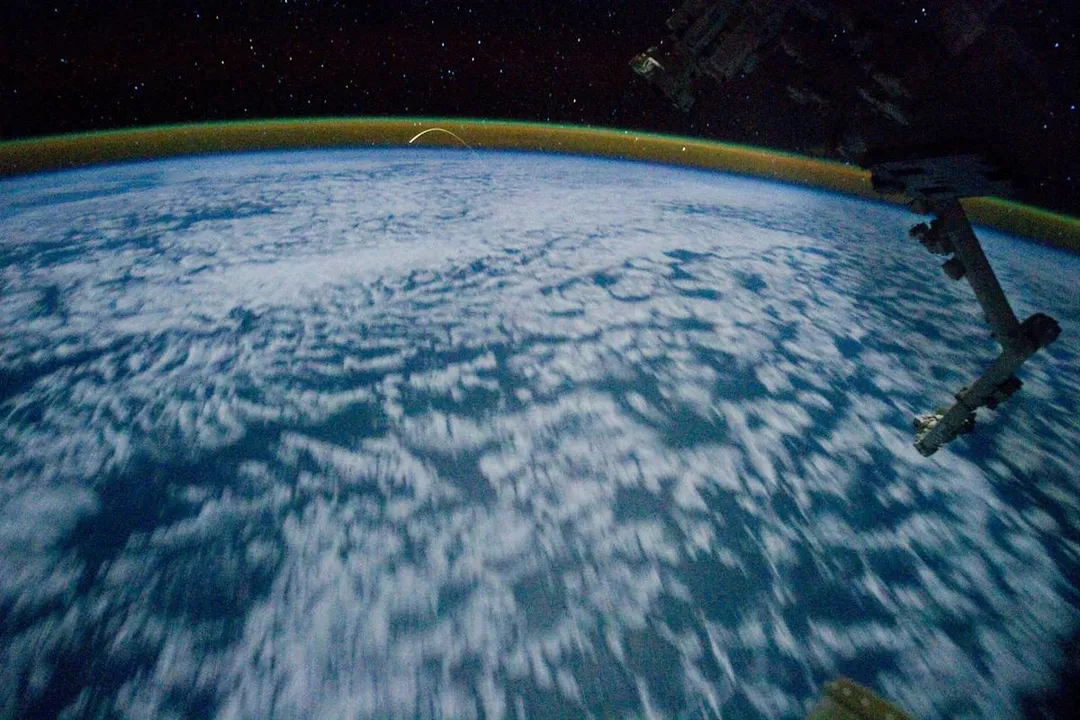
While the FAI's 100 km standard is internationally recognized, it is not the only definition used, especially within the United States. [3][9] For many years, the US Air Force and NASA have used a slightly lower altitude as their official cutoff for awarding astronaut wings: 50 miles, which translates to approximately 80.5 kilometers. [2][3][6][7][9]
This discrepancy is fascinating because it highlights the non-universal nature of defining where one realm ends and another begins. If you cross the 80 km mark, US agencies might consider you an astronaut, but a record book compiled under FAI rules might not grant you that status until you pass the 100 km mark. [3][6] This difference of about 20 kilometers, or 12 miles, is a significant vertical distance when discussing atmospheric layering. [7]
The existence of two primary benchmarks creates a practical ambiguity, particularly in the burgeoning field of commercial spaceflight. Companies offering suborbital "space tourism" often target altitudes near or just above the 80 km threshold to qualify their passengers for astronaut wings under the US standard, even if they fall short of the 100 km international line. [6] This split definition forces vehicle designers and mission planners to be aware of which legal or scientific framework they are operating within when claiming an altitude record or certifying a traveler. [9]
# The Reality of Gradual Change
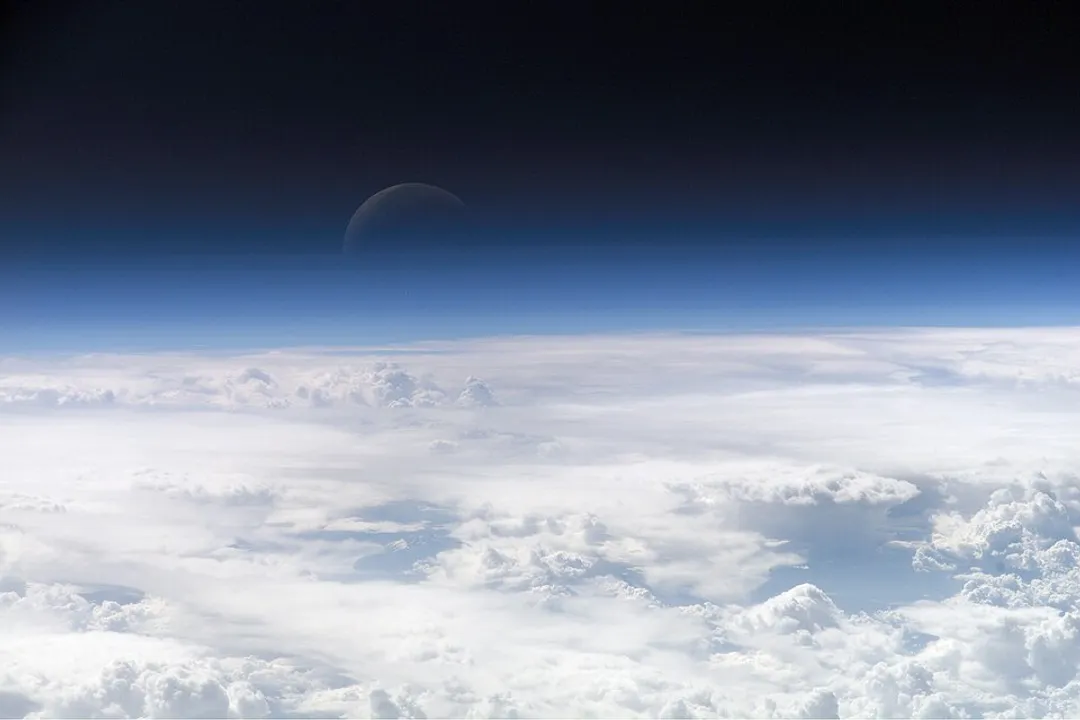
The most critical point to grasp about the Kármán line is that it represents a legal and physical convention, not a sharp physical border where the atmosphere abruptly ends. [3][7] The Earth's atmosphere does not possess a clear wall; it gradually diffuses into the near-vacuum of space over hundreds of kilometers. [2][7] There is no single, universally agreed-upon physical parameter that sharply defines "space". [3]
Some scientific arguments suggest that the 100 km line might be too high, or at least insufficient for modern purposes. One line of thinking posits that the true boundary, based on where the aerodynamic lift requirements transition to purely ballistic necessity, might actually be lower than the FAI standard. [6] The argument is that as aerospace technology advances, vehicles are becoming capable of generating sufficient lift at lower atmospheric densities than was assumed when the 100 km standard was set decades ago. [6] If spacecraft or advanced high-altitude aircraft can effectively function higher up than previously thought, then the point at which the atmosphere stops enabling conventional flight could be shifting. This creates a dynamic situation where a fixed international standard might eventually need reevaluation based on evolving aerospace capability. [6]
Another boundary sometimes discussed in atmospheric science relates to the thermosphere, the layer above the mesosphere, where the air is so thin that molecules rarely collide. This region is sometimes conceptually divided into the exosphere (the outermost layer blending into space) and the thermosphere proper. However, these layers are defined by temperature profiles or molecular behavior, not by the ability of a winged craft to achieve flight. [2]
# Practical Implications and Future Standards
The differing altitude definitions have tangible consequences, especially when considering the ongoing privatization of access to near-Earth environments. For a commercial operator launching passengers, gaining that coveted "astronaut" status often involves meeting the standards of the jurisdiction under which they are flying. If a rocket reaches $90$ km, it is well past the point where any traditional airplane could operate, yet it falls short of the international 100 km mark. [2][7]
This situation prompts an interesting comparison: the distinction between a true orbital astronaut and a suborbital space traveler. An orbital mission, such as those by the International Space Station (ISS), operates at altitudes typically ranging from $330$ to $435$ kilometers—far above any proposed boundary for space. [1] These individuals are indisputably in space, performing maneuvers entirely governed by orbital mechanics. Suborbital flights, conversely, briefly touch the edge, achieving high velocity and weightlessness for a few minutes before falling back through the atmosphere. They cross the threshold of thin air but do not achieve the sustained velocity required to stay up there without falling. [2][6]
The long-term outlook suggests that as more entities cross these defined lines, pressure may mount to either officially adopt a single, definitive, and perhaps scientifically modern standard, or to create tiered certifications—perhaps one for "atmospheric space flyers" (crossing $80$ km) and another for "orbital space explorers" (crossing $100$ km and achieving sustained orbit). [3][7] The fact that the Kármán line was established by a sports and records-keeping body (the FAI) rather than a purely scientific organization means its definition carries historical weight but may lack current scientific consensus on the precise physical cutoff point. [1][3] Ultimately, while the sky may look the same at $99$ km as it does at $101$ km, the legal and historical status of the traveler changes drastically upon crossing that internationally agreed-upon line of $100$ kilometers. [1]
#Videos
Where does outer space begin? - YouTube
Related Questions
#Citations
Kármán line - Wikipedia
The Kármán Line: Where space begins - Astronomy Magazine
Karman line | Definition & Facts - Britannica
Where does outer space begin? - YouTube
TIL Karman line is the border that separates the Earth's atmosphere ...
Outer space may have just gotten a bit closer | Science | AAAS
Where begins space? I know that the Karman line lies at an altitude ...
Where does space begin? | BBC Sky at Night Magazine
The Edge of Space Just Crept 12 Miles Closer to Earth | Live Science