What is the barrier between Earth and space called?
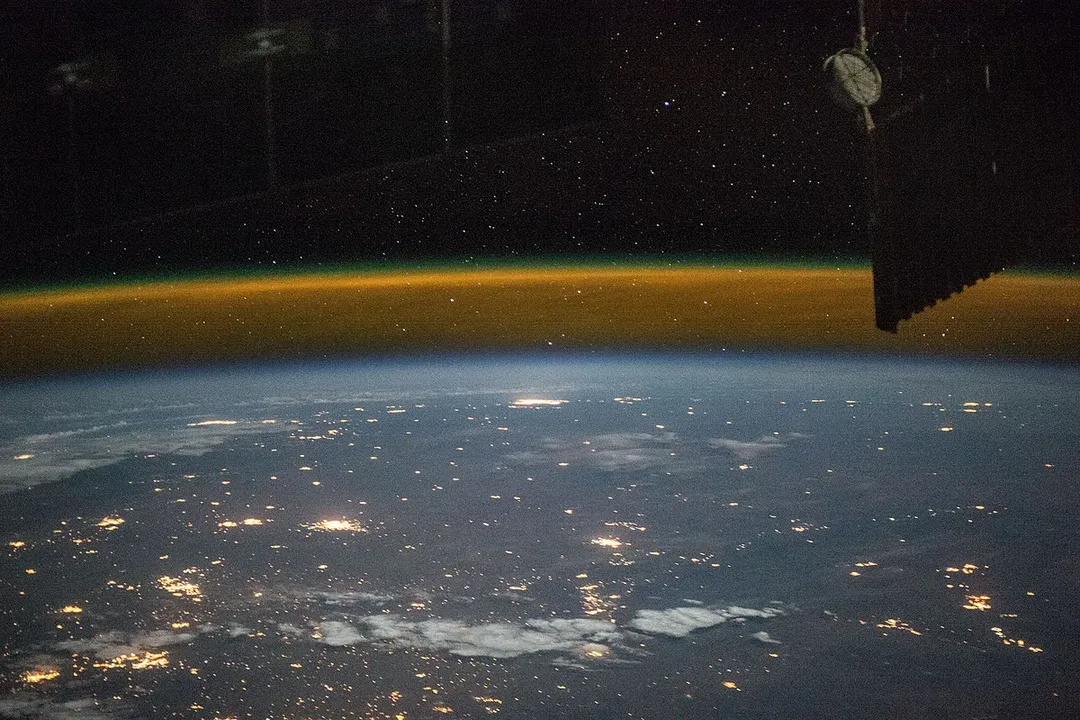
The boundary separating our terrestrial atmosphere from the vastness of space is not marked by a sudden wall or a dramatic color shift visible from the ground. Instead, it is an invisible, conceptual line defined by physics and agreed upon by convention, a demarcation point critical for recognizing human achievement in aerospace flight. While the air gradually thins the higher one travels, there exists a globally recognized altitude that signifies the transition from aerodynamic flight, where an aircraft needs wings and air to stay aloft, to purely ballistic or orbital flight, where the vehicle must rely on sheer velocity to achieve a curve of flight that matches the Earth’s curvature.
# The Name
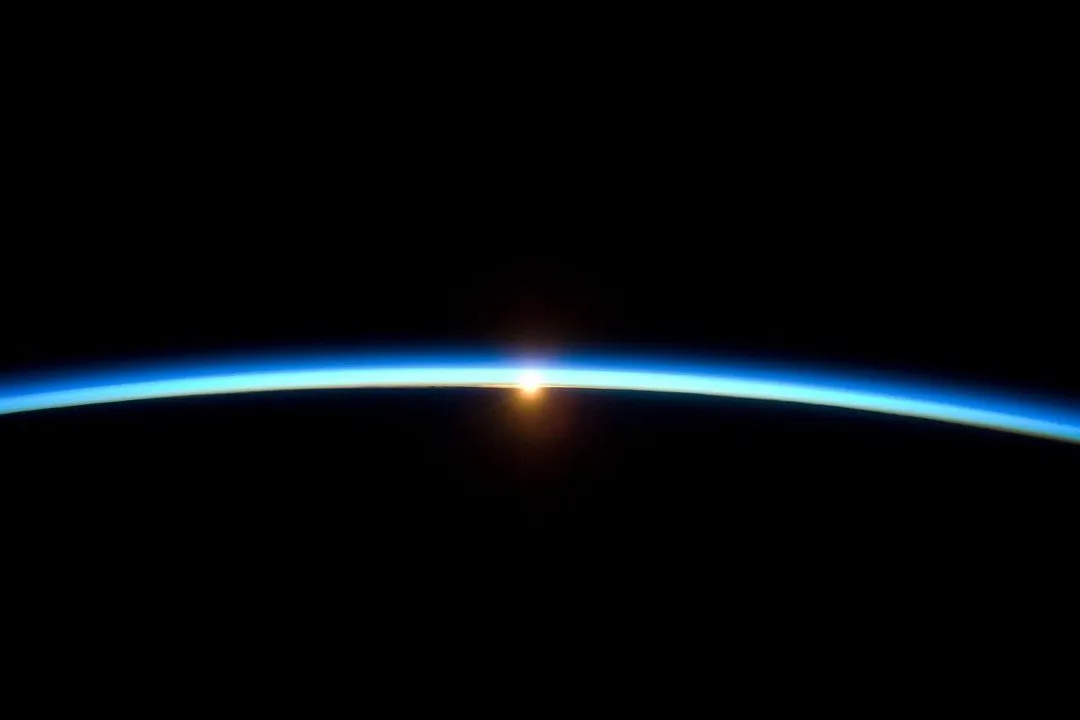
This internationally accepted frontier is known as the Kármán line. It is named in honor of Theodore von Kármán, a Hungarian-American aerospace engineer and physicist. Kármán was instrumental in establishing the scientific principles underpinning aviation and rocketry, making his recognition in defining this boundary appropriate. He proposed this specific altitude based on the technical requirements for sustained flight, distinguishing true spaceflight from atmospheric travel. The line itself is a purely theoretical construct; it is not a physical structure or a point where the atmosphere abruptly ceases.
# Defining Altitude

The official altitude assigned to the Kármán line stands at 100 kilometers above mean sea level. This figure is the standard adopted by international bodies like the Fédération Aéronautique Internationale (FAI), the global governing body for aeronautics and astronautics. For anyone looking to claim the title of an astronaut by an international standard, crossing this 100 km mark is the benchmark.
While 100 km is the most commonly cited figure, it is important to note that not every organization agrees on this precise number. For instance, the United States military and NASA traditionally recognize a slightly lower altitude as the boundary for awarding astronaut wings, setting it at 50 miles, which converts to approximately 80.5 kilometers. This difference, a gap of nearly 20 kilometers, illustrates that the "start of space" is a definition, not a physical constant, though the Kármán line remains the globally de jure standard for the aerospace community at large.
# Aerodynamic Foundation
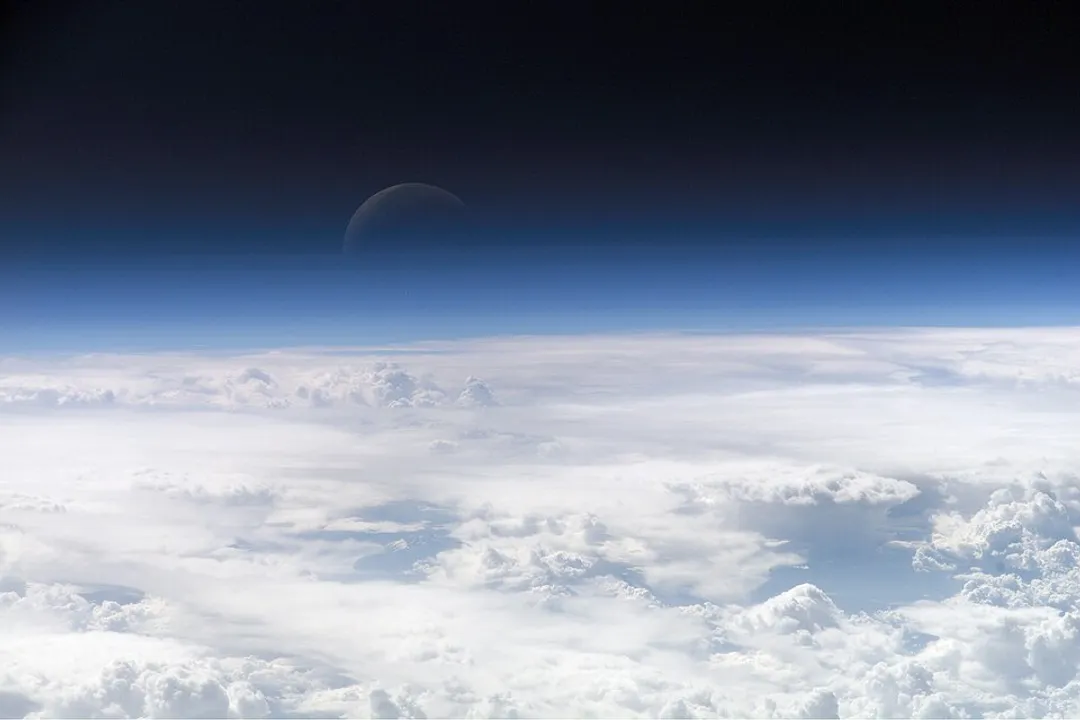
The selection of 100 kilometers is not arbitrary; it is rooted in the physics of flight, specifically the relationship between altitude, speed, and the need for aerodynamic lift. For an aircraft or spacecraft to maintain level flight, it must generate enough lift to counteract gravity. This lift is produced by the wings interacting with the surrounding air molecules. As altitude increases, the air density drops exponentially, meaning that lift generation becomes progressively more difficult.
The Kármán line represents the altitude where a vehicle must achieve orbital speed—roughly Mach 23 or about 7.8 km/s—to generate sufficient aerodynamic lift to keep flying, assuming it is still trying to fly like an airplane. At altitudes below this line, a vehicle can remain airborne by flying slower, relying on its wings. Above this altitude, the air is too thin to provide meaningful aerodynamic support, forcing any vehicle to maintain a high enough velocity so that its trajectory curves around the Earth rather than falling back down; this is the realm of spaceflight.
Consider this: if you launch a rocket straight up and it stops traveling at 100 km, it will fall back to Earth. If you launch it past 100 km but don't give it enough horizontal velocity, it will still fall back. The Kármán line is the minimum altitude where reaching orbital speed—the speed required to keep "falling" around the planet—becomes the only viable method for sustained presence, rendering the lifting function of wings essentially obsolete. This transition point is a fascinating intersection between classical aeronautics and orbital mechanics.
# Layers Delineating
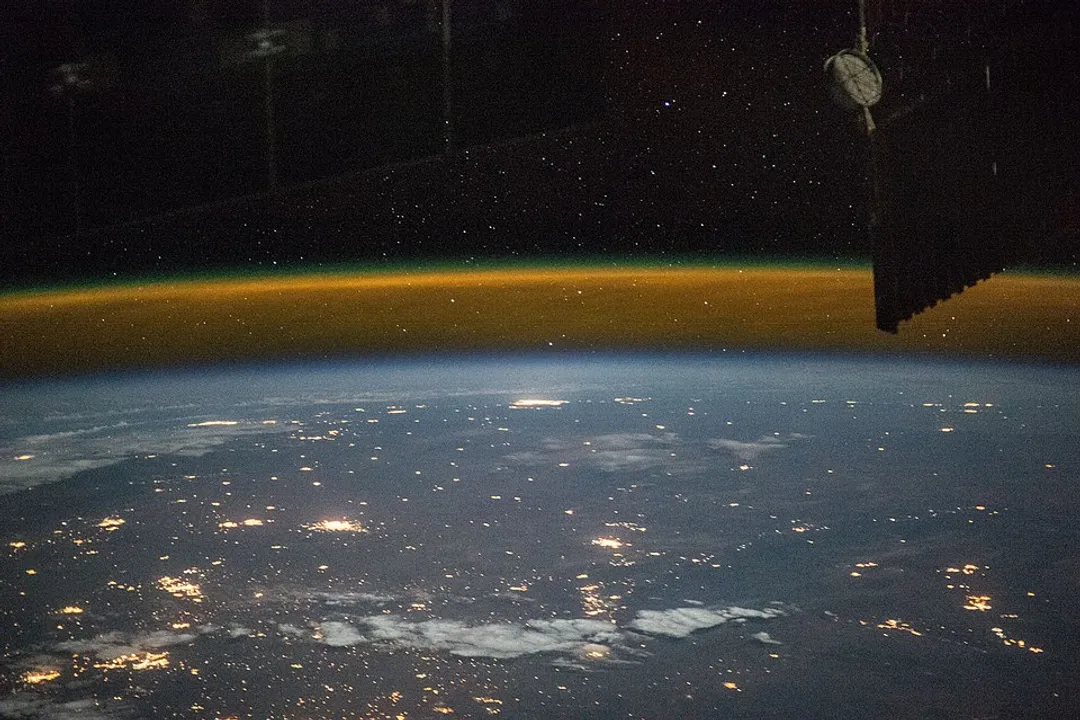
To better understand the Kármán line's position, it helps to situate it within the structure of the Earth's atmosphere, which is not uniform but is divided into distinct layers based on temperature profiles.
The boundary sits near the very top of the mesosphere or the very bottom of the thermosphere. The layers, moving upward from the surface, are the troposphere, stratosphere, mesosphere, and then the thermosphere, followed by the exosphere which fades into interplanetary space.
Here is a brief look at the regions surrounding the boundary:
| Layer | Approximate Altitude Range (km) | Key Characteristic |
|---|---|---|
| Stratosphere | 12 to 50 | Contains the ozone layer |
| Mesosphere | 50 to 85 | Meteors typically burn up here |
| Kármán Line | 100 | Boundary between atmosphere and space (FAI standard) |
| Thermosphere | 100 to 600 | Location of the ionosphere and auroras |
The Kármán line sits above the mesosphere, right where the thermosphere begins. While the mesosphere is often considered the last layer where air is dense enough for objects like meteors to heat up and disintegrate noticeably, the thermosphere is so thin that orbital mechanics begin to dominate atmospheric drag as the primary factor in an object's flight path. It is important to recognize that the air pressure at 100 km is incredibly low—about one billionth of the pressure at sea level—which is why sustained aerodynamic flight becomes impractical.

# Recognition and Contention
Although the FAI has adopted the 100 km line, the concept of a single, agreed-upon boundary for "space" is still subject to international interpretation, highlighting the difference between engineering necessity and political recognition. The fact that the US military and NASA utilize the 80.5 km (50 mile) mark, and that this definition has been used to award astronaut wings to pilots of the X-15 rocket plane, shows a practical divergence in how different entities define the achievement.
This discrepancy means that a person flying to 90 km might be considered an astronaut by US standards but not by FAI standards, though both flights have technically crossed into a region where atmospheric drag is negligible compared to the velocity required for orbit. This situation offers an interesting comparative point: the US standard appears to prioritize achieving speeds high enough to begin testing high-altitude, suborbital reentry profiles, whereas the FAI standard aligns more closely with the more stringent requirement for sustained flight near orbital conditions. For the burgeoning commercial spaceflight sector, this definition matters immensely for prestige and regulatory purposes, as crossing the line often triggers specific regulatory requirements.
If one were to visualize the experience of crossing, the difference between 80 km and 100 km might seem negligible to the passenger who is already experiencing weightlessness and the blackness of the sky. However, the physics governing the remaining drag and the required energy input to maintain that altitude shifts significantly across that 20-kilometer band.
# Commercial Threshold
In the modern era, the Kármán line has gained new relevance with the rise of suborbital commercial space tourism. Companies aiming to take paying customers to the edge of space are deliberately designing their vehicles to breach the 100 km threshold. The ability to state definitively that a passenger has crossed into space provides a significant marketing advantage and fulfills a long-held human ambition.
This commercial interest is driving an unofficial re-emphasis on the Kármán line as the standard, moving it from a purely scientific/aeronautical benchmark to a key marketing milestone. When analyzing the flight profiles of these commercial ventures, the Kármán line serves as the ultimate altitude goal, even if the actual orbital insertion altitude is much higher (the International Space Station orbits at around 400 km). Suborbital flights, which briefly cross the line before immediately returning, are an excellent demonstration of the boundary's function: they achieve the "space" altitude but lack the sustained horizontal velocity needed for orbit.
For anyone tracking the progress of private space endeavors, monitoring which vehicles consistently cross the 100 km mark, and comparing that to the 50-mile mark used by the FAA for US commercial pilot licensing, provides a clear gauge of technological capability and regulatory alignment.

# Perception vs. Reality
One final element to consider is how the Kármán line relates to human perception. While it is a critical technical boundary, what a human experiences as "space" might be less defined. Astronauts aboard the Space Shuttle or the ISS, orbiting far above 100 km, are clearly in space, where the effects of gravity are negligible and the Earth is a distinct blue marble against blackness. However, even below the Kármán line, at altitudes where military pilots have flown, the sky darkens considerably, and the effects of thin air become profoundly evident.
This suggests that the Kármán line is perhaps best understood as the threshold of orbital mechanics dominance, rather than the point where the atmosphere ends or where one immediately experiences a profound change in sensory input. The transition is gradual in terms of air density, but sharp in terms of the physics required to stay up there. It serves as a practical, calculable point where the intent of the vehicle shifts decisively from flying through the air to flying around the planet, an essential distinction for engineers and policymakers alike.
#Videos
Where does outer space begin? - YouTube
Related Questions
#Citations
Kármán line - Wikipedia
The Kármán Line: Where space begins - Astronomy Magazine
Karman line | Definition & Facts - Britannica
Where does outer space begin? - YouTube
The Kármán Line: Where does space begin?
Where does space begin? Have you heard of the Kármán line ...
Kármán line | Research Starters - EBSCO
The edge of space: Revisiting the Karman Line - ScienceDirect
Where does space begin? The Kármán line and layers of Earth's ...