What is the Chinese space capsule called?
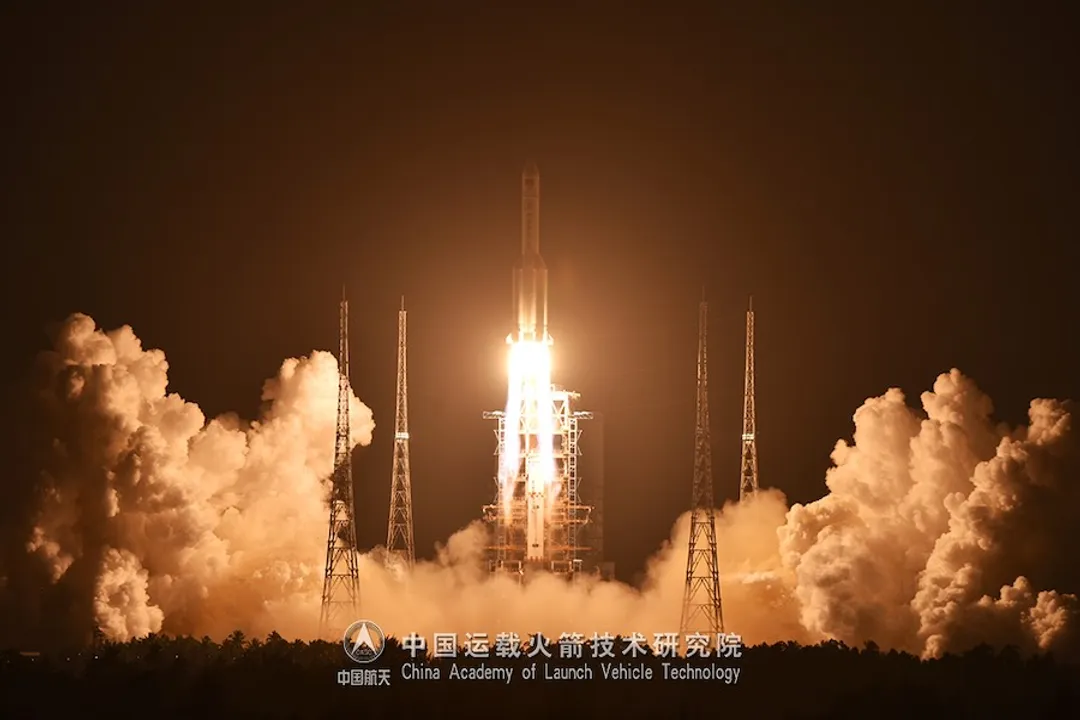
When discussing China's presence in low Earth orbit, many people picture the large, multi-module structure orbiting above; this is the Tiangong space station. [1][2][7] However, the question of what the space capsule is called requires looking at the vehicles designed to ferry the astronauts to and from that station. [5] The answer involves both a well-established vehicle name and newer, next-generation designs intended for future missions. [8]
# Station Basics
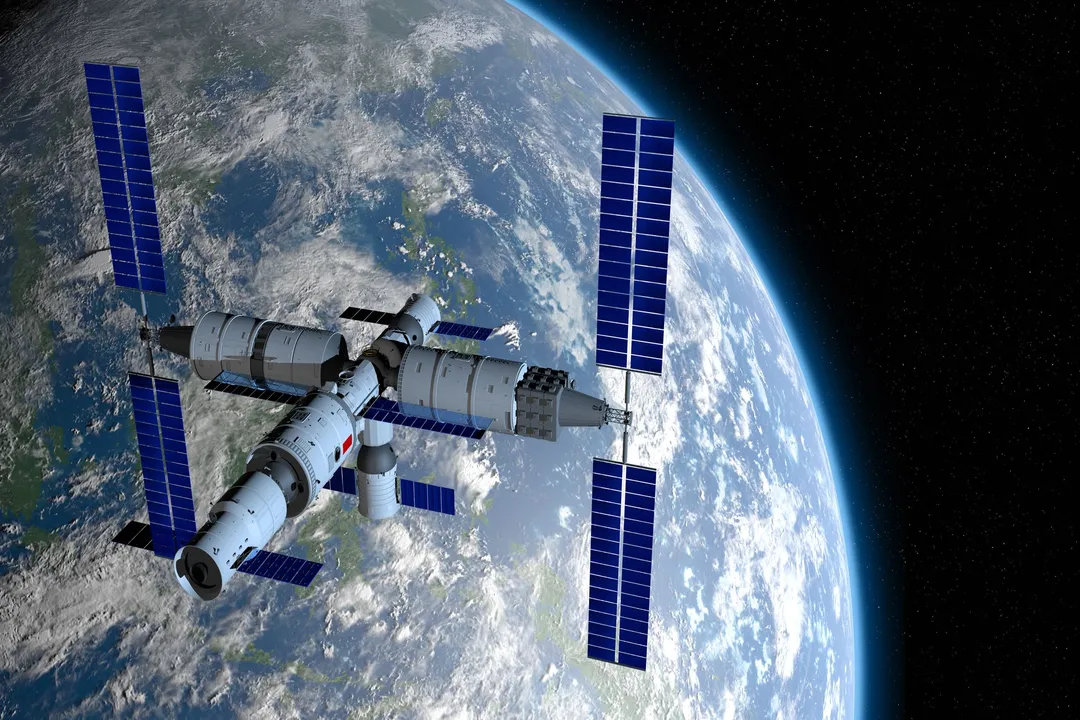
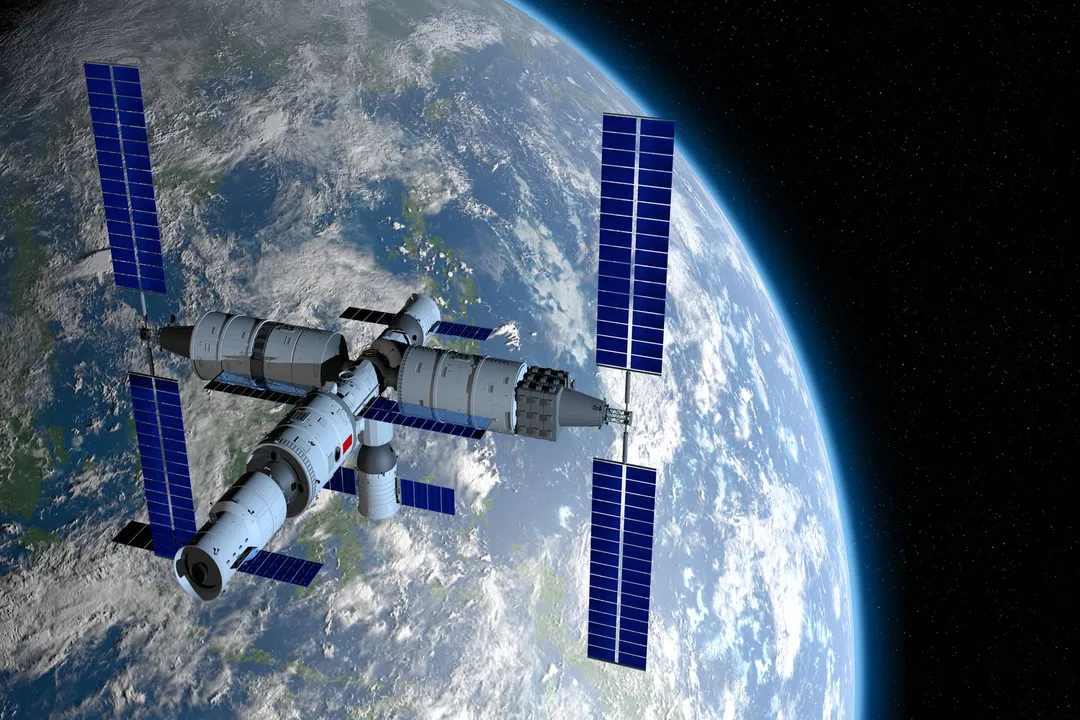
The physical destination for Chinese taikonauts is the Tiangong space station, which translates roughly to "Heavenly Palace". [2] This structure represents China’s ambition to maintain a permanent, long-duration human presence in space. [2][7] Unlike earlier, smaller experimental platforms such as Tiangong-1, launched around 2011, or Tiangong-2, the current Tiangong is a modular, full-scale station designed for continuous occupation. [3][1]
The station is built around the Tianhe core module, which serves as the primary living and control center. [1] Additional laboratory modules, like Wentian and Mengtian, are subsequently docked to expand research and operational capacity. [1] The goal is to have a structure capable of hosting crews for extended periods, necessitating regular resupply and crew rotation missions. [9]
# Capsule Designations
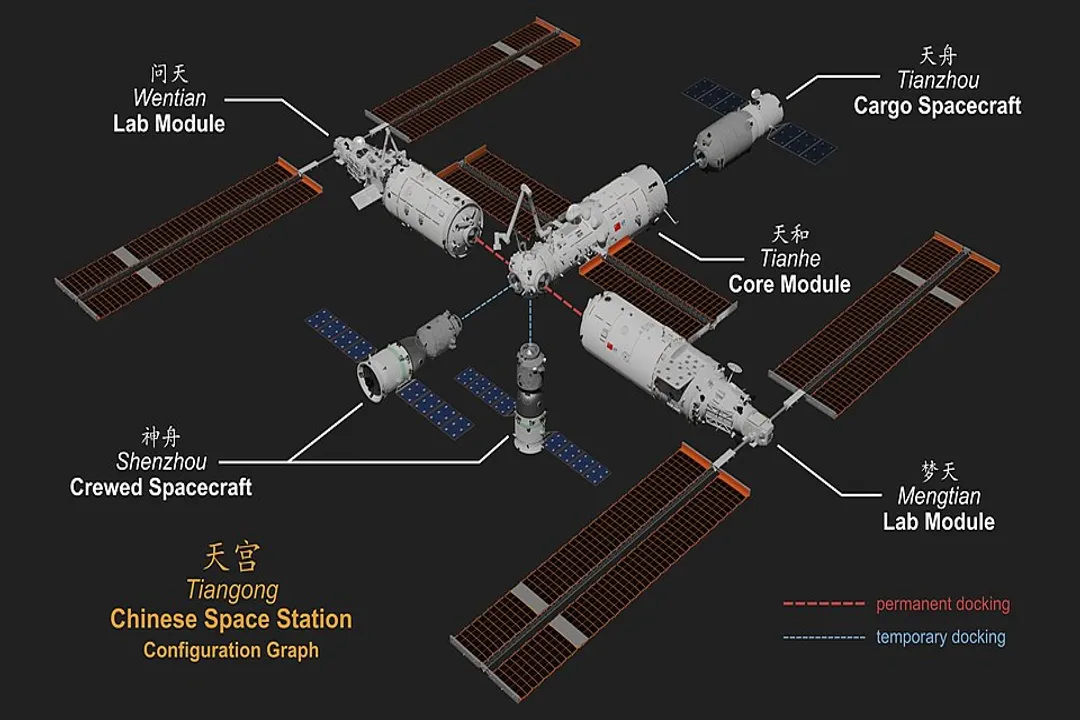
The most frequently referenced crew vehicle in China’s space program, which has been the workhorse for ferrying crews to Tiangong and its predecessors, is the Shenzhou spacecraft. [5] Shenzhou has been the standard for China’s crewed missions for years. [1]
However, as the space station grew more complex and long-term residency became the norm, the need for newer, perhaps larger or more capable, crew transport vehicles arose. [8] This next phase of crew transport is embodied by the Mengzhou spacecraft. [5] Mengzhou is designed as the successor or complement to the Shenzhou line, specifically built to support the Tiangong station's expanded operational requirements. [5] This distinction is important: Tiangong is the home, while Shenzhou and Mengzhou are the taxis. [2][5]
The fact that there are two distinct names—Shenzhou (the established vehicle) and Mengzhou (the new vehicle)—highlights a common pattern in the development of national space programs where new hardware is often named distinctly even if its function is similar to its predecessor. [5][8] For general purposes, one might refer to the transport vehicle broadly as the Chinese crew capsule, but the specific name depends on the generation of hardware being discussed.

# Vehicle Progression
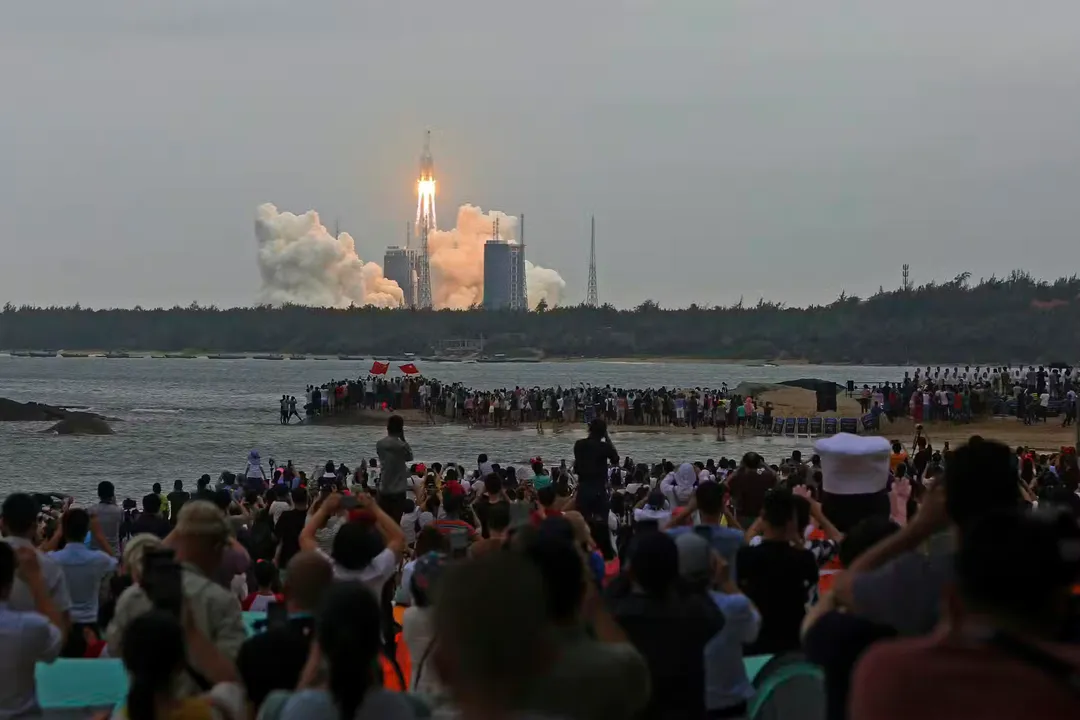
The introduction of new hardware isn't immediate; it follows rigorous testing protocols, often involving uncrewed precursors. [8] Prototypes for these next-generation Chinese crew capsules, potentially including the Mengzhou design, were observed arriving at launch sites around early 2020. [8]
The actual flight test of the next-generation design came later. The Mengzhou spacecraft successfully conducted its first uncrewed test flight in May 2022. [5] This mission demonstrated the capability of the new capsule to reach orbit, dock with the Tiangong station, perform necessary maneuvers, and return safely to Earth. [5] Prior to this, China also tested large-scale prototypes of its crew capsules in 2020, using test vehicles that were significantly larger than the current Shenzhou capsules, indicating a planned increase in capability. [8]
Interestingly, these developments are part of a broader set of new vehicles. Sources indicate that alongside the new crew capsule, China is also developing specialized lunar landers and other new spacecraft meant for deep space exploration beyond the immediate vicinity of the Tiangong station. [6] This suggests that Mengzhou, while currently focused on Tiangong support, represents a platform upon which future deep-space crew vehicles might be based.
# Crew Transport Design
When comparing the established Shenzhou capsules with the newer Mengzhou design, one can infer a strategic shift in mission requirements. The original Shenzhou spacecraft, which took inspiration from the Russian Soyuz design, was relatively compact. [1] While reliable, its capacity and duration capabilities are fixed by that older architecture. [5]
The development of a completely new capsule like Mengzhou strongly suggests an effort to increase performance metrics beyond what Shenzhou could offer for a permanent station. [8] If we look at the trajectory of other international space programs, moving to a "next-generation" capsule usually implies increased volume for cargo, larger crew capacity, or extended on-orbit lifespan between refurbishment cycles. [5] While the exact technical specifications are closely guarded, the commitment to developing a new vehicle for the Tiangong missions—which involve longer stays than the initial Shenzhou flights—signals a move toward greater operational flexibility for the crews supporting the Heavenly Palace. [7] It is reasonable to assume Mengzhou offers increased resilience and perhaps greater autonomous capability compared to its predecessor, crucial when docking with a complex, multi-module habitat like Tiangong. [1]

# Operational Rhythm
To keep Tiangong functioning as a permanent outpost, launches cannot be sporadic; they must adhere to a strict, predictable cycle. [2] A permanent human presence requires regular crew rotations and resupply missions for consumables, research equipment, and maintenance parts. This rhythm demands reliable access to both the crew capsules (Shenzhou/Mengzhou) and cargo vehicles. [9]
For instance, a standard crew rotation might involve sending a new crew up roughly every six months, with the old crew returning in their Shenzhou or Mengzhou vehicle. [7] If the two capsule types are used in tandem, perhaps Shenzhou continues handling shorter, emergency, or initial rotation missions while the larger Mengzhou is reserved for dedicated long-duration crew handovers or specialized missions, this offers redundancy that is vital for long-term human spaceflight success. [5] This duality allows engineers to phase in the new technology while maintaining established, well-understood operational heritage from the older system. Having multiple vehicle types ready for the same destination significantly lowers the risk profile associated with commissioning an entirely new spacecraft for routine operations. [8]
# First Flights
The initial steps for any new Chinese space hardware often involve making it public in parts or through prototype displays before its first actual mission. In the lead-up to the Mengzhou flight, for example, prototypes for the new capsule and station modules were seen arriving at launch facilities. [8] The successful uncrewed flight of Mengzhou in 2022 was a necessary validation step. [5] This test verifies every system—from ascent performance and orbital mechanics to the critical de-orbit burn and atmospheric re-entry sequence—without risking human lives. [5] Only after such a successful demonstration can the vehicle be cleared for carrying taikonauts to the Tianhe core module. [1]
In summary, while Tiangong is the station, the crew transport capsules are primarily known by the names Shenzhou, the incumbent vehicle, and Mengzhou, the newer generation designed for the demands of China's permanent orbital laboratory. [5][7]
#Videos
New spacecraft arrives at China's space station for 'stuck' astronauts
Related Questions
#Citations
Tiangong space station - Wikipedia
China's space station, Tiangong: A complete guide
Tiangong-1 Launch Makes China's Space Station Plans a Reality
New spacecraft arrives at China's space station for 'stuck' astronauts
Chinese lunar lander and new crew spaceship names revealed
China's Tiangong Space Station: What it is, For, See
Prototypes for new Chinese crew capsule and space station arrive at ...
Tiangong, China's space station | The Planetary Society