What are the constellations the Sun passes through called?
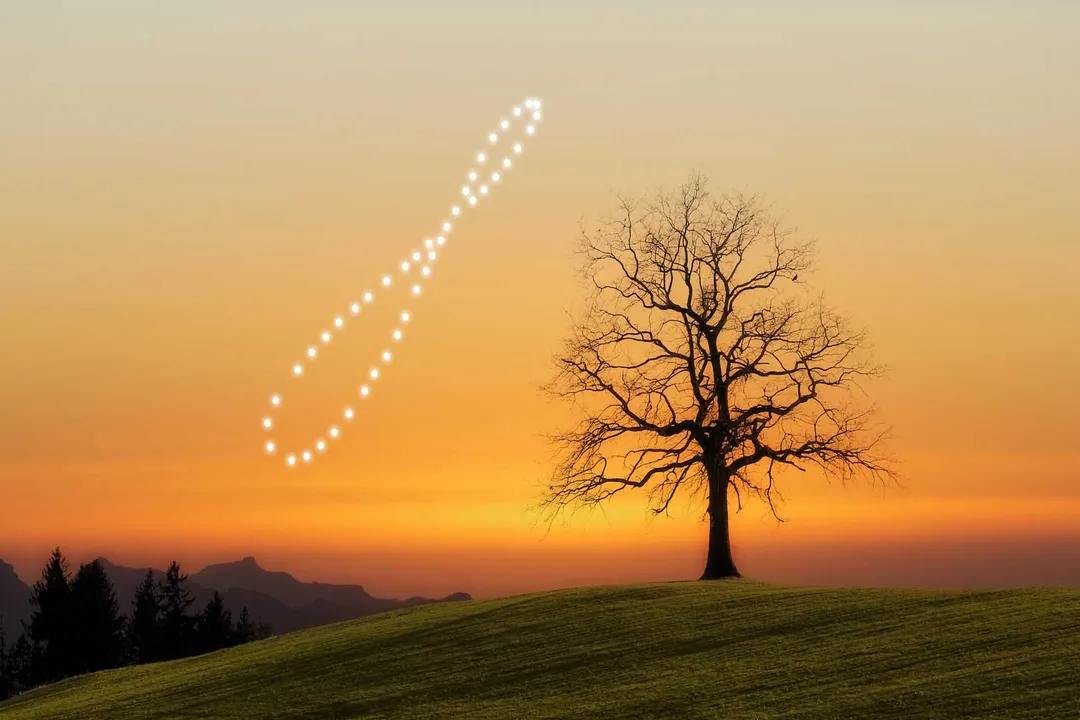
The set of constellations the Sun appears to travel through across the celestial sphere over the course of a year are defined by a specific astronomical line: the ecliptic. This imaginary circle marks the Sun's apparent annual path, which fundamentally dictates our sense of solar time and the passage of the seasons. It is not a random track; rather, it represents the plane of Earth's orbit around the Sun projected onto the sky.
# The Path

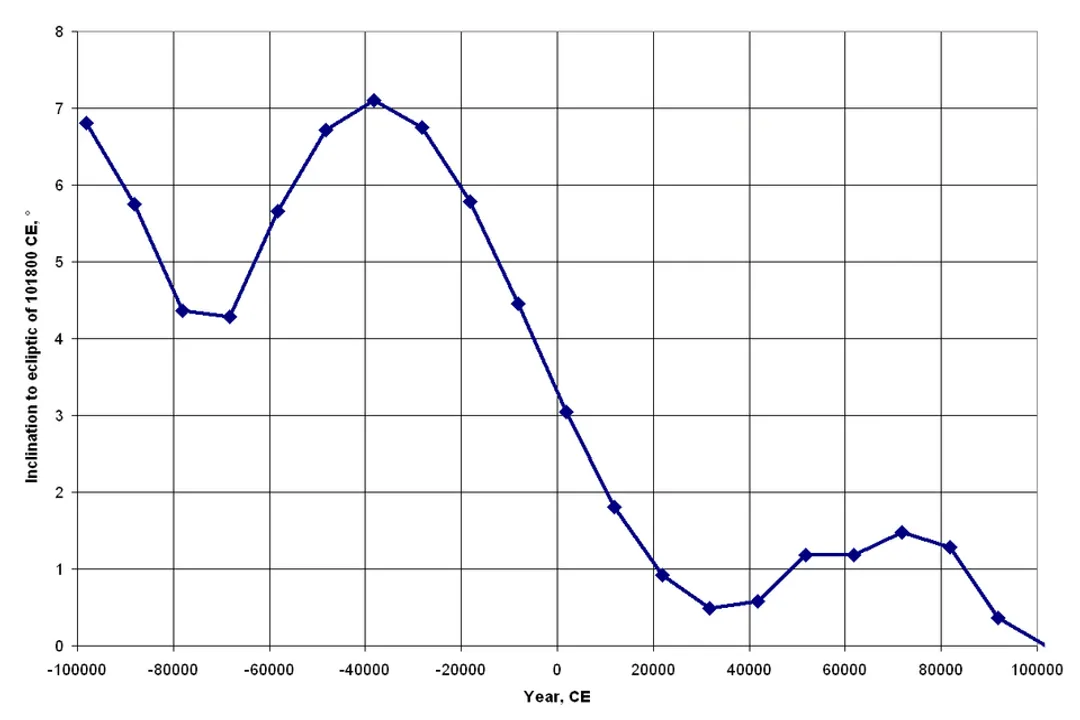
The ecliptic is often described as the path the Sun seems to take, but its underlying reality is geometrical. Astronomically, it is the plane containing Earth's orbit, and when we observe the sky, the Sun appears to move along the intersection of this plane with the celestial sphere. This path defines the celestial longitude for objects in the solar system, as most planets also orbit the Sun in a plane very close to this same track.
The appearance of the Sun's path is crucial for ancient timekeeping and navigation. Early sky-gazers recognized that certain prominent star patterns lay along this solar route. Because the Earth is orbiting the Sun, the Sun appears to shift its background scenery against the distant stars over the months. This movement defines a specific band in the sky through which the Sun, Moon, and planets primarily travel.
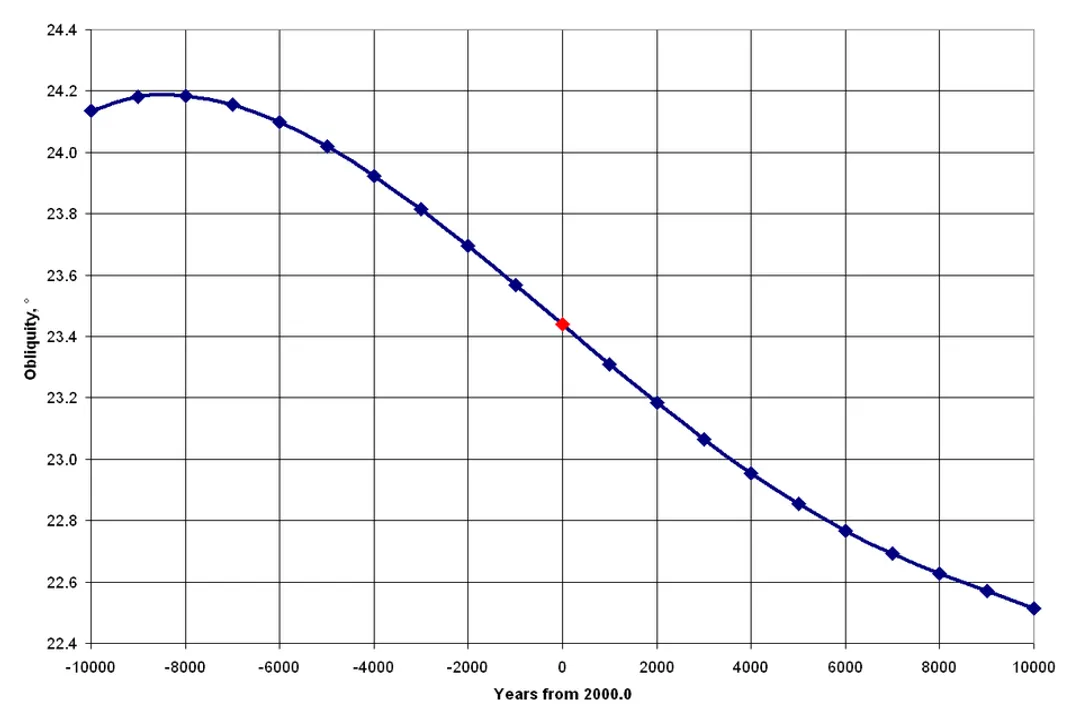
The ecliptic is tilted relative to the celestial equator—the projection of Earth's equator onto the sky—by an angle currently around . This inclination, known as the axial tilt of the Earth, is what causes our changing seasons. This angle is significant because when the Sun is directly overhead at the Tropic of Cancer (during the Northern Hemisphere summer solstice), it has reached its northernmost point on the ecliptic relative to the celestial equator. Conversely, the southernmost point marks the winter solstice. If the Earth's axis was perfectly aligned with the plane of its orbit (zero axial tilt), there would be no seasons, and the Sun would always trace the celestial equator, making seasonal tracking much less intuitive for early sky-watchers [Self-Generated Insight].
# Zodiac Signs
The specific constellations that the ecliptic passes through are collectively known as the Zodiac. The word "Zodiac" itself translates roughly to "circle of animals," reflecting the fact that many of the names are derived from animals or mythological figures represented by them.
The traditional system recognizes twelve constellations that form this belt. As the Sun moves through these groups over the year, we attribute specific dates or segments of time to them, leading to the familiar systems of astrology, which are based on these ancient observations. From an observer's perspective on Earth, the Sun spends roughly one month in each of these twelve groupings.
However, modern astronomy reveals a more complex picture than the traditional twelve signs suggest. While the Sun appears to move through the twelve constellations recognized by antiquity—Aries, Taurus, Gemini, Cancer, Leo, Virgo, Libra, Scorpius, Sagittarius, Capricornus, Aquarius, and Pisces—it actually crosses the path of a thirteenth constellation: Ophiuchus, the Serpent Bearer.
The Sun enters the boundaries of Ophiuchus between Sagittarius and Scorpius, meaning that technically, the Sun crosses thirteen, not twelve, distinct constellations recognized by the International Astronomical Union (IAU). The reason Ophiuchus is usually omitted from astrological zodiac calendars is historical; the original division of the sky into twelve equal segments occurred long before the boundaries of the constellations were precisely mapped according to modern standards. Because the divisions for astrology were set based on equinoxes and solstices, and the constellations have shifted relative to those fixed points over millennia due to axial precession, the traditional system no longer aligns perfectly with the constellations the Sun currently occupies.

# Celestial Map
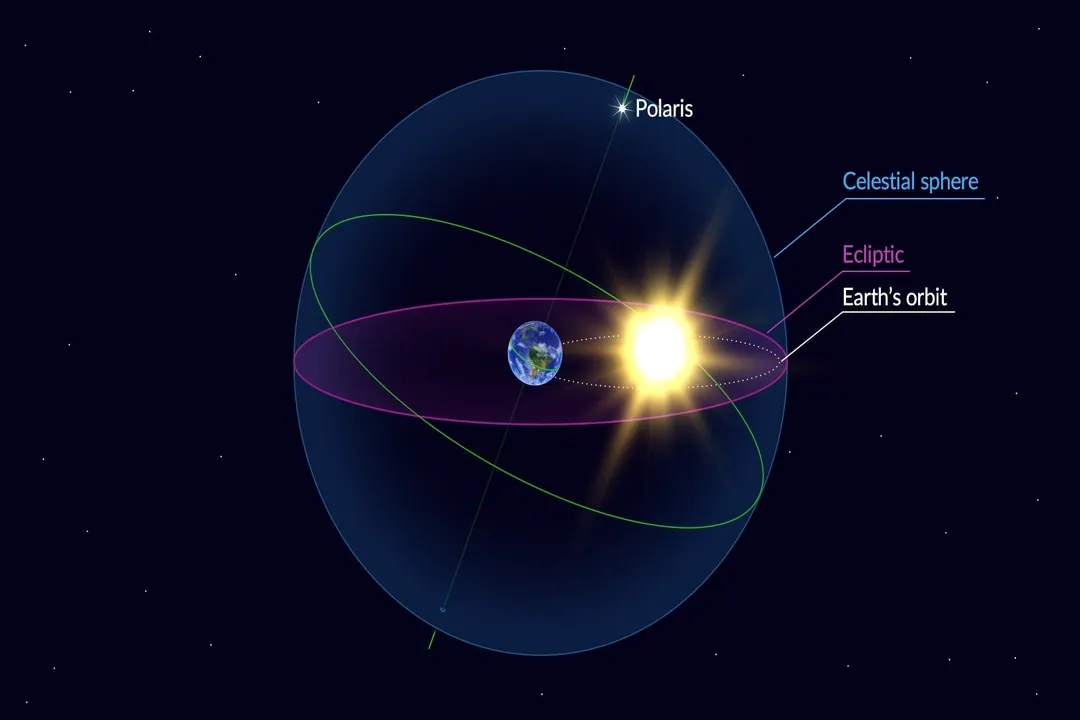
Understanding where the Sun is requires reference points on the celestial sphere. While the ecliptic defines the Sun's route, the celestial equator provides the primary zero-point latitude for the sky, analogous to Earth's equator. The ecliptic intersects the celestial equator at two points: the vernal equinox and the autumnal equinox.
The Sun is at the vernal equinox (0 degrees longitude on the ecliptic) around March 20th in the Northern Hemisphere, marking the start of spring. It reaches the autumnal equinox around September 22nd, marking the start of autumn. These intersection points are constantly shifting slowly over time due to precession—a slow wobble in Earth's axis—a phenomenon that has caused the traditional zodiacal dates to drift away from the actual stellar constellations they were originally named after.
It is important to note that the constellations themselves are not uniform in their distribution along the ecliptic. While a division into twelve equal segments creates the signs of the zodiac used in astrology, the actual constellations—the arbitrary shapes of stars mapped by astronomers—vary widely in size [Self-Generated Insight]. For instance, the Sun spends about 45 days in Virgo, but only about 7 days in Libra [Self-Generated Insight]. Therefore, while the path is defined by the ecliptic, the duration the Sun spends within the recognized borders of each constellation differs significantly [Self-Generated Insight].
# Historical Groupings
The practice of tracking the Sun through specific star patterns is ancient, dating back to civilizations like the Babylonians, who established the earliest known forms of the zodiac. These early astronomers looked to the sky to establish calendars, predict agricultural cycles, and manage civil life. The concept was later adopted and refined by the ancient Greeks.
Today, constellations are officially recognized groupings of stars that cover specific regions of the sky, defined by the International Astronomical Union (IAU). These boundaries are fixed areas of the celestial sphere, not just the pattern of the brightest stars within that area. When we discuss the constellations the Sun passes through, we are referring to the officially demarcated regions that intersect the ecliptic line.
To map the Sun's current position accurately, an observer must look for the constellation that currently contains the Sun relative to the ecliptic plane, regardless of whether that grouping was part of the original twelve recognized thousands of years ago. The consistency of the ecliptic plane itself, however, remains the authoritative celestial coordinate system for tracking solar system objects.
#Videos
The Ecliptic: Crash Course Kids #37.2 - YouTube
Related Questions
#Citations
Ecliptic - Wikipedia
What Is the Ecliptic: The Sun's Path In the Sky - Star Walk
What Is the Ecliptic? - Time and Date
The Ecliptic: Crash Course Kids #37.2 - YouTube
The Ecliptic: the Sun's Annual Path on the Celestial Sphere
Sky Tellers - Constellations - Lunar and Planetary Institute
ELIM5: How exactly do we map the sun's ecliptic path, the zodiac in ...
Ecliptic | COSMOS - Centre for Astrophysics and Supercomputing
Ecliptic - In-The-Sky.org