What constellation is the Sun in right now?

Determining the constellation the Sun currently occupies requires looking beyond the familiar divisions of the zodiac calendar and focusing on the actual position of our star against the backdrop of fixed stars visible at night. This position shifts constantly throughout the year as the Earth completes its orbit around the Sun, causing the Sun to appear to drift eastward relative to the distant constellations. [4] While many people associate the Sun with a specific astrological sign based on their birth date, astronomers track its location based on the ecliptic—the apparent plane of the Sun’s motion across the celestial sphere. [4]
# The Celestial Path

The Sun does not hover in one spot; it traces a predictable path known as the ecliptic over the course of roughly $365.25$ days. [4] This path intersects the celestial sphere and is the defining line used by ancient astronomers to map out the constellations through which the Sun travels. When we look up at the night sky, the constellations that lie along this path are the ones relevant to the Sun’s position, regardless of whether they are visible at the same time as the Sun. [4]
The path the Sun takes is defined by a set of $13$ constellations recognized in modern astronomy, though only $12$ are commonly associated with the traditional zodiac. [1] This difference is significant. The traditional system often used in popular culture adheres to the tropical zodiac, which is based on the seasons, not the actual star patterns. [4] The astronomical reality includes the constellation Ophiuchus, the Serpent Bearer, which the Sun actually passes through during its annual trek. [1] For instance, depending on the exact date, the Sun will be situated within the boundaries defined for Ophiuchus for a period, typically spanning from late November to mid-December. [1]
# Astronomical Versus Tropical Signs
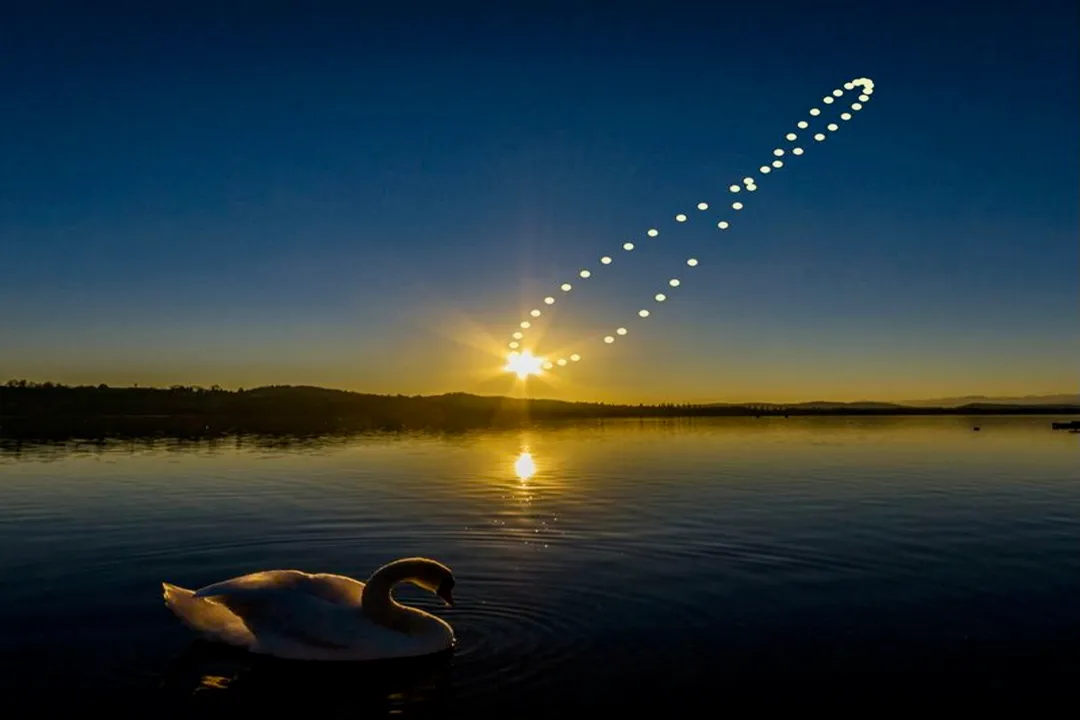
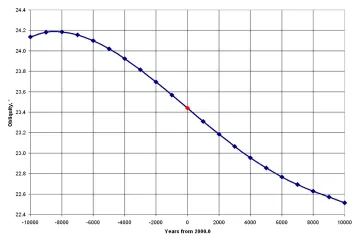
The discrepancy between the Sun's astronomical position and the tropical sign we cite on a birthday card is perhaps the most important concept to grasp when asking "What constellation is the Sun in right now?". [4] Because the Earth’s axis has slowly wobbled over the last two millennia (a process called precession of the equinoxes), the dates associated with the tropical zodiac signs no longer align accurately with the constellations themselves. [4]
If you were to check a precise star map today, the Sun would likely be in a constellation that is one sign behind what the tropical calendar suggests for that date. [4] For example, if the tropical calendar says the Sun is in Sagittarius, the actual astronomical location might still be in the preceding constellation, Scorpius, or just entering Sagittarius, depending on the exact day of the year. [4] Resources that map the sky in real-time calculate the Sun's current celestial coordinates—its right ascension and declination—and then cross-reference those against the established modern boundaries of the $13$ astronomical constellations. [2][5]
# Pinpointing the Current Location
To find the Sun's exact constellation today, one must consult up-to-date astronomical data calculated for the current date and time. [5] This information is usually determined by finding the Sun’s ecliptic longitude and then determining which constellation boundary that degree value falls within. [2] Various online tools are specifically designed to provide this real-time information, often through interactive sky maps or dedicated solar position locators. [2][5][9]
When checking these sources, it is important to verify the context of the display. Some general star charts are optimized for nighttime viewing, meaning the Sun’s calculated position will appear on the opposite side of the celestial sphere from where you are viewing from, or it might be omitted entirely from the visualization. [9] Reliable tools will have a specific function to display the Sun's location relative to the constellations across the entire celestial sphere, showing exactly where it is located right now, even though you cannot see it due to daylight. [2][5]
One useful way to contextualize this data, which varies based on the specific calculation epoch used by different astronomical databases, is by observing how long the Sun spends in each zone. While the traditional zodiac divides the year into $12$ equal $30$-degree slices, the actual constellation boundaries are irregular in size, meaning the Sun spends varying amounts of time in each one. [4] For instance, the period spent in one constellation might be slightly longer or shorter than the period spent in the next, a detail that precise mapping software captures but which is lost in the generalized monthly calendars. [4]
When planning to use an online star chart or celestial simulator to check the Sun's position, a key consideration is the required precision. If you are looking at a generalized map, the visual difference between being $5$ degrees into one constellation versus $5$ degrees into the next might be subtle on the screen. However, knowing the exact time zone difference is important for absolute accuracy. If you check a location-based chart from a website that defaults to Universal Time (UT) while you are many hours ahead or behind that time, the calculated longitude of the Sun might place it across a constellation boundary that it will only officially cross several hours later in your local time frame. [2] Therefore, always ensure the tool you are using is calculating based on your precise local time or is clearly labeled with the Coordinated Universal Time (UTC) it is referencing.
Another valuable tip for someone trying to track the Sun’s movement involves using star charts designed for finding other objects. Since the Sun is so overwhelmingly bright, we usually look for it only when trying to determine its immediate surroundings. If you pull up a high-quality, interactive star chart and intentionally zoom in on the Sun’s location (which might require temporarily dimming the Sun marker or switching to an equatorial grid view), you can use the chart's coordinate lines to see exactly which constellation lines it crosses. Unlike the planets, which drift relative to the background stars, the Sun’s path is fixed year to year; what changes is when on the calendar it occupies a certain degree of that path, which is a result of the Earth's orbital position. [9]
# Tracking Annual Progression
The Sun’s apparent movement is continuous, advancing through the constellations day by day. While the exact demarcation lines are complex astronomical boundaries, we can look at general timelines to understand the progression. For example, the Sun is typically found moving through the region of Taurus around May, moving into Gemini towards the end of that month, and then progressing through Cancer in June. [1] This pattern continues around the celestial sphere, with the Sun returning to its starting point approximately one year later. [4] These dates shift slightly from year to year due to minor perturbations in the Earth's orbit, but the overall sequence remains constant. [4]
The sheer visibility challenge also plays a role in this topic. Because the Sun is up during the day, you can never visually confirm its location by looking at the stars it is supposedly "in front of." Instead, the knowledge relies entirely on accurate mathematics and celestial observation equipment used by organizations that publish these current positions. [2][5] This reliance on calculation highlights the importance of using current, authoritative sources for this specific piece of astronomical data. [2]
Related Questions
#Citations
The Sun: Complete Information & Live Data | TheSkyLive
Sun - Heavens-Above
Current Night Sky - Center for Astrophysics | Harvard & Smithsonian
Night Sky Tonight: Visible Planets at Your Location - Time and Date
The Planets Today : A live view of the solar system
Sky Map in Real Time - Stelvision
Visible planets and night sky guide for December - EarthSky
Star Charts - Adventure Science Center
In-The-Sky.org