Is the Sun actually a star yes or no?
The object dominating our daytime sky is, unequivocally, a star. To phrase the question as a simple binary choice misses the fundamental astronomical definition that places our local celestial engine squarely in that category. It is not a planet, a moon, or a comet; it is a massive, self-luminous ball of plasma held together by its own gravity, generating energy through nuclear fusion in its core. [1][2] This process of sustained energy generation is the dividing line between a star and everything else in our solar system, such as Earth or Jupiter. [3]
# Star Definition

The Sun fits the astrophysical criteria perfectly. Astronomically speaking, a star is defined by its ability to initiate and sustain hydrogen fusion in its core. [3] This requires immense mass to generate the necessary gravitational pressure and temperature, which for the Sun is about $15.7$ million Kelvin in its center. [2] The Sun converts hydrogen into helium, releasing vast amounts of energy in the form of light and heat, which is what we experience daily. [1][3] Planets, in contrast, do not have enough mass to achieve this sustained fusion, though some very large ones, like Jupiter, are sometimes referred to as "failed stars" because they could theoretically fuse deuterium if they were a little more massive, but they still cannot fuse regular hydrogen. [3]
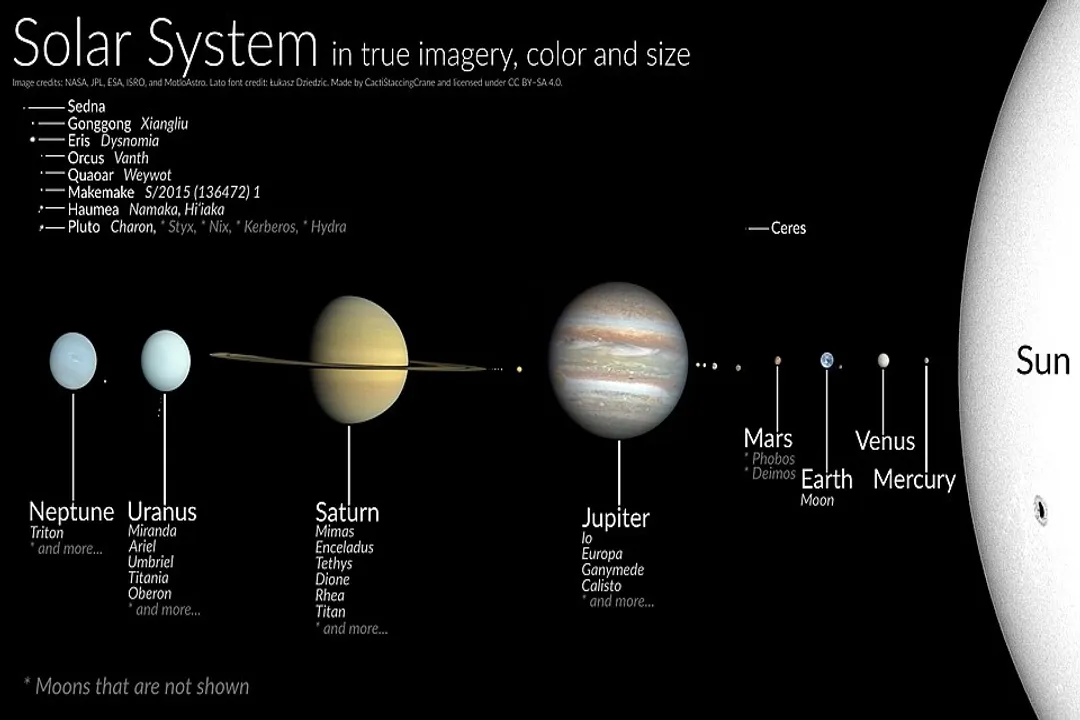
The physical makeup of the Sun reinforces its status. It is composed primarily of hydrogen (around $73%$ by mass) and helium (about $25%$ by mass), with trace amounts of heavier elements like oxygen, carbon, neon, and iron. [2] This composition is standard for most stars in the universe. [6] If you were to compare the Sun to objects in our immediate cosmic neighborhood, the distinction becomes stark. Earth, our home, is a rocky planet orbiting the Sun, relying entirely on the Sun's emitted energy to sustain its environment. [1] The Sun is the gravitational anchor of the entire solar system, a fact that immediately separates it from the non-luminous bodies that orbit it. [2]
The sheer scale difference is another key indicator. The Sun has a mass approximately $330,000$ times that of Earth. [2] To put that into perspective, if the Sun were hollow, you could fit over a million Earths inside it, with room to spare. [1] This overwhelming mass dictates its function as the primary energy source for the entire planetary system.
# Contrast Planets
Planets, by definition set by the International Astronomical Union (IAU), must orbit a star, be massive enough to be rounded by their own gravity, and have cleared the neighborhood around their orbit. [2] The Sun does none of these things; it is the object being orbited. Planets generate very little of their own light—any glow they exhibit, like that seen from Venus or Mars, is merely reflected sunlight. [9] The Sun, however, generates its own light through the fusion reactions occurring deep within its core. [1][5] While a large planet like Jupiter generates some internal heat from gravitational contraction, this process is fundamentally different and far less energetic than the sustained thermonuclear furnace inside a true star. [3]
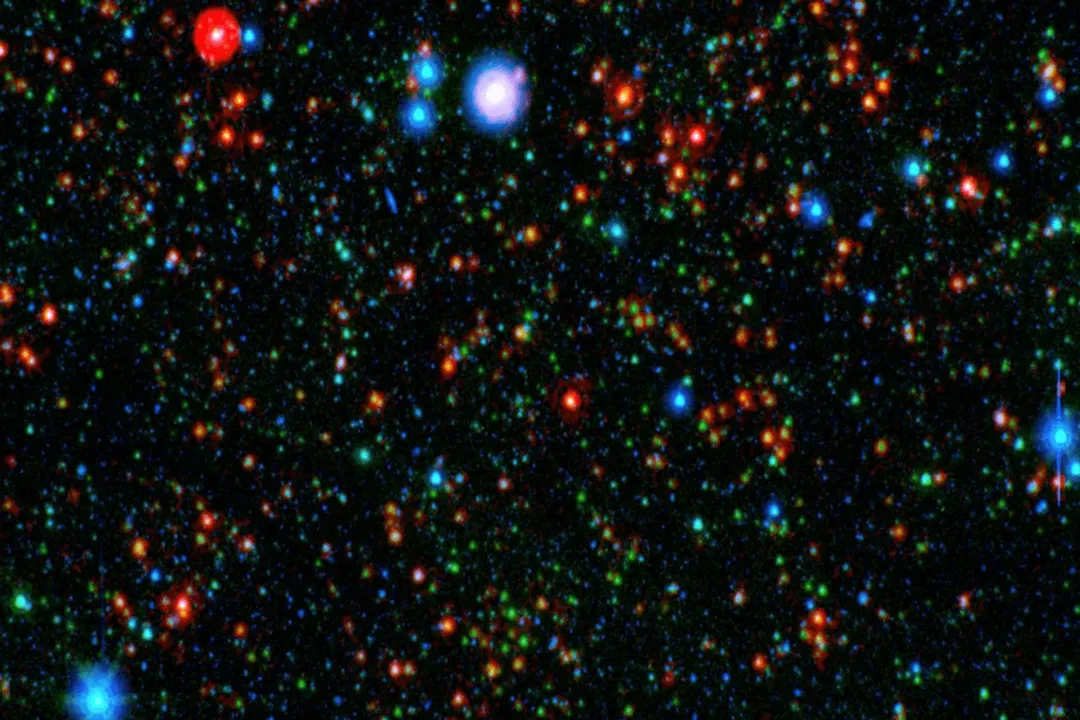
It can be helpful to visualize the vast spectrum of stellar objects. While we see thousands of tiny pinpricks of light at night, those are all distant suns—stars just like ours, but located many light-years away. [1][6] Our Sun is simply the closest example, making its characterization as a star unique in our daily experience, but not unique in the universe. [5]
# Naming Convention Uniqueness
If the Sun is just another star, why do we use a proper name, "the Sun," instead of simply calling it "Sol" or "Star Number One"? This habit stems entirely from our local perspective and historical development of astronomy. [5]
For ancient observers, the Sun was the only star they could truly study up close, the only one they saw move across the sky daily, and the only one whose light directly affected their lives. [7] Therefore, it received a unique designation, a proper name akin to calling a specific person "John" instead of just "a human." The word "Sun" itself is ancient, stemming from Old English sunne and Germanic roots, long before the realization that it was merely one member of a colossal galactic population. [5]
When early astronomers like Copernicus and Kepler began to understand that Earth orbited the Sun, and later when figures like Giordano Bruno proposed that the stars were distant suns, the uniqueness of our local star began to fade in scientific context, but the common name persisted. [7] The term star became the general classification for any celestial body that produces its own light through fusion, while the Sun remained the common, terrestrial name for our specific star. [5][6]
It is worth noting that in other languages, this distinction is often clearer. The word for the Sun in many languages is simply the word for "star" or derived from the same root, highlighting the shared identity. [5] For instance, while we might say "a star," astronomers often refer to the Sun as Sol when wishing to use the official astronomical term for our star, although "the Sun" remains the standard vernacular. [2]
# Stellar Identity
Is every star a Sun? In common parlance, no, because "the Sun" refers specifically to the star at the center of our solar system. [6] Astronomers sometimes use the term "sun" generically to refer to any star, or specifically the star that a particular planetary system orbits, but this is less common than using the proper noun "the Sun" for our star. [6] Conversely, if another star had a planet orbiting it, that planet would orbit its star, which would be its sun. [6] However, to avoid ambiguity, the default reference for the object at the center of the Sol system is always "the Sun."
This leads to a fascinating point of perspective. When we look up at a bright star like Sirius or Alpha Centauri, we are looking at an object that is like our Sun in its fundamental nature—a fusion reactor. [1] Yet, Sirius is intrinsically much brighter and more massive than our Sun, while many other stars are significantly smaller and dimmer, classified as K-dwarfs or M-dwarfs. [6] If we were viewing our Sun from Proxima Centauri (about $4.24$ light-years away), it would appear as just another faint, ordinary star in their night sky, indistinguishable from countless others except for its specific spectral characteristics. [1]
The perceived difference between the Sun and the stars is purely a matter of distance. The Sun is not special in what it is—it's a G-type main-sequence star, a common type—it is only special because it is here.
# Historical Understanding
The realization that the Sun was just one of countless stars, and that those twinkling lights were fundamentally the same type of object, was a major shift in cosmological thinking. [7] For millennia, the Sun and Moon were often treated as unique celestial bodies, separate from the fixed, unchanging "wanderers" or the eternal background stars. [7]
The turning point arrived gradually as observational tools improved and philosophical models evolved. By the 16th and 17th centuries, thinkers were actively debating the nature of the stars. [7] The ability to measure stellar parallax—the apparent shift in a star's position due to Earth's orbit—was crucial. If stars exhibited parallax, it meant they were relatively nearby, not infinitely far away as some earlier models suggested, thereby confirming they were physical objects like the Sun. [7] Though Tycho Brahe could not measure parallax in the late 16th century (because stars were much farther than he calculated), his precise measurements laid the groundwork. The first successful measurement of stellar parallax, achieved by Friedrich Bessel in $1838$ for the star $61$ Cygni, definitively proved that stars had finite, measurable distances and were comparable objects to the Sun. [7] This established the Sun as a member of the star population, rather than an exception to it. [2]
# Stellar Spectrum Classification
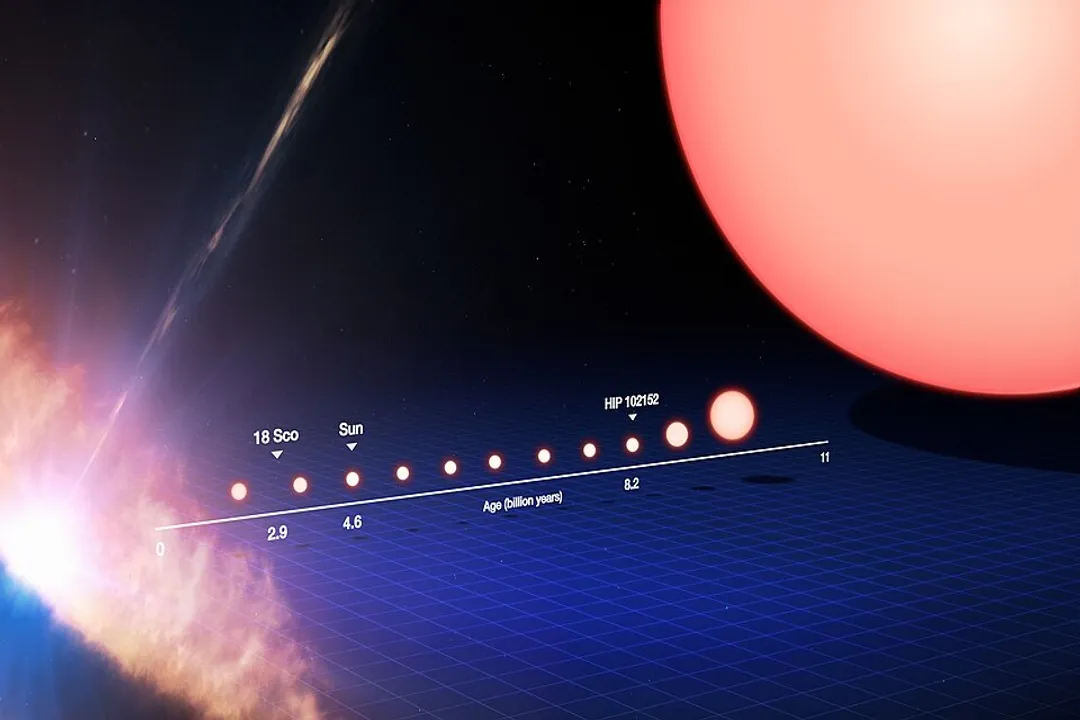
Understanding the Sun required developing a system to classify all stars. This classification system, initially based on appearance (like the Draper classification system), sorts stars based on their surface temperature and spectral characteristics. [2] Our Sun is classified as a G2V star. [2]
- G indicates a spectral type, meaning it has a surface temperature around $5,778$ Kelvin and exhibits specific absorption lines. [2]
- 2 is a subclass, positioning it between the hotter F-type stars and the cooler K-type stars. [2]
- V is the luminosity class, indicating it is a main-sequence star—meaning it is currently fusing hydrogen in its core, just as the Sun is now. [2]
This classification system, applied universally, confirms the Sun's membership card. We can look at the spectral fingerprint of a star millions of light-years away, compare its pattern of light absorption to that of the Sun, and conclude, "That object is undergoing the exact same physical process."
# Our Local Star's Metrics
To truly appreciate the Sun's star status, it helps to look at its quantitative characteristics, which are precisely measured because of its proximity.
| Property | Value | Comparison Context |
|---|---|---|
| Type | G2V Main Sequence Star | Common class of star [2] |
| Mass | kg | times Earth's mass [2] |
| Radius | km | times Earth's radius [2] |
| Surface Temp | K | Affects its yellow-white color [2] |
| Age | Approximately $4.6$ billion years | Mid-life for a star its size [2] |
| Luminosity | Watts | The one we feel directly [2] |
One interesting side effect of the Sun being so close, compared to the next nearest star system, Alpha Centauri (over $4$ light-years away), is how we perceive its brightness and movement. The Sun’s apparent motion across our sky during the day is an artifact of our planet's rotation, while the actual motion of the Sun relative to the background stars is its orbit around the Milky Way's center. [1] Stars appear fixed relative to each other because their distances are so vast that their slight annual shifts due to parallax (if observable) or proper motion are negligible to the naked eye compared to the Sun’s apparent path. [7]
Imagine you are standing in a vast, dark stadium. The single, massive floodlight positioned just a few meters above your head is the Sun. Every other light source you see—the spotlights on the far side of the field, the tiny lights in the upper decks—those are the other stars. They are all producing light in the same way, but the difference in perceived intensity and apparent size is due entirely to the distance between you and the light source. [1][8] The Sun is a perfectly average, middle-aged star when judged by galactic standards, perhaps slightly less massive than the brightest stars, yet far more dominant than the smallest red dwarfs. [6]
# Stellar Population Insight
A deeper analysis reveals that G-type stars like our Sun are actually somewhat less common than the dimmest stars. Red dwarfs (M-type stars) make up a significant majority—perhaps $75%$—of the stars in the Milky Way galaxy. [6] If you looked at the total number of stars, the Sun is statistically above average in brightness and mass, yet if you looked at the total stellar population, it belongs to a minority class. This comparison underscores that while the Sun is "average" in terms of the observable physics of star life cycles, it is not the most abundant type of star out there. This knowledge fundamentally shifts our understanding of planetary habitability—if life-supporting planets are common, they are likely orbiting dimmer, cooler red dwarfs, not G-type stars like our own. [6]
# Everyday Perception versus Reality
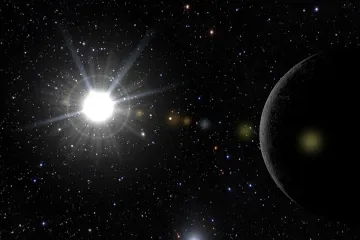
It is easy for an observer to mistake the Sun's unique appearance for a unique classification. Why does the Sun appear as a bright disc while all other stars are mere points of light? Again, the answer is proximity. [1] The Sun is so close that its angular diameter is about $32$ arcminutes, easily visible to the naked eye as a distinct, physical sphere (though one must never look directly at it). [2] Stars millions of times farther away, even if they are physically larger than the Sun, subtend an angle too small for the human eye to resolve; they remain point sources. [1]
This visual difference—disc versus point—is the primary reason, historically and psychologically, for the ambiguity in the question. If the nearest star, Proxima Centauri, were magically transported to the Sun’s current orbit, the sky would be instantly dominated by an incredibly bright, massive, hot object, and we would be facing an existential crisis, but the classification of the object would remain the same: it would still be a star. [1][8]
# The Necessity of Terminology
The persistent use of "the Sun" despite knowing it is a star serves a practical purpose rooted in our position within the cosmos. We need a specific name for the object that governs our environment, sustains our climate, and determines our concept of a "day". [5] Calling it just "a star" would necessitate constantly clarifying which star we mean, unless context already made it obvious. If we were speaking to an astronomer on a distant exoplanet orbiting an F-type star, they would refer to their local system's primary as "their Sun," and we would refer to ours as "our Sun."
To illustrate the point, consider a local context for a moment. If you lived in a town named "Springfield," and there were a hundred other towns named Springfield across the country, you would still refer to your home as "Springfield" when speaking to neighbors. If you spoke to someone from a different Springfield, you'd clarify: "Springfield, Illinois," or "Springfield, Massachusetts." Similarly, in the grand cosmic dictionary, the entry for star is broad (fusion reactor), and the entry for the Sun is specific (the G2V star at the center of the Sol system). [5]
In summary, the answer is a definitive yes. [1][9] The Sun is a star—a G-type, main-sequence star that is currently in its prime, fusing hydrogen into helium. [2] Its unique name is a linguistic relic of a time before we knew it was one of billions, a necessary proper noun to specify the object that defines our solar system. [5] All scientific metrics confirm its status, differentiating it only by its proximity to us, not by its fundamental nature. [3]
Related Questions
#Citations
Our Sun is a Star - Facts About the Sun | Exploratorium
Sun - Wikipedia
ELi5 what makes the sun a star and not a planet? And why ... - Reddit
How Do We Know The Sun Is a Star? ☀️ #astronomy ... - YouTube
If the Sun is a star, why not just call it a star? Why call it the Sun?
The Sun Is A Star. But Is Every Star A Sun? - IFLScience
When was it first determined that the Sun is a star?
Sun: Yellow Star or White Light? Why Does It Look Yellow?
Is the Sun a Star? - Sun and Stars in our Solar System - Optics Trade