Is the Sun supposed to be a star?
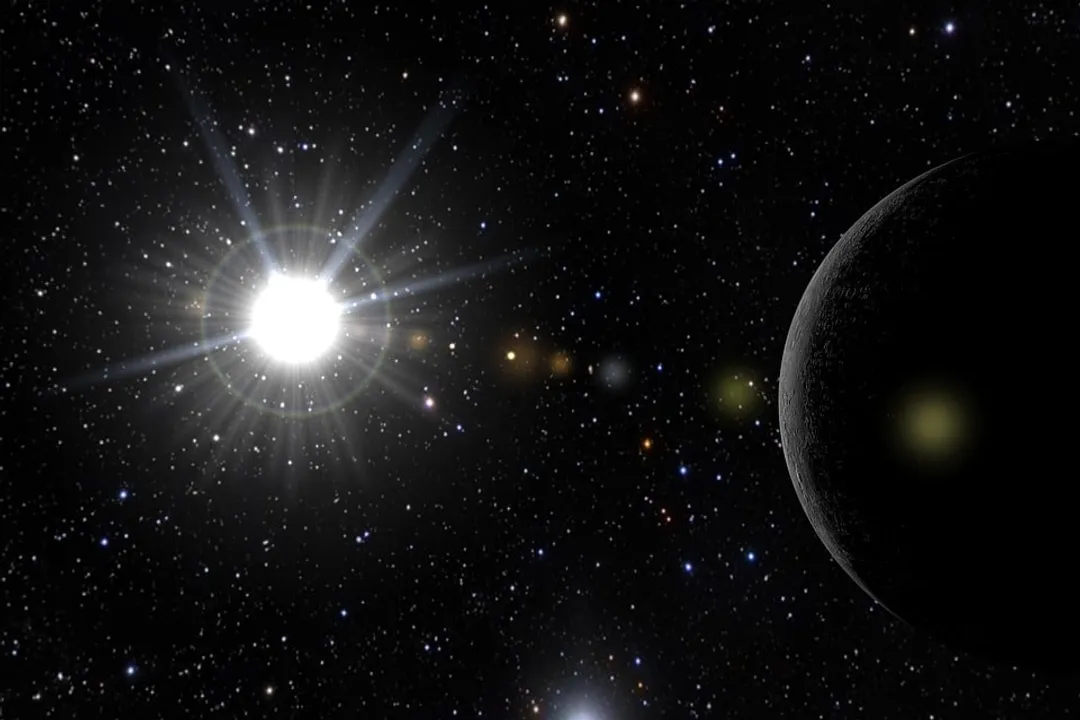
The concept that the Sun is merely one star among countless others in the vast expanse of the cosmos represents one of the profound shifts in human understanding, moving away from an Earth-centered view to one where our star is just one of many cosmic furnaces. Simply put, yes, the Sun is absolutely a star. It meets every physical criterion required to earn that classification: it is a massive, incandescent sphere of plasma held together by its own gravity, generating tremendous energy through sustained nuclear fusion at its core.
# Fusion Power
What truly separates a star from a planet, even a giant one like Jupiter, is the self-sustaining internal engine known as nuclear fusion. A planet, no matter its size, remains fundamentally a body of rock, ice, or gas that reflects the light emitted by its host star. The Sun, however, is continuously converting mass into pure energy deep within its core.
The Sun is predominantly composed of the lightest elements: about three-quarters hydrogen and nearly a quarter helium by mass in its visible surface layer, the photosphere. Within the core, which reaches temperatures near $15.7$ million Kelvin, hydrogen nuclei are forced together in a process—primarily the proton-proton chain—to form helium. This reaction results in a net mass loss, precisely described by Einstein’s famous mass-energy equivalence, . Every second, the Sun fuses roughly $600$ billion kilograms of hydrogen into helium, releasing an equivalent amount of energy in the process.
If we look at the boundary between 'star' and 'not a star' based on this physics, the difference is stark. For an object to ignite core hydrogen fusion and become a true star, it needs a minimum amount of mass to create the necessary internal pressure and temperature. Objects less massive than this threshold cannot sustain the reaction that defines stellar life. Indeed, theory suggests that if Jupiter were to gain about $13$ to $20$ times its current mass in hydrogen, it could cross that critical threshold and become a brown dwarf, qualifying it for stellar lineage, even if only a lesser one.
# Solar Classification

While the Sun is a star, not all stars are like the Sun. We classify stars using systems like the Hertzsprung-Russell diagram based on physical parameters such as temperature, luminosity, and size. The Sun is categorized as a G-type main-sequence star, often designated as G2V. The 'G' refers to its spectral type (color/temperature), and the 'V' signifies that it resides on the main sequence, actively fusing hydrogen in its core. Informally, it is sometimes called a "yellow dwarf," though its actual light, when viewed outside Earth's atmosphere, is white.
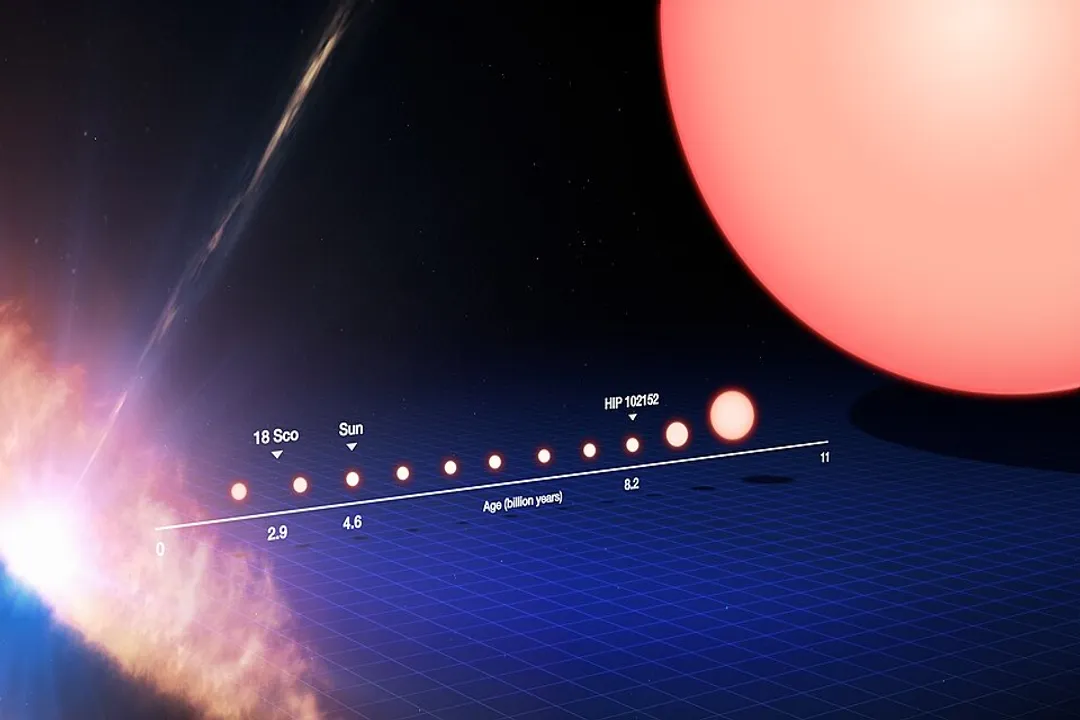
Its dominance within its own system is absolute; the Sun accounts for about $99.86%$ of the total mass of the entire Solar System, its gravity acting as the anchor for everything orbiting it, from Mercury out to the farthest reaches of the Oort cloud. Despite this massive presence, the Sun is an average specimen in terms of stellar life, sitting roughly halfway through its expected $10$ to $11$ billion year main-sequence lifespan.
The term "typical" is deceiving when applied to the Sun in the grand galactic sense. While its properties might fall somewhere in the middle of all possible stellar characteristics, stars very similar to our Sun only make up about $5%$ of the stars in the Milky Way galaxy. The vast majority, over $80%$, are much cooler and less massive stars known as red dwarfs. The Sun is, therefore, a relatively close, rather than common, star. It is brighter than about $85%$ of the stars in our galaxy, primarily because the far more numerous red dwarfs are dimmer.
# Historical Acceptance
It might seem obvious today, but confirming that the bright daytime orb was the same kind of object as the twinkling night-sky pinpricks was a slow, multi-stage discovery. For ancient observers, the distinction was clear: stars were fixed points of light, while the Sun, Moon, and a few bright "wanderers" (planets) moved against that fixed background.
The first significant steps toward unification came from Greek philosophers who suggested a physical similarity. Anaxagoras around the 400s BC proposed the Sun was a giant ball of molten metal, distinct from the stars (which he thought might be fiery stones), but bringing the discussion into the realm of physical explanation rather than myth. A true declaration that they shared the same fundamental nature arrived with Giordano Bruno in the 16th century. He reasoned that if the Sun was extremely distant, it would naturally appear as a star, concluding that "The composition of our own star and world is the same as that of as many other stars and worlds as we can see". This idea gained scientific traction once the Earth was confirmed not to be the center of the system.
However, concrete evidence confirming this shared nature required better tools. It wasn't until the $19$th century that Angelo Secchi used spectroscopy to analyze starlight, finding its chemical signature strikingly similar to that of sunlight. This observational confirmation, combined with $20$th-century breakthroughs in nuclear physics establishing fusion as the stellar power source, finalized the understanding that the Sun is fundamentally a star—one whose physics we can study up close.
# Sun Versus Star
The question naturally arises: if the Sun is a star, why do we use two different words? The differentiation is primarily one of reference and perspective. "The Sun" is the proper name for the star at the center of our Solar System. When we talk about the Sun, we are talking about that specific, proximal object that dictates Earth's climate and supports nearly all life here.
When astronomers refer to other stars, they are discussing objects belonging to other systems. However, language has evolved, particularly through usage in science fiction and general discussion, where stars reasonably similar to ours are frequently called "other suns," such as the famous "twin suns" of Tatooine. Yet, this usage is informal. A highly evolved star, like a red giant, or a dead one, like a white dwarf, would generally not be referred to as a "sun," even if it is technically a star.
The most common working criteria for referring to another star as a "sun" seem to be twofold: first, it must be actively fusing elements and generating its own light through that process, and second, it must be orbited by planets.
Thinking about this duality brings up an interesting comparison regarding the timescale of stellar processes. When we look up at the Sun, the light we see left the surface about $8$ minutes ago. However, the energy packet created by fusion in the core takes an enormous amount of time to escape the dense interior layers; estimates place this photon travel time between $10,000$ and $170,000$ years. This means that the Sun illuminating your skin right now is carrying energy that was physically created in its heart millennia before recorded human history. This illustrates that what we observe as the Sun's steady, present-day light is actually a very delayed, averaged result of processes initiated long ago in its ultra-dense core.
This relationship between our star and the universe’s stars is one of the most powerful tools in astrophysics. Since we cannot manipulate our Sun to test theories about magnetic fields, interior structures, or atmospheres, studying other stars allows scientists to see how those models hold up across different masses and temperatures. In essence, the Sun acts as a controlled, local laboratory—a Rosetta Stone for understanding the physics driving every other luminous body visible in the night sky.
Related Questions
#Citations
Sun - Wikipedia
ELi5 what makes the sun a star and not a planet? And why ... - Reddit
Sun as a Star - NSO - National Solar Observatory
Our Sun is a Star - Facts About the Sun | Exploratorium
When was it first determined that the Sun is a star?
The Sun: Facts, size, and fate of Earth's blazing star | Astronomy.com
The Sun Is A Star. But Is Every Star A Sun? - IFLScience