Is the Sun an average sized yellow star?
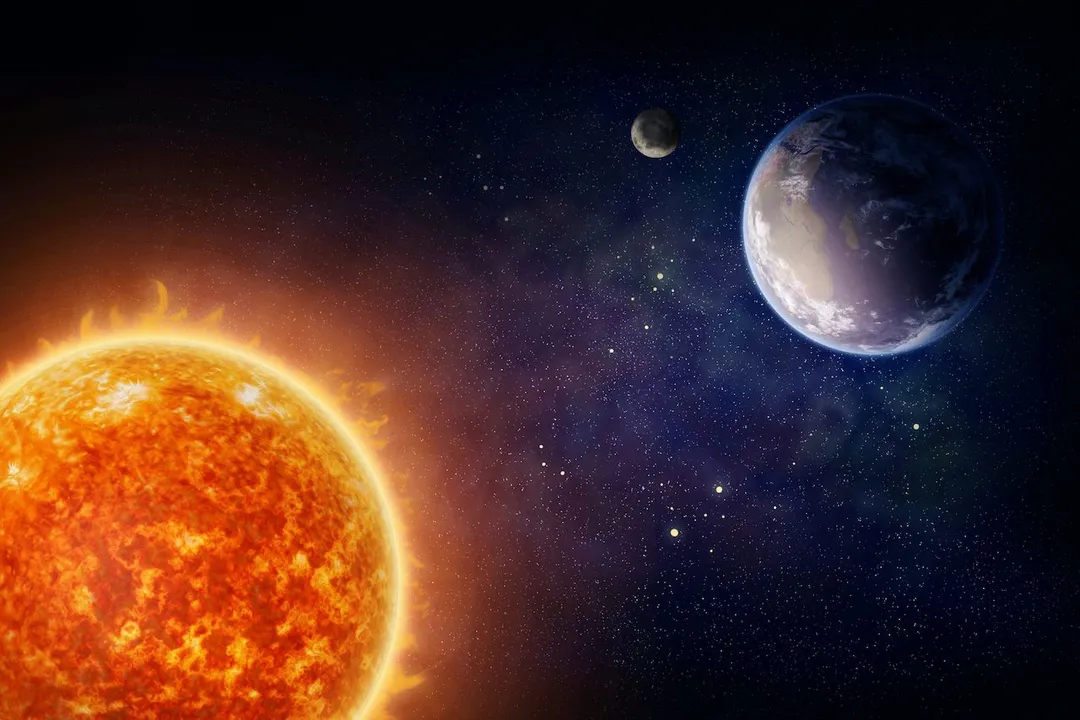
The designation of our star, the Sun, as an "average sized yellow star" is a statement so frequently repeated that it often slips past critical examination. While this phrase captures a rough sketch, a deeper dive into astrophysics reveals a far more nuanced reality regarding its size, color, and statistical standing within the vast population of stars in the Milky Way galaxy. [9] To truly grasp where the Sun sits in the cosmic hierarchy, we need to understand the specific metrics that astronomers use to classify it and what the most common types of stars actually look like.
# Stellar Type

The Sun is formally classified as a G-type main-sequence star, often denoted by the spectral classification . [2] This three-part code offers a wealth of information about its current life stage and physical characteristics. [1] The 'G' refers to its spectral type, which relates directly to its surface temperature, placing it in a group of stars that are hotter than K-type and cooler than F-type stars. [2] Our Sun has a surface temperature of about 9,940 degrees Fahrenheit (approximately degrees Celsius). [1]
The Roman numeral 'V' in the classification signifies that the star is currently in its main-sequence phase. [2] This means it is in the longest and most stable period of its life, fusing hydrogen into helium in its core, much like a cosmic engine running steadily. [1][4] For the Sun, this phase has lasted for about billion years, and it is expected to continue for roughly another billion years. [1] It is a reliable, middle-aged star, having converted about half of the hydrogen in its core into helium since its birth. [1]
When looking at the Hertzsprung-Russell (H-R) diagram—the fundamental tool for plotting stellar properties—the Sun sits squarely on the main sequence line, confirming its status as a hydrogen-burning star. [2] Its mass is used as the standard unit for other stars, defined as one solar mass (). [2]
# Size Scale

The term "average sized" starts to fray when we compare the Sun to the true population distribution of stars. If "average" means typical, we must look at what dominates the galaxy. The Sun has a diameter of approximately miles ( million kilometers). [1] Its mass is about times that of Earth. [2]
However, the vast majority of stars in the Milky Way are red dwarfs (M-type stars). [7] These stars are significantly smaller and less massive than the Sun. For instance, the smallest known stars are only about to percent of the Sun’s mass, classifying them as brown dwarfs or the lower limit for hydrogen fusion. [2] If we consider the sheer count of stars, our Sun is substantially larger than the common stellar citizens of our galaxy. Red dwarfs make up perhaps three-quarters of all stars. [7] In this context, calling the Sun "average" is statistically misleading; it is much larger than the median star by number. [9]
Contrast this with the massive stars. The Sun is relatively small when compared to giants and supergiants. Stars like Rigel or Betelgeuse dwarf our Sun in sheer volume. If the Sun were replaced by a star with the mass of Sirius A (about twice the Sun’s mass), the impact on the inner solar system would be profound due to increased luminosity and stellar wind, though Sirius A is still considered a relatively small star itself. [6] If the Sun were a medium-sized ocean freighter, the most massive stars would be aircraft carriers, and the red dwarfs would be small fishing boats.
Here is a comparison of the Sun's statistics against some common stellar benchmarks:
| Characteristic | The Sun | Betelgeuse (Red Supergiant) | Proxima Centauri (Red Dwarf) |
|---|---|---|---|
| Spectral Type | |||
| Mass () | $1.0$ | ||
| Diameter () | $1.0$ | ||
| Surface Temp (K) | |||
| Luminosity () | $1.0$ | ||
| Lifespan | Billion Years | Million Years | Trillions of Years |
It is worth noting that while -type stars are common, they are not the most common. They are more massive and burn hotter than the ubiquitous M-type dwarfs. [7] In discussions about stellar averages, experts often rely on mass as the primary criterion, and by mass, the Sun is certainly more central than by sheer count, but it still resides in the upper third of stellar masses when considering the whole population. [9]
# Apparent Hue
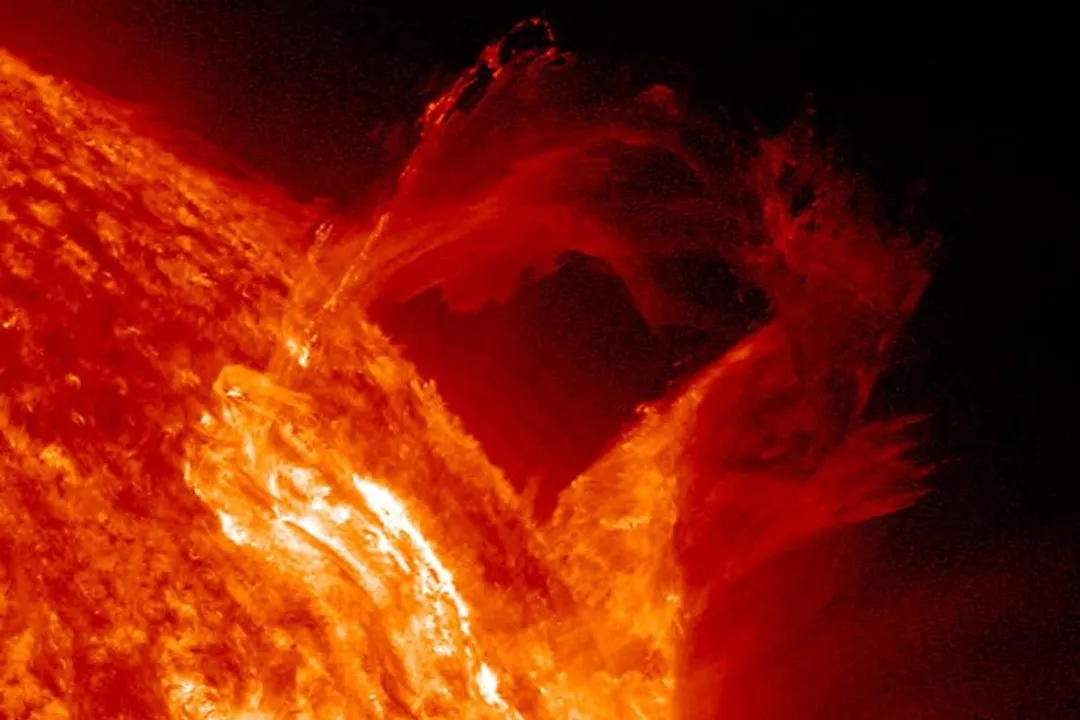
The description "yellow star" is perhaps the most visually misleading part of the common moniker. The Sun is not truly yellow; its peak emission of light is in the green-blue part of the visible spectrum. Based on its temperature of nearly Kelvin, the Sun actually emits light across the entire visible spectrum, meaning its true color, when viewed outside Earth's atmosphere, is white.
The perception of yellowness is an atmospheric effect. As sunlight travels through Earth's atmosphere, shorter-wavelength blue light is scattered more effectively by air molecules—the same process that makes the sky look blue. This removal of blue light leaves the remaining transmitted light appearing yellower to our eyes. If you were to view the Sun from the Moon or from space, it would appear blindingly white.
This leads to an interesting side calculation regarding planetary habitats. If Earth orbited a star that was significantly cooler, say an orange -type star, the incoming light would be naturally biased toward the red end of the spectrum. For terrestrial biology, which evolved under the Sun's specific spectral output, the subtle filtering provided by our atmosphere is a critical factor in the light available for photosynthesis and vision. The Sun’s spectral class () represents a "Goldilocks" zone for life as we know it—hot enough to produce abundant energy and a long lifespan, yet cool enough not to incinerate nascent planetary atmospheres early in its life. [4]
# Statistical Standing
Why, then, do astronomers and the public often settle on "average"? The answer lies in the historical context of stellar discovery and the functional definition used in many astrophysical models.
When early astronomers cataloged the visible stars in our night sky, they naturally focused on the brightest ones. The brightest stars visible to the naked eye are often massive, hot, blue, and short-lived giants—the least average stars possible. [9] Our Sun, a modest -type star, is entirely invisible to the naked eye from another star system like Alpha Centauri. [6] Therefore, from the limited sample of bright stars, the Sun appears less luminous and smaller, leading to the "average" label by comparison to the local, visible elite. [9]
Furthermore, the term "average" is often used relative to the solar neighborhood or within a certain mass range. The Sun is a fairly typical main-sequence star for its mass group. [4] It is not extremely metal-poor or metal-rich compared to other stars of its age, and its rotation rate is fairly standard for a star of its age. [4] Astronomers frequently use the Sun () as the unit baseline for calculating the properties of other stars simply because it is the star whose properties we know best with high certainty. [2] This convenience of having a known reference point reinforces the notion of it being "average" in a mathematical sense, even if statistically it's larger than the majority. [3]
The consensus seems to be that the Sun is a statistically ordinary, middle-of-the-road star when considering parameters like mass and temperature across the main sequence if you exclude the overwhelmingly numerous red dwarfs. [6] It is neither extremely massive nor extremely small, neither extremely hot nor extremely cool. [4]
# Contextual Placement
To appreciate the Sun’s place, one must consider its galactic home. It resides in the Orion Arm of the Milky Way galaxy, about light-years from the galactic center. [1] Its orbit around the galaxy takes about million years to complete. [1] The Sun is considered a second-generation star, meaning it formed from gas and dust clouds enriched by the deaths of previous, much more massive stars. [1] This enrichment with heavier elements (astronomers call everything heavier than helium a "metal") is why it is classified as a -type star rather than an earlier or -type star that formed from nearly pure hydrogen and helium. [2]
Thinking about the Sun's longevity provides a crucial perspective. Since the most common stars, the red dwarfs, have lifespans potentially extending into the trillions of years, the Sun’s -billion-year main-sequence lifespan is actually quite brief by comparison. [7] From the perspective of a universe populated by M-dwarfs, the Sun is a relatively short-lived, somewhat fleeting object that burns through its fuel reserves quickly and comparatively brightly. [9] The Sun’s current -billion-year age means it has about half its fuel left, suggesting it is currently at its peak stability for supporting complex life on its orbiting planets. [1] If you were to plot the entire lifetime of a red dwarf on a timeline spanning a meter, the Sun’s entire life would occupy only a few centimeters, highlighting how different the 'average' stellar existence truly is. [7]
In summary, calling the Sun an "average sized yellow star" is a simplification that is simultaneously true and false depending on the frame of reference. It is average in terms of its mass falling near the median of recognized stellar types on the H-R diagram, and it is a reliable, main-sequence G-type star. [2][4] However, it is significantly larger than the most numerous stars in the galaxy (red dwarfs), [7] and its color is scientifically white, appearing yellow only due to our atmospheric bias. It sits comfortably in the middle lane, but that lane is populated by far fewer stars than the slow, dim lanes occupied by the universe’s true stellar majority.
Related Questions
#Citations
Our Sun: Facts - NASA Science
Sun - Wikipedia
Is our Sun considered about an average-sized star? Is it ... - Quora
Is there anything really special about our sun that is rare among the ...
Why is the Sun called an "average star"? - Physics Stack Exchange
How Does Our Sun Compare With Other Stars? - NASA Space Place
The Sun is not an average star - Solar System Observing
Our sun is a yellow dwarf star, located 93 million miles from Earth
How big is the sun? - Space