What is the size of a nebula star?
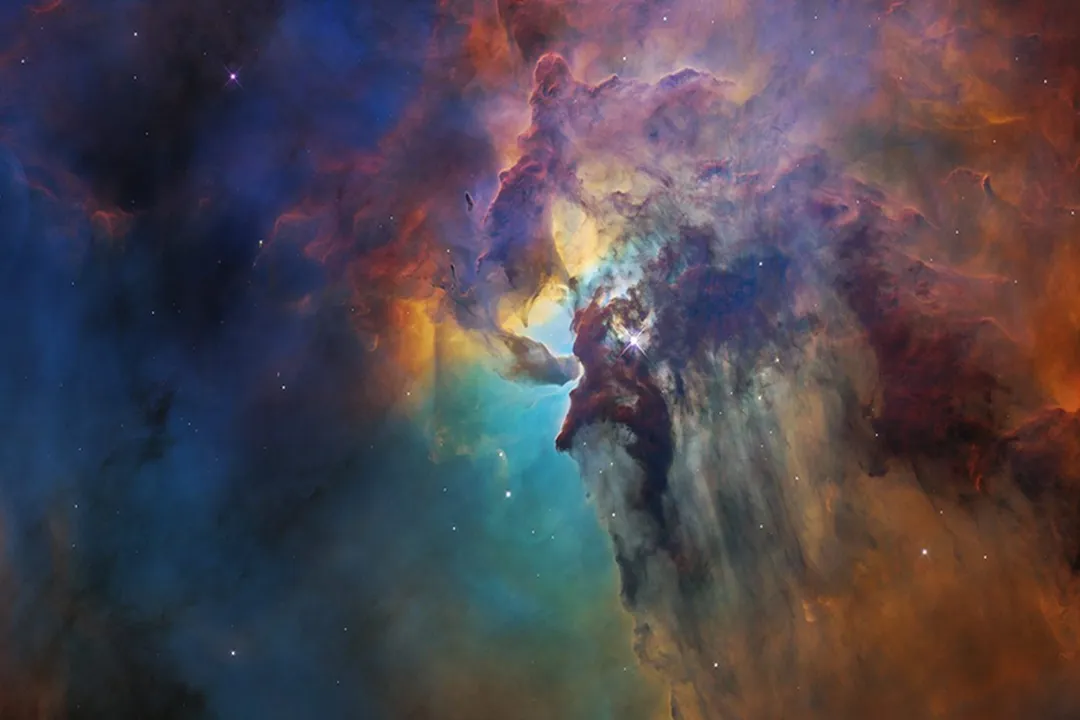
The question of scale when discussing objects within the cosmos often leads to confusing terminology, and perhaps no term illustrates this better than "nebula star." When we look up at the night sky, we perceive nebulosity—those beautiful, sprawling clouds of gas and dust—as singular entities. However, these structures are not stars themselves; they are the colossal nurseries, graveyards, or remnants associated with stars. [2] To properly address the size inherent in this concept, we must examine two vastly different metrics: the size of the stars that populate these regions, and the staggering dimensions of the nebulae that cradle them.
# Stellar Scale
A star, even one that forms within a nebula like the massive O-type stars found in stellar factories, adheres to physical laws that keep its size constrained, though that constraint is still enormous by human standards. For instance, our own Sun, a relatively average star, has a diameter of about 1.39 million kilometers. [6] This is a known benchmark, but the stars forming within nebulae can be dramatically larger.
When massive stars are born in regions like the Orion Nebula, designated Messier 42 (M42), they can swell to become many times the mass and radius of the Sun. [6] While specific radii aren't universally detailed across all provided sources, the context of stellar nurseries implies a spectrum of stellar sizes. Contrast the Sun’s diameter with the sheer size of the environment it resides in. The Orion Nebula itself spans approximately 24 light-years across. [6] If you were to place our Sun directly in the center of M42, the nebula's edge would extend nearly 12,000 times further out than the Sun’s radius. This massive disparity in scale—the tiny, luminous point versus the encompassing cloud—is the first crucial point in understanding the "size of a nebula star."
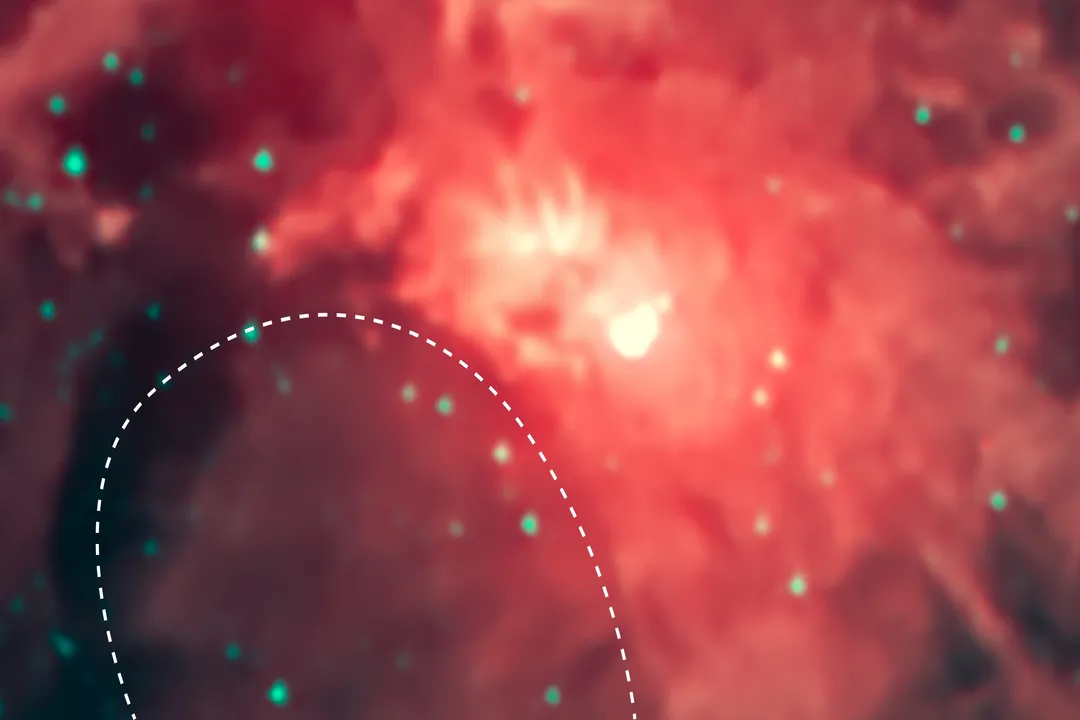
The stars are the engines, the bright points of light, while the nebula is the raw material or the aftermath. The life cycle dictates this relationship. In active star-forming regions, the heat and radiation from these newborn, massive stars are what eventually blow away the remaining gas and dust, carving out cavities within the nebula itself, such as the cavity observed in the Lagoon Nebula. [8] Thus, the star’s size determines the shape and dissipation of its environment, but the environment’s size dwarfs the star by orders of magnitude.
# Nebula Dimensions
Nebulae exist across an astonishing range of sizes, generally categorized by their origin. The vastness of these clouds is the dominant feature when discussing the scale associated with them. Many popular nebulae, which are often the focus of amateur and professional observation, measure in the tens or hundreds of light-years across. [1][8]
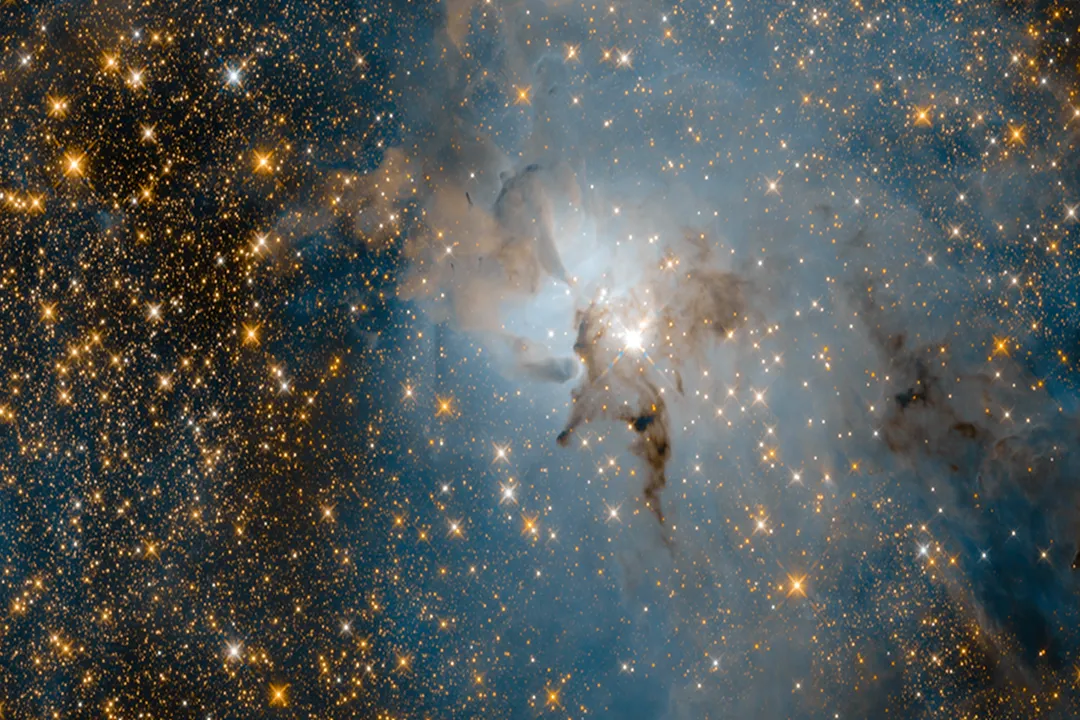
Consider the Lagoon Nebula, an active star-forming region where young stars are emerging from the gas and dust. This stellar nursery is about 110 light-years across. [8] To put that into a more relatable, albeit still mind-boggling, comparison: if you could somehow shrink the distance between New York and Los Angeles down to the diameter of our Sun, the 110 light-years of the Lagoon Nebula would still span a distance hundreds of times greater than the entire continental United States.
The Orion Nebula (M42) at 24 light-years is smaller, yet still immense. [6] As noted in general astronomical discussions, sizes around 100 light-years are quite common for these large emission or dark nebulae. [1]
# Planetary Remnants
The scale changes drastically when the star has reached the end of its life and expels its outer layers, creating a planetary nebula. Despite the misleading name, planetary nebulae have nothing to do with planets; they are the final glowing shells ejected by dying, medium-sized stars. [3]
These structures are far smaller than their stellar nursery predecessors. A typical planetary nebula, like the Ring Nebula, might span only a few light-years in diameter. [3] This shrinkage from the 100 light-year scale of a stellar nursery down to the single-digit light-year scale of a planetary nebula represents a significant phase change in cosmic geography. The material that once formed a vast cloud where a thousand stars might be gestating is now concentrated into a comparatively small, rapidly expanding shell around a single stellar remnant, the white dwarf. [3]
For example, if we imagine a 100 light-year-wide nebula, it takes light roughly 100 years to travel from one side to the other. In a planetary nebula just 1 light-year across, that transit time is reduced to just one year. [3] This compression of scale is a direct consequence of the star’s death, marking a shift from the scale of birth to the scale of finality.
# Comparing Cosmic Contexts
The sources provide excellent examples to ground these massive figures. The Lagoon Nebula, for instance, is a vast structure where star formation is actively underway, characterized by regions of dense dust blocking the light from background stars. [8] Its enormous size allows for the simultaneous existence of massive, hot, young stars and the cold molecular clouds from which they formed.
If we consider a hypothetical scenario where an average star like our Sun was 100 light-years in diameter—making it the size of a large nebula—the gravitational forces required to hold that mass together would instantly cause it to collapse into a black hole or a dense remnant, as the internal pressure could not counter the immense self-gravity at that radius for a normal star. [2] This highlights a fundamental principle: the sheer volume occupied by a nebula is almost entirely empty space, thinly spread gas, and dust, allowing the volume to expand without collapsing under its own gravity in the way a star does.
A helpful way to visualize the relative sizes between the nebula and its central star is to consider the light-travel time difference. If a star in the Orion Nebula had a radius one million times that of the Sun, light would take only a few seconds to cross it. In contrast, light takes 24 years to cross the entire Orion Nebula. [6] This means that the star is, relatively speaking, an infinitesimal speck within the structure it dominates.
# Evolving Size Metrics
The concept of size for a nebula is not static; it is dynamic, especially for planetary nebulae. Once a star sheds its outer layers, that material continues to expand outward. A planetary nebula might start relatively small but will visibly grow larger over thousands of years as the gas spreads into the interstellar medium. [3] Eventually, this material becomes so diffuse that it blends in with the background interstellar gas, effectively becoming "too large" to be observed as a distinct nebula.
The Hubble Space Telescope has been instrumental in observing these structures, providing detailed imagery that allows astronomers to map out the precise boundaries and measure these light-year scales. [4] Whether observing the active chaos of star formation in the Lagoon Nebula or the symmetrical beauty of a dying star's last breath, the measurement of these celestial clouds is a critical factor in understanding stellar evolution—from the genesis of a massive star to its ultimate fate. The star's size dictates its lifespan and explosive finale, but the resulting nebula's size tells the story of its ejection velocity and the density of the space it has traversed.
To offer a final perspective on scale, imagine a common object, a small town of about 10,000 people. If that town were represented by a single star, say, the size of the Sun, then the 110 light-year Lagoon Nebula would be a region the size of a continent containing that town. The vast majority of the "space" in the nebula is the emptiness between molecules, only occasionally punctuated by a dense pocket of gas or a newly formed, blazing star. [2] This spatial context is the real answer to the size of a "nebula star"—it is not the star’s physical size that defines the term, but the monumental, light-year spanning environment that frames its existence.[1][3][8]
#Videos
How Big Are Nebulae & Galaxies In the Night Sky ... - YouTube
How big is a NEBULA? Size and FOV explained - YouTube
Related Questions
#Citations
Size of Nebulae : r/space - Reddit
Nebula - ESA/Hubble
Planetary nebula | Definition, Temperature, Size, & Facts | Britannica
The Average Nebula - The Observational Approach to Cosmology
How Big Are Nebulae & Galaxies In the Night Sky ... - YouTube
Messier 42 (The Orion Nebula) - NASA Science
What is the size of a nebula? - Facebook
Star Formation: Lagoon Nebula - ViewSpace