What type of size star is the Sun?
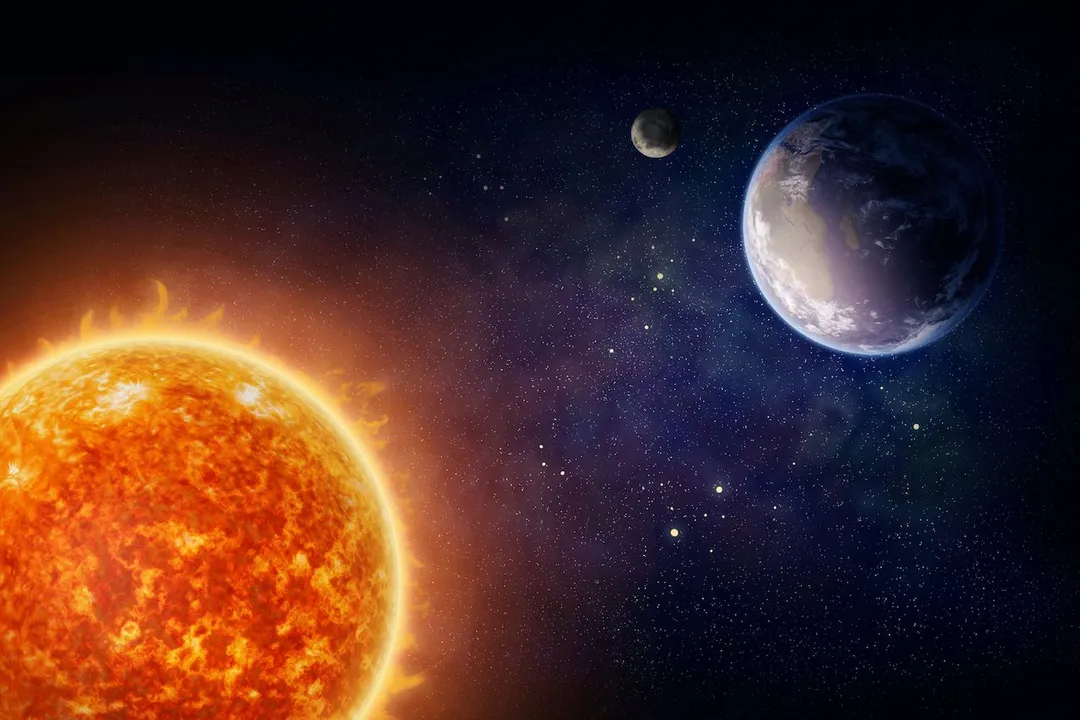
The Sun, the brilliant powerhouse at the center of our cosmic neighborhood, is classified by astronomers using a specific system that tells us a great deal about its nature, size, and current stage of life. Formally, our star is a G-type main-sequence star, often abbreviated in technical notation as G2V. [1][4][5][7] The "G" denotes its spectral type, related to its surface temperature, and the "V" signifies it belongs to the main sequence, the stable phase where most stars spend the bulk of their existence. [1][4]
This G-type classification leads to the common, though technically informal, description of our star as a yellow dwarf. [1][5] This moniker is somewhat misleading, as the Sun's actual light, when viewed from space or high in the atmosphere, is white. [1][5] It only appears yellow to us on Earth because of the way our atmosphere scatters shorter wavelengths of light away from our direct line of sight. [1][5]
# Physical Dimensions
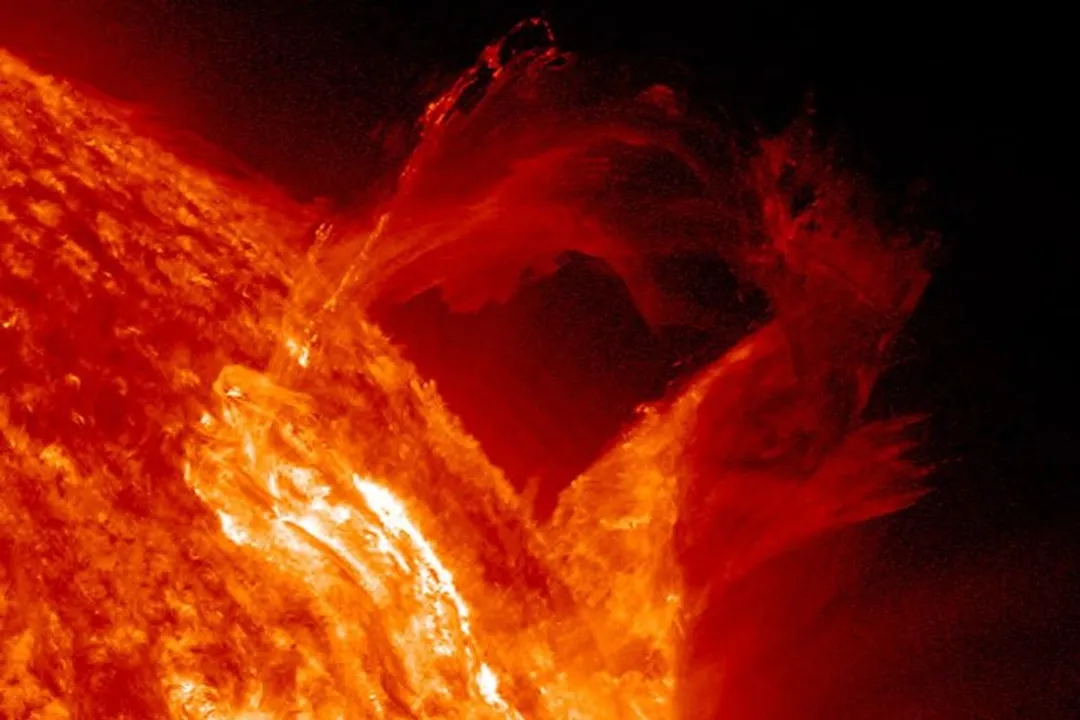
When we talk about the Sun's physical scale, the numbers are staggering, especially when related back to the only planet orbiting it that supports life. The Sun is nearly a perfect sphere; its equatorial and polar diameters differ by a mere $10$ kilometers. [4] Its mean radius measures about $696,000$ kilometers, [2] resulting in a total diameter of approximately $1.392$ million kilometers. [2][6] To visualize this, you could line up about $109$ Earths across the Sun’s face. [2][6]
Its mass is equally dominant in our local environment. The Sun contains about kilograms of material, [4] which translates to roughly $333,000$ times the mass of Earth. [2][4] This concentration of matter is so immense that the Sun accounts for approximately $99.86%$ of the total mass of the entire Solar System. [2][7] The remaining $0.14%$ is everything else—the planets, the asteroid belt, comets, and the Kuiper Belt objects. [2]
As a result of this overwhelming gravitational dominance, some astronomers have described our system poetically as "the sun plus some debris". [2]
The difference in volume is perhaps the most arresting comparison. While $109$ Earths fit across the diameter, the volume comparison is far more dramatic. NASA statistics suggest that about $1.3$ million Earths could fit inside the Sun. [2][5][7] This enormous volume, packed with plasma, is held in place by gravity but kept from collapse by the outward pressure generated by nuclear fusion in its core. [5][7] This internal pressure, which balances the gravitational pull, is a defining characteristic of any main-sequence star. [5]
# Contextual Scale
The frequent use of "average-sized" or "medium-sized" to describe the Sun is a point of subtle confusion when comparing it to the entire stellar population of the galaxy. [4][8] On one hand, it is average when considered within the context of what astronomers expect for a stable, middle-aged star that can support planets like ours. [8] Furthermore, it is far from the extremes found elsewhere in the Milky Way. [2] For example, it is significantly smaller than the giant stars we observe, such as the red giant Betelgeuse, which is hundreds of times larger in diameter. [2][6] We have discovered stars that are $100$ times larger in diameter than the Sun. [2][3]
However, looking at the raw statistics of stellar populations reveals a skewed reality. [4][8] The vast majority of stars in the universe are red dwarfs, which are far smaller and less massive than the Sun, often making up around $70%$ of the total stellar count. [4][8] This means that by pure frequency, the Sun is relatively large; it is brighter than about $85%$ of the stars in the Milky Way. [4] In this sense, the Sun sits in the top percentile of stellar size and brightness, making the term "average" imprecise if not carefully defined. [4][8] When astronomers call it average, they are usually referring to its place within the distribution of main-sequence stars or using a logarithmic scale for mass where it sits centrally between the low-mass red dwarfs and the rare, massive giants. [8]
| Feature | Sun’s Value | Comparison Point | Source Type |
|---|---|---|---|
| Classification | G2V | Main Sequence | [4][5] |
| Diameter | million km | Earth diameters | [2][6] |
| Mass | Earth Mass | of Solar System Mass | [2][4] |
| Photosphere Temp. | K ( F) | Cooler than the Corona ( K) | [4][7] |
| Lifespan Status | Halfway through Main Sequence | billion years remaining | [5] |
# Stability Anchor
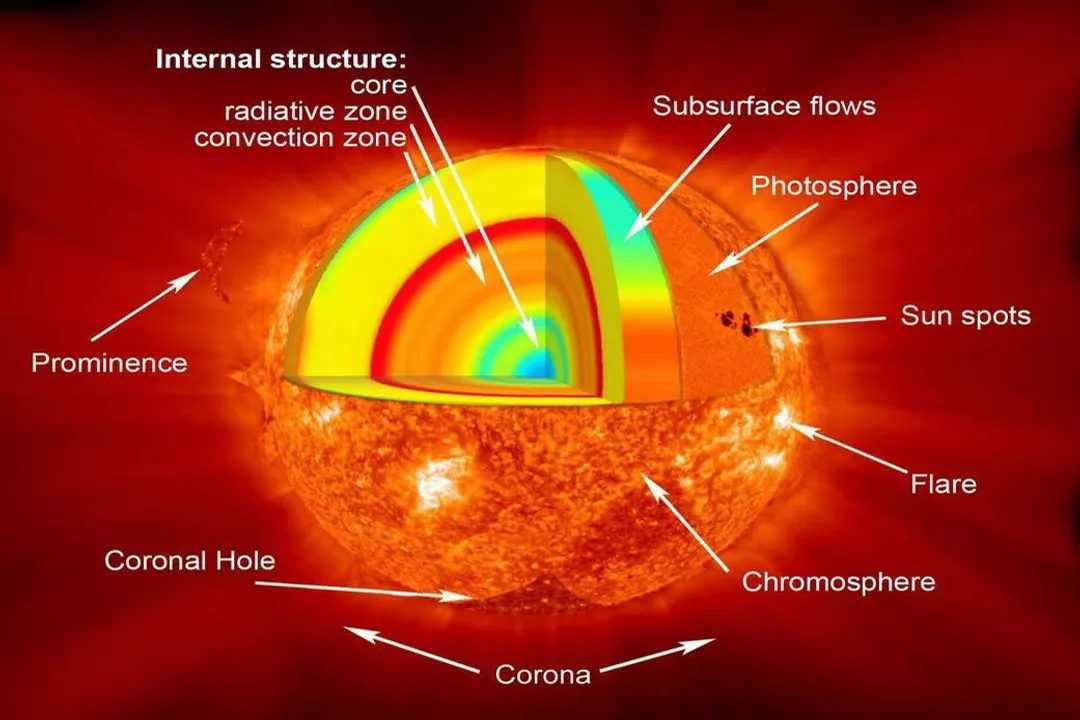
The Sun is currently about $4.6$ billion years old and is settled into its main-sequence phase, a period of reliable energy output fueled by converting hydrogen into helium in its core. [4][5][7] This state of hydrostatic equilibrium—the balance between gravity pulling in and fusion pressure pushing out—is what provides the crucial, steady stream of energy that makes life on Earth possible. [2][7]
When we consider the Sun's classification, it is this longevity that makes it so interesting to us. While far more massive stars burn brighter and hotter, they exhaust their fuel rapidly—sometimes in just millions of years. [5] The Sun, however, is predicted to remain stable on the main sequence for roughly another five billion years. [5][7] This protracted stability allows complex biology to develop and evolve over geological timescales—a condition not afforded by the massive, short-lived stars that dominate the high-mass end of the spectrum. [5] Therefore, while statistically it might be larger than the majority of stars (the faint red dwarfs), its size and class place it in the Goldilocks zone of stellar evolution: hot enough to foster warmth and light, but not so hot that its lifetime is too brief for inhabitants to arise and gaze back at it. [2][5] This longevity, tied directly to its moderate mass, is arguably the most significant aspect of its size classification for any life-bearing world.
Related Questions
#Citations
Sun - Wikipedia
Our Sun: Facts - NASA Science
How Does Our Sun Compare With Other Stars? - NASA Space Place
In what sense is the sun “average” sized if it's larger than 95% of all ...
The Sun: Understanding Its Classification as a Star
How big is the sun? - Space
Our Sun is a Star - Facts About the Sun | Exploratorium
Is the Sun really a medium size star? - Astronomy Stack Exchange