Can we say the Sun is a star?
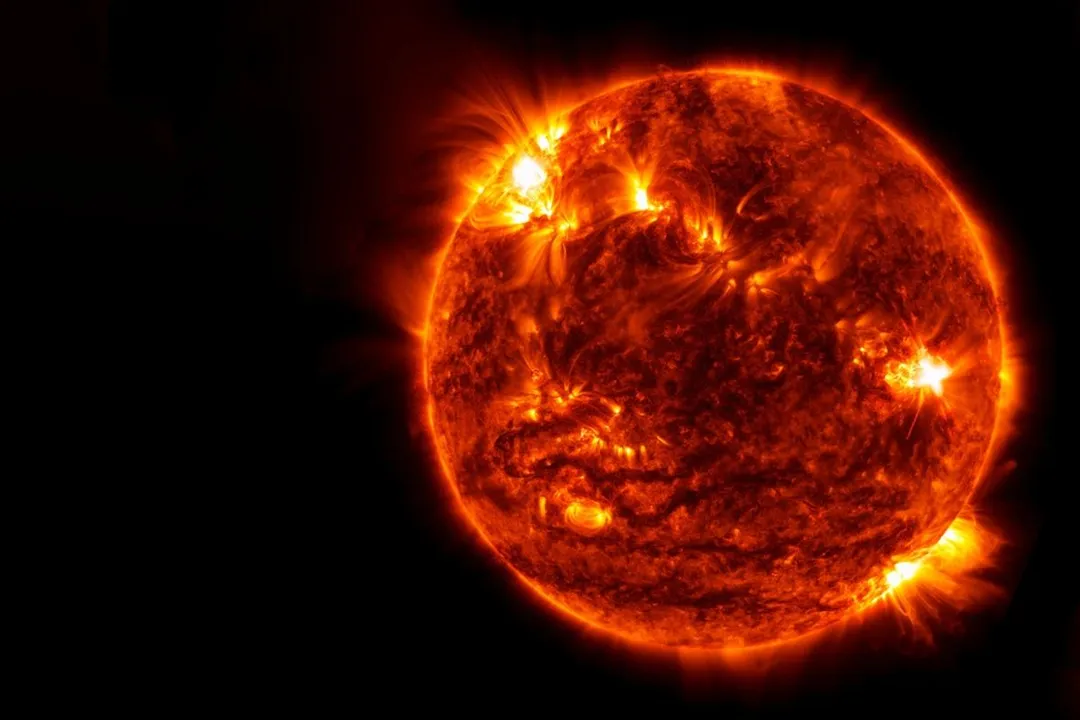
That giant, blazing orb dominating our daytime sky is, without question, a star. While our everyday experience makes it seem unique—it is the only one we see during the day, after all—scientifically speaking, the Sun fits every definition required to be categorized as a star, just like the countless pinpricks of light visible on a clear night. [2][4] The confusion often arises not from what the Sun is, but from its extreme proximity to us, which skews our perception of its size and brightness compared to its distant cosmic counterparts. [4]
# Basic Classification
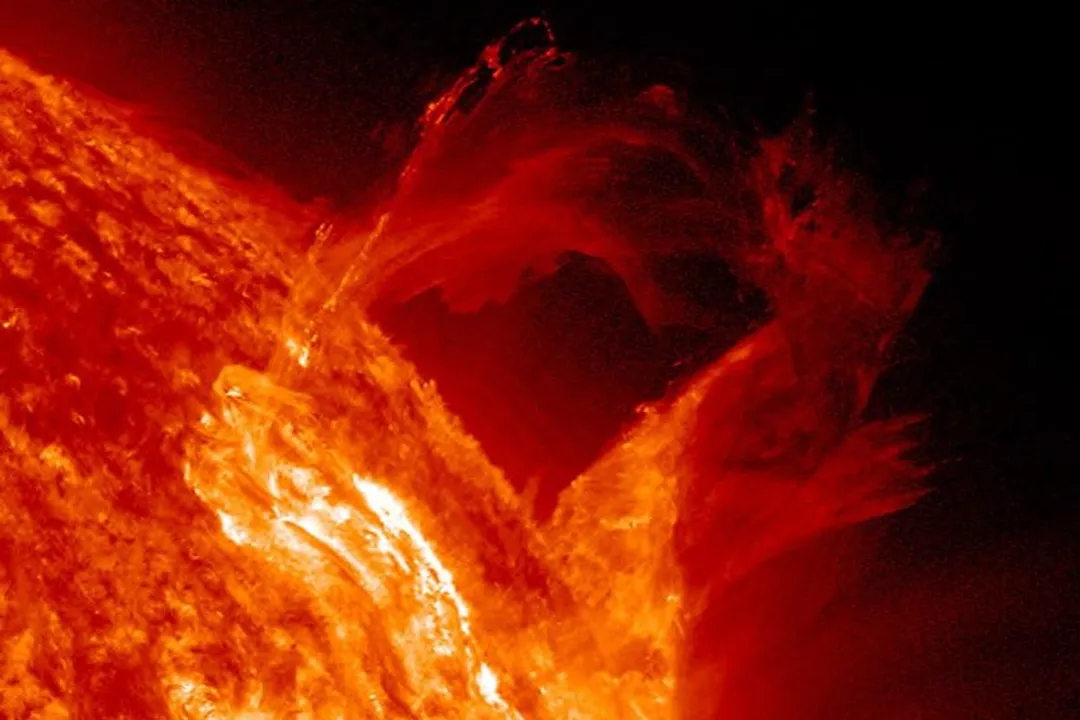
When astronomers classify the Sun, they place it firmly within the stellar category. It is a massive, self-luminous celestial body made up primarily of extremely hot plasma. [1] Its defining characteristic, the physical process that separates it from planets like Jupiter or Saturn, is that it generates its own energy through sustained nuclear fusion occurring deep within its core. [2][8] This process involves the constant conversion of lighter elements, mainly hydrogen, into heavier ones like helium, releasing staggering amounts of light and heat in the process. [1][2]
Planets, no matter how large or hot they might become internally (like the gas giants in our own system), do not reach the necessary density and temperature to initiate this self-sustaining thermonuclear reaction. [3] The absolute requirement for being a star boils down to achieving that critical mass where core pressure ignites sustained hydrogen fusion. This threshold is why objects like Jupiter, despite their size, remain planets; they simply lack the kilogram requirement to kickstart their own internal, self-sustaining furnace. [3]
# Stellar Definition
The fundamental properties of the Sun align perfectly with the scientific definition of a star. It is a vast sphere of plasma held together by its own immense gravitational pull. [1] Measuring its physical scope, the Sun has a diameter of approximately 1.39 million kilometers. [1] Its mass is staggering, calculated to be about kilograms. [1]
Our Sun is currently classified as a G-type main-sequence star, often referred to as a Yellow Dwarf. [1][8] This classification relates to its surface temperature and its stage in the stellar life cycle. [8] It has been shining steadily for about 4.6 billion years and is expected to continue doing so for another five billion years or so before evolving off the main sequence. [1] It is through the detailed study of our nearby Sun that scientists gain crucial observational data to understand the physics governing the billions of other stars scattered across the universe. [7][8]
# Proximity Effect

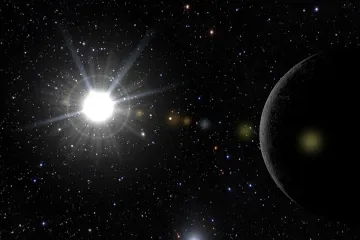
The main reason our Sun seems special is purely a matter of distance. It is located about 93 million miles (or one Astronomical Unit, AU) away from Earth. [1] This proximity is negligible on a galactic scale but enormous in human terms. Because it is so close, it appears vastly larger and brighter than any other star we can see, which can lead to the incorrect assumption that it must be fundamentally different. [4]
Consider the apparent magnitude versus the absolute magnitude. The Sun is an average, middle-of-the-road star when compared to the entire population of the Milky Way. In fact, when you look up at the night sky, the vast majority of visible stars are smaller, cooler, and less luminous than our Sun. [4] While the Sun is certainly not a giant among stars, it outshines the majority of its peers. If you were to survey a random star in the Milky Way, you'd find that our Sun shines brighter than roughly 85% of its stellar neighbors, meaning it's decidedly above average in terms of luminosity, even if it's 'average' in terms of stellar class. [4] Stars like Sirius or Rigel look brighter to us only because they are far more intrinsically luminous or, in Sirius's case, slightly closer than the Sun is to us, even though they are still incredibly distant. [4]
# Stellar Diversity
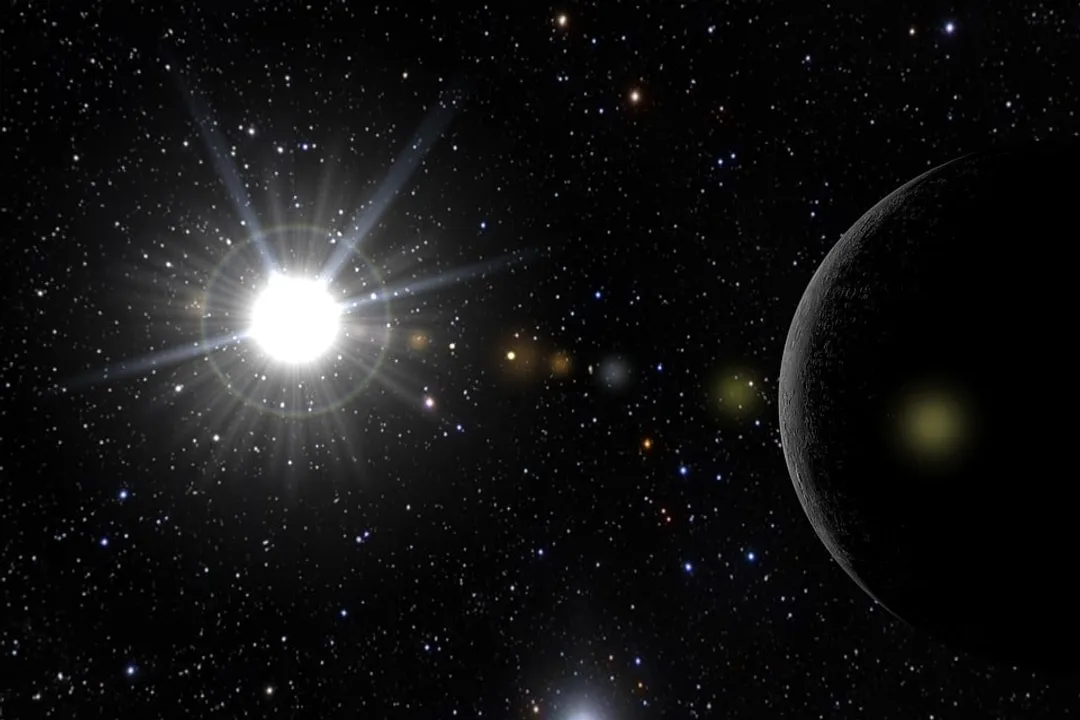
The cosmos is filled with stars of incredible variety, forming a spectrum of sizes, temperatures, and lifecycles. [4] If the Sun were the only type of star, the universe would be far less interesting. Stars can range from dim, long-lived Red Dwarfs—which are far less massive than the Sun and may burn their fuel for trillions of years—to colossal Blue Giants that burn through their fuel in mere millions of years. [4]
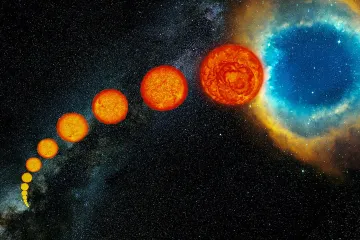
Stars are categorized based on their spectral type and luminosity class, often visualized using the Hertzsprung-Russell (H-R) diagram. [8] The Sun sits comfortably on the main sequence, the diagonal band where stars spend most of their lives fusing hydrogen. [8] The Sun’s G2V classification indicates its temperature profile (G-type) and its main-sequence status (V). [8] Stars that have exhausted their core hydrogen will evolve into giants or supergiants, or, if they are small enough like the Sun, eventually shrink into a white dwarf. [4] Understanding this diversity reinforces the idea that the Sun is merely one specific, well-understood example of a common cosmic object. [4]
# Historical Viewpoint
The understanding that the Sun shares its nature with the distant stars is a relatively modern realization in human history. For millennia, most cultures viewed the Sun and Moon as unique celestial bodies, separate from the fixed, distant stars. [6] The major conceptual shift began with the realization, championed by thinkers like Copernicus, that the Earth orbits the Sun, not the other way around. [6]
It took time after establishing the heliocentric model for astronomers to conclusively prove the Sun's stellar nature. Early astronomers knew the Sun was massive, but confirming it was made of the same stuff and operated by the same physical laws as the background stars required advances in spectroscopy and physics. [6] By the time scientists could accurately measure distances and analyze stellar spectra, the conclusion was unavoidable: the Sun is simply the closest star to us, allowing us to examine its structure in unmatched detail. [6][7]
# Sun's Specifics
To truly appreciate the Sun as a star, one must appreciate its internal workings. At its center, the core temperature reaches about 15 million degrees Celsius. [1] This incredible heat and pressure drive the proton-proton chain reaction, fusing about 600 million tons of hydrogen into helium every second. [1]
Here is a brief comparison of the Sun's primary attributes:
| Property | Value | Unit |
|---|---|---|
| Classification | G2V (Yellow Dwarf) | Stellar Type |
| Diameter | Kilometers | |
| Mass | Kilograms | |
| Surface Temperature | Kelvin | |
| Age | Billion Years | |
| Fusion Rate | 600 million | Tons H/s |
| [1][8] |
We can use the Sun's structure as a template for understanding distant stars, essentially acting as a baseline. When we look at a faraway star whose light has traveled hundreds of light-years, we are essentially reading its profile through the lens of what we already know about our own star's physics, albeit adjusted for its different mass and age. [7] For instance, studying the Sun's magnetic activity and solar flares gives us context for interpreting flares observed on other, more distant stellar bodies, helping confirm that the mechanisms driving these celestial powerhouses are universal. The fact that we can measure the magnetic field of our Sun directly, down to its granular structure on the surface, offers an empirical foundation for modeling the magnetic fields of stars light-years away that we can only observe indirectly.
Related Questions
#Citations
Sun - Wikipedia
Our Sun: Facts - NASA Science
ELi5 what makes the sun a star and not a planet? And why ... - Reddit
Why is the sun considered a star? Are there different types ... - Quora
How Do We Know The Sun Is a Star? ☀️ #astronomy ... - YouTube
When was it first determined that the Sun is a star?
Sun as a Star - NSO - National Solar Observatory
Ask a Solar Physicist - Stanford Solar Center
Is a Sun a Star or a Planet? How We Know - Discover Magazine