When a Sun like star's hydrogen runs out, it first expands into a _____.?
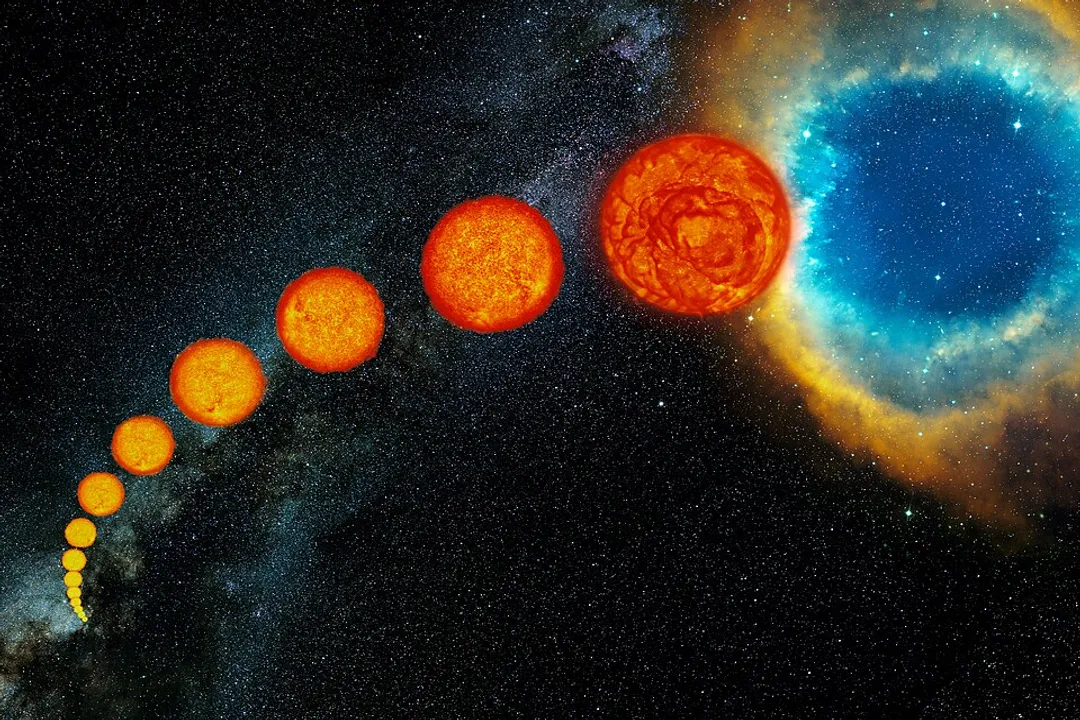
The moment a star like our Sun exhausts the hydrogen fuel in its core marks a definitive end to its stable, main-sequence existence. This dramatic transition is characterized by a sudden, massive change in the star's physical structure. When that core hydrogen runs out, the star first swells outwards, transforming into a Red Giant.
# Fuel Depletion
During its long "adult" life, which can span billions of years, the star has been steadily converting hydrogen into helium in its central furnace via nuclear fusion. This ongoing process creates the outward pressure necessary to counteract the crushing inward pull of gravity, keeping the star in a state of hydrostatic equilibrium. Once the supply of hydrogen fuel within the very center is depleted, the engine stalls in that region. What remains is a core composed primarily of inert helium "ash". Because fusion has ceased in this central region, the core can no longer support itself against the immense inward force of gravity, causing it to begin contracting and heating up internally.
# Shell Ignition
As the helium core shrinks, the surrounding layers of the star, particularly the shell immediately outside the core, are squeezed tighter and subjected to increasing temperatures. This compression eventually raises the temperature and pressure in that hydrogen-rich shell high enough to kickstart nuclear fusion there, even though the core itself is no longer fusing. This process is known as shell burning.
This ignition of hydrogen fusion in a shell surrounding the inert core releases a significantly greater amount of energy than the previous core fusion ever did. The dramatic increase in outward thermal and radiation pressure generated by this new, intense energy source overwhelms the gravitational forces holding the outer layers of the star in place.
# Stellar Expansion
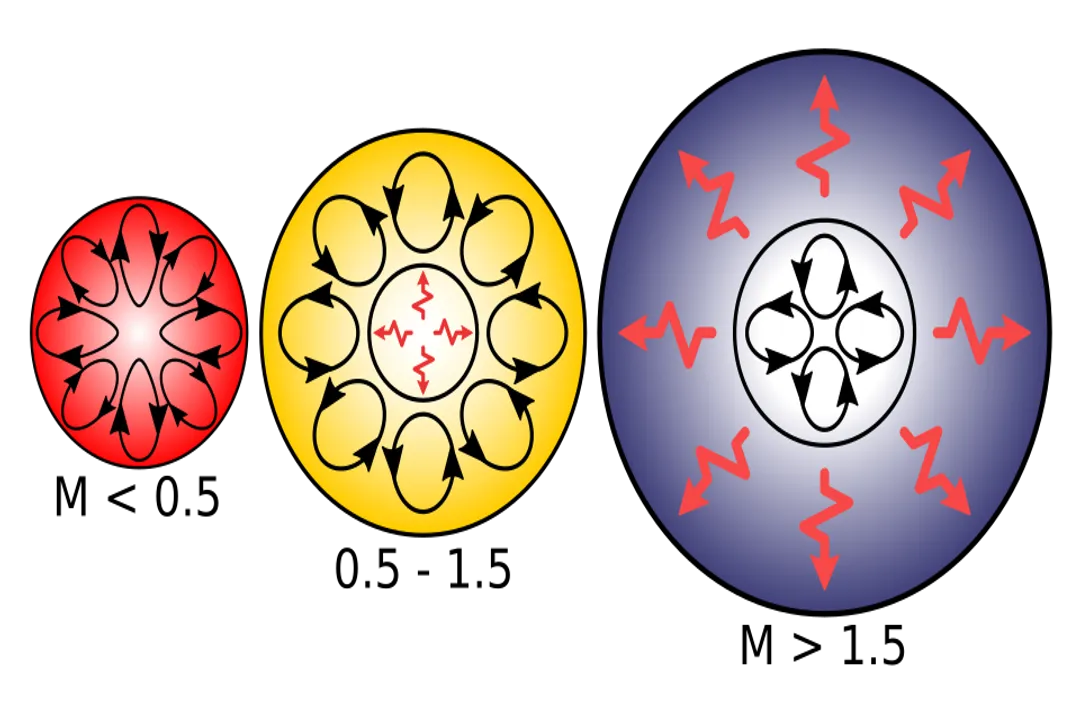
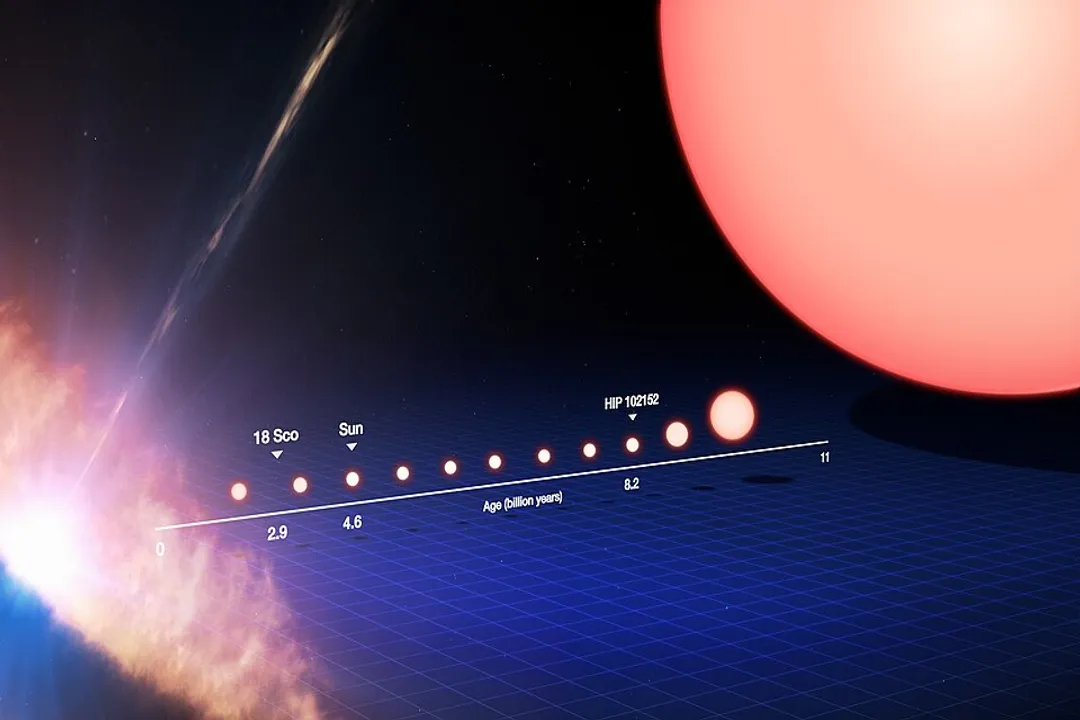
The massive output of energy from the shell-burning stage forces the star's outer envelope of gas to expand outward dramatically. This expansion can cause the star to swell to many times, or even hundreds of times, its original diameter. Simultaneously, as this vast amount of energy is spread across a much larger surface area, the temperature of the star's surface drops significantly. This cooling causes the star to glow with a reddish hue, giving this evolutionary stage its name: the Red Giant. The star has traded its main sequence stability for vast size and a cooler exterior temperature.
For a star with a mass similar to the Sun, the expansion is projected to be immense. Astronomers calculate that when our Sun enters this phase, its radius is expected to swell so much that it will consume the orbits of Mercury and Venus, and may extend all the way to where Earth currently orbits. If the Earth were sitting today where the Sun is, the Red Giant Sun's visible surface would be far past our current position, illustrating the sheer volume of stellar material being pushed outward by that shell-burning pressure.
# Energy Transition
It is instructive to contrast the two primary burning phases of the star's life. The main-sequence stage, powered by sustained core hydrogen fusion, is exceptionally long-lived because the energy generation is stable, regulated by the precise balance between gravity and internal pressure over billions of years. In contrast, the subsequent shell hydrogen burning that defines the Red Giant phase is characterized by far less stability, often leading to pulsations as the thin shell heats and cools rapidly. While the shell burns hotter and releases far more total energy per second, this phase is comparatively short in stellar lifetimes, lasting only a fraction of the time the star spent on the main sequence.
# Subsequent Stages
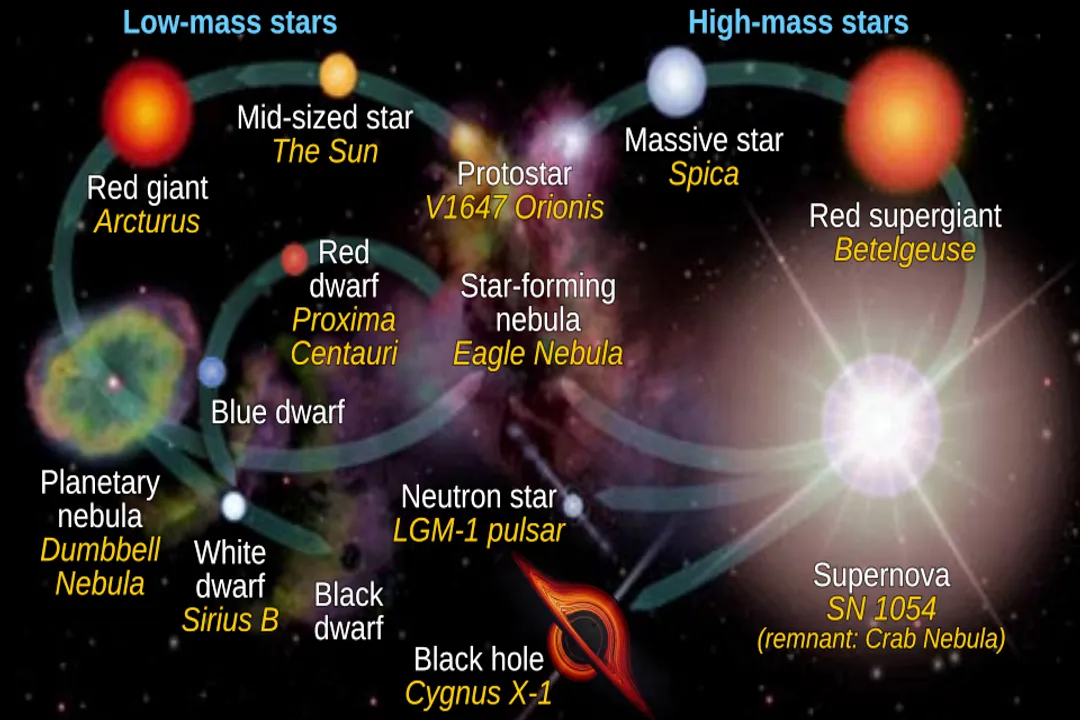
The path the star takes after the Red Giant phase is fundamentally determined by its initial mass. For stars roughly the mass of our Sun, after exhausting the hydrogen in the shell and beginning to fuse helium in the core (a subsequent event not immediately following the initial expansion), the star will eventually shed its outer layers entirely. This ejected material forms a beautiful, glowing shell known as a planetary nebula. What remains at the center is a small, incredibly dense, and very hot stellar remnant called a White Dwarf. Conversely, stars significantly more massive than the Sun do not become standard Red Giants but instead become Supergiants, leading to much more energetic and explosive final chapters.
# Stellar Evolution Context
The entire process of a star’s life, from birth in a nebula to its eventual demise, is called stellar evolution. The transformation into a Red Giant is a non-negotiable step for Sun-like stars, representing the necessary intermediate stage between their long, stable hydrogen-burning life and their final, compact end-state. While the specific trigger—hydrogen depletion in the core—is universal for this class of star, the exact timing and intermediate steps leading up to the Red Giant phase depend on the star's initial characteristics, such as its initial metal content and mass. For our own Sun, which is considered a relatively average, middle-aged star, this cosmic transformation is not an immediate event but is reliably predicted to begin in about five billion years.
Related Questions
#Citations
[FREE] When a sun-like star's hydrogen runs out, at first it expands into
When a sunlike star's hydrogen runs out, at first it expands | Quizlet
When a star runs out of hydrogen, it begins using helium as fuel. Is ...
Why does a star expands and throw out its shell when it becomes a ...
When hydrogen in the star runs out, what stage of their life ... - CK-12
Ask Astro: How quickly will the Sun become a red giant?
Stellar Life Cycle | Earth Science - Lumen Learning
Stellar evolution - Wikipedia