What causes the star's surface temperature to drop significantly during the Red Giant phase?
Answer
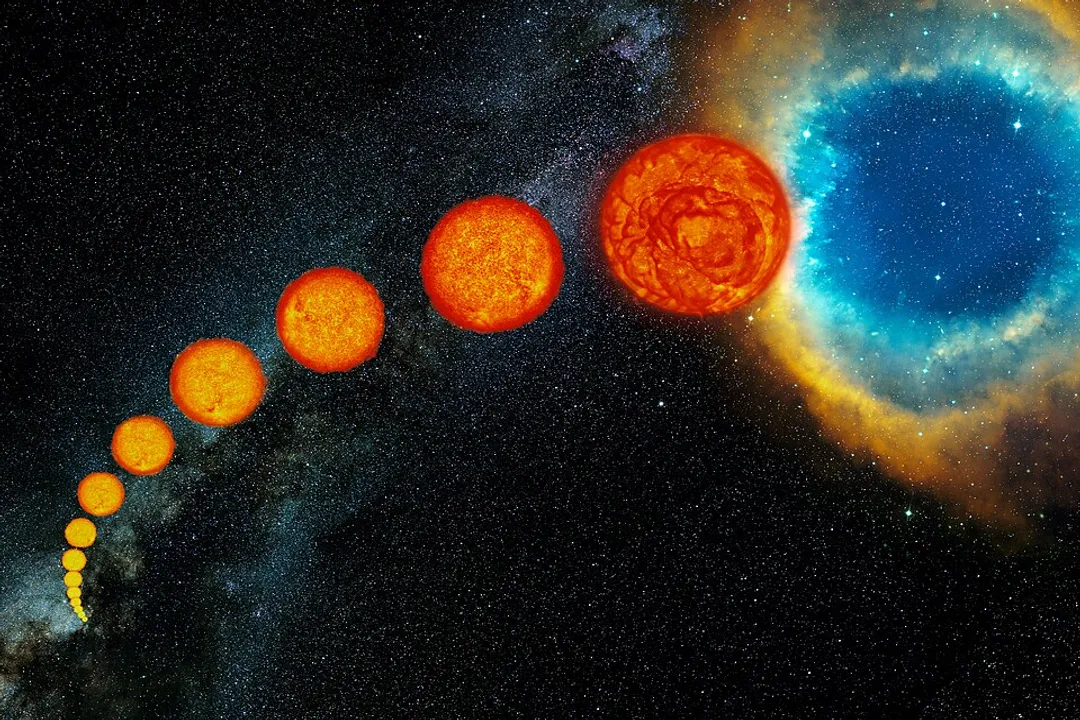
The massive output of energy spreads across a much larger surface area
As the vast amount of energy generated by shell burning is spread across a much larger surface area due to expansion, the temperature of the star's surface drops significantly, causing it to glow reddish.
Related Questions
What definitive event marks the end of a Sun-like star's stable, main-sequence existence?What is the immediate structural transformation a Sun-like star undergoes after its core hydrogen depletion?What is the inert material left in the core after core hydrogen fusion ceases?What process begins in the shell surrounding the contracting helium core of a Sun-like star?How does the energy output during the hydrogen shell burning phase compare to the previous core fusion phase?What causes the star's surface temperature to drop significantly during the Red Giant phase?According to predictions for the Sun, how far might its radius swell during the Red Giant phase?How does the stability of the shell hydrogen burning phase contrast with the main-sequence stage?What remnant is left at the center of a Sun-like star after it sheds its outer layers following the Red Giant phase?What term describes the entire process of a star's life from birth to demise?What fate awaits stars significantly more massive than the Sun after leaving their initial stable phase?