What two opposing forces maintain stability during a star's long main sequence life?
Answer
Outward thermal pressure perfectly balancing inward crush of gravity
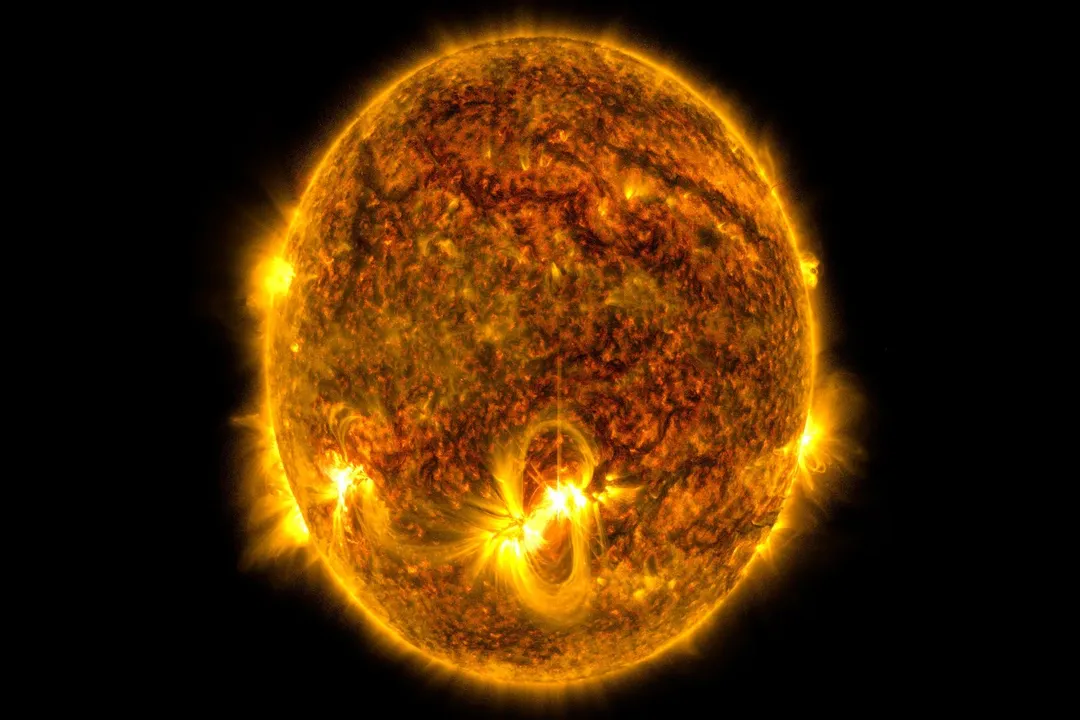
The stability of a star, particularly during the majority of its life spent on the main sequence, is predicated on a perfect equilibrium between two dominant forces. The energy generated by the sustained fusion of hydrogen into helium in the core creates a powerful outward thermal pressure. This outward push is precisely countered by the inward gravitational force exerted by the star's own massive structure. When the hydrogen fuel in the center is depleted, this balance is broken, gravity wins momentarily, causing contraction and heating, which subsequently ignites hydrogen burning in the surrounding shell.
Related Questions
What scientific process describes the continuous creation of heavier elements from lighter ones in a star's stellar engine?What two opposing forces maintain stability during a star's long main sequence life?In massive stars, what fusion products immediately follow the initial helium burning into carbon and oxygen?Why does the fusion of iron atoms in a massive star's core lead to core collapse rather than sustained energy release?How does the relative duration of the silicon-burning stage compare to the star's main sequence life?What critical mass limit, often cited, signals the end of the balancing act when the iron core collapses?What subatomic particles are formed when protons and electrons are squeezed together during the rapid iron core implosion?What phenomenon causes the abrupt halting of the inner iron core's implosion after reaching maximum density?What mechanism, involving rebound and particle bursts, results in the spectacular Type II supernova explosion?If a star's remnant core mass exceeds approximately 3 solar masses, what object results from the continued gravitational collapse past neutron degeneracy pressure?