What is the approximate main sequence lifespan for our Sun, a yellow dwarf star?
Answer
10 billion years
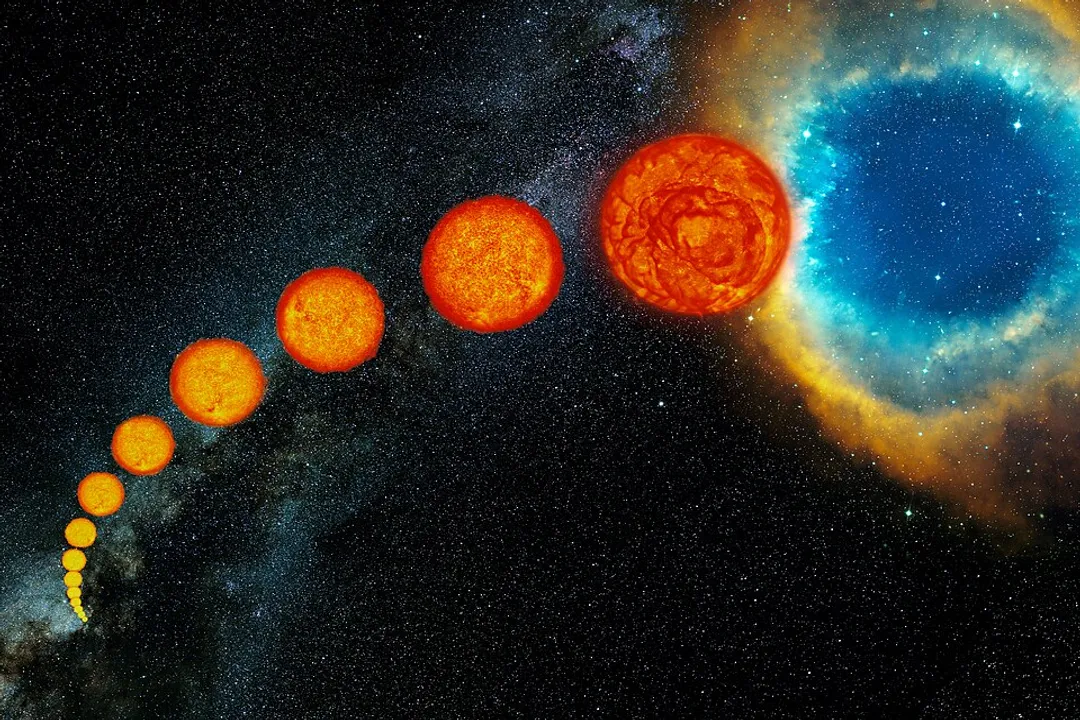
The main sequence is the longest and most predictable phase of a star's life, characterized by hydrogen fusion in the core. For an average star, specifically noted as a yellow dwarf like our Sun, this stable phase is expected to last for approximately 10 billion years. This lifespan allows the star to efficiently convert hydrogen into helium. In contrast, significantly more massive stars consume their fuel at a much faster rate, lasting only millions of years on the main sequence, while low-mass red dwarfs are modeled to last for hundreds of billions to trillions of years, demonstrating the staggering variation dictated by initial mass.
Related Questions
What is the approximate main sequence lifespan for our Sun, a yellow dwarf star?How long might an O-type star, 10 solar masses, remain on the main sequence?What fundamental property dictates a star’s timeline and evolutionary fate?What stage precedes white dwarf formation for Sun-like stars?What element forms the critical stopping point in fusion for high-mass stars?What remnant forms from a supernova if the initial mass was high enough?What diagram is mapped by comparing star clusters that formed at the same time?What is the projected lifespan range for extremely common, cool Red Dwarfs?What physical state establishes when a star settles onto the main sequence?Why do massive stars utilize their hydrogen fuel at a breakneck pace?