Is the Sun an average star?
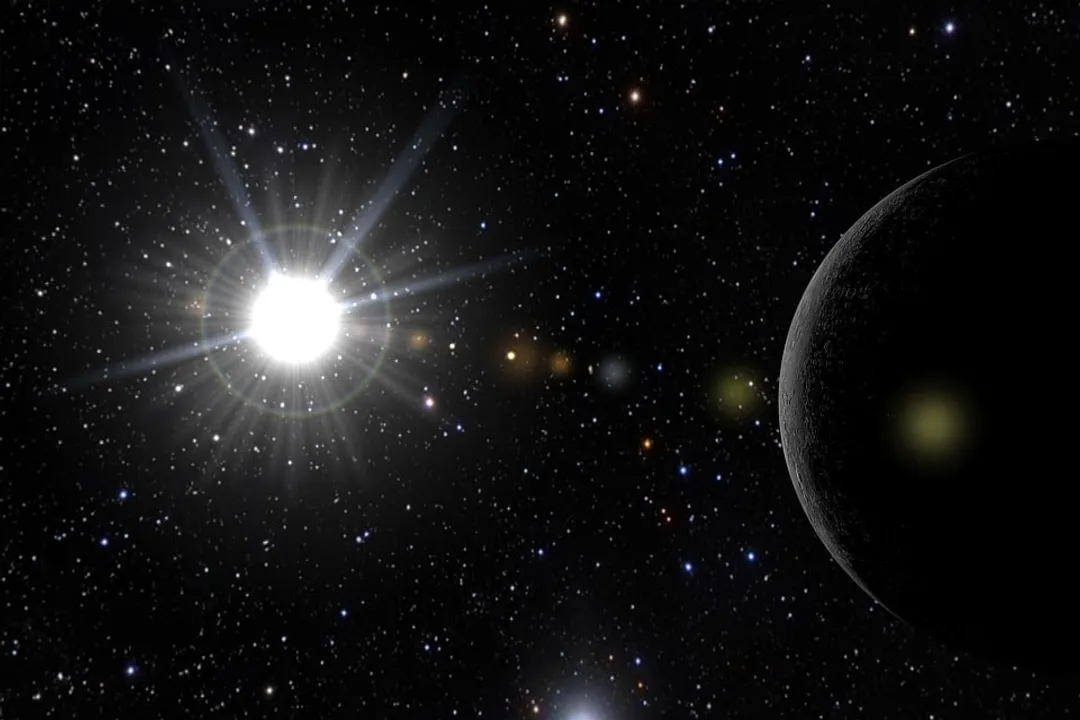
The label "average star" is one of the most frequently applied descriptions for our Sun, yet this simple adjective hides a surprisingly complex astronomical reality. Whether this classification holds true depends entirely on the frame of reference one chooses—are we comparing it to the entire galactic population, or only to the subset of stars we typically study or see? The Sun, officially designated a G2V main-sequence star, sits near the middle of the Hertzsprung-Russell diagram in terms of temperature and luminosity for certain types of stars, but when surveying the galaxy's billions of inhabitants, its standing changes dramatically.
# Stellar Data
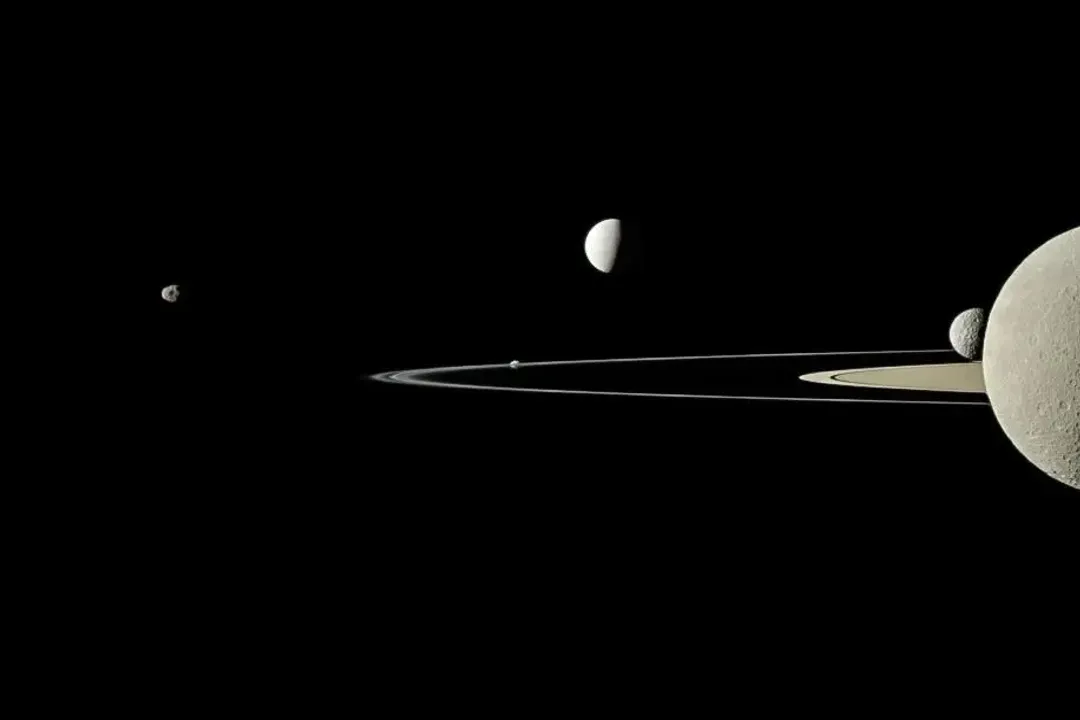
To assess the Sun's average status, we must first quantify what the Sun is. Its mass is substantial, equating to approximately . This single body contains about $99.86%$ of the entire mass of our solar system. In terms of size, its diameter is about , which translates to roughly 109 times the diameter of Earth. Its surface temperature hovers around . These specific figures position the Sun squarely in the yellow dwarf category. For general comparison, it is larger and brighter than the majority of stars found throughout the Milky Way.
Here is a quick comparison to put the Sun’s properties into perspective against other celestial benchmarks:
| Property | The Sun | Earth | Sirius A (Brightest Night Sky Star) |
|---|---|---|---|
| Mass (Relative) | $1$ Solar Mass | Earths | Solar Masses |
| Diameter (Relative) | Earth Diameters | $1$ Earth Diameter | Solar Diameters |
| Spectral Type | G2V | N/A | A1V |
| Luminosity (Relative) | $1$ Solar Luminosity | Negligible | Solar Luminosities |
# Size Context

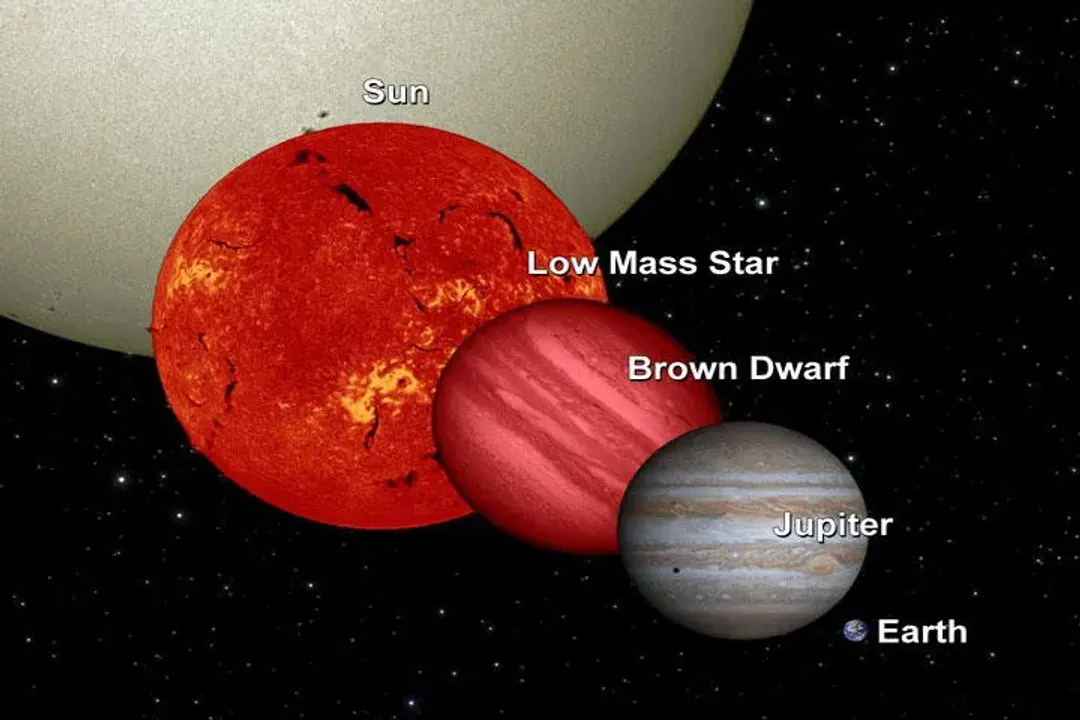
The term "average" often implies being squarely in the middle, not an outlier. When comparing the Sun to the extremes of stellar size, it certainly seems moderate. For instance, it is dwarfed by massive stars like Betelgeuse, a red supergiant whose diameter is so large that if it replaced our Sun, its edge would extend past the orbit of Jupiter. On the opposite end of the spectrum, the Sun is gigantic compared to stellar remnants such as white dwarfs, which are often only about the size of Earth. From this perspective, looking at the range of possibilities, the Sun occupies a comfortable, middle-ground size classification.

# Small Star Rarity
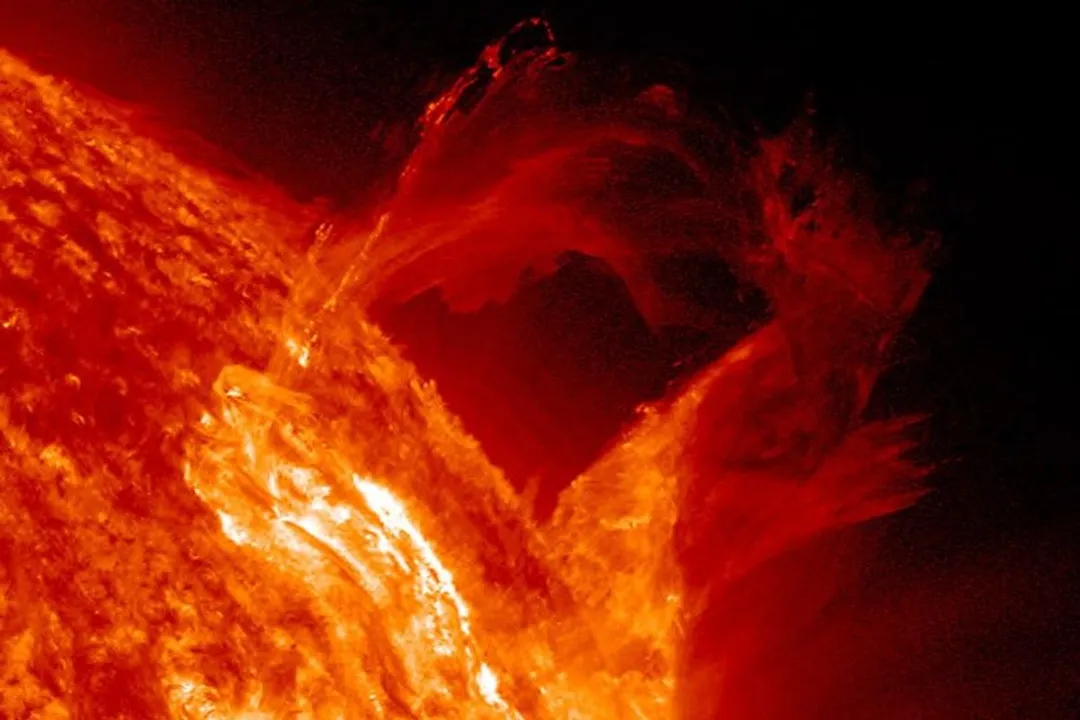
The reason the Sun is often called not a typical star rests in the census of the galaxy. If an astronomer were to randomly select a star in the Milky Way, they would have an overwhelmingly high probability of encountering a red dwarf star, classified as an M-type main-sequence star. These M-dwarfs are much smaller, cooler, and significantly less luminous than our Sun.
Because red dwarfs outnumber G-type stars like our Sun by a massive margin—potentially accounting for up to three-quarters of all stars in the galaxy—the Sun is statistically rare compared to the most common members of the stellar community. It is far more massive and luminous than the typical, numerous stellar object. In the context of frequency, the Sun is an unusual, bright outlier, not the norm. To use a simplified analogy: if the stellar population were a city council, the Sun would be one of the few highly visible, wealthy members, while the vast majority of the population are much poorer, dimmer constituents who rarely make the evening news.
# Typical Stage
Despite its statistical rarity, the Sun maintains the "average" label for a distinct reason rooted in stellar evolution and classification: it is a main-sequence star. The vast majority of stars, regardless of their final mass, spend the longest portion of their lives fusing hydrogen into helium in their cores—this is the main sequence phase. The Sun is currently about halfway through this stable phase. In this sense, its behavior and current life stage are representative of what most stars are doing for billions of years. Furthermore, its spectral type, G2V, places it in a relatively temperate grouping when considering the sequence from the hottest, brightest blue stars down to the coolest, dimmest red dwarfs. It is an archetypal representation of a solar-mass star successfully navigating the primary adult life of a star.
This distinction between statistical abundance and evolutionary typicality is key to the confusion. We call it average because it is a perfect specimen of a middle-aged, solar-type star, but we must acknowledge that solar-type stars are themselves a minority population.
One interesting implication of this framing is seeing the Sun as an ideal candidate for long-term habitability, precisely because it is not an extreme outlier on the main sequence. Stars that are much more massive burn through their fuel too quickly—their main sequence phase lasts only millions of years, not billions. The Sun’s relatively long main-sequence lifespan, estimated at around 10 billion years total, provides the necessary timescale for complex biological evolution to take hold on an orbiting planet, something that statistically common red dwarfs struggle to offer due to their much longer, but often tumultuous, early lives.
# Life Cycle Comparison
The Sun's fate also plays a role in how we classify it. It is destined to swell into a red giant and then shed its outer layers to become a white dwarf—a common, relatively quiet end for a star of its mass. This contrasts with the explosive deaths of the most massive stars, which end as supernovae, or the slow fading of the least massive red dwarfs into theoretical black dwarfs over timescales exceeding the current age of the universe. Its life path is highly conventional for its mass bracket.
Considering the sheer volume of stars that are not on the main sequence—stars that have already become giants, or have collapsed into white dwarfs, neutron stars, or black holes—the Sun is currently playing the most common role available to a star of its specific mass class. However, when considering all possible states of matter that qualify as a "star" at any given time, the statistics still favor the less energetic, dimmer populations.
# Implied Context Bias
It is worth considering the historical context influencing this descriptor. For much of human history, and even into the early days of modern astronomy, our understanding of stellar populations was heavily biased toward what was easily observable. The stars we can see with the naked eye or measure easily are generally the brighter, larger, and rarer ones—the O, B, A, and F types, and indeed, stars like Sirius A. The dim, low-mass red dwarfs, being inherently faint, are much harder to detect unless they are very close to us. Therefore, when early astronomers used the Sun as a baseline, they were inadvertently comparing it primarily to the visible minority, where the Sun does appear quite average in luminosity and size relative to its brighter companions. This observational selection bias likely solidified the "average" label long before comprehensive galactic surveys revealed the true dominance of M-dwarfs.
If we were to construct a representative stellar sample based only on the nearest 100 stars to Earth, the Sun's proportion of the total mass and luminosity in that local sample would appear far more central than its proportion in the entire Milky Way census. This highlights that the concept of "average" is inherently scale-dependent, shifting from "typical of a bright star" to "atypical of all stars" based on the scope of the data set.
# Stability and Habitability
An interesting synthesis of this topic connects the Sun’s classification not to mass or brightness alone, but to its longevity of output. The G2V classification implies a very stable energy output over billions of years, which is arguably the most significant "average" quality from a terrestrial perspective. A star that fluctuates wildly in energy—like many younger, more active low-mass stars—might not provide the steady thermal environment necessary for liquid water to persist on a planetary surface over geological timescales. Therefore, while the Sun is statistically rare in the overall stellar population, it might be considered the ideal average for supporting long-term planetary habitability among stars that are massive enough to support large, active planets like Earth. This stability, inherent in its G-type main-sequence status, is a more crucial metric for us than its position relative to the total count of galactic M-dwarfs.
In summary, the Sun is neither an exceptional giant nor a common dwarf; it is an average main-sequence star that happens to be a statistically rare G-type star compared to the overwhelming majority of smaller, dimmer inhabitants of the galaxy. Its moderate size and stable energy production make it a poster child for what a typical, long-lived star should look like for planetary science, even if it is uncommon in the galactic crowd.
Related Questions
#Citations
In what sense is the sun “average” sized if it's larger than 95% of all ...
How Does Our Sun Compare With Other Stars? - NASA Space Place
The Sun isn't a typical star in the Universe - Big Think
Why is the Sun called an "average star"? - Physics Stack Exchange
Is the Sun a very large star? - Quora
Sun as a Star - NSO - National Solar Observatory
Sun - Wikipedia
The Sun is not an average star - Solar System Observing
Our Sun: Facts - NASA Science
The Sun isn't a typical star in the Universe | by Ethan Siegel - Medium