Why is the Sun not a star?
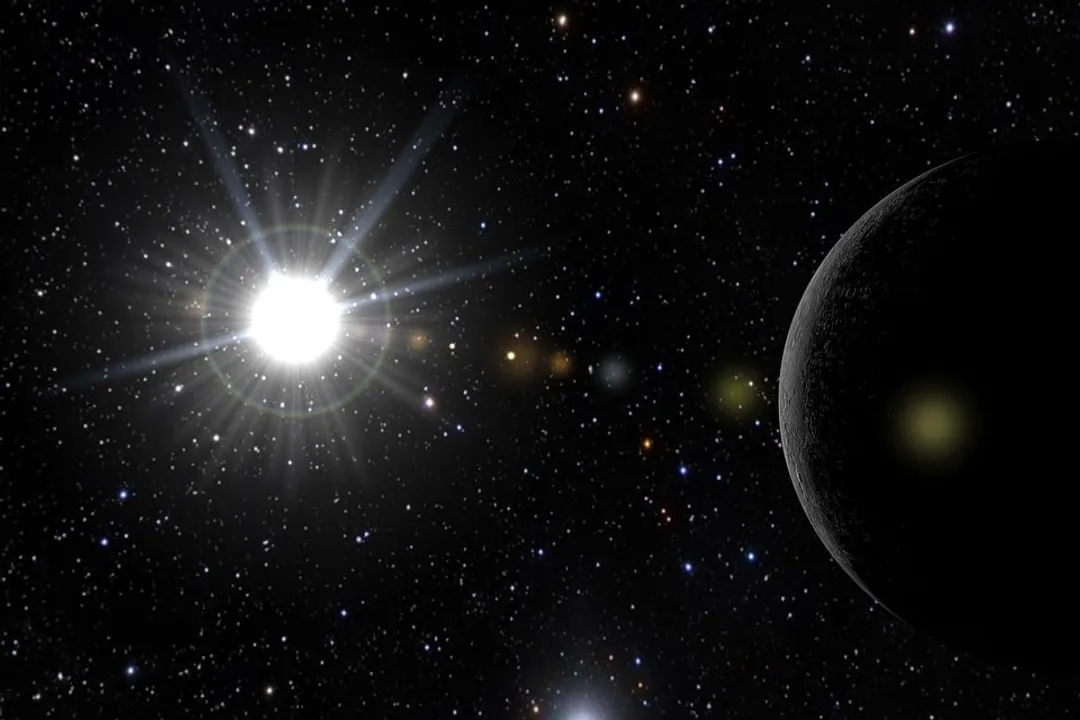
The premise that the Sun is not a star fundamentally misunderstands celestial classification, as the Sun is, by every scientific measure, precisely what we call a star. It is the star around which our entire Solar System orbits. The reason this question frequently arises is rooted in perspective and proximity. To us, the Sun is the massive, brilliant, singular object dominating our daytime sky, an entity seemingly different from the tiny, twinkling pinpricks we see at night, which are also stars. The distinction people often try to make is between our star, the Sun, and their stars, the distant ones. Scientifically, however, the Sun belongs firmly in the stellar category, distinguished from planets by one key physical process.
# Stellar Definition
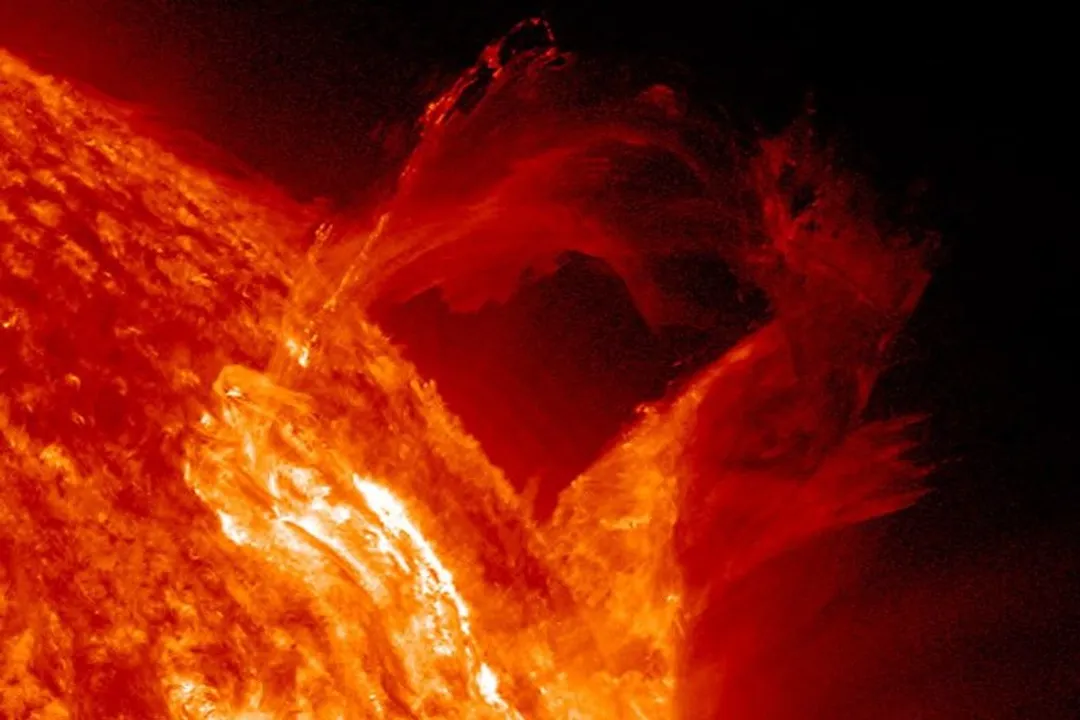
The most crucial differentiator between a star and a planet is the engine that powers it: nuclear fusion. A star is, by definition, a massive, luminous sphere of plasma held together by its own gravity, which generates energy through sustained nuclear fusion reactions in its core. For a celestial body to achieve this, it must possess sufficient mass to create the immense pressure and temperatures needed to force lighter elements, primarily hydrogen, to fuse into heavier ones, such as helium. This process releases vast amounts of energy, which is why stars shine.
The Sun has successfully achieved this state. It is currently fusing hydrogen into helium in its core, a process that began roughly 4.6 billion years ago when the solar nebula collapsed under gravity. If a body lacks the requisite mass—even if it’s quite large, like Jupiter—it cannot ignite sustained fusion, and thus it remains a planet or a brown dwarf (a "failed star") rather than a true star. The Sun’s mass, which is approximately 330,000 times that of Earth, provides the necessary gravitational squeeze for this stellar furnace to operate. Therefore, because the Sun is undergoing core hydrogen fusion, it qualifies as a star.
# Classification and Characteristics
While it is a star, it is not the only one in the universe, nor is it the largest, hottest, or oldest. Astronomers categorize the Sun within a specific stellar type based on its properties. It is classified as a G2V star, often referred to as a yellow dwarf.
The components of this classification tell us a great deal:
- G2: This indicates its surface temperature, which falls around 5,778 Kelvin. This temperature dictates its yellow-white color and its position on the Hertzsprung-Russell (H-R) diagram.
- V: The Roman numeral five signifies that the Sun is a main-sequence star. This is the longest phase of a star's life, where it maintains hydrostatic equilibrium by balancing the outward pressure from fusion against the inward pull of gravity.
The Sun is remarkably average in the grand scheme of the cosmos. When we look up at the night sky, we see a vast array of stars exhibiting incredible diversity in size, color, and luminosity. Many stars are significantly more massive and luminous than our Sun, burning through their fuel at a tremendous rate and living far shorter lives. Conversely, there are countless red dwarfs that are smaller and dimmer, capable of shining steadily for trillions of years.
Thinking about the sheer numbers involved helps illustrate the Sun's average status. If we were to create a simple comparison table based on its characteristics versus hypothetical extremes, the relative mediocrity becomes apparent:
| Characteristic | The Sun (G2V) | Example of a Larger Star (O-type) | Example of a Smaller Star (Red Dwarf M-type) |
|---|---|---|---|
| Mass (Solar Masses) | 1.0 | > 16 | < 0.5 |
| Surface Temperature (K) | ~5,778 | > 30,000 | < 4,000 |
| Luminosity (Sun = 1) | 1 | > 30,000 | < 0.01 |
| Main Sequence Lifespan | ~10 Billion Years | A few million years | Trillions of years |
This comparison highlights that our Sun is not an outlier but rather a middle-of-the-road star, currently existing in the stable, middle portion of its planned lifespan. Our perception of it being unique stems only from our immediate dependence on it for warmth and light.
# Proximity Versus Nature

The primary reason for the perceived difference between the Sun and other stars is distance. The other stars we see at night are tremendously far away. Proxima Centauri, the closest known star to our Solar System, is still about 4.24 light-years distant. The Sun, by contrast, is only about 8.3 light-minutes away.
This proximity drastically affects how we observe them.
- Apparent Brightness: Because the Sun is so close, it appears incredibly bright, dominating the sky during the day. Distant stars appear dim because their light has traveled so far, causing a massive drop in intensity.
- Apparent Size: The Sun subtends an appreciable angle in our sky, appearing as a disk. Other stars are so remote that their light sources are effectively singular points from our perspective, leading to the term "point source" used in older astronomy. Even through powerful telescopes, most distant stars still appear as points rather than resolved disks, unlike the Sun.
It is interesting to note that many of the stars we see in the night sky are actually much larger and more luminous than the Sun; they only appear faint because they are so remote. Conversely, if we could somehow swap our Sun with a very distant, very faint red dwarf star, that red dwarf would be completely invisible to the naked eye, even though it is a fully functioning, hydrogen-fusing star.
This leads to an interesting linguistic distinction sometimes used in astronomy. While the Sun is a star, the term "sun" is occasionally used in an astronomical context to refer to the central star of any star system that possesses orbiting planets. In this sense, if an exoplanet orbits Alpha Centauri A, then Alpha Centauri A is its sun, and it is a star just like ours.
# Historical Recognition
It may be surprising to consider that for a long period of human history, the idea that the Sun was simply another star was not widely accepted. The ancient geocentric models placed the Sun as a unique, central light source distinct from the fixed stars. The recognition of the Sun’s true nature—that it is a star among countless others, only appearing special due to its location—was a significant milestone in astronomical thought. This understanding solidified over time, as observations of stellar parallax (the apparent shift of nearby stars against background stars as Earth orbits the Sun) eventually proved that the stars were indeed incredibly distant objects, not fixed spheres close to Earth. This acceptance confirmed that the Sun was simply the closest example of the general class of celestial bodies we call stars.
# The Sun's Specific Role in Our Context
The reason we treat the Sun differently in our daily lives is entirely down to its function as the system regulator. The Sun constitutes over 99.8% of the total mass of the Solar System, making it the gravitational anchor that dictates the paths of every planet, asteroid, and comet.
Its primary, ongoing contribution is the energy it supplies, which is indispensable for life on our world. The light and heat reaching Earth from the Sun drive weather patterns, fuel photosynthesis, and maintain the temperature ranges necessary for liquid water to exist on our planet's surface. When we observe the Sun, we are witnessing the direct source of nearly all biological energy available to us, something no other star can provide for Earth. It is the only star that affects us directly enough to warrant its own name, separate from the designation "star" used for its distant brethren.
Considering this life-giving aspect, imagine the implications of a star that was slightly smaller or cooler, perhaps an M-type star with only 30% of the Sun’s mass. Such a star would have a habitable zone (the region where liquid water can exist) much closer in, leading to tidal locking for any orbiting planet, meaning one side would always face the star in perpetual day and the other in perpetual night [cite: 1, elaborating on fusion limitations]. Because the Sun sits perfectly in the "Goldilocks zone" of stellar mass, providing stable, long-term energy output for billions of years, its uniqueness to us is based on convenience and survival, not physical composition.
# Stellar Evolution and Time Scales
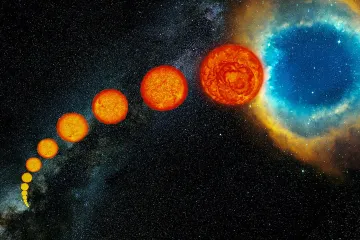
The Sun’s life as a main-sequence star is finite, governed by the rate at which it consumes its core hydrogen supply. It has approximately another 5 billion years left in its current phase before it exhausts the hydrogen in its core and begins to swell into a red giant. This predictability is key to understanding our own planet’s long-term future.
If we contrast this with the life cycle of its stellar cousins, the Sun’s moderate mass becomes a defining feature of its longevity. A star born with five times the Sun’s mass burns its fuel so rapidly that it may only last a few hundred million years before exploding as a supernova [cite: 2, summarizing stellar lifecycle differences]. In contrast, the lowest mass stars, the red dwarfs, fuse hydrogen so slowly that their lifespans are measured in trillions of years, far exceeding the current age of the universe itself [cite: 6, implying long lifespans for low-mass stars]. Our Sun’s 10-billion-year main sequence window gives Earth a relatively comfortable timeframe for complex life to evolve and persist. This stable middle path—not too fast, not too slow—is what makes the Sun the perfect reference point for understanding planetary habitability.
To summarize the reality: the Sun is a star because it fuses hydrogen into helium in its core due to sufficient mass. It is called the Sun because it is ours, the closest and most influential star in our sky, allowing us to study stellar physics up close in a way impossible for any other luminous sphere in the heavens. While it possesses unique importance to Earth, fundamentally, it shares its classification with billions of other shining points dotting the dark sky.
Related Questions
#Citations
ELi5 what makes the sun a star and not a planet? And why ... - Reddit
Sun - Wikipedia
Our Sun: Facts - NASA Science
Why is the sun called Earth's only star? I thought all the stars we see ...
Sun as a Star - NSO - National Solar Observatory
When was it first determined that the Sun is a star?
The Sun Is A Star. But Is Every Star A Sun? - IFLScience
Debate on the sun being a star in our solar system - Facebook
How Do We Know The Sun Is a Star? ☀️ #astronomy ... - YouTube