For high-mass protostars, what mechanism allows energy to escape during contraction, leading to rapid core stabilization?
Answer
The material becoming highly transparent to photons
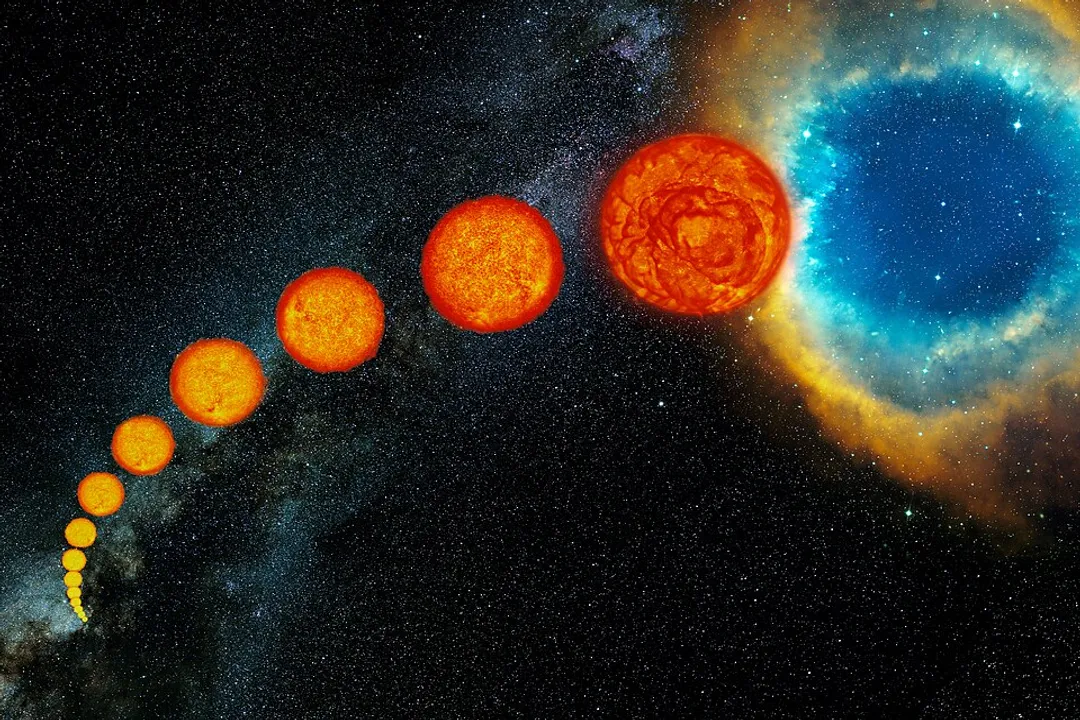
The physics governing the contraction of very massive protostars dictates that their interiors become extremely hot. This intense heat renders the stellar material highly transparent to the photons generated by gravitational collapse. Consequently, the primary mode of energy transport outward becomes radiation, allowing the released gravitational potential energy to escape swiftly. This efficient radiative cooling mechanism permits the massive object to contract rapidly towards hydrostatic equilibrium, resulting in a very short formation timescale compared to cooler, more opaque stars.
#Videos
Why Massive Stars Form Faster Than Low Mass Stars - YouTube
Related Questions
What is the approximate assembly time for a star fifteen times the Sun's mass during pre-main sequence contraction?What is the primary physical driver accelerating the assembly of high-mass protostars?For high-mass protostars, what mechanism allows energy to escape during contraction, leading to rapid core stabilization?During contraction, what is the approximate luminosity scaling relationship for high-mass stars relative to their mass ($M$)?What is the inverse scaling relationship governing the contraction timescale ($ au$) for high-mass stars based on mass ($M$)?In contrast to high-mass stars, what limits energy transport outwards in cooler, low-mass protostars?What is the approximate main-sequence lifespan for a star with ten solar masses, classified as an O-type star?The relationship quantifying faster fuel consumption in massive stars is known by what specific term?What is the duration of the carbon-burning phase in the post-main sequence evolution of high-mass stars?What observational consequence arises because high-mass stars are built fast and live short, spectacular lives?