What mechanism drives the next stages of evolution after core hydrogen exhaustion in a massive star?
Answer
Violent gravitational collapse of the helium-rich core.
Once the hydrogen fuel in the core of a high-mass star is completely converted into inert helium ash, the primary source of outward thermal pressure vanishes from that central region. With this outward support gone, gravity gains the ascendancy, causing the helium-rich core to contract violently. This gravitational collapse is explicitly identified as the key mechanism that initiates the subsequent, more dramatic stages of stellar evolution for such massive objects that have depleted their main fuel supply.
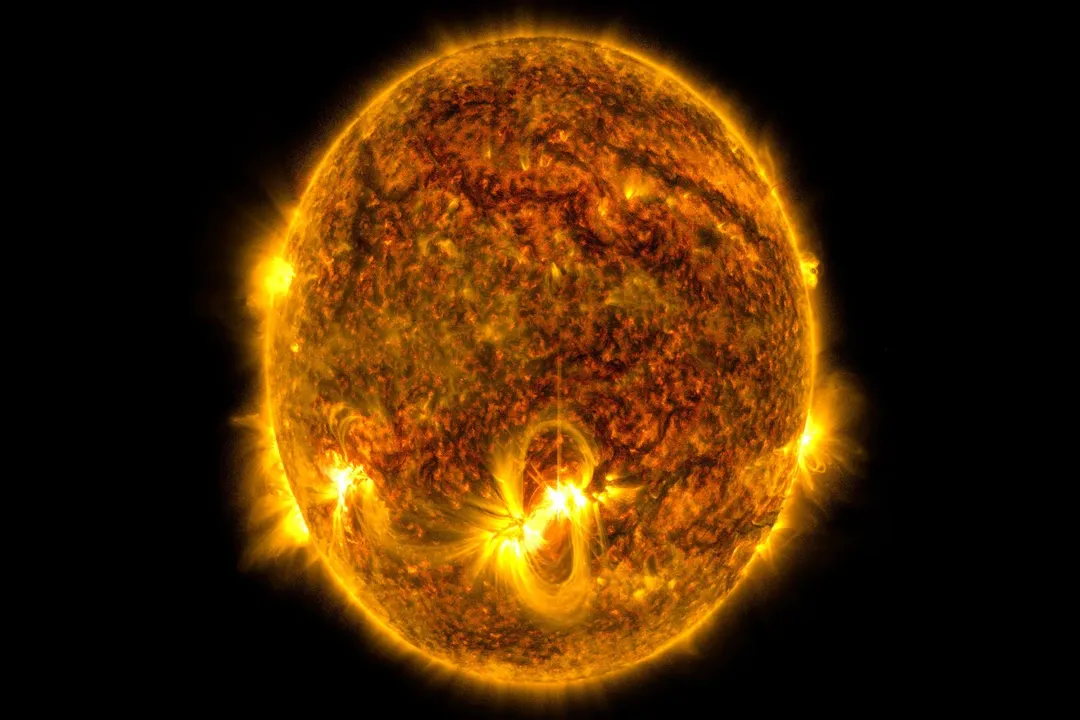
#Videos
How Does A Star's Hydrogen Fuel Loss Impact Its Core? - YouTube
Related Questions
What mechanism drives the next stages of evolution after core hydrogen exhaustion in a massive star?What phase transition occurs when hydrogen fusion ignites in the shell surrounding the inert helium core?What is the fusion process responsible for creating carbon and oxygen from helium nuclei in the core?What structural characteristic develops inside a high-mass star as successive heavier element fusion layers ignite?Why does the fusion process abruptly stop sustaining the star when the core material transforms into iron (Fe)?What comparison can be made regarding the timescales of the fusion cycles in a high-mass star after core hydrogen depletion?What physical pressure is responsible for finally halting the catastrophic inward plunge of the iron core?What event is initiated by the shockwave rebounding outward from the suddenly halted iron core?What determines whether the remnant core becomes a neutron star or a black hole?What physical mechanism causes the initial helium-rich core to contract violently upon hydrogen fuel exhaustion?