What is happening in the core of all stars on the main sequence?
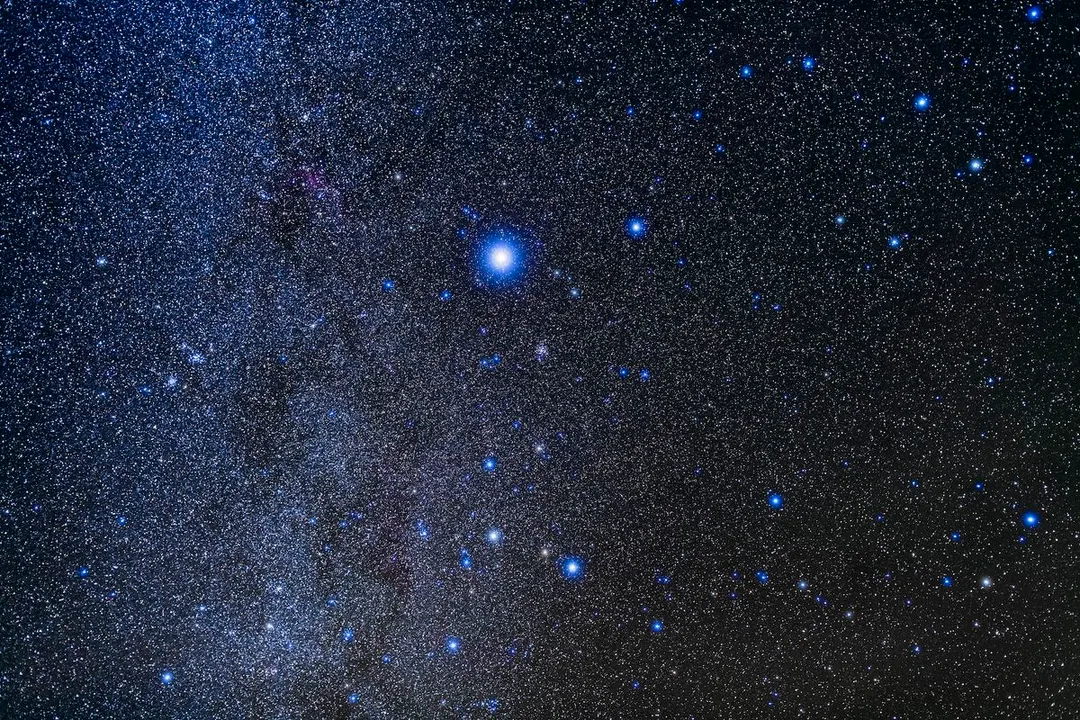
The heart of any star resting stably on the main sequence is a realm of unimaginable pressure and heat, a cosmic engine room where the fundamental laws of physics are constantly at work, dictating the star's entire existence. This longest phase of a star's life, spanning billions of years for objects like our Sun, is defined by one crucial, continuous activity: the conversion of hydrogen fuel into helium ash deep within its interior. [1][3][6] Without this energetic process occurring in the stellar core, the star would simply collapse under its own colossal gravitational weight. [2][4]
# Core Burning

The entire energy output that makes a star shine—light, heat, and other radiation—originates in this extremely dense, hot center, which is formally known as the stellar core. [9] For stars like the Sun, which are categorized as low-to-intermediate mass stars, the mechanism powering this conversion is primarily the proton-proton chain. [4] This chain reaction involves a sequence of steps where atomic nuclei of hydrogen (protons) collide and fuse together to form a heavier element, helium. [4][8] In the most basic terms, four hydrogen nuclei eventually combine to form one helium nucleus. [4]
However, this seemingly simple process is complex and requires specific, extreme conditions. The temperatures inside the Sun's core are estimated to reach about 15 million Kelvin, and the density is more than 150 times that of water. [4] It is the sheer kinetic energy provided by this intense heat that allows the positively charged protons to overcome their natural electromagnetic repulsion and get close enough for the strong nuclear force to bind them together. [4]
For stars significantly more massive than the Sun, the physics of the core changes considerably, though the end product remains the same: hydrogen turning into helium. [1] In these hotter, more massive stellar cores—those exceeding about 1.3 times the Sun's mass—the primary fusion pathway shifts to the CNO cycle (Carbon-Nitrogen-Oxygen cycle). [4] This cycle uses trace amounts of carbon, nitrogen, and oxygen as catalysts to facilitate the fusion of hydrogen into helium. [4] While the overall chemical change is identical, the CNO cycle is much more temperature-sensitive than the proton-proton chain, meaning a small increase in core temperature leads to a massive increase in the energy production rate. [4]
# Pressure Balance
A main sequence star is a picture of temporary, dynamic stability, maintained by a perfect opposition of forces known as hydrostatic equilibrium. [2][4] Picture a massive sphere of gas, where gravity is constantly trying to crush every single atom inward toward the center of mass. [4] Counteracting this relentless gravitational collapse is the immense outward pressure generated by the thermonuclear reactions occurring in the core. [4][6]
This outward pressure is twofold: the thermal pressure created by the high temperature of the hot gas, and the radiation pressure created by the torrent of photons (light particles) streaming outward from the fusion sites. [9] As long as the star is on the main sequence, the rate of fusion perfectly generates enough outward pressure to exactly balance the inward pull of gravity. [4] If the core were to momentarily generate too much heat, the star would expand slightly, cooling the core and decreasing the fusion rate until balance is restored. Conversely, if the core cooled slightly, gravity would compress it, raising the temperature and increasing the fusion rate back to equilibrium. [4] This continuous self-regulation is what defines the stable, long-lived main sequence phase. [3][6]
# Star Mass
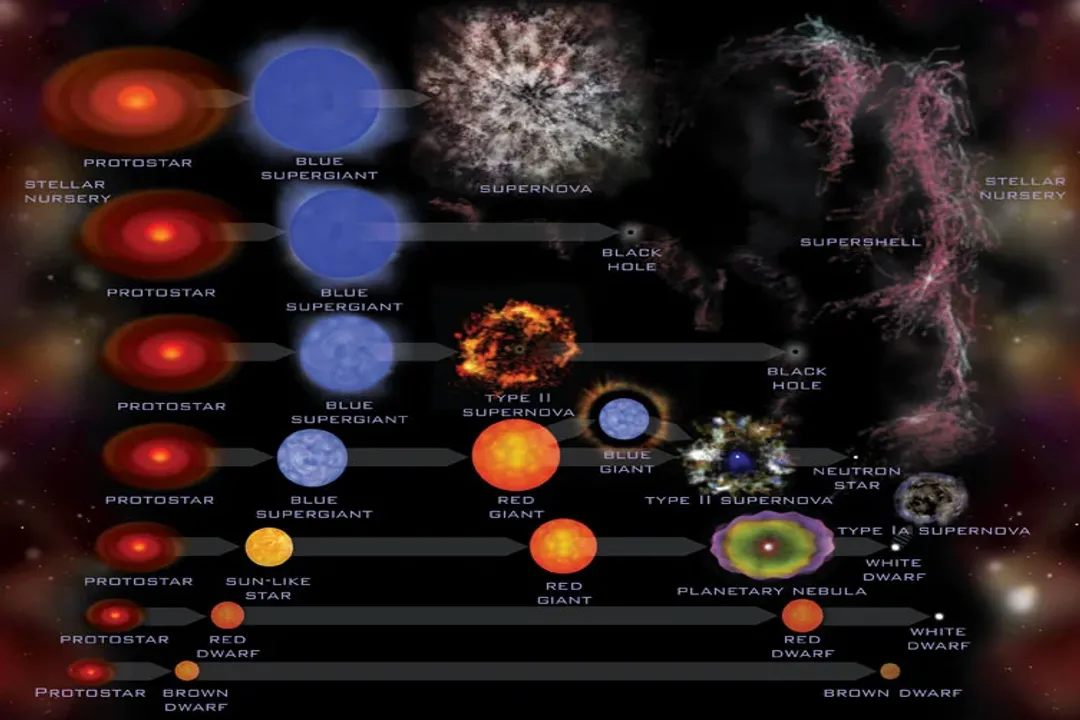
The fundamental characteristic that determines everything about a star’s time on the main sequence—its temperature, luminosity, size, and lifespan—is its initial mass. [1][6] A star's mass dictates the strength of gravity, which in turn determines the necessary core temperature and pressure required to achieve hydrostatic equilibrium. [4]
Consider the contrast between the smallest and largest stars:
| Characteristic | Low-Mass Star (e.g., Red Dwarf) | High-Mass Star (e.g., Blue Giant) |
|---|---|---|
| Core Temperature | Relatively low (e.g., million K) [4] | Extremely high (e.g., $25+$ million K) [4] |
| Fusion Process | Predominantly Proton-Proton Chain | Predominantly CNO Cycle |
| Luminosity | Very dim | Extremely bright |
| Lifespan | Trillions of years | A few million years |
When we look at a massive star, its core must sustain an outward pressure great enough to counteract gravity that is hundreds of times stronger than the Sun's gravity. [1] To achieve this, the core operates at a much higher temperature and density, pushing hydrogen fusion at an astonishingly high rate. [4] This leads to the interesting paradox that the most massive stars burn through their fuel supply—the hydrogen in their core—the fastest, resulting in lifespans measured in millions of years, rather than the Sun's expected ten-billion-year run. [1][6] The sheer requirement for pressure to hold up that much mass means the core conditions are inherently far more sensitive and volatile than in a star like ours. [4]
If we consider the Sun, it has about kilograms of mass holding itself up. A star ten times the Sun's mass has $1000$ times the total energy to balance because the gravitational force scales with mass, but the required rate of energy output scales much more steeply, closer to the mass cubed or higher. It's a brutal economic calculus dictated by the core’s immediate needs.
# Fuel Change
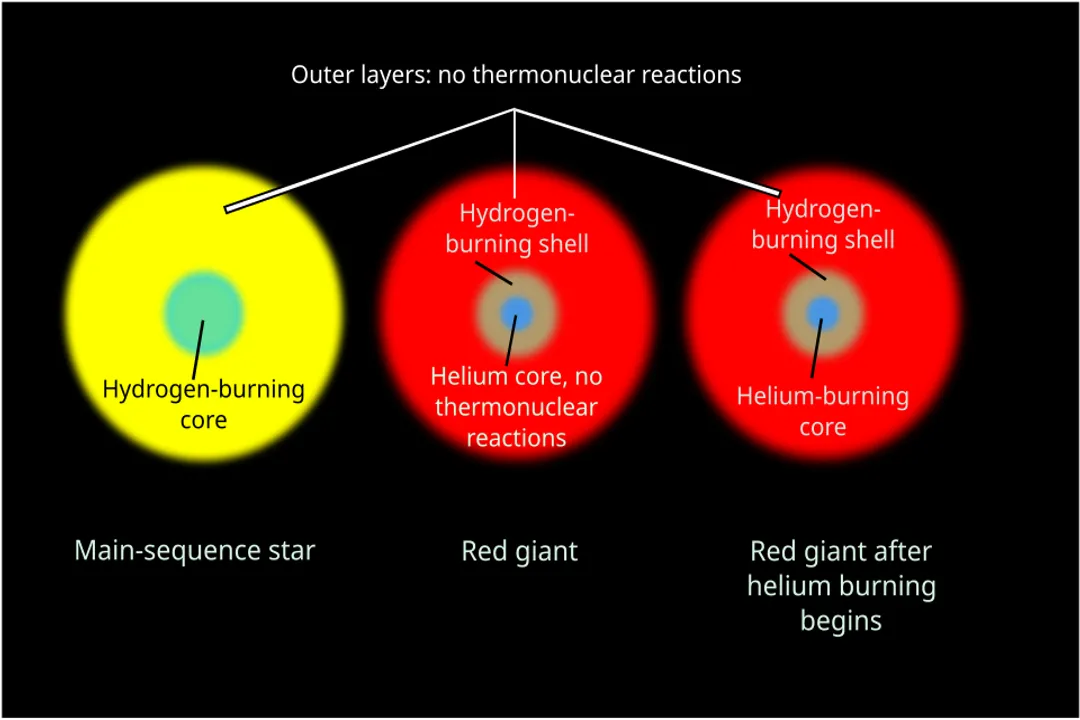
The main sequence ends precisely when the star runs out of the primary fuel in its core. [5][6] Since the fusion process converts hydrogen to helium, the core composition gradually shifts over billions of years. The center of the star becomes enriched with inert helium "ash," while the surrounding layers still maintain high temperatures due to the energy pouring out from the core. [5]
Once the concentration of hydrogen in the absolute center drops below the critical threshold needed to sustain the necessary fusion rate, the outward pressure drops suddenly. [4] Gravity then wins the ongoing contest, and the core begins to contract. [5] This contraction heats the surrounding shell of still-hydrogen-rich material just outside the now-helium-dominated core. This shell heats up enough to initiate hydrogen fusion in a shell around the core, rather than within it. [5]
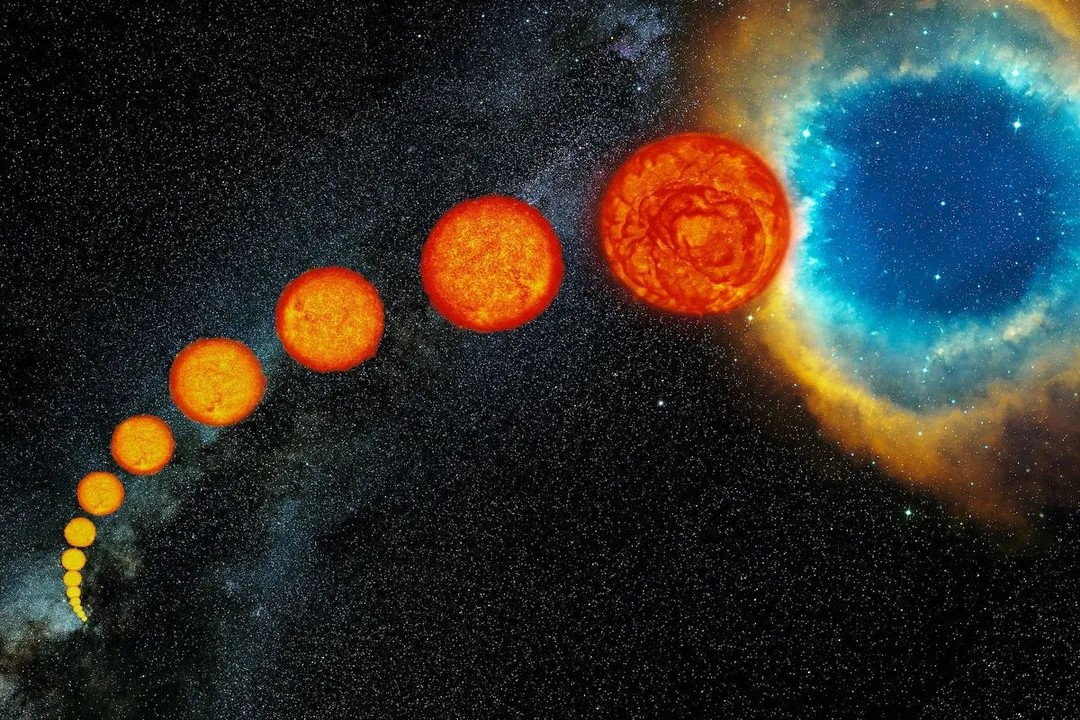
This shell burning is an extremely vigorous process. It produces far more energy than the core fusion did when the star was in its prime. [5] This massive increase in energy pushes the outer layers of the star outward, causing the entire star to swell dramatically and cool down on the surface, marking its departure from the main sequence and beginning its transition toward becoming a red giant. [5]
# Core Fate
What happens next depends heavily on the star's total mass again, but the fundamental change in the core—the cessation of core hydrogen burning—is the trigger for all subsequent evolution. [1][5] For low-mass stars, like the Sun, the core becomes a dense ball of non-fusing helium. [5] The star may contract further until the temperature in the surrounding shell is high enough to ignite helium fusion into carbon and oxygen, but this ignition happens only after the star has already swollen substantially. [5]
For the most massive stars, the core contraction following hydrogen exhaustion leads to much higher temperatures, allowing them to immediately ignite helium fusion into carbon upon leaving the main sequence, and then proceed through subsequent fusion stages—carbon to neon, neon to oxygen, and so on—creating heavier elements layer by layer in their core and surrounding shells. [1] In these giant stars, the core never truly stops its high-energy work; it simply changes the element it is fusing, pushing the boundary of what fusion can create until iron is formed in the very center. [1] Iron fusion is the final, end-of-the-line reaction, as it consumes energy rather than releasing it, leading to catastrophic collapse. [1]
Understanding the main sequence is therefore about understanding a star’s youth and maturity—the long, relatively calm period defined entirely by the quiet, relentless efficiency of converting the universe's most abundant element into its second most abundant, right at the center of the furnace. [2][3][9] This phase is not just a waiting period; it is the necessary calibration phase that establishes the star’s elemental composition and sets the stage for its dramatic final acts. [5]
Related Questions
#Citations
Main sequence - Wikipedia
Star Basics - NASA Science
Main Sequence Stars: Definition & Life Cycle | Space
Lecture 14: The Main Sequence
Evolution from the Main Sequence to Red Giants – Astronomy
Star Life Cycle - ASPIRE
Star Main Sequence - Universe Today
G. C. Sloan: Main Sequence Stars, Giants, and Supergiants