Why is a star stable during the main sequence period of its life cycle?
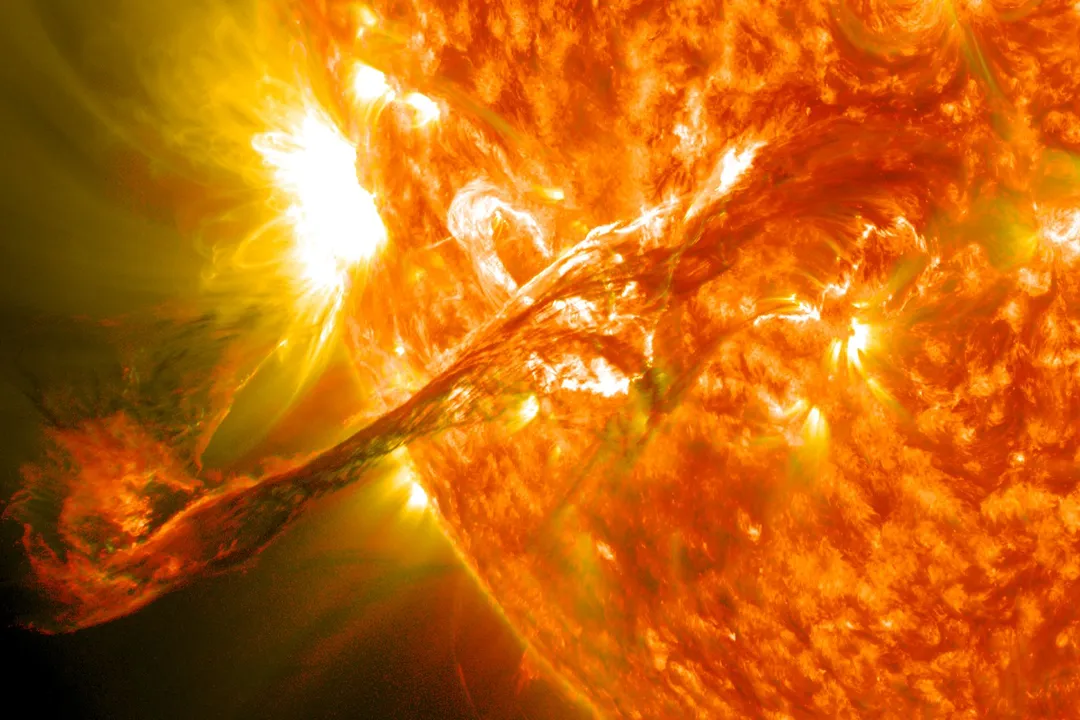
The vast majority of a star’s existence, the span during which it shines with a steady light, is spent on what astronomers call the main sequence. [4][7] For our own Sun, this stable period accounts for about 90 percent of its entire lifespan. [5] This long, relatively unchanging phase is not arbitrary; it is the direct result of a magnificent, non-stop internal balancing act that keeps the star from either collapsing into oblivion or exploding apart. [9] The star achieves a perfect, dynamic stalemate between the relentless inward pull of its own immense mass and the powerful outward push generated by the nuclear furnaces blazing deep within its core. [1]
# Lifetime Phase
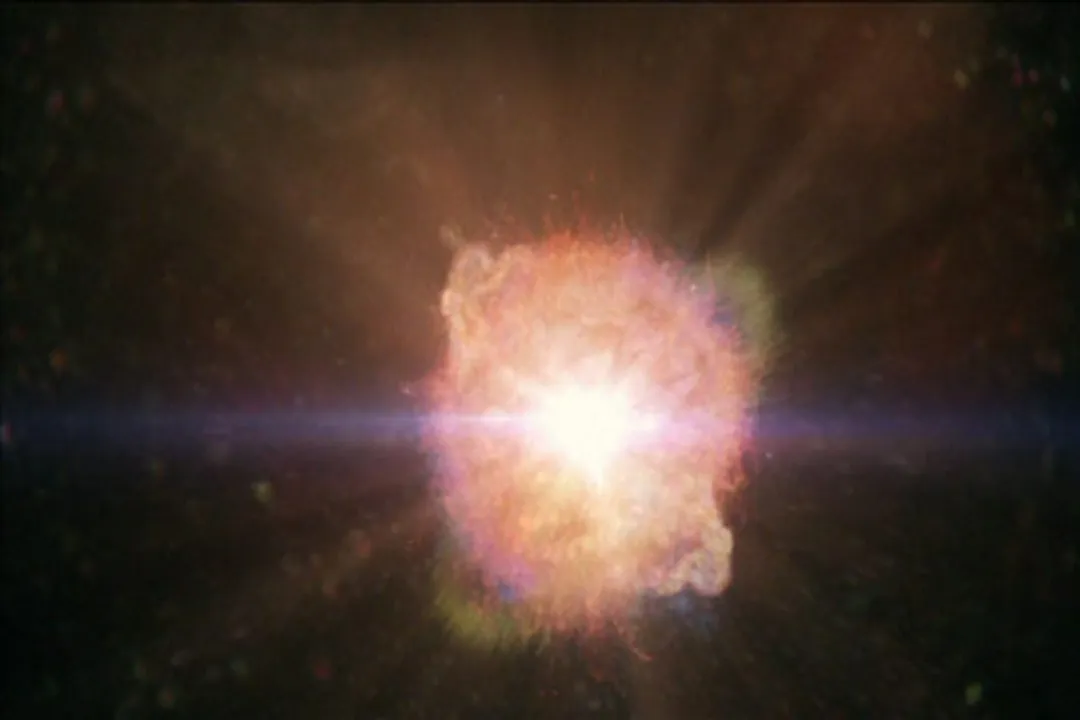
Stars spend their main sequence lives fusing hydrogen into helium in their cores. [3][5] This process represents the longest and most stable phase in a star’s stellar evolution. [7] When a star first lands on the main sequence, it has effectively settled into a sustainable routine based on the material it started with. [2] This phase lasts for billions of years for stars like the Sun. [4] If we were to observe the stars on the main sequence over time, we would notice very little change in their fundamental characteristics—their brightness, size, and surface temperature remain remarkably consistent throughout this long stretch. [8]
# Fuel Ignition
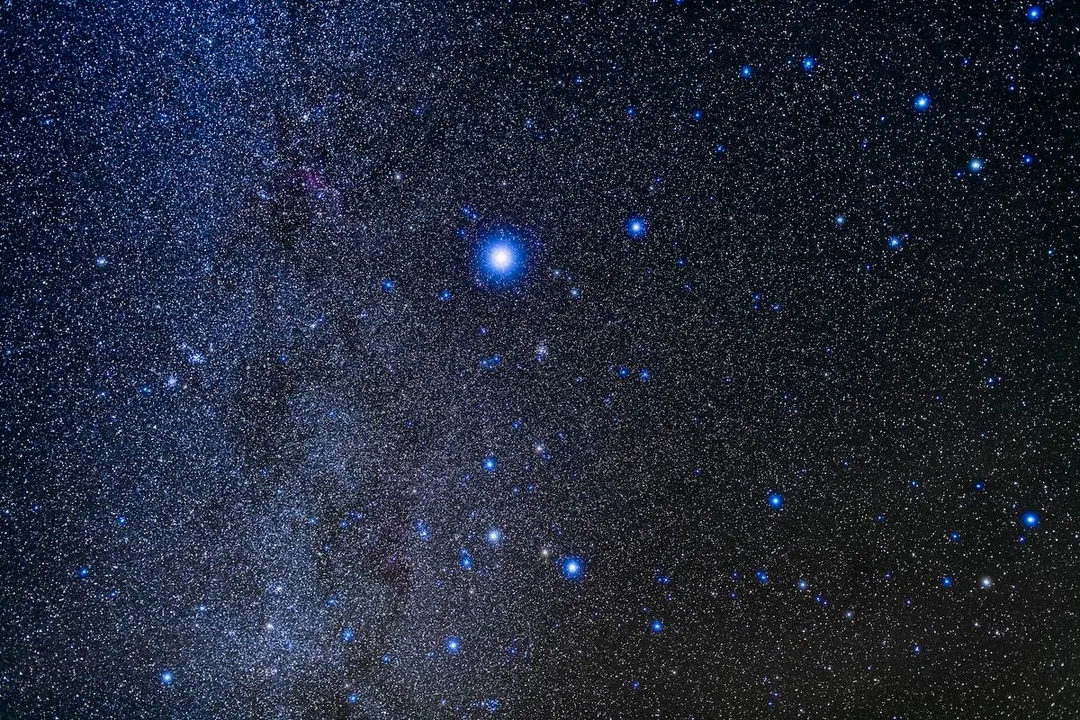
Before a star can begin its main sequence tenure, it must gather enough mass from its initial cloud of gas and dust to begin the critical process of nuclear fusion. [5][7] As gravity compresses the stellar nursery, the temperature and pressure in the center skyrocket. [2] When the core temperature reaches approximately 15 million degrees Celsius (or Kelvin, since the values are close at these extreme temperatures), hydrogen atoms begin to fuse together to form helium nuclei. [5][7] This is the moment the star "turns on" and officially joins the main sequence. [5]
The conversion of hydrogen to helium releases enormous amounts of energy, primarily in the form of gamma rays and neutrinos. [1] This energy doesn't just heat the core; it generates an immense outward pressure that directly counteracts the crushing force of gravity. [9]
Consider a simple analogy: imagine a massive, perfectly inflated, yet incredibly hot, balloon. The rubber of the balloon walls is constantly trying to shrink inward (gravity), but the very hot air inside is constantly pushing outward (pressure) with just the right amount of force to keep the balloon at a constant size. [5] If the air pressure inside were to suddenly drop, the balloon would collapse; if the pressure increased too much, it would burst. The main sequence star exists in this precise, fine-tuned state.
# Gravitational Collapse
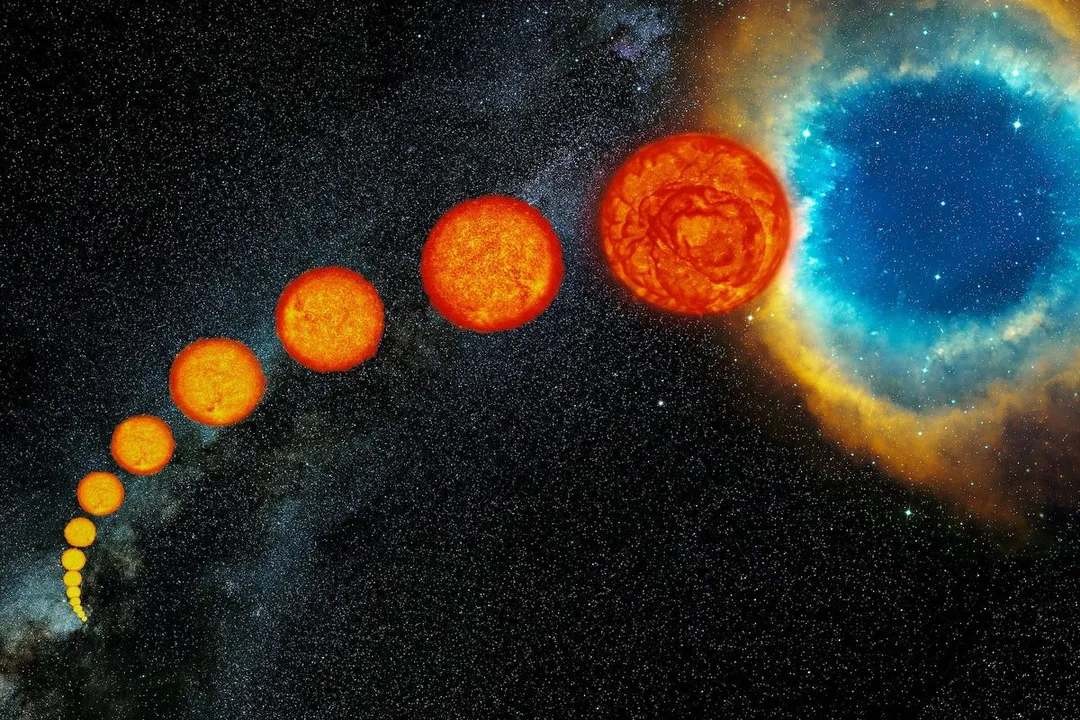
Gravity is the engine driving the entire stellar structure toward self-destruction. [2] Because stars are composed of incredibly massive amounts of matter—the Sun alone contains more than 300,000 times the mass of Earth—the gravitational force trying to pull every particle toward the star's center is staggering. [8] This inward force is strongest at the center, where the weight of all the overlying layers of gas and plasma exerts the maximum crush. [4] Without an opposing force, the star would shrink almost instantaneously. [9]
# Internal Pressure
The energy generated by the core's fusion reactions manifests as outward pressure. [1] This pressure is twofold: there is the thermal pressure created by the high temperature of the plasma, and the radiation pressure resulting from the high-energy photons (light/gamma rays) bouncing around. [9] In stars similar to or smaller than the Sun, the thermal pressure component is usually dominant in maintaining the structure. [9]
For any given point within the star, the thermal and radiation pressure pushing outward must exactly match the gravitational pressure pulling inward from all the material outside that point. [1][9] This condition is called hydrostatic equilibrium. [1][9] It’s a state of dynamic balance: material is constantly falling inward, but the outward pressure from the heat generated by fusion pushes it back out, resulting in a net zero change in the star's overall size or structure over long periods. [4]
If, for example, a small, temporary fluctuation caused the core temperature to slightly increase, fusion would momentarily speed up. This would generate a surge in outward pressure, causing the star to expand ever so slightly. As it expands, the core density drops, which slows the fusion rate back down. This restored rate causes the pressure to decrease, allowing gravity to bring the star back toward its original size. This inherent feedback loop is what stabilizes the star on the main sequence. [9]
Here is a comparison of the major forces at play during the main sequence:
| Force | Direction | Source/Mechanism | Effect on Stability |
|---|---|---|---|
| Gravity | Inward | Self-attraction of mass | Seeks to compress and collapse the star [2] |
| Thermal Pressure | Outward | Heat from nuclear fusion [1] | Resists compression; expands the stellar material |
| Radiation Pressure | Outward | Outgoing photons from fusion [9] | Provides additional outward push, especially in more massive stars |
This concept of hydrostatic equilibrium is a beautiful demonstration of physical law in action, where the star's mass dictates the required energy output. A more massive star has a stronger gravitational pull, meaning it must burn its fuel much hotter and faster to generate the necessary counter-pressure to remain stable. [4][8] This explains a crucial dependency we see in stellar populations.
# Mass Influence
A star’s initial mass is the single most important factor determining its position on the main sequence and how long it stays there. [4][8]
- Low-Mass Stars (Red Dwarfs): These stars, perhaps only a fraction of the Sun's mass, have less gravity to fight against. They burn their core hydrogen fuel very slowly and conservatively. [4] Consequently, they have incredibly long main sequence lifetimes, potentially lasting for trillions of years. [4] They are stable because their low outward pressure needs only a gentle, slow-burning furnace to balance their relatively weak gravity. [9]
- Sun-like Stars (Intermediate Mass): Our Sun follows a moderate path. It maintains equilibrium through a steady, long-term fusion rate, resulting in a main sequence life expected to be around 10 billion years. [5][4]
- High-Mass Stars (Blue Giants): Stars significantly more massive than the Sun experience colossal gravitational forces trying to crush them. [8] To avoid immediate collapse, their cores must maintain extreme temperatures and pressures, leading to a runaway fusion rate. [4] They consume their hydrogen fuel prodigiously quickly, remaining on the main sequence for only a few million years before exhausting their core supply. [8]
It is fascinating to observe that the more "powerful" a star appears (i.e., the brighter and hotter it is), the shorter its stable main sequence period actually is, because its greater mass requires a much higher rate of energy expenditure to maintain that equilibrium. [4]
# Leaving Sequence
The stable period on the main sequence continues only as long as the star has sufficient hydrogen fuel in its core to sustain the fusion reaction that generates the necessary outward pressure. [7] Once the hydrogen in the very center is largely converted into helium "ash," the primary energy source shuts down in that region. [2][8]
Without fusion pressure in the core, gravity finally wins the localized battle, and the core begins to contract and heat up again. [8] This contraction increases the temperature around the now-inert helium core, which often ignites a shell of fresh hydrogen fuel surrounding it. [7] This new, hotter source of energy typically pushes the star’s outer layers outward, causing it to expand significantly and cool down, moving it off the main sequence and into the next phase of its life, such as becoming a subgiant or a red giant. [2][8] The transition out of the main sequence is marked by the disruption of the long-held hydrostatic balance, signifying the end of the star's most peaceful phase. [1]
The main sequence, therefore, is a grand, self-regulating environment where the star perfectly matches its internal energy production to the external demand imposed by its own weight, creating a stable beacon in the cosmos for billions of years. [4][9]
#Videos
Why Is the Main Sequence a Star's Longest Stable Phase? - YouTube
Related Questions
#Citations
Why Is the Main Sequence a Star's Longest Stable Phase? - YouTube
The Life Cycles of Stars: How Supernovae Are Formed
Main sequence stars - The life cycle of a star - AQA - BBC Bitesize
Main Sequence Stars: Definition & Life Cycle | Space
Star Life Cycle - ASPIRE
The Life Cycle of a Star - Little Passports
Life Cycle of Stars - BYJU'S
Stellar Evolution - | The Schools' Observatory
Why are main-sequence stars stable? - Quora