What is the coolest main sequence star?
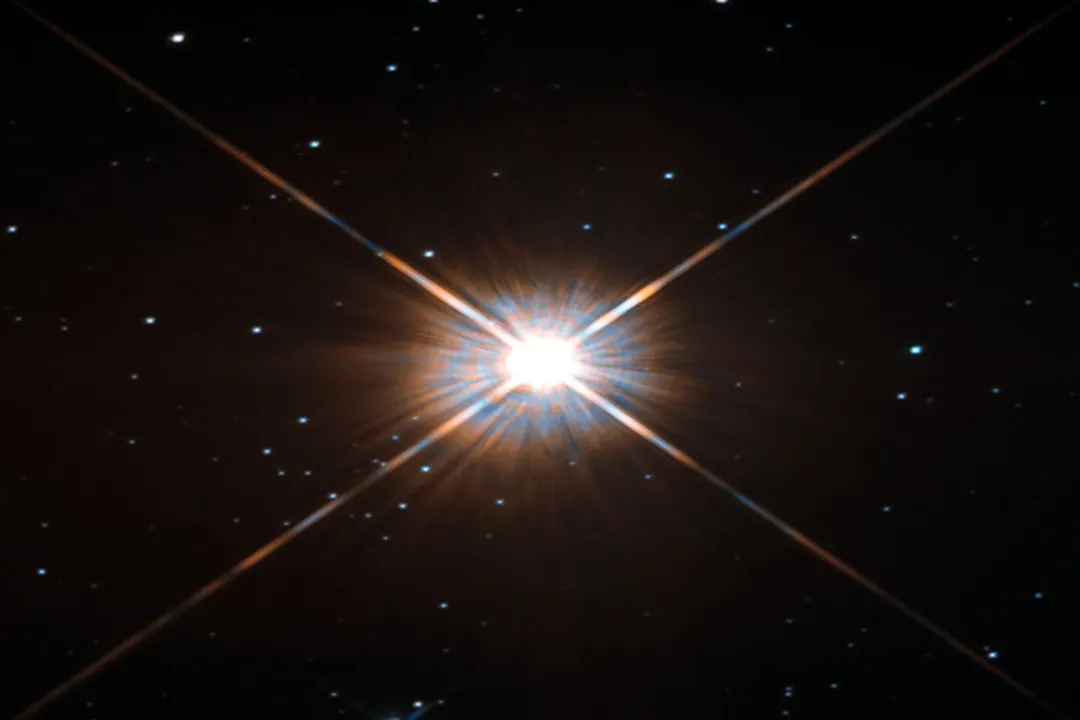
The quest to find the universe’s coldest star inevitably leads us to the smaller, dimmer end of the stellar spectrum, far away from the brilliance of our own Sun. When we talk about stars, most people think of brilliant yellow-white objects or fiery red giants. However, the coolest true stars—those that sustain core hydrogen fusion—fall into a class known scientifically as Red Dwarfs, or M-type main-sequence stars. These objects define the lower boundary for genuine stellar classification based on sustained energy production.
# Coolest Stars
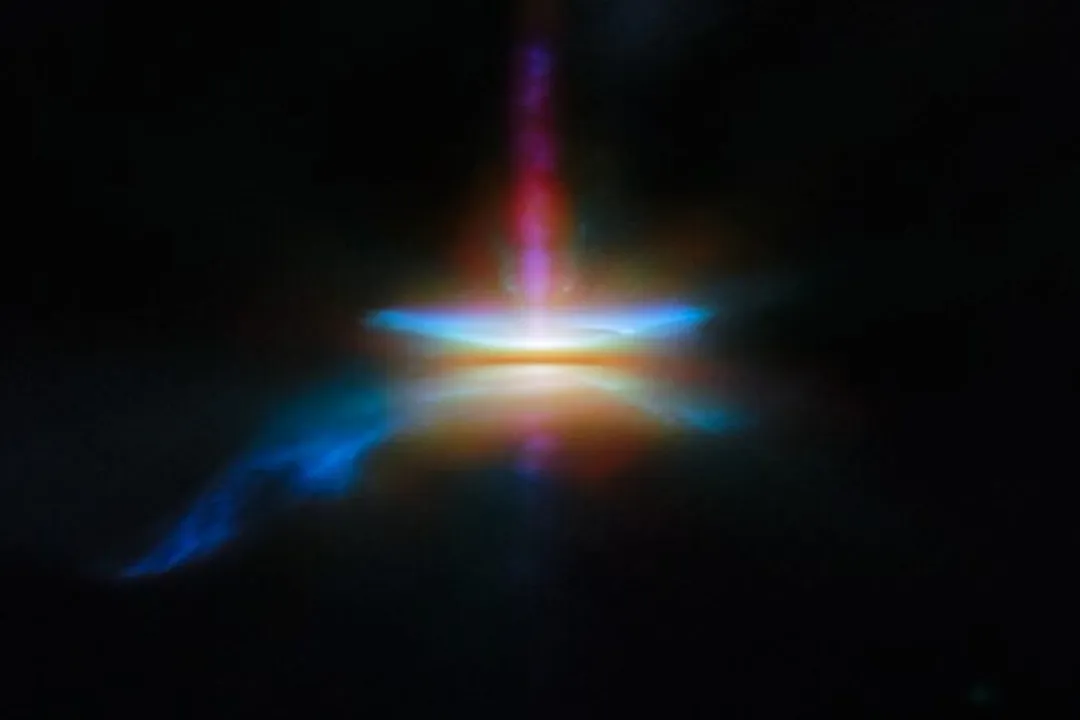
Our Sun, a G-type star, has a surface temperature hovering around . The red dwarfs, by contrast, are the cool kids on the main sequence block, boasting surface temperatures generally ranging from about up to . This lower temperature is why they appear red; the energy they emit peaks at longer, redder wavelengths. They are also incredibly dim, sometimes producing only th of the Sun’s light, with even the largest among them possessing only about $10%$ of the Sun’s luminosity.
The fascinating thing about these diminutive, cool stars is their sheer prevalence. In the Milky Way neighborhood, red dwarfs are believed to constitute roughly three-quarters of all the hydrogen-fusing stars. Proxima Centauri, the closest star to us at just over $4$ light-years away, happens to be a prime example of this common, yet hard-to-spot, stellar type.
# Longevity Calculation
What truly sets these cool, low-mass stars apart is their expected lifespan. Larger stars burn through their core hydrogen much faster than smaller ones. For a star like the Sun, the main sequence life is about $10$ billion years. Red dwarfs operate on an entirely different cosmic timescale because of their internal structure.
Stellar models show that red dwarfs with masses below about are fully convective. This means energy and matter are constantly churned from the core to the surface. Unlike the Sun, where fusion is limited to the hydrogen in the core, this convection ensures that the helium ash accumulating in the core is constantly mixed with fresh hydrogen from the outer layers. This mechanism allows them to consume nearly all their hydrogen fuel supply, not just the $10%$ in the core. Consequently, the smallest red dwarfs are predicted to burn for trillions of years—a duration far exceeding the current age of the universe ($13.8$ billion years). This internal mechanism is an extraordinary feature of the coolest main sequence stars; every red dwarf currently existing is, cosmologically speaking, essentially a newborn object, still ages away from its eventual transition into a blue dwarf.
# Defining the Line
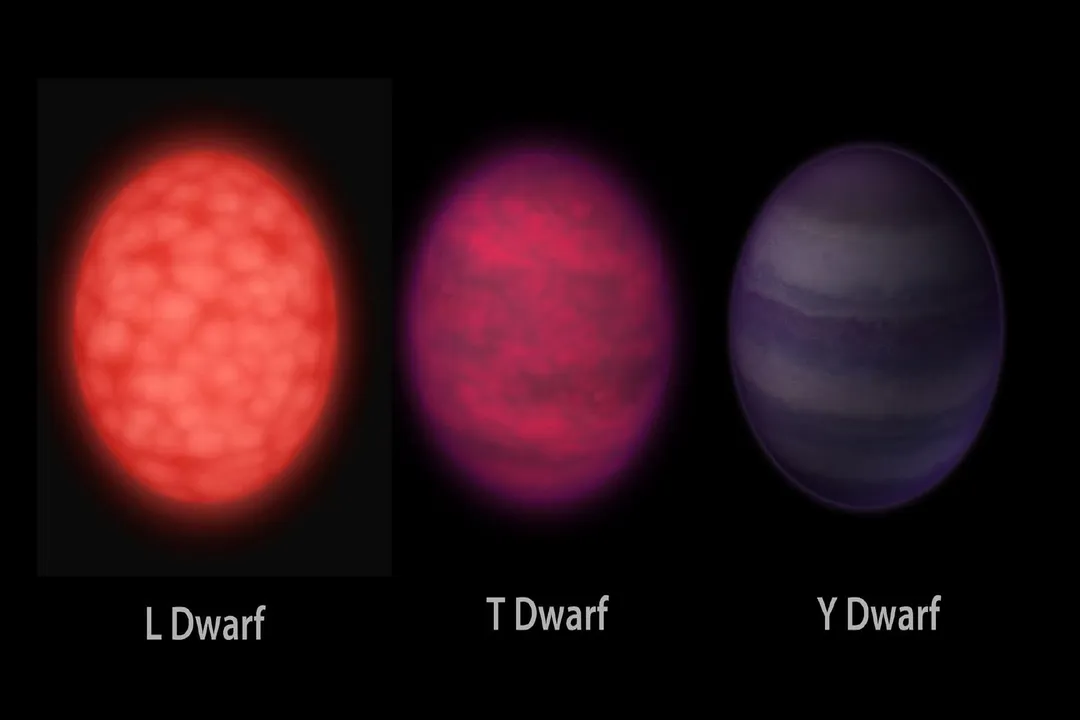
As we look toward the cooler end of the M-type classification, the definition of what constitutes a "star" versus a "brown dwarf" becomes increasingly blurred. A strict definition for a main-sequence star requires it to be massive enough to fuse regular hydrogen () in its core. This threshold is generally cited as being slightly above $0.08$ solar masses (), or roughly $78$ to $80$ times the mass of Jupiter.
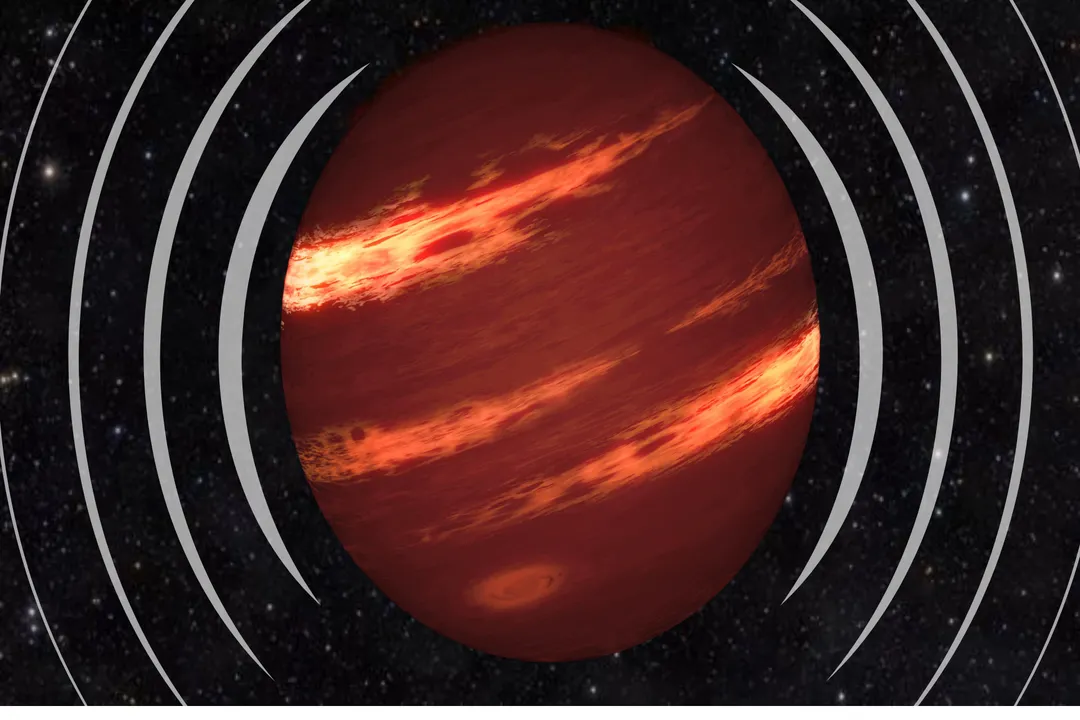
Objects below this limit are brown dwarfs, often termed "failed stars" because they lack the core pressure and temperature for sustained hydrogen fusion, though they might fuse heavier elements like deuterium or lithium early on. The coolest red dwarfs can dip into temperatures close to and spectral types like or . However, the classification is not entirely clean, as there is a substantial spectral overlap where late -types are virtually indistinguishable from the hottest brown dwarfs based on temperature alone.
# Ultra-Cool Dwarfs
When temperatures drop below the lower limit of the standard M-dwarf range, astronomers enter the realm of ultra-cool dwarfs. While some sources use this term loosely, a working definition for ultra-cool dwarfs often specifies spectral classifications of or later, corresponding to surface temperatures generally below .
Objects cooler than this start falling into the spectral class, where temperatures are typically between about and . At these lower temperatures, the chemistry of the star’s atmosphere changes significantly, allowing molecules like methane and alkali metals to become prominent. Below the dwarfs are the dwarfs (around to ), followed by the dwarfs, which represent the coldest known substellar objects, sometimes reaching temperatures as low as . For context, is about , meaning the coldest substellar objects can be below freezing, something you certainly wouldn't call a main-sequence star.
# Title Holder
The core question asks for the coolest main sequence star. This means we must strictly exclude the brown dwarfs, even those in the and classes. We are looking for an object that fuses hydrogen and falls within the defined dwarf temperature range, pushing that lower limit as far down as possible.
Based on current astronomical surveys, the coolest confirmed main sequence star appears to be , which exhibits an spectral type with a surface temperature officially measured at . This places it right on the cusp, slightly cooler than the general lower bound often cited for dwarfs, yet it is confirmed as a main-sequence star. Another candidate for an extremely cool main sequence star is , listed with a range of . However, the explicit classification of as the coolest known main sequence star as of $2023$ makes it the strongest contender for the title, demonstrating that true stars can indeed exist just shy of the mark.
It is worth noting the inherent observational difficulty here. Proxima Centauri, our nearest neighbor, is a red dwarf, yet is much farther away (over $41$ light-years) and significantly fainter, requiring specialized infrared surveys like to even detect these incredibly dim objects. This highlights that the absolute closest stars may not represent the temperature extremes; the cosmic census of the coldest, dimmest objects requires wide-area infrared monitoring to find the faintest true stars hiding nearby.
To put these figures into perspective, here is a comparison across the star/substellar boundary:
| Object Type | Example/Class | Approximate Surface Temperature () | Defining Feature |
|---|---|---|---|
| Sun (Reference) | G2V | Core Hydrogen Fusion | |
| Typical Red Dwarf | M3V | Full Convection, Trillions of Years Lifespan | |
| Coolest Main Sequence Star Candidate | $1,939$ | Hydrogen Fusion at the coolest limit | |
| Hottest Brown Dwarf (L Dwarf) | L-class | $1,300 - 2,000$ | Deuterium Fusion, Cooling over time |
| Coldest Brown Dwarf (Y Dwarf) | WISE $0855-0714$ | Atmospheres with methane/water clouds |
# Classification Nuances
The study of these dim objects pushes the limits of stellar classification. Standard dwarf spectral standards were established decades ago, but the discovery of cooler objects required an overhaul, leading to the inclusion of , , and types, primarily for brown dwarfs. The presence of specific molecules, like titanium oxide being prominent in dwarfs (which would dissociate in hotter stars), is a key indicator of their low temperature. For the ultra-cool dwarfs near the boundary, the presence or absence of lithium can be a tie-breaker: since stars rapidly deplete lithium during hydrogen fusion, a positive lithium signature often points toward a brown dwarf that never reached full stellar status.
In summary, while the universe hosts substellar objects in the spectral class that are several hundred degrees cooler, the title of the coolest main sequence star currently rests with objects like , which manages to maintain the necessary core conditions for hydrogen fusion at a temperature barely above . These faint, long-lived embers are the most numerous stellar residents in our galaxy, offering a window into the very slow, quiet end-state of low-mass stellar evolution.
Related Questions
#Citations
List of coolest stars - Wikipedia
Which star is the coldest? : r/askastronomy - Reddit
Red dwarf star | Definition, Facts, & Temperature | Britannica
'Failed star' is the coldest radio wave source ever discovered | Space
So, what exactly is an 'ultra-cool' dwarf star?
List of coolest stars - Grokipedia
The Coolest Star | by Brian Koberlein