Why does a main sequence star turn into a red giant?
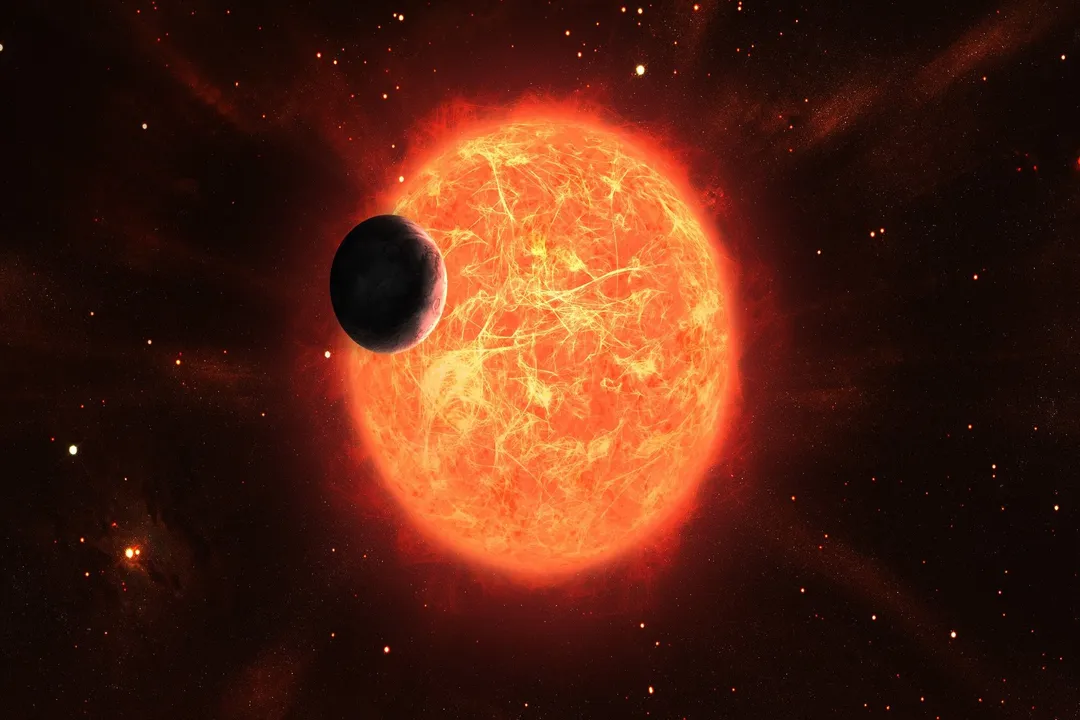
The transformation from a stable, middle-aged star to a bloated, luminous giant is one of the most dramatic events in stellar life cycles. For stars like our Sun, this process begins not with a bang, but with the slow exhaustion of the primary fuel source that has sustained them for billions of years. [1][7] This initial, long-lasting phase is known as the main sequence. [3][7] During this time, the star exists in a state of near-perfect balance, often called hydrostatic equilibrium. [2][9] Gravity constantly tries to crush the star inward, but this is offset by the tremendous outward pressure generated by nuclear fusion occurring deep within its core. [2][4] Specifically, hydrogen atoms are fused into helium atoms, releasing vast amounts of energy. [3][4][10]
# Fuel Ends
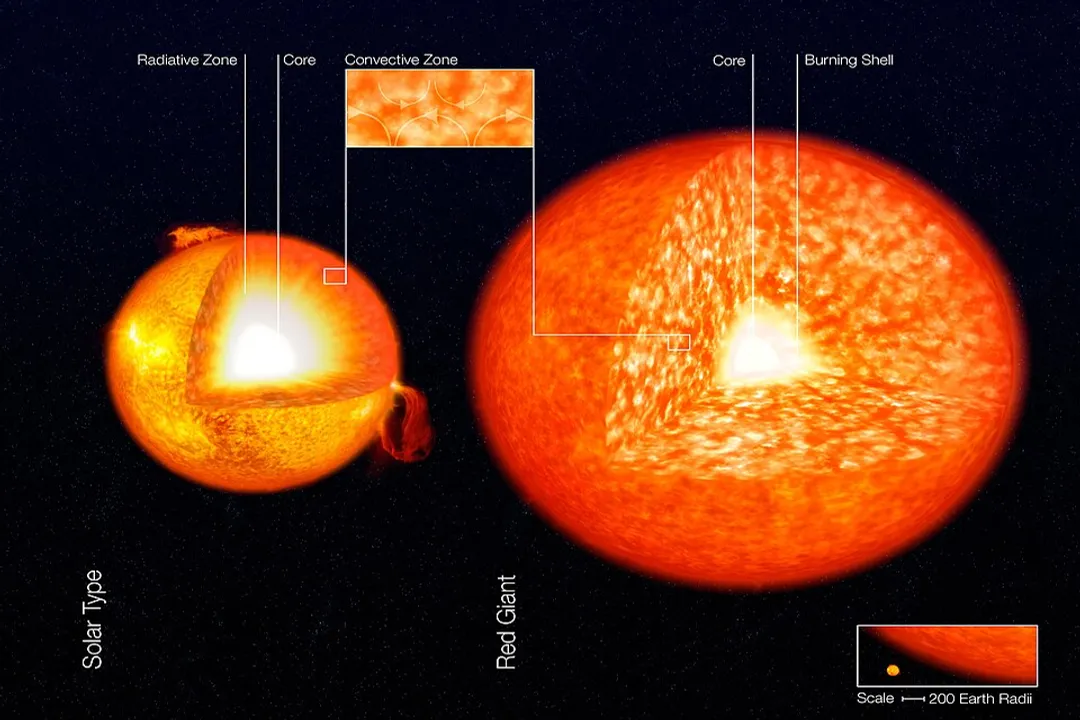
This stable energy production continues as long as there is hydrogen fuel available in the star's core. [3][6] However, since fusion is a continuous process, the core's hydrogen supply is finite. [10] Once the hydrogen within the very center of the star has been entirely converted into helium, the core fusion reaction ceases. [1][4][6] Because helium cannot fuse at the existing core temperatures and pressures, the primary source of outward pressure vanishes suddenly. [6][10]
# Core Contraction
Without the stabilizing outward pressure from core hydrogen fusion, the force of gravity immediately wins the long-standing battle against the core. [1][3] The core, now composed primarily of inert helium "ash," begins to contract rapidly under its own weight. [1][6] This gravitational collapse is the direct trigger for the next stage. [3][10] As the core shrinks, the immense pressure forces the material closer together, causing the temperature within that region to skyrocket dramatically. [3][6]
# Shell Ignition
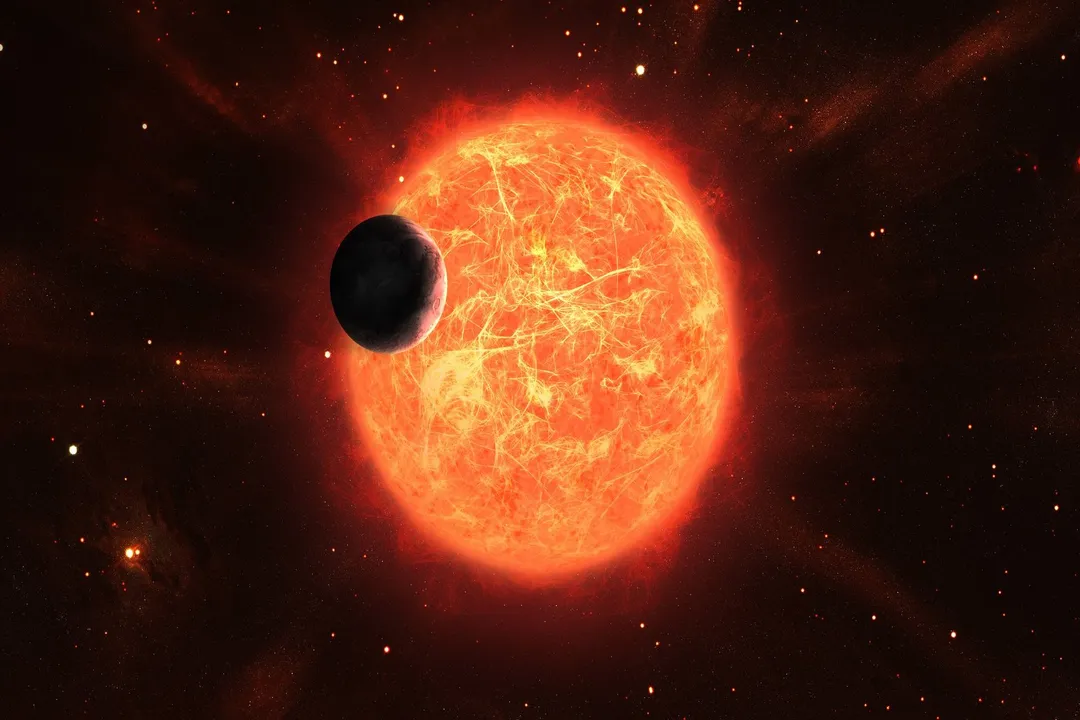
The intense heating caused by the contracting helium core has a profound effect on the layers immediately surrounding it. [3][6] This surrounding shell still contains plenty of unfused hydrogen. As the core contracts and heats up, this hydrogen shell reaches the temperature and density threshold required to initiate nuclear fusion. [1][6][10] This process is called hydrogen shell burning. [1][3]
This new energy source is incredibly productive. Imagine a campfire where the large logs in the center have burned down to embers, but the heat generated by those embers ignites a new, highly reactive layer of kindling surrounding them—the energy output from this shell can easily exceed the steady output the star generated when it was burning its core fuel. [10] The star is now producing more energy than it did during its long main sequence life. [3][10]
# Surface Expansion
The massive surge in energy production from the hydrogen-fusing shell pushes against the star's outer envelopes of gas with tremendous force. [3] This outward push overwhelms the remaining gravitational pull on those outer layers, forcing them to expand outward significantly. [1][4] This expansion is not gradual; the star swells enormously, sometimes reaching hundreds of times its original diameter. [1][4][5]
As these outer layers rush outward into space, they cool down significantly because the energy is being spread across a much, much larger surface area. [1][4] This cooling causes the star’s surface to shift its peak emission toward the red end of the visible spectrum. [1][5] The star has now officially become a red giant. [1][5] While the star’s surface temperature drops, its total energy output, or luminosity, actually increases substantially due to its massive size. [4]
It’s useful to visualize this shift in energy distribution. During the main sequence, a star acts like a very bright, compact lightbulb, focusing its energy output from a small, extremely hot core. When it transitions to a red giant, it essentially morphs into a massive, but cooler, floodlight. Although the floodlight's surface is dimmer per square meter, its sheer size means it casts much more total light across the cosmos. [4]
# Solar System Fate
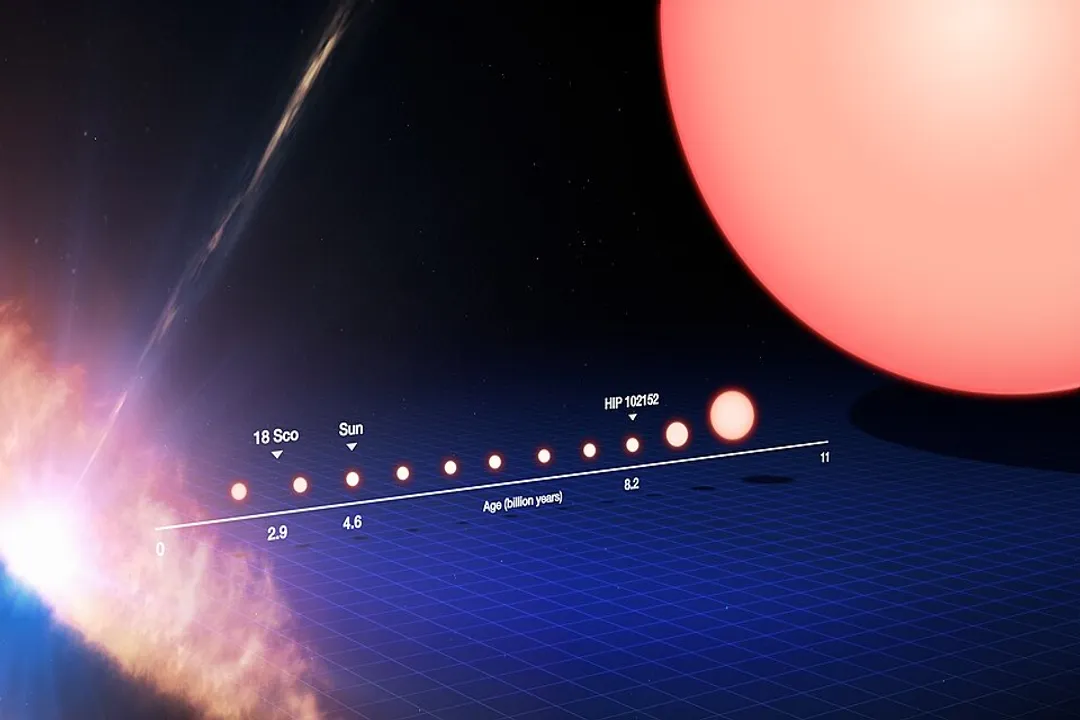
Our own star, the Sun, is currently about halfway through its main sequence lifetime, roughly $4.6$ billion years old. [1] In about five billion years, it will exhaust its core hydrogen and begin this transformation. [1][5] When the Sun becomes a red giant, its radius is predicted to expand past the orbit of Mercury and likely engulf Venus. [1][5] Whether Earth is swallowed depends on the exact mass loss the Sun experiences during this phase, but it will certainly experience a catastrophic temperature increase, boiling away our oceans long before the star physically reaches our orbit. [5] The Sun will eventually shed its expanded outer layers, creating a beautiful shell of gas known as a planetary nebula, leaving behind a small, dense remnant called a white dwarf. [4][5]
# Mass Differences
The specific path taken to become a red giant, and what happens next, is dictated almost entirely by the star's initial mass. [4][5]
| Initial Stellar Mass (Relative to Sun) | Evolutionary Path Feature | Result |
|---|---|---|
| Low to Intermediate (Like the Sun) | Classic Red Giant Phase | Ends as a Planetary Nebula and White Dwarf. [4][5] |
| High Mass (Greater than ~8 Solar Masses) | Red Supergiant Phase | Ends in a core-collapse supernova explosion. [4][5] |
Stars significantly more massive than the Sun follow a grander, more accelerated path, becoming red supergiants instead of simple red giants. [4][5] These massive stars burn through their fuel much faster and experience more complex internal restructuring. [4]
This entire red giant phase, though visually dramatic, is a relatively short chapter in a star's life compared to the main sequence. [5] Once the helium core becomes dense and hot enough—reaching temperatures around $100$ million Kelvin—it will ignite helium fusion through the triple-alpha process, which will cause a temporary stabilization before the star moves on to fuse heavier elements. [3][6] The red giant stage, therefore, is a temporary, volatile bridge between the two longest-lasting burning phases in a star's existence. [3]
#Videos
Why Do Red Giant Stars Get Bigger? - YouTube
Related Questions
#Citations
Red Giant - ESA/Hubble
Why do stars become red giants? - Astronomy Stack Exchange
Evolution from the Main Sequence to Red Giants | Astronomy
Red giant - Wikipedia
Red giant stars: Facts, definition & the future of the sun - Space
The Transition to the Red Giant Phase for Sun-like stars | ASTRO 801
Stellar Evolution - | The Schools' Observatory
Why Do Red Giant Stars Get Bigger? - YouTube
G. C. Sloan: Main Sequence Stars, Giants, and Supergiants
Why do stars goes through the red giant phase, instead of going ...