What's the difference between a red giant and a red supergiant?
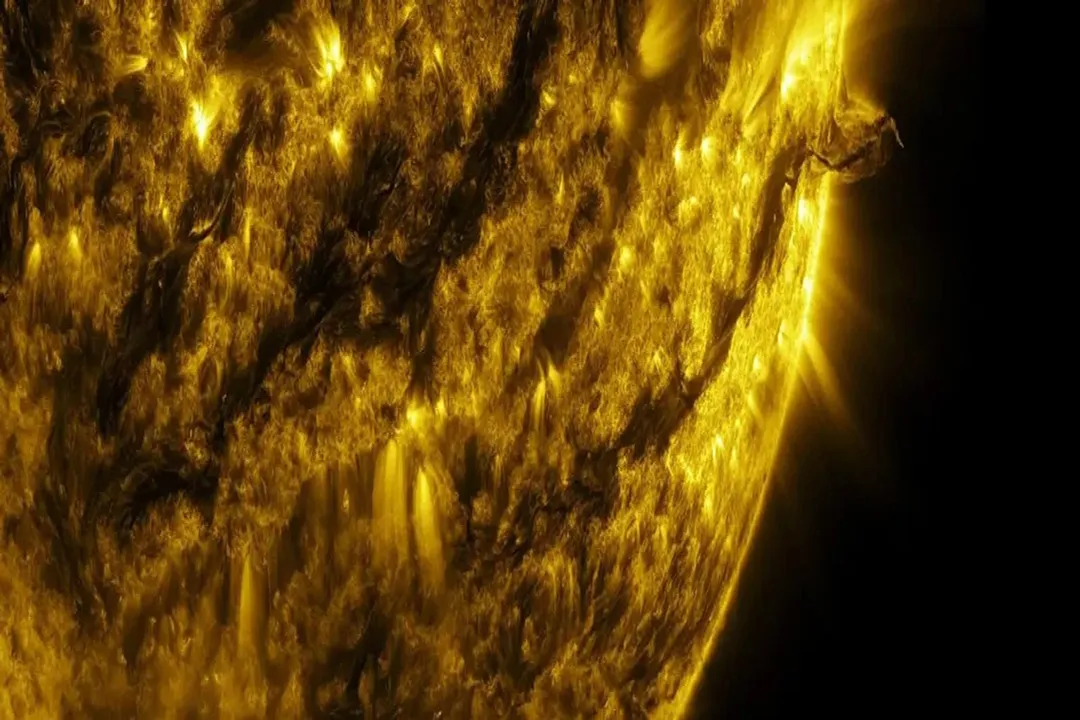
The visual spectacle of a star swelling to enormous proportions, turning a deep orange-red hue, signals that it is reaching the twilight of its existence. These are the evolved stars we categorize as either red giants or red supergiants. While both terms describe stars that have moved away from the stable hydrogen-burning phase of their lives, the difference between them is fundamental, dictated entirely by the initial mass of the star before it began this dramatic expansion. [3][5]
The shift from a main-sequence star—like our Sun—to a giant or supergiant happens when the star exhausts the hydrogen fuel in its core. [3] Gravity causes the core to contract and heat up, which in turn ignites hydrogen fusion in a shell surrounding the core. This new, intense energy production pushes the star's outer layers outward, causing them to expand dramatically while simultaneously cooling the surface, resulting in that characteristic reddish color. [5][3]
# Origin Mass
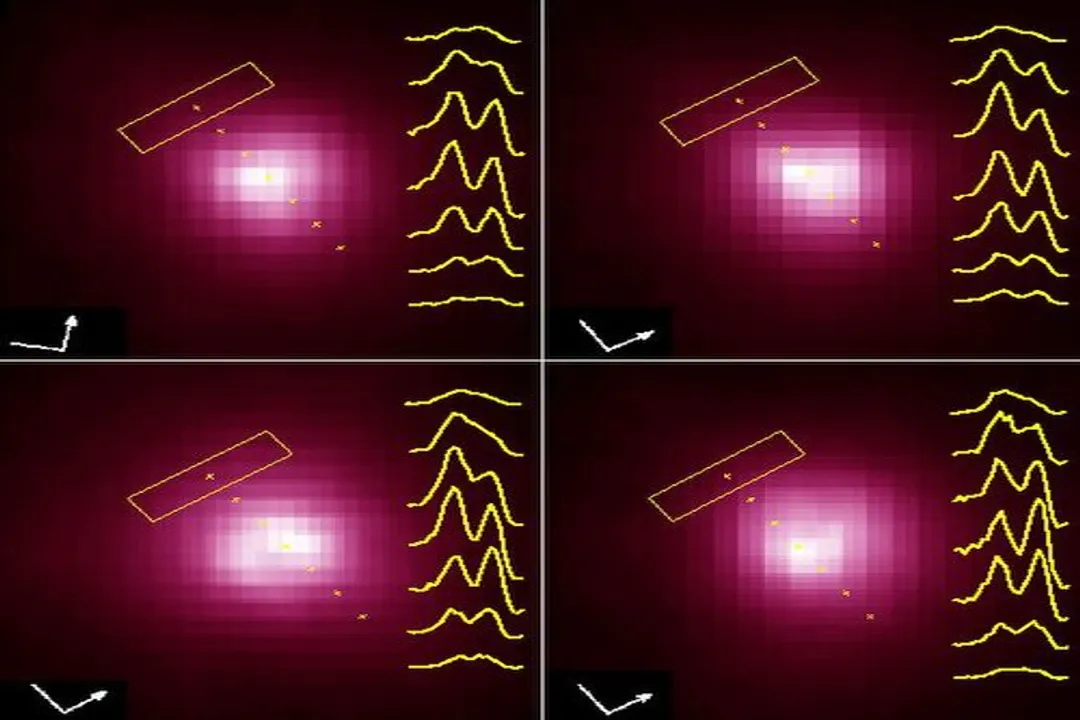
The dividing line between these two stellar behemoths rests on how massive the star was when it first formed. [2] This initial mass determines the star's entire life history, including its eventual fate. [4]
Red giants are the result of stars that started out with masses relatively close to that of our own Sun, typically up to about 8 solar masses. [3][2] Stars in this mass range follow a relatively predictable path after leaving the main sequence. They swell up, shed their outer layers, and eventually settle down as a cooling stellar remnant known as a white dwarf. [3]
Red supergiants, conversely, begin their lives as truly massive objects, usually starting with masses exceeding 8 to 20 times the mass of the Sun. [4][2] Because they possess so much more material, the gravitational pressures in their cores are far greater, allowing them to fuse progressively heavier elements (like carbon, neon, oxygen, and silicon) long after a Sun-like star has stopped core fusion. [4] This capability to maintain core burning for a much longer time, even through heavier elements, keeps them on the path toward a far more violent end. [2]
# Physical Scale
While both types are vastly larger than their main-sequence selves, the scale difference between a red giant and a red supergiant is immense, representing one of the most striking contrasts between the two classes. [1]
A typical red giant, like the one our Sun will become, might expand to encompass the orbit of Mercury or Mars. [5] If we imagine our Sun expanding into a red giant, its outer edge might reach about $1$ Astronomical Unit (AU) or slightly more.
However, a red supergiant is an entirely different animal. These stars are the largest known stars in terms of physical volume. [4] Stars like Betelgeuse or Antares, famous examples of red supergiants, have radii hundreds of times that of the Sun. [8] To put this into perspective, if a Sun-like star evolving into a red giant filled the orbit of Mars (about $1.5$ AU), a massive red supergiant could easily have an outer edge extending past the orbit of Jupiter, or perhaps even Saturn, depending on its exact mass and stage of evolution. [1] This extreme physical puffiness is what earns them the "supergiant" designation—it’s not just a small upgrade in size; it’s an exponential leap in volume. [3]
The contrast in energy output is equally dramatic. A red giant is luminous, but a red supergiant radiates orders of magnitude more energy due to its sheer surface area, despite having a cooler surface temperature than a main-sequence star. [5]
# Core Burning
The internal mechanics driving the expansion define their life spans and eventual outcomes. [3]
In a red giant stemming from a Sun-like star, the sequence is relatively short. After core hydrogen is exhausted, helium fusion begins in the core (the helium flash), followed by a brief period of core contraction and shell burning. [3] Once helium is depleted, the star generally lacks the mass necessary to ignite carbon fusion in the core, meaning its active nuclear life is effectively over, leading to mass ejection. [3]
For a red supergiant, the story is one of continuous, layered fusion. Because of the enormous pressure and temperature attainable in their cores, they proceed through multiple burning stages: hydrogen to helium, helium to carbon and oxygen, and so on, often synthesizing elements all the way up to iron. [4] This process happens in shells surrounding the inert core, much like layers of an onion. [4] This element-building process is what gives the universe the heavy elements necessary for rocky planets and life, elements that the smaller red giant simply cannot forge. [4]
# End State
The final moments for these two stellar classes are vastly different, marking the starkest functional difference between them. [4]
The red giant sheds its extended outer atmosphere slowly, often resulting in a beautiful, expanding shell of gas known as a planetary nebula. [3] What remains at the center is the hot, dense, inert core—the white dwarf—which will slowly cool down over billions of years. [3]
The red supergiant meets a far more spectacular end. Once fusion proceeds to iron in the core, no further energy can be extracted through fusion, as fusing iron consumes energy. [4] The core collapses catastrophically in mere seconds, triggering a rebound explosion known as a Type II supernova. [4][2] This explosion is so bright it can briefly outshine an entire galaxy. [2] The remnant left behind is either an incredibly dense neutron star or, if the initial mass was sufficient, a black hole. [4][2]
| Feature | Red Giant | Red Supergiant |
|---|---|---|
| Initial Star Mass | Low ( to $8$ Solar Masses) [3][2] | High ( to $20+$ Solar Masses) [4][2] |
| Size (Radius) | Large (Can reach Mars's orbit) [5] | Enormous (Can reach Jupiter/Saturn's orbit) [1][4] |
| Core Fusion Stages | Limited (H, He fusion) [3] | Extensive (Up to Iron fusion) [4] |
| Final Fate | Planetary Nebula White Dwarf [3] | Type II Supernova Neutron Star or Black Hole [4][2] |
# Observing Stellar Giants
When astronomers observe these stars across the galaxy, determining their exact status based purely on apparent size is challenging because we need an accurate measure of distance first. [8] Knowing how big a star actually is requires knowing how far away it is. If we only measure its apparent brightness (how bright it looks from Earth), we might mistake a slightly smaller, closer red giant for a truly enormous, distant red supergiant, or vice versa. [8] This is why detailed stellar modeling that incorporates luminosity, temperature, and spectral analysis is necessary to place these stars correctly on the Hertzsprung-Russell diagram. [5] The sheer brightness of a red supergiant, even from vast distances, often betrays its true status compared to the dimmer, though still large, red giants in a cluster.
#Videos
What Are Red Giant And Supergiant Stars? - Physics Frontier
Related Questions
#Citations
What are the differences between a red giant and a red supergiant?
Difference between a red giant and red supergiant? - Physics Forums
Red giant and red supergiant stages of a star's life cycle - Sparkl
Red supergiant - Wikipedia
What Are Red Giant And Supergiant Stars? - Physics Frontier
What's the difference between a red giant and a red supergiant?
Star Types - NASA Science
How do we know red supergiants like Antares and Betelgeuse aren't ...
Red Giant - ESA/Hubble
What is the difference between a Red Giant and a Red Supergiant?