Do red giants still have hydrogen?
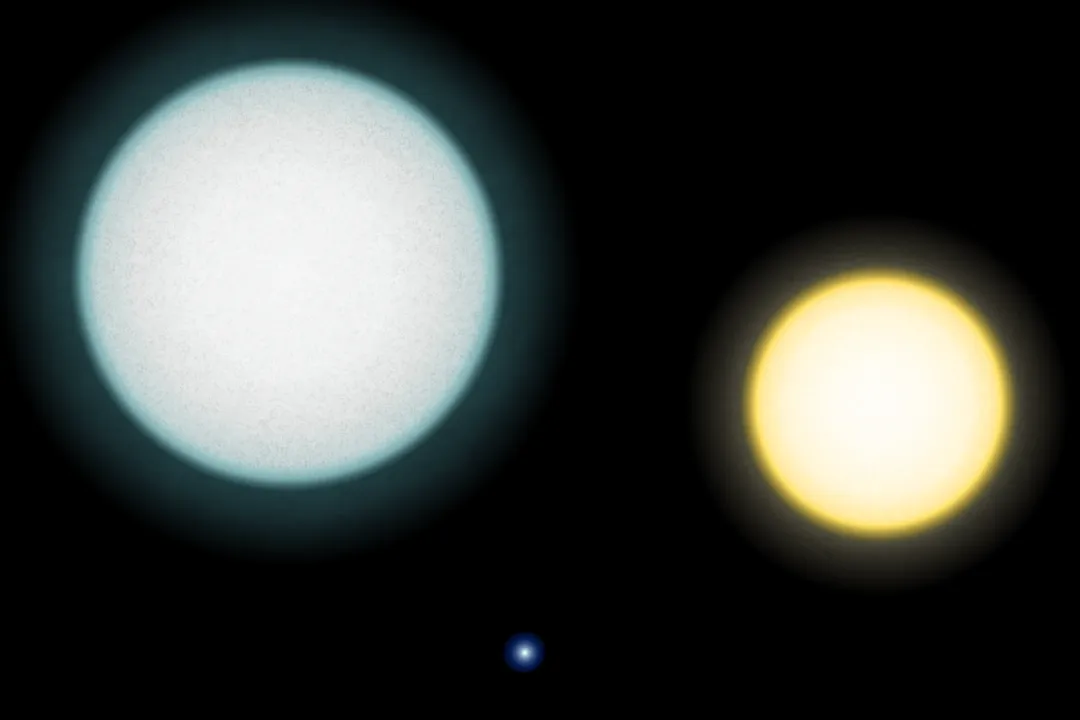
The transformation of a star like our Sun into a red giant is one of the most dramatic life stages an average star undergoes, and it fundamentally alters the star's internal chemistry. The central question about these bloated, aging behemoths—whether they still possess the hydrogen that once fueled them—gets a nuanced answer. While the most active burning of hydrogen has ceased in their centers, these massive, expanded stars are far from chemically inert; they simply organize their fuel differently, utilizing hydrogen in a shell surrounding an increasingly dense core.
# Core Exhaustion
Stars spend the vast majority of their existence, known as the main sequence, steadily fusing hydrogen into helium in their cores. This process releases the energy that balances the inward pull of gravity, keeping the star stable and relatively constant in size. When a star exhausts the supply of hydrogen fuel in its center, this equilibrium is broken.
For stars similar to our Sun, once the core's hydrogen supply is depleted, fusion stops there. The resulting core is now composed primarily of inert helium ash. This cessation of core fusion causes the outward pressure that supported the star to decrease, leading to a gravitational collapse of the core material. This collapse heats the surrounding layers intensely, which is the trigger for the next phase of life.
# Shell Burning
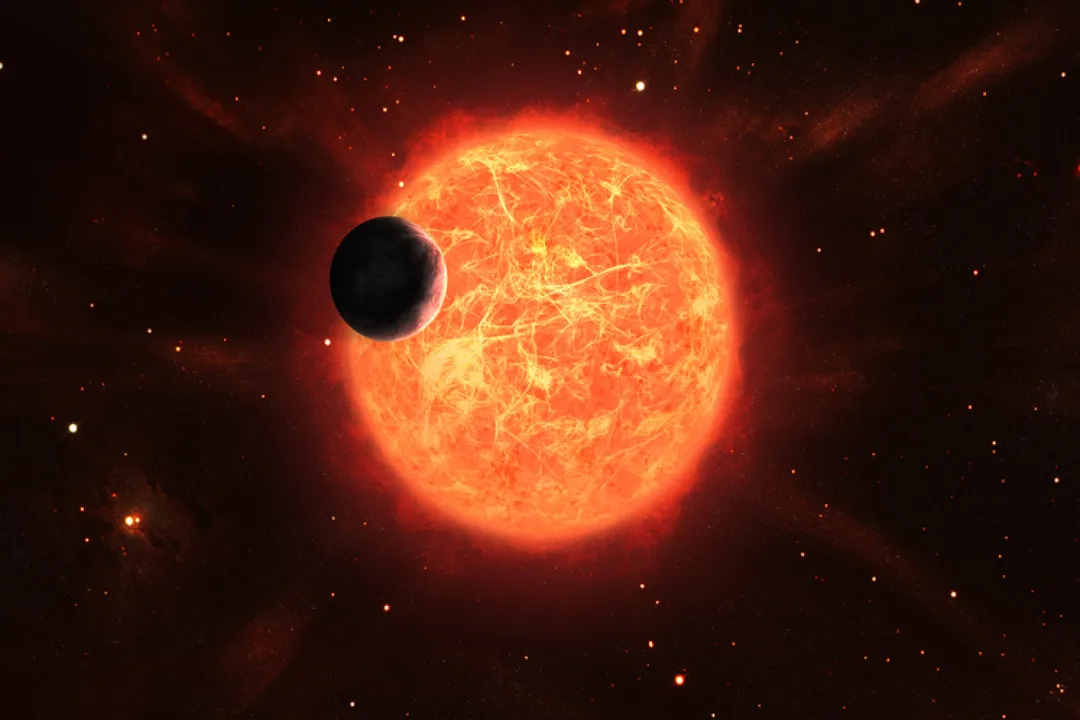
The story of the red giant phase is really a story about where the burning occurs when the core itself is done with its initial fuel. As the helium core contracts and heats up, it reaches a temperature high enough to ignite the layer of fresh hydrogen situated just outside the helium center. This process is called hydrogen shell burning.
It might seem counterintuitive, but this shell burning is actually more vigorous than the original core burning was when the star was on the main sequence. The gravitational contraction of the core increases the temperature and pressure in the shell dramatically, leading to a much higher rate of fusion in that narrow region. This intense, renewed energy production generates a massive outward thermal pressure that overcomes gravity in the star’s outer layers, forcing them to expand to enormous proportions. The star bloats up, cools down on the surface, and thus takes on a reddish hue, becoming a red giant.
# Composition Stratification
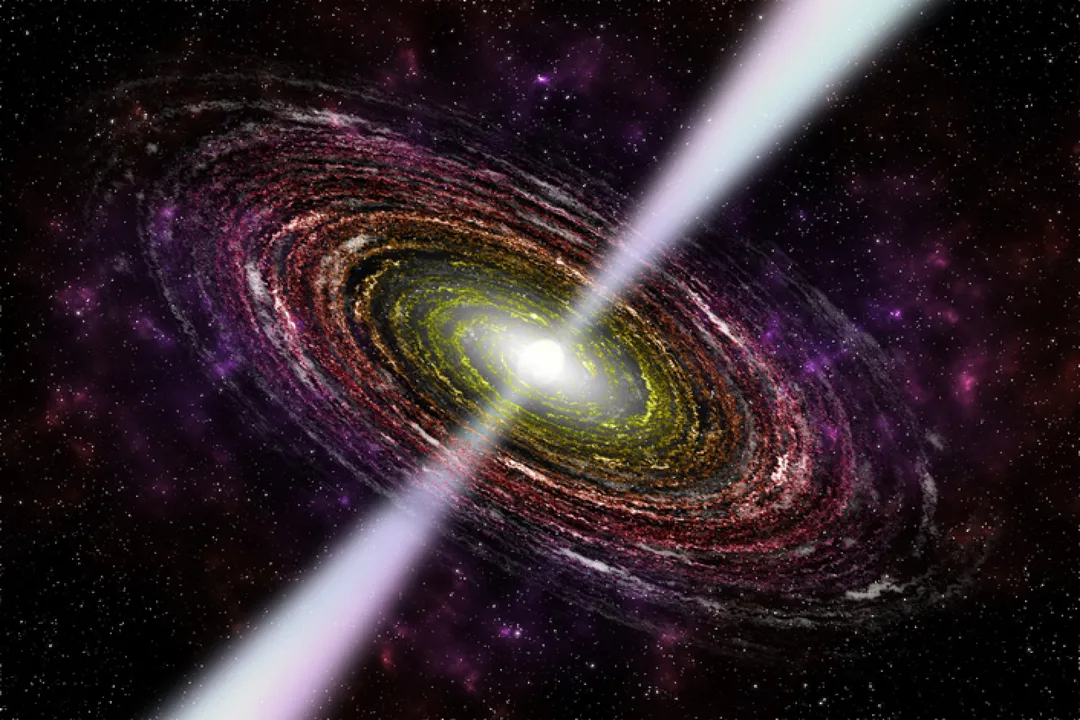
So, do red giants still have hydrogen? Yes, a great deal of it, but its location is key. A typical intermediate-mass star evolving into a red giant develops a layered structure, often described as an "onion" structure, though it is far simpler than later-stage massive stars:
- The Core: Mostly inert helium, sometimes beginning to contract toward the temperature required for helium fusion (if the star is massive enough).
- The Hydrogen-Burning Shell: A layer immediately surrounding the core where the current main energy source—hydrogen fusion—is taking place.
- The Envelope: The vast, cool, and loosely bound outer layers of the star, which are still composed predominantly of hydrogen and helium, largely untouched by the fusion process occurring deeper inside.
In essence, while the core is no longer hydrogen-fusing, the star as a whole still contains significant amounts of hydrogen in its outer shell and envelope. This distinction is vital: the star is defined by how it is generating energy, not just by the raw materials it contains.
# Size and Surface Shift
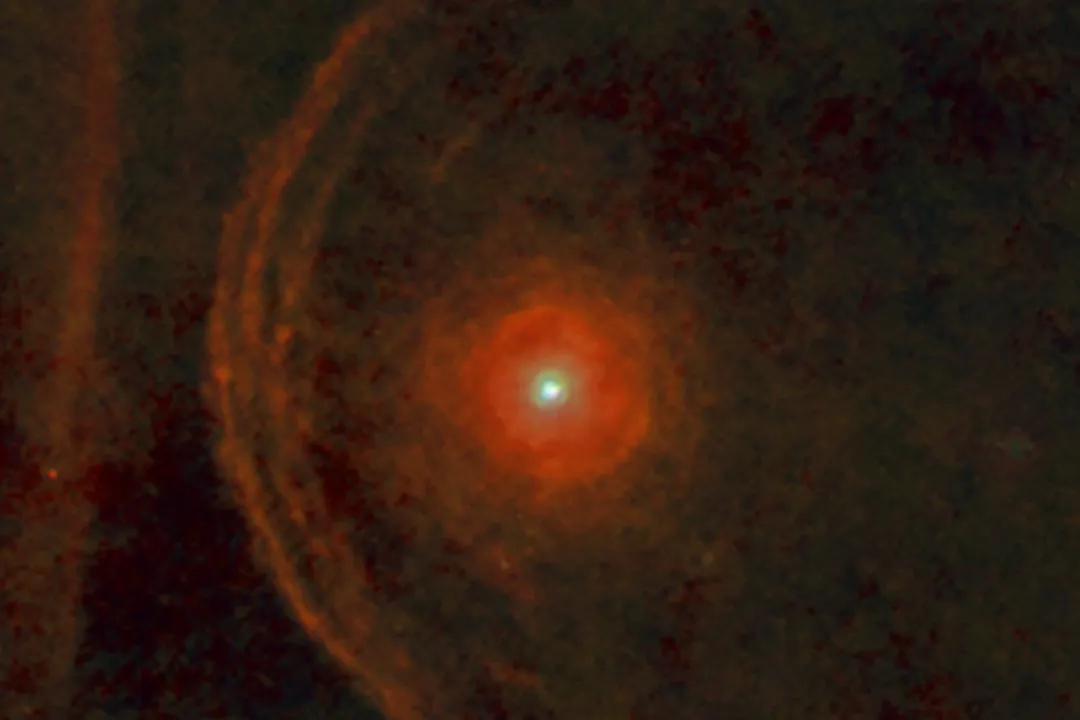
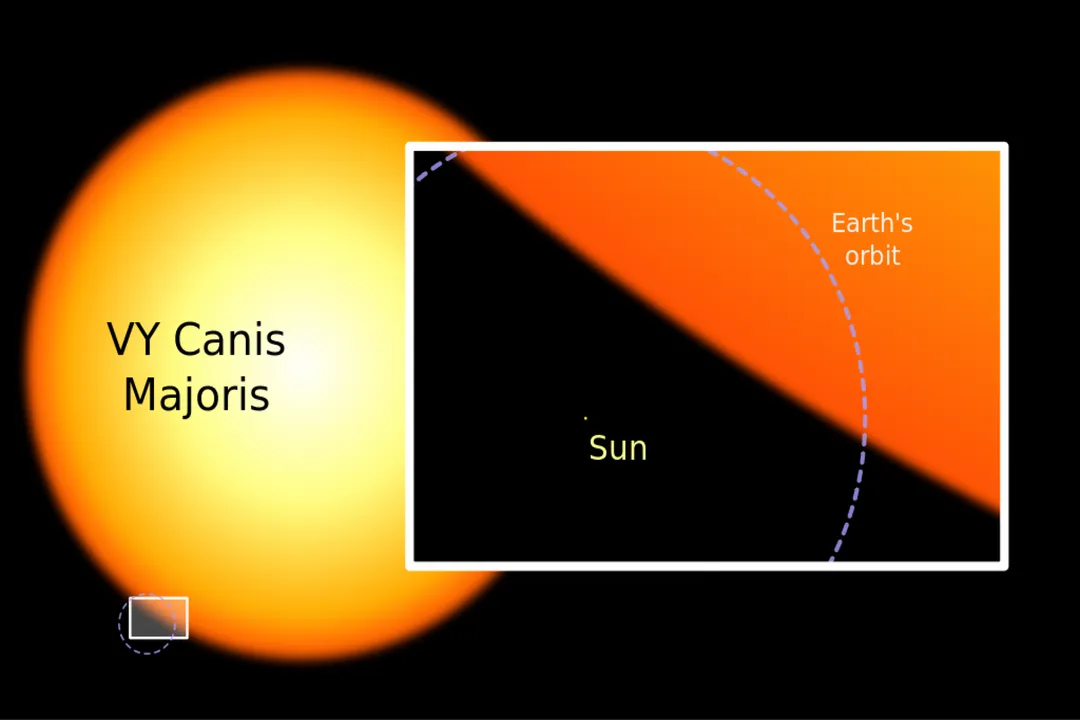
The sheer scale of the expansion during the red giant phase is hard to grasp. Stars increase their radius by factors of tens to hundreds. For a star like our Sun, when it becomes a red giant, its outer boundary is predicted to swell past the orbit of Mercury and possibly Venus. If the Sun were to become a red giant today, the Earth would likely be consumed. This expansion cools the surface temperature significantly, often dropping it below 5,000 Kelvin, which shifts the peak light emission toward the red end of the spectrum, hence the name.
Consider the sheer volume change. If a star began its life with a radius of $1$ Solar Radius (), upon reaching the red giant phase, its radius might easily reach . This is a volume increase of approximately $100^3$, or one million times the original volume, even though the star's mass has only slightly decreased due to stellar winds. This demonstrates that the change is mostly about the puffing up of the outer layers, powered by the efficiency of the shell fusion process.
# Stellar Metabolism Analysis
The physical manifestation of a red giant—its low surface temperature and immense size—is a direct consequence of its altered internal "metabolism" driven by the shift from core to shell burning. When the core fusion stops, the entire hydrostatic balance must be re-established, but now the engine is running on a hotter, tighter jacket of fuel. This rapid increase in shell fusion rate forces the star to become much larger to radiate the same amount of total energy it did when it was smaller and hotter on the main sequence.
If we think about the star's internal workings in terms of energy output versus surface area, it becomes clearer. A main sequence star is like a compact, high-efficiency furnace. A red giant is like that same furnace being forced to burn fuel much hotter in a narrow band (the shell), causing the entire structure to expand outwards dramatically to find a new, cooler equilibrium temperature at the surface. The star has effectively traded size and surface temperature for the ability to keep burning its initial fuel supply, albeit in a less centrally located fashion. This new configuration, while visually imposing, is inherently unstable compared to the long, steady burn of the main sequence.
# Helium Ignition
The red giant phase is often a temporary stopover, particularly for Sun-like stars. The continual gravitational pressure on the helium core eventually causes its temperature to rise further, perhaps reaching around $100$ million Kelvin. At this critical point, helium nuclei can begin fusing into carbon and oxygen—the next stage of stellar nucleosynthesis.
For stars below about $2.25$ solar masses, this ignition happens suddenly and explosively in what is known as the helium flash, because the core is supported by electron degeneracy pressure, which is pressure independent of temperature. Once helium burning begins stably in the core, the star shrinks somewhat and becomes hotter, moving onto the horizontal branch of the Hertzsprung-Russell diagram. For more massive stars, helium ignition occurs more gently and steadily while they are still in the red giant phase. This subsequent phase means the star is actively fusing both hydrogen (in an outer shell) and helium (in the core) simultaneously, representing a brief return to a more balanced state before later, more dramatic mass loss occurs.
# Composition Comparison
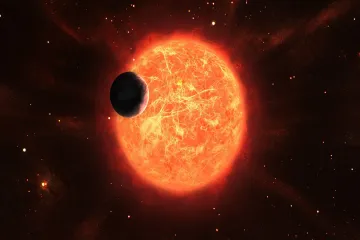
To visualize the compositional differences between a star's life stages, a simplified comparison of mass fractions can be illustrative. While exact figures vary based on the star's initial mass and how much mass it has lost via stellar winds, the shift away from core hydrogen is consistent.
| Stellar Phase | Core Composition (Approximate Mass %) | Shell/Envelope Composition (Dominant Fuel) | Primary Energy Source |
|---|---|---|---|
| Main Sequence | Hydrogen (), Helium () | Remainder | Core Hydrogen Fusion |
| Red Giant (Early) | Helium (), Hydrogen () | Hydrogen Fusion in Shell | Hydrogen Shell Fusion |
| Red Giant (Late) | Helium (), Carbon () / Oxygen () | Hydrogen Shell (Diminishing) | Helium Core Fusion (If hot enough) |
This table highlights that while the total amount of hydrogen in the star's outer envelope remains large—often well over half the star's mass in the early red giant stage—its role has shifted from being the central energy generator to being a passive blanket around the active core/shell region.
# Stellar Winds and Mass Loss
An often-overlooked aspect of the red giant phase is the dramatic increase in mass loss through stellar winds. These giants are so large and their outer layers are so loosely bound that they shed material into space at a high rate. This ejected material forms a vast, expanding shell of gas and dust around the dying star, which is often visible and rich in newly created heavier elements.
This mass loss means that the total amount of hydrogen available to the star decreases over time, but this loss is relatively minor compared to the total initial hydrogen content unless the star is on the path to becoming a planetary nebula. The process of swelling and blowing off outer layers is what eventually uncovers the hot, inert core, which will later become a white dwarf.
# Observational Clues
Astronomers confirm these internal changes by studying the star's light spectrum. When a star enters the red giant phase, the absorption lines in its spectrum change markedly. The surface layers become chemically enriched with elements synthesized during the prior core burning phase, like carbon and nitrogen, which are dredged up to the surface through convection mechanisms that mix the star's interior layers. Observing these specific spectral signatures, particularly the presence of heavier elements on the surface, acts as a tell-tale sign that the star has already exhausted its core hydrogen supply and is currently operating via shell burning.
Understanding the fate of hydrogen in these stars provides a crucial anchor point for stellar modeling. The observed properties of red giants across the galaxy—their luminosities, temperatures, and sizes—are used to calibrate evolutionary tracks that track the consumption of hydrogen and the subsequent progression to helium burning.
# Final Chemical Inventory
When we finally look at the ultimate fate of a star like the Sun—shedding its outer layers to leave behind a white dwarf—the remnant core will be mostly inert carbon and oxygen, having successfully fused nearly all its available core helium. The vast hydrogen envelope that characterized the red giant phase will have been ejected into space, contributing its material to the interstellar medium, where it can eventually form the next generation of stars and planets. Thus, the red giant stage is the final, most voluminous, and most luminous phase where the star uses its remaining hydrogen fuel in a shell to power its expansion before moving on to burn helium in its core, or before ending its life as a mere stellar remnant. It is a phase defined by hydrogen relocation and shell-based utilization rather than central generation.
Related Questions
#Citations
Are red giants still primarily made of hydrogen? What is their exact ...
Red Giant - ESA/Hubble
Red giant stars | Research Starters - EBSCO
What fuel does a red giant use? : r/askscience - Reddit
Red Giants - Center for Astrophysics | Harvard & Smithsonian
Red giant stars: Facts, definition & the future of the sun - Space
Red Giant - History of the Universe
22.1: Evolution from the Main Sequence to Red Giants
Red Giants: 7 hot-to-handle facts about stars in the dying stages of ...