Why do red giants cool?
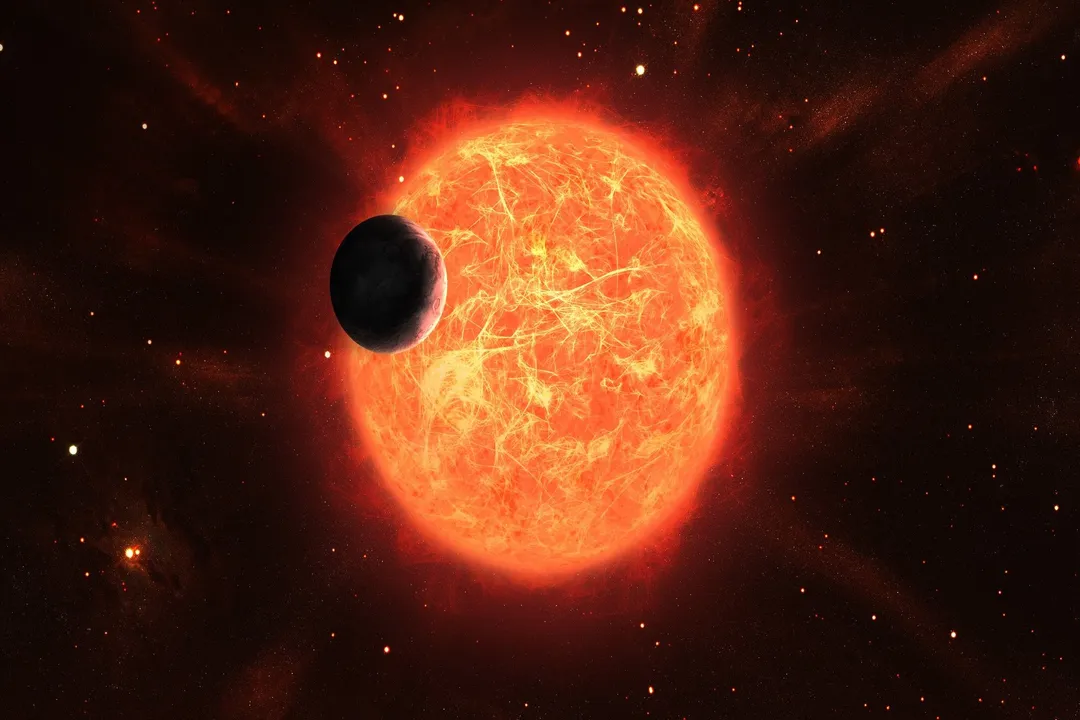
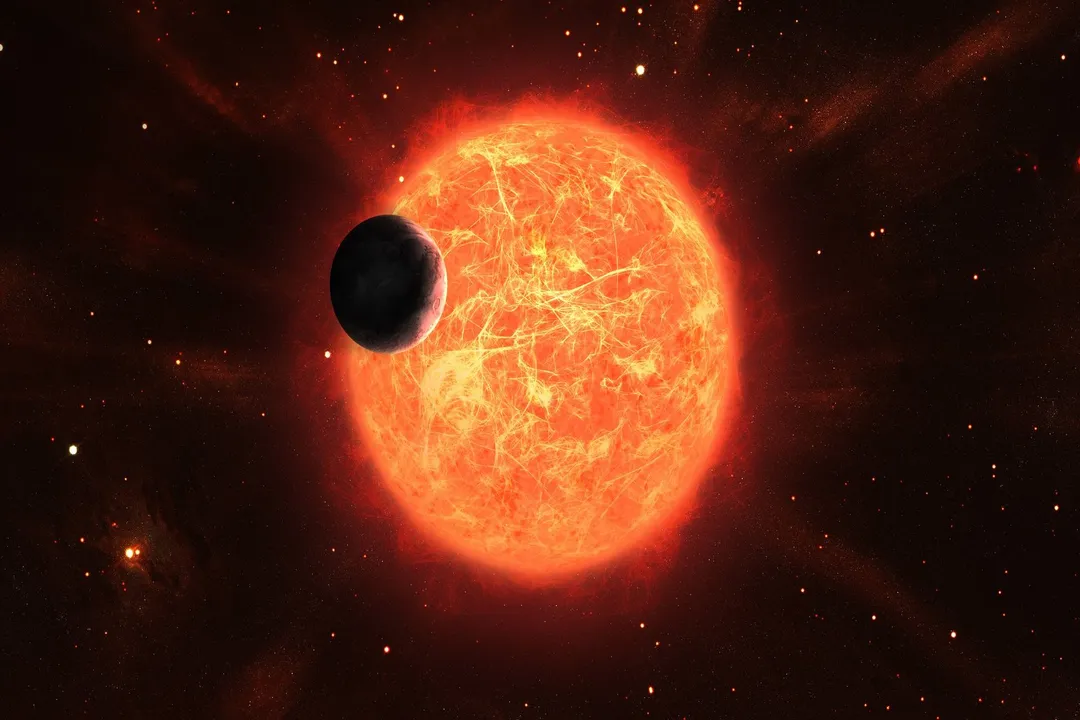
This is the start of the article with introduction paragraph and is not a heading. It should immediately begin the text. The transformation of a star like our Sun from a stable main-sequence resident into a sprawling, cooler behemoth known as a red giant marks one of the most dramatic shifts in stellar life. For general observers, the name suggests intense heat, yet the defining characteristic of this phase, paradoxically, is the cooling of its outer layers. [1][2] Understanding this cooling requires looking deep inside the star, past the enormous, inflated atmosphere, to the engine that drives this entire grand expansion.
# Stellar Aging
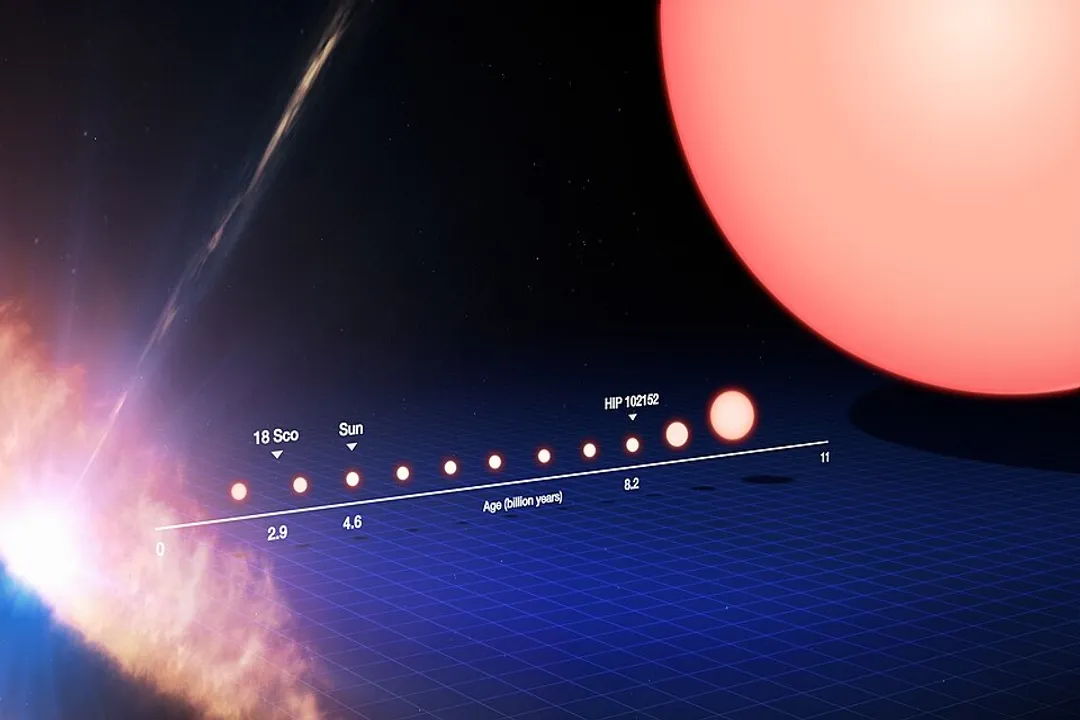
Stars spend the vast majority of their existence in the main sequence, fusing hydrogen into helium within their cores. This phase is characterized by a stable equilibrium where the outward pressure generated by core fusion perfectly balances the inward crush of gravity. [9] For a star like the Sun, this hydrogen-burning phase lasts for billions of years. [1][8]
When the hydrogen fuel in the core runs out, the primary energy source that was balancing gravity ceases in that central region. [8][9] Gravity, unopposed, begins to compress the inert helium ash core, causing it to heat up significantly. [1][8] This rising temperature in the contracting core is crucial because it heats the shell of hydrogen surrounding the core to such an extreme degree that hydrogen fusion ignites in that shell. [1][8] This process is known as shell burning. [1][8]
# Core Pressure
The ignition of hydrogen fusion in the shell surrounding the now-contracting core releases an enormous amount of energy. [1][8] This energy generates an outward pressure that becomes vastly greater than what the star produced during its main-sequence life when fusion was confined only to the center. [1][9] Think of it like putting a much bigger fire directly underneath a container rather than having the fire spread evenly through the center; the immediate thermal output pushing outwards is intense. [5]
# Atmospheric Expansion
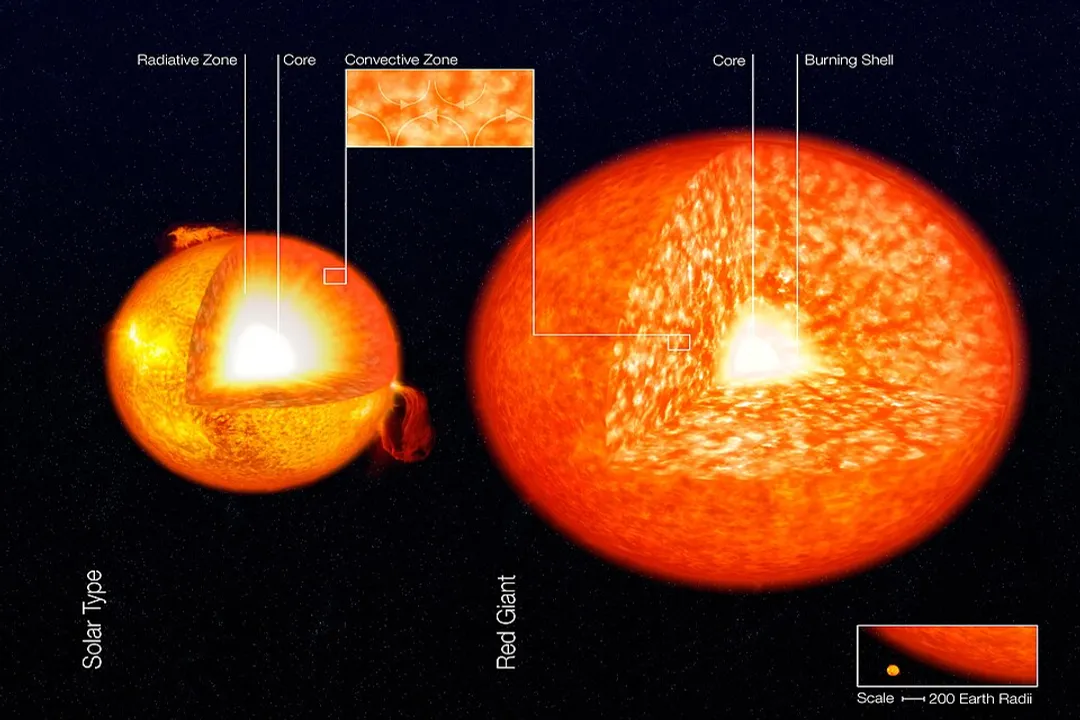
This tremendous new outward pressure from the shell fusion acts upon the star’s entire outer envelope, forcing it to expand outwards dramatically. [1][8] As the outer layers inflate, they move much farther away from the core, the source of the heat. [9] This expansion causes the material making up the star's visible surface to spread out over an incredibly large area. [2][8]
The key physical principle at play here relates to the relationship between temperature, surface area, and the rate at which energy radiates away. When the same total amount of energy—the star's luminosity—is spread across a far greater surface area, the energy density at the surface decreases. [2][4] Consequently, the surface temperature drops significantly. [4][9] A main-sequence star might have a surface temperature around 6,000 Kelvin (like our Sun), but a red giant can cool to temperatures below 5,000 Kelvin. [4]
# Temperature Surface Area
This relationship is defined by the Stefan-Boltzmann Law, which relates luminosity (), the star's radius (), and its surface temperature (): . [4] Since the star has become a giant, has increased immensely. For the star to maintain the required energy balance during this phase, the temperature () must decrease significantly to balance the massive increase in radius squared () while maintaining the overall energy output or increasing it slightly. [4] The visible color changes from a yellowish-white to a distinct red precisely because the peak wavelength of emitted light shifts toward the longer, cooler end of the electromagnetic spectrum. [2]
If we were to compare the surface area of a main-sequence star to its red giant progeny, the difference is staggering. Imagine our Sun, which has a radius of about $700,000$ kilometers. When it becomes a red giant, its radius could swell to $150$ to $200$ times its current size. [1][2] This means the surface area available to radiate the energy is hundreds of thousands of times greater. Even though the core fusion process is more vigorous in the shell, the sheer act of spreading that heat over such a colossal surface area results in a cooler skin. [4]
An interesting point arises when considering the sheer scale of this expansion on a familiar object. If our Sun became a red giant today, its surface would likely extend past the orbit of Venus, possibly enveloping Mercury entirely. [1] The visible photosphere—the "surface" we see—would be hundreds of millions of kilometers across, meaning the thermal energy is distributed over a truly astronomical area, leading directly to that lower temperature. [2]
# Energy Output Rise
It might seem contradictory that a cooler star can be so much brighter than it was before, but this is the fundamental signature of the red giant phase. [4] While the surface temperature drops, the dramatic increase in the star's radius is the dominant factor in its luminosity. [4][9]
| Stellar Phase | Surface Temperature (K) | Relative Radius | Dominant Process |
|---|---|---|---|
| Main Sequence | ~5,800 (Sun-like) | 1 | Core Hydrogen Fusion |
| Red Giant | ~3,000 to 5,000 | Hydrogen Shell Fusion | |
| Red Supergiant | Shell/Core Fusion Stages |
As noted in the table above, the luminosity () dependence on radius () is squared (), while its dependence on temperature () is to the fourth power (). [4] When a star transitions from the main sequence to a red giant, the radius increases perhaps one hundredfold (), while the temperature might drop by only 20–40% (e.g., from 6,000 K to 4,000 K). The effect of the massive radius increase overwhelmingly dictates the final luminosity, causing the star to shine far more brightly despite its cooler skin. [4]
# Supergiants Cooling
For the most massive stars, those destined to become red supergiants rather than mere red giants, this cooling effect is even more pronounced. [7] These stars fuse heavier elements in successive shells after core helium burning concludes, leading to even larger radii and more complex internal structures. [7] A red supergiant can expand to radii thousands of times that of the Sun, leading to surface temperatures that can dip below $3,500$ Kelvin. [7] It is fascinating to consider that even massive stars, which burn through their fuel at a frantic pace, end up with surfaces cooler than the main-sequence stars that are much less massive, simply because their size is so overwhelming. [7]
# Spectral Shifts
The way we perceive the cooling is directly tied to stellar classification. Stars are categorized by spectral type, which is fundamentally based on surface temperature, from hottest (O-type) to coolest (M-type). [2] The transition to a red giant places the star firmly into the K or M spectral classes, which are inherently cooler classes than the G class where the Sun resides on the main sequence. [2] This shift in spectral classification is a direct consequence of the lowered surface temperature caused by the vast expansion. [2]
# Stellar Endings
The red giant phase is ultimately temporary, even if it lasts for millions of years for some stars. [1] Once the helium in the core has fused into carbon and oxygen (or heavier elements in more massive stars), the star exhausts its fuel supply in a manner that leads to a stable, smaller remnant. [1] For Sun-like stars, the outer layers drift away, forming a planetary nebula, leaving behind a hot, dense white dwarf core. [1] This remnant is incredibly hot initially, but because it no longer generates energy through fusion, it simply cools down over eons, eventually becoming a cold, dark black dwarf. [1] The cooling of the red giant phase itself is simply an intermediate step on the path to this final, slow cooling process of the stellar corpse.
When thinking about the fate of our own stellar neighborhood, this cooling transition is essential context for any long-term planning, hypothetical or otherwise. If any planet were to survive the Sun's red giant expansion—which seems unlikely given the predicted radius—the surface environment would change drastically, bathed in less intense, but much more widely distributed, infrared light rather than visible light. The cooler, redder radiation would fundamentally alter photosynthesis and atmospheric chemistry for any life clinging to existence on the surviving world. [4] This difference between the visible light spectrum of a main-sequence star and the infrared-heavy spectrum of a red giant means that any surviving life would need entirely different pigments to capture the available light energy efficiently.
The physical mechanism driving the cooling is entirely dependent on the structural readjustment following core exhaustion. It is not a failure of energy production, but rather a spatial re-allocation of that energy. The star is not dying when it becomes a red giant; it is undergoing a necessary, albeit dramatic, structural reorganization to continue shining for a period, albeit with a much cooler exterior shell. [8] The cooling is simply the effect of the required massive radius increase needed to match the energy output from the renewed shell fusion process with the surface's ability to radiate that energy. [4]
#Videos
What Causes a Red Giant's Surface to Cool? - YouTube
Related Questions
#Citations
Red giant - Wikipedia
Red Giant - ESA/Hubble
Why is a star in their red giant phase cooler than in their main ...
Red giants, luminosity, and habitable zones : r/astrophysics - Reddit
What Causes a Red Giant's Surface to Cool? - YouTube
Red giant stars: Facts, definition & the future of the sun - Space
How can red supergiants be cooler than dwarfs of the same spectral ...
22.1: Evolution from the Main Sequence to Red Giants
Red Giants - Center for Astrophysics | Harvard & Smithsonian
Lecture 15: Red Giants