What is the explosion of a red giant called?
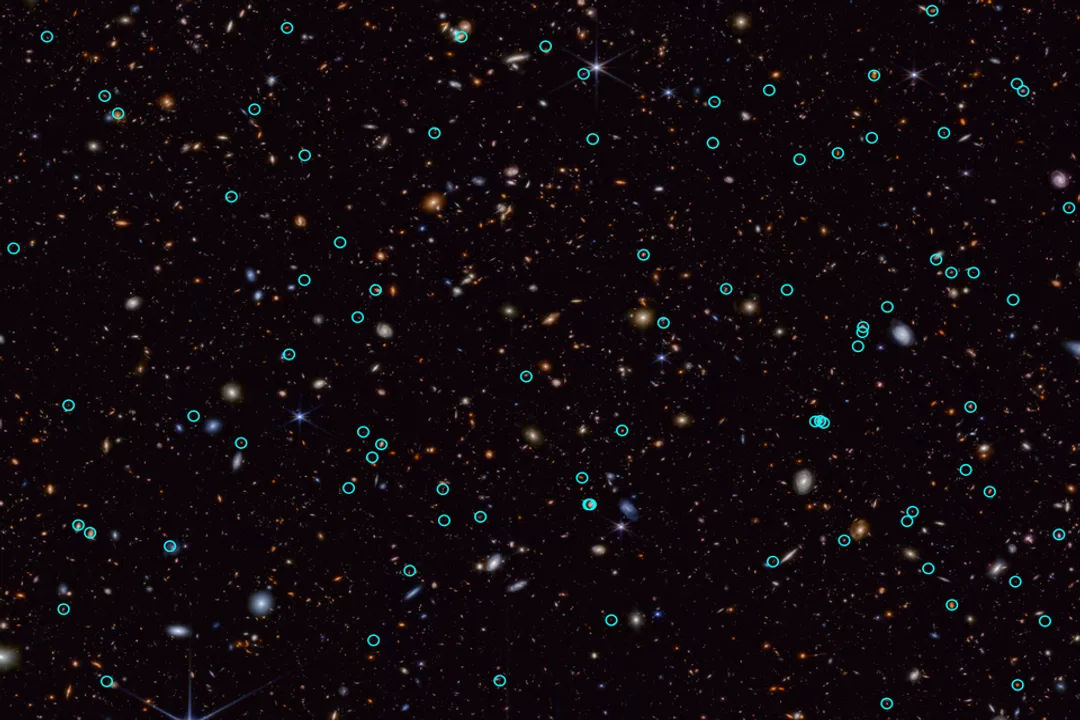
The spectacular ending to the life of certain massive stars is one of the most energetic events in the universe, capable of briefly outshining entire galaxies. [2][6] When we ask what the explosion of a red giant is called, the immediate astronomical answer is a supernova. [1][2][6] However, this term requires some crucial context, as not every star that swells into a red giant meets the criteria for this catastrophic blast. [8] The most direct path to a supernova involves a specific, much larger class of aging star: the red supergiant. [3][5]
# Stellar Fates
Stars spend the majority of their existence in a stable phase, fusing hydrogen into helium in their cores. [8] Once the hydrogen fuel runs low, the star begins to change dramatically based primarily on its initial mass. [8] For stars similar in mass to our Sun, the outer layers will expand enormously, turning the star into a red giant. [8] This phase involves complex internal nuclear reactions, but for solar-mass stars, this swelling doesn't end in an explosion; instead, the outer layers drift away to form a planetary nebula, leaving behind a cooling white dwarf. [8]
The stars destined for the supernova spectacle are far more massive, often starting their lives as blue giants before evolving into red supergiants. [3] These behemoths are many times the mass of our Sun. [3] When these giants deplete the lighter elements in their cores, they continue fusing heavier and heavier elements, building up layers like an onion, until they create a core of iron. [3]
# Explosion Term
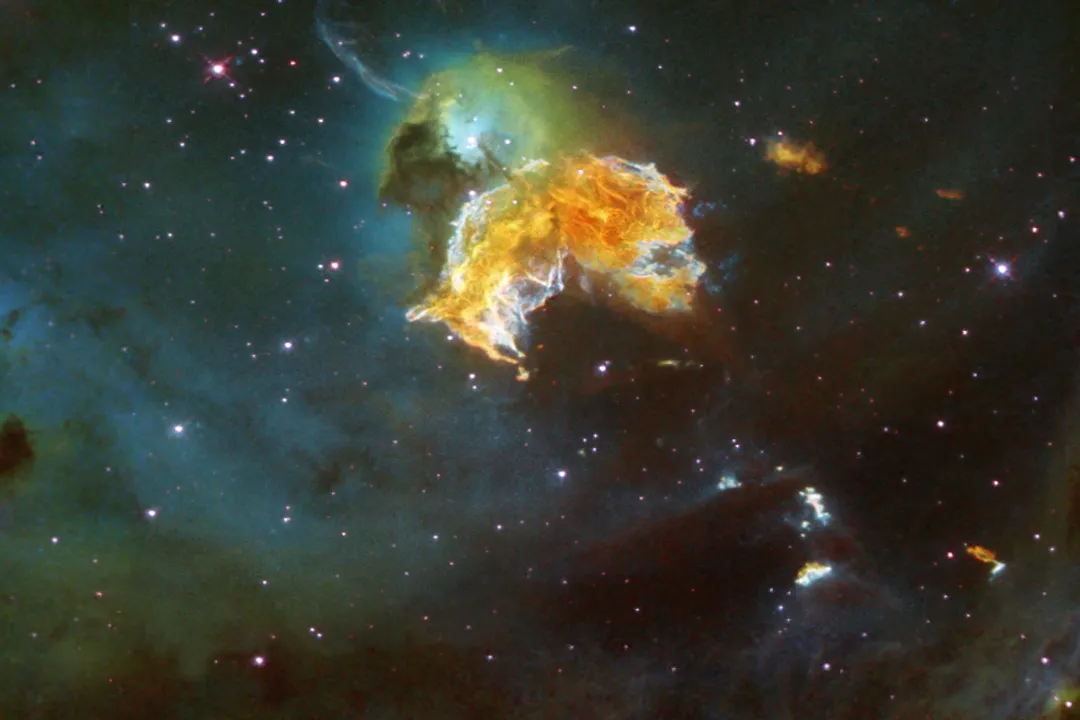
The resulting explosion is universally termed a supernova. [2][6] This is a general category for a stellar explosion that marks the catastrophic death of a star. [2][6] While there are several ways a star can meet its explosive end—such as a white dwarf accumulating too much mass from a companion star in a Type Ia supernova—the explosion resulting from the death of a massive star like a red supergiant is specifically known as a Type II supernova. [1][3] This event represents the final, violent release of energy as the star’s internal structure fails completely. [6]
Thinking about the sheer scale of this event helps place it in perspective. A Type II supernova releases an amount of energy in mere seconds that our own Sun will produce over its entire ten-billion-year lifespan. [8] It is this incredible, instantaneous energy release that distinguishes the supernova from quieter stellar transitions. [2] Consider that the total energy emitted during the explosion is often quantified in the range of joules; while that number is abstract, it illustrates why these events can momentarily dominate the light output of their entire host galaxy. [6]
# Core Collapse
The mechanism driving the supernova of a red supergiant is rooted in gravity winning a final, decisive battle against outward pressure. [3]
- Fuel Exhaustion: The massive star fuses elements up to iron in its core. [3] Iron cannot release energy through fusion; instead, fusing iron consumes energy. [3]
- Loss of Pressure: Once the iron core forms, energy generation stops abruptly, and the immense weight of the outer layers is no longer supported by thermal pressure. [3]
- Infall and Collapse: Gravity crushes the iron core inward in a fraction of a second, compressing it to incredible densities, reaching perhaps the density of an atomic nucleus. [3]
- The Bounce: This collapse halts suddenly when the core reaches the limits of nuclear density, creating a super-dense object that resists further compression. [3] The infalling stellar material then violently rebounds off this rigid core, creating a powerful shockwave. [3]
- Ejection: This outward-rushing shockwave rips through the star's outer layers, heating them to billions of degrees and causing the spectacular supernova explosion. [3] What remains is either a neutron star or, if the original star was massive enough, a black hole. [3]
It is important to note the mass boundary here. A star must typically be at least eight times the mass of the Sun to undergo core collapse and become a Type II supernova. [8] Stars slightly less massive might become a white dwarf, as mentioned before, but the precise point where a star transitions from a stable giant phase to a runaway core collapse is a complex area of stellar physics, often involving mass loss throughout its life. [8]
# Direct Witness
For decades, the mechanism of a massive star’s explosion, especially the exact state of the star just before the final moments, was primarily inferred from models and observations of the aftermath. [5] However, astronomers achieved a significant milestone by observing a star as it transitioned into a supernova explosion, providing direct observational evidence for the theoretical path of a red supergiant death. [5] This was a rare sight, essentially catching a star in the act of dying violently. [5]
This specific observation, detailed in recent studies, captured the immediate pre-supernova phase, showing the star in its swelled, red supergiant state just before the catastrophic shockwave broke free. [5] Being able to study this transition phase is immensely valuable because it helps scientists calibrate their understanding of stellar interiors and the physics governing the final collapse that leads to the blast wave. [5] Before such direct witnessing, most evidence came from studying the remnants, or analyzing supernovae long after they had faded. [1][2]
# Observation Tools
Understanding these explosive events relies heavily on advanced telescopic capabilities, both on Earth and in space. [4] Observing the dying star and the subsequent light curve—how the brightness changes over time—is central to classifying and studying the event. [1] Tools like the Hubble Space Telescope have provided stunning images of the aftermath, showing the expanding gas clouds, which are rich in newly synthesized elements created during the explosion. [1]
The nature of the explosion itself means that it releases an enormous spectrum of radiation, from high-energy gamma rays to visible light, allowing different instruments to study different aspects of the event. [2] Since the star’s last stage is a red supergiant, it is already large and somewhat cool on the surface, but the explosion drastically increases its temperature and luminosity across the spectrum. [3] This high-energy output is what allows us to see these events across billions of light-years. [2]
# Solar Future
While the term "red giant explosion" sounds universal for any star that swells, it is vital for any casual stargazer to remember the fate awaiting our own Sun. [8] Our Sun is not massive enough to become a red supergiant; it will swell into a red giant in about five billion years, but it will lack the necessary core mass to trigger the iron core collapse. [8] Instead of a supernova, the Sun will shed its outer layers, leaving behind a dense, hot white dwarf. [8] This distinction in stellar mass dictates the difference between a gentle stellar retirement and a universe-shaking explosion. [3][8]
Therefore, the explosion of a red giant—more accurately, a red supergiant—is called a supernova, specifically a Type II supernova, marking the instant gravity overwhelms the core's internal fusion energy, leading to the most powerful stellar detonations known. [3][6]
#Videos
Why Do Some Red Giant Stars Explode As Supernovae? - YouTube
Related Questions
#Citations
Supernova - Wikipedia
Supernovae - Imagine the Universe! - NASA
What causes the explosion of a red supergiant? | CK-12 Foundation
Why Do Some Red Giant Stars Explode As Supernovae? - YouTube
For The First Time, We've Seen a Red Giant Star Transition Into a ...
A supernova is a massive stellar explosion that occurs when a star ...
What is a supernova? - Space
Red Giant - ESA/Hubble
Stellar Evolution - | The Schools' Observatory