What event triggers the heating of the hydrogen shell surrounding the core in a star that has exhausted its core hydrogen?
Answer
The compression and heating of the inert helium ash core
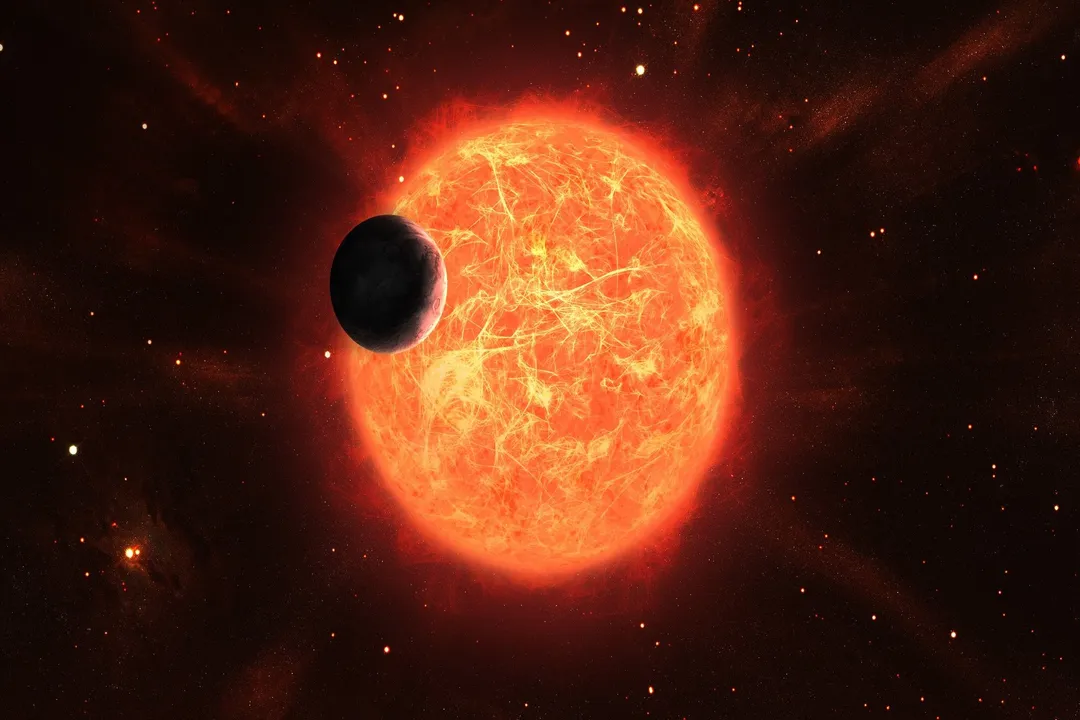
When core hydrogen is depleted, gravity compresses the inert helium ash core. This compression raises the core's temperature significantly, which in turn heats the surrounding hydrogen shell enough for fusion to ignite there.
#Videos
What Causes a Red Giant's Surface to Cool? - YouTube
Related Questions
What is the defining characteristic of the red giant phase, paradoxically?What event triggers the heating of the hydrogen shell surrounding the core in a star that has exhausted its core hydrogen?What physical principle directly causes the surface temperature of the expanding giant to drop?In the relationship $L ext{ propto } R^2 T^4$, what factor dominates the luminosity increase when a star transitions from main sequence to red giant?If our Sun becomes a red giant, to what extent might its radius increase?Which spectral class would the Sun likely move into upon becoming a red giant?What process characterizes the energy generation during the stable main sequence phase?How is the visible color shift to red explained during the red giant phase?What is the ultimate remnant left behind after a Sun-like star exhausts its fuel supply at the end of the giant phase?What is the primary physical reason a red giant is significantly brighter than it was during its main-sequence life?