Did ancient beaches found on Mars reveal the Red Planet once had oceans?
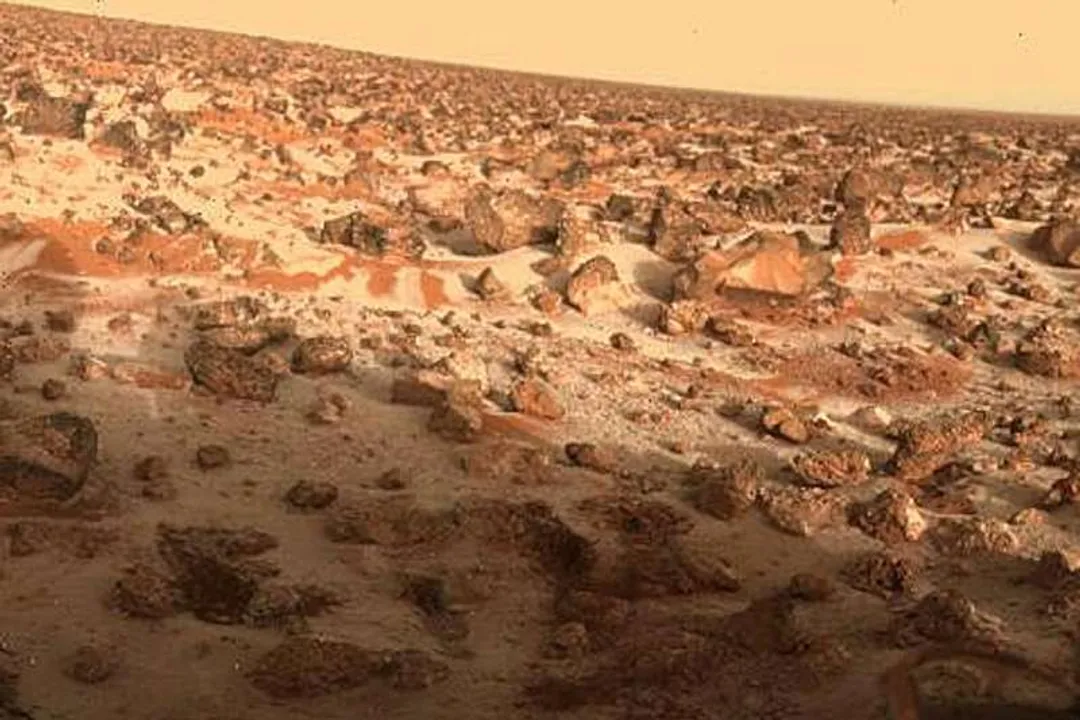
The long-standing cosmic question of whether Mars ever hosted vast, life-sustaining bodies of liquid water seems to be finding its answer written in stone—or rather, in ancient sand. For decades, orbital images hinted at dry riverbeds and ancient lake basins, but direct, incontrovertible proof of extensive liquid water, like that required for oceans and familiar shorelines, remained elusive. Now, geological data gathered by planetary missions reveal sedimentary structures that bear an uncanny resemblance to Earth’s coastal environments: evidence of ancient beaches on the Red Planet. These discoveries suggest that Mars was not just sporadically wet, but possessed significant, long-lived bodies of liquid, potentially large enough to qualify as oceans, existing billions of years ago.
# Sedimentary Evidence
The identification of beaches requires more than just finding a flat plain near a low-lying area; it demands specific geological sorting and rounding processes that only sustained wave action can create. Scientists studying the data have zeroed in on distinctive geological formations that point toward persistent water. These features include layers of sediment showing precise sorting, where particles of similar size are grouped together, a hallmark of water carrying and depositing material over time.
Perhaps the most compelling signature is the presence of rounded pebbles and gravel embedded within these layers. On Earth, the constant tumbling action of waves rolling stones against each other smooths their edges over immense spans of time. The Martian evidence shows similarly well-rounded clasts, suggesting they were subjected to prolonged abrasion in a dynamic aquatic environment. This contrasts sharply with rocks eroded purely by wind, which tend to remain angular and rougher because aeolian (wind-driven) erosion works differently, abrading surfaces rather than tumbling materials over long distances in a fluid medium.
Furthermore, the analysis has identified features consistent with ancient ripple marks, the subtle, wave-formed undulations left in the sand. When viewed from above, the patterns observed in these Martian layers strongly suggest deposition by flowing water, not just wind currents. The precise geometry and scale of these features allow researchers to estimate the energy of the ancient waters that shaped them.
# Ancient Gulf
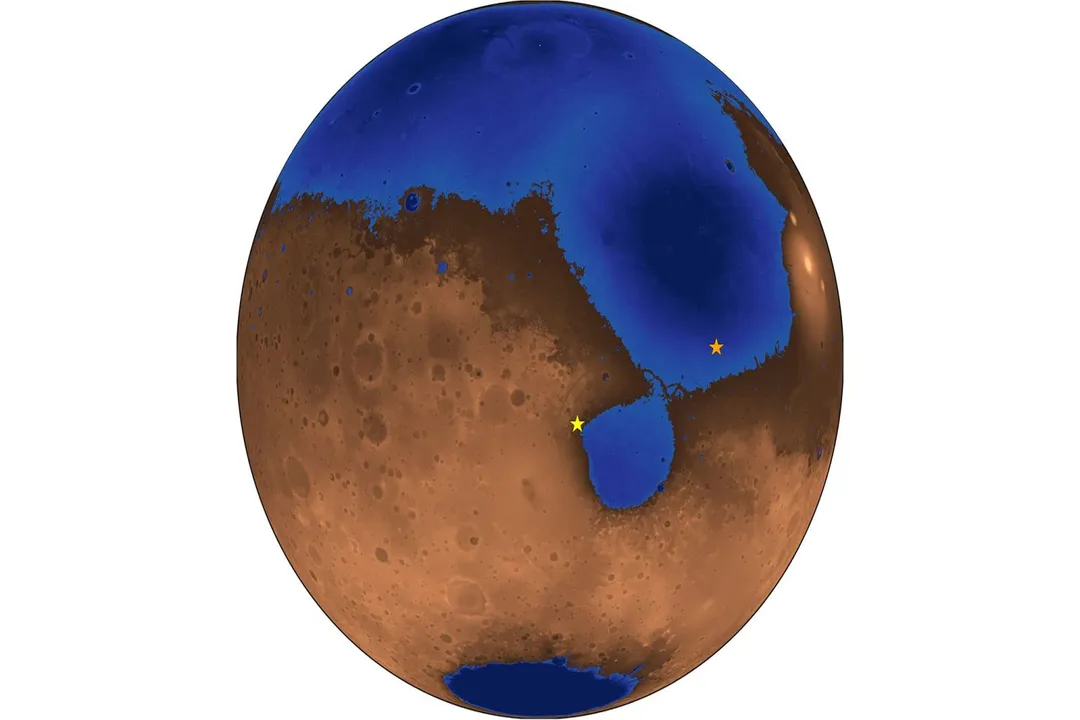
One key finding centers on a specific region where these sedimentary features cluster, suggesting the edge of a substantial body of water. Researchers have identified what they describe as evidence for a "gulf" on Mars, a large inlet or bay fed by the planet's hypothesized ancient ocean. This finding moves the discussion from isolated puddles or short-lived lakes to a system indicative of a vast, regional water presence, potentially spanning large areas of the Martian surface.
The significance of this scale cannot be overstated. While evidence for ancient water on Mars has been abundant, finding structures indicative of persistent shorelines—areas where water levels fluctuated gently over long periods—suggests a climate stable enough to maintain large lakes or seas for extended durations. If the region was indeed a gulf, it implies that the broader region, perhaps a major impact basin, was filled with water deep enough to support wave action necessary to form beaches.
The current Martian environment is hostile to liquid water; surface pressure is too low and temperatures are generally too cold, meaning any surface ice sublimates or freezes instantly. To have beaches, Mars must have existed under dramatically different conditions billions of years ago, likely featuring a much thicker atmosphere capable of trapping heat and allowing water to remain stable in its liquid phase.
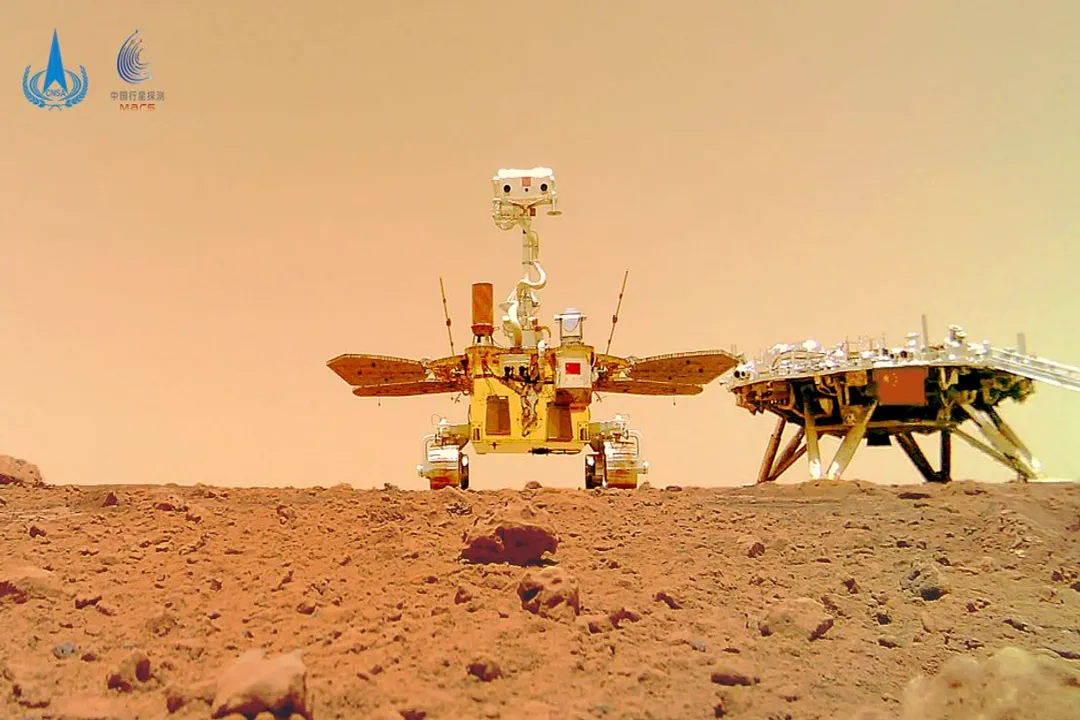
We can construct a tentative geological cross-section for this ancient locale. Imagine the basin filling, perhaps after massive volcanic outgassing or sustained input from melting subsurface ice. As the water level reached a stable elevation, wave energy would sort the incoming sediments, pushing finer materials like mud away into deeper waters and depositing the coarser sand and gravel near the shoreline—creating the layering we now observe in the rover imagery.
# Climate Shift
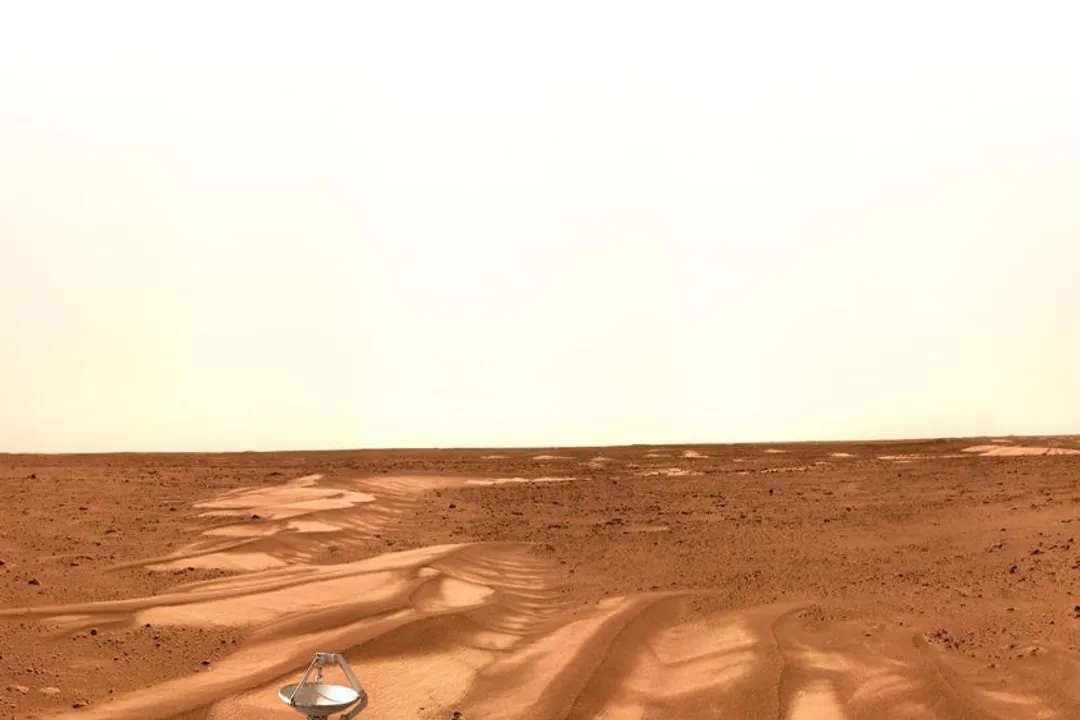
The age of these beach deposits places them deep in Martian history, predating the planet's current arid state. Dating these sedimentary layers places them in a period that may have been over a billion years ago, though specific timelines can vary depending on the model used for Martian geological evolution. This timeframe is critical because it situates the existence of oceans after the earliest, most intense period of early solar system bombardment, suggesting that liquid water persisted well into a period when Mars was already cooling down.
The implication is a gradual, rather than instantaneous, transition from a relatively wet environment to the frozen desert we see today. What caused this atmospheric collapse remains a major topic of investigation. Was it a gradual loss of the magnetic field, allowing solar winds to strip away the atmosphere over eons, or was it a catastrophic, rapid event? The persistence of these shorelines suggests the process was drawn out, offering a longer window for potential habitability than if the water vanished quickly.
When comparing this to early Earth, which also experienced a "wet" phase billions of years ago, Mars presents a fascinating case study in planetary divergence. Earth retained a strong magnetic field and thicker atmosphere, allowing liquid water to remain stable on the surface until the present day, albeit regulated by the carbon cycle. Mars appears to have lost that critical planetary protection much earlier. Seeing beaches that are younger than some of the very earliest water evidence suggests that pockets of stable water persisted longer in protected, lower-altitude regions, even as the global climate degraded.
| Martian Water Feature | Estimated Age (Years Before Present) | Key Evidence | Implication |
|---|---|---|---|
| Earliest River Channels | ~4.1 Billion | Outflow channels, mineral alteration | Initial presence of liquid water |
| Ancient Shores/Beaches | ~3.7 Billion (Varies) | Rounded pebbles, sorted sand, ripples | Stable, long-lived oceans/gulfs |
| Recent Subsurface Ice | Present Day | Radar soundings, polar caps | Water remains locked away in frozen form |
This transition from ocean to desert poses a unique challenge for astrobiologists. Life, if it arose, would have needed to adapt to increasingly difficult conditions. The last persistent beaches likely represented oases where microbial life might have retreated as the larger bodies of water shrank and salinity increased.
# Interpreting the Evidence
While the evidence for rounded pebbles and sorted sediments is strong, the interpretation of the term "beach" must be approached with caution, as a Martian beach is fundamentally different from a Terran one. One must consider the ambient conditions that would have influenced the environment adjacent to the water. For instance, the source material suggests that while oceans existed, it would have been far too cold for swimming or sunbathing as we know it today. This highlights the need to define geological terms based on process (wave sorting, deposition) rather than analogy (recreation or comfort).
A subtle but crucial analytical point when assessing these features is distinguishing true wave action from aeolian processes that mimic water deposition. Wind abrasion can certainly sort sediment, especially in low-gravity environments where saltating (bouncing) sand grains can impact surfaces. However, the combination of perfectly sorted sand with large, well-rounded pebbles strongly argues against purely wind-driven origins for these specific formations. The rounding process requires sustained, fluid-mediated friction that wind alone struggles to replicate efficiently for large clasts over a broad area without extensive, shallow standing water.
The sheer volume of material that needed to be transported and deposited to create these layered features suggests that the water source—whether a massive lake or an ocean—was not ephemeral. For a beach to form, the energy source (the waves) must act consistently over geological timescales to push material up the slope and retreat, leaving behind a recognizable berm or nearshore deposit. The sedimentary record acts as a long-term exposure meter for this aquatic activity.
Considering the scale, a thought experiment reveals the immense hydrological shift. If we consider the largest known basin that might have held water, like Oceanus Borealis in the northern lowlands, the sheer volume required to fill that area to a level where coastlines formed hundreds of kilometers away from the basin center is staggering. This implies an atmospheric pressure perhaps comparable to terrestrial sea level pressure, or at least substantially higher than the near-vacuum present now. The erosion rate required to supply enough sediment to form the observed beaches, assuming steady conditions, would necessitate continuous, planet-wide hydrological cycling—rain, runoff, and erosion—a process entirely absent today.

# Astrobiological Implications
The discovery of persistent ancient beaches elevates Mars from a planet that might have had water to a planet that definitely had environments capable of supporting water-dependent chemistry for a significant period. From an astrobiological perspective, shorelines are prime targets. On Earth, where oceans met land—the littoral zone—life found maximum opportunity to evolve, moving from water to land over time. These Martian beaches represent interfaces where organic molecules, if they ever formed on Mars, would have been concentrated, mixed, and potentially preserved in the resulting sedimentary rocks.
The next logical step for missions like the Perseverance rover, if it is sampling these areas, is to look for specific biosignatures within these sedimentary layers—minerals that only form in the presence of life, or microfossils trapped between the grains of sand. The fact that these shorelines are accessible and represent a "late-stage" water environment means that if life ever took hold, it might have clung to existence here longer than anywhere else on the planet.
The sheer scale of the past water volume required to create these coastal features also impacts theories about Martian magnetic field decay. A large ocean would have been a massive conductor. Its existence for a prolonged period, even billions of years ago, suggests that whatever mechanism stopped Mars’s dynamo—the churning molten core that generates the magnetic field—took time to fully shut down, perhaps allowing the ocean to persist longer than if the field had failed instantly. The erosion of the atmosphere likely coincided with, or followed closely behind, the core dynamo's failure, meaning these beach-forming periods occurred when Mars was already losing its planetary shield. This places a constraint on how long conditions were truly habitable, suggesting the window closed as the atmosphere thinned rapidly.
These ancient sand deposits are not just relics of a wet past; they are geological time capsules, recording the atmospheric composition, temperature ranges, and wave dynamics of a world fundamentally different from the one we observe today. They confirm that Mars was once a dynamic world shaped by water, offering tangible locations to search for the definitive proof of extraterrestrial life.
#Videos
US, China Scientists Discover Presence of Oceans and Beaches on ...
Related Questions
#Citations
Ancient Beaches Found on Mars Reveal The Red Planet Once Had ...
Did Mars Have an Ocean? Scientists Find New Clues
'Vacation-style' beaches may have existed on ancient Mars - CNN
Mars had ocean, "vacation-style" beaches, study suggests - Axios
Gulf of Mars: Rover finds evidence of 'vacation-style' beaches on Mars
Scientists have discovered a 3-billion-year-old beach buried on Mars
Mars once had an ocean with sandy beaches, researchers say
US, China Scientists Discover Presence of Oceans and Beaches on ...
Ancient Beaches Testify To A Long-ago Ocean On Mars - Astrobiology