What have humans built on Mars?

The red dust of Mars currently settles on a surprisingly extensive collection of human-made objects. While the dream of permanent, bustling cities remains firmly in the future, the Martian surface bears the marks of our persistent robotic curiosity. These artifacts, ranging from delicate scientific instruments to the heavy wreckage of descent stages, represent humanity's current, albeit unmanned, footprint on another world. We have successfully sent machines to land, move, and operate, effectively pre-building the foundational infrastructure for eventual human arrival by proving our ability to reach the planet reliably.
# Present Landings
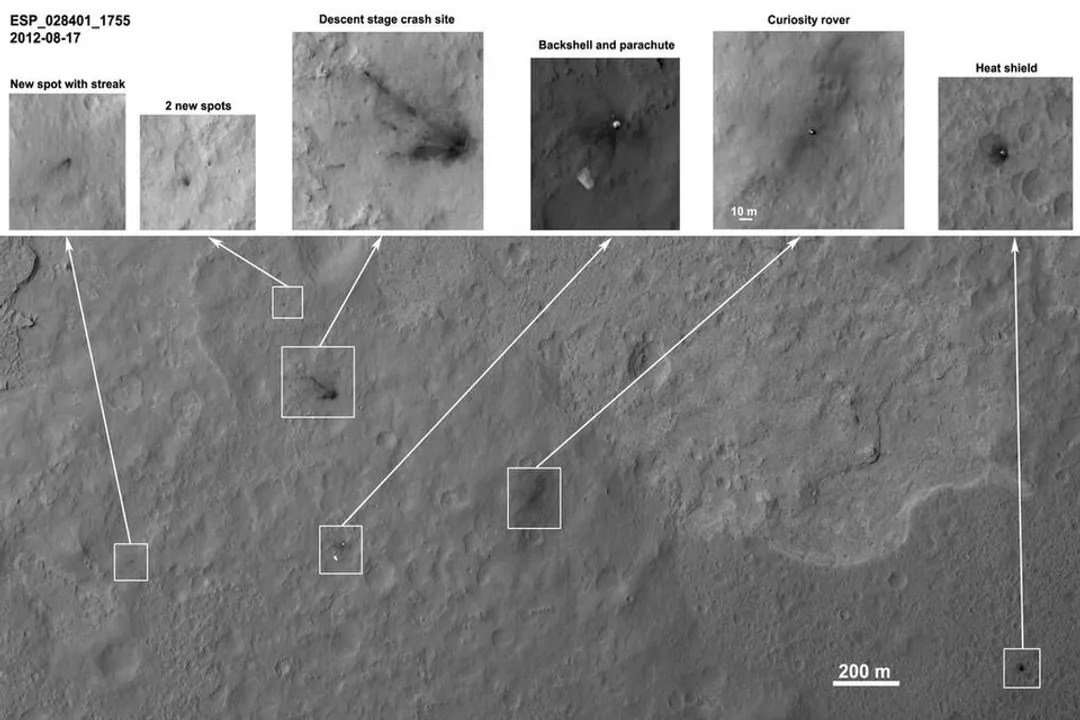
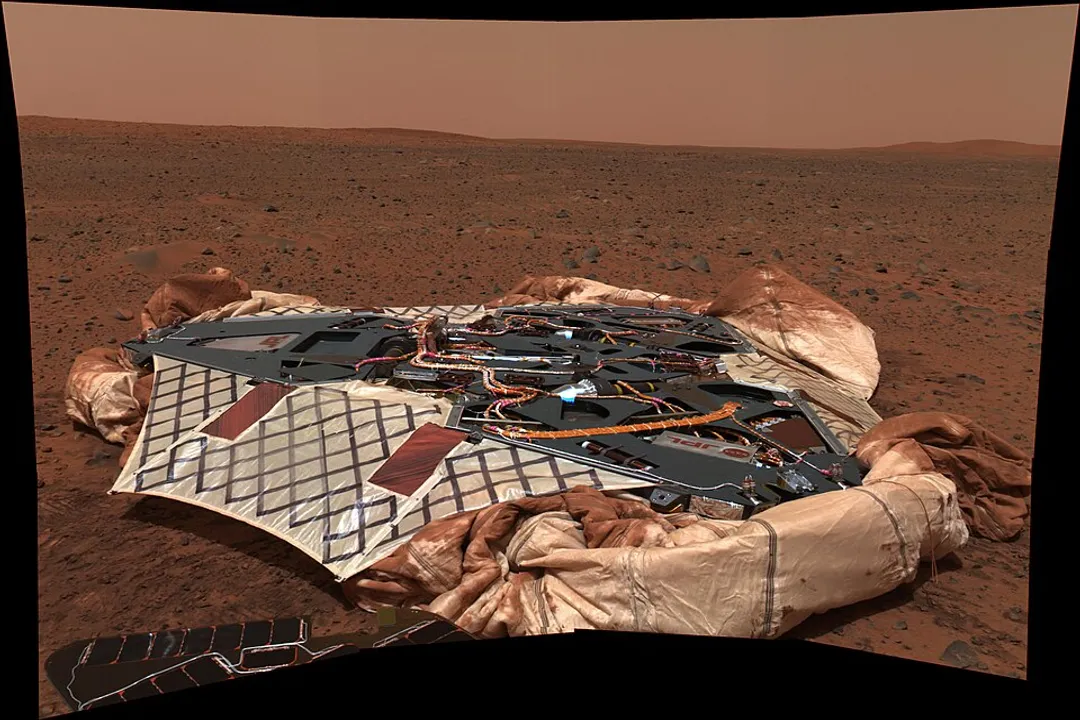
What currently exists on Mars are not buildings in the traditional sense, but rather a collection of highly sophisticated robots, landers, and the necessary hardware that got them there. This list includes components like descent stages, heat shields, parachutes, and various pieces of equipment that have either successfully finished their missions or are awaiting the next dust storm. The history of these landings dates back decades, evolving from flybys and brief impacts to complex rovers capable of autonomous traversal and analysis.
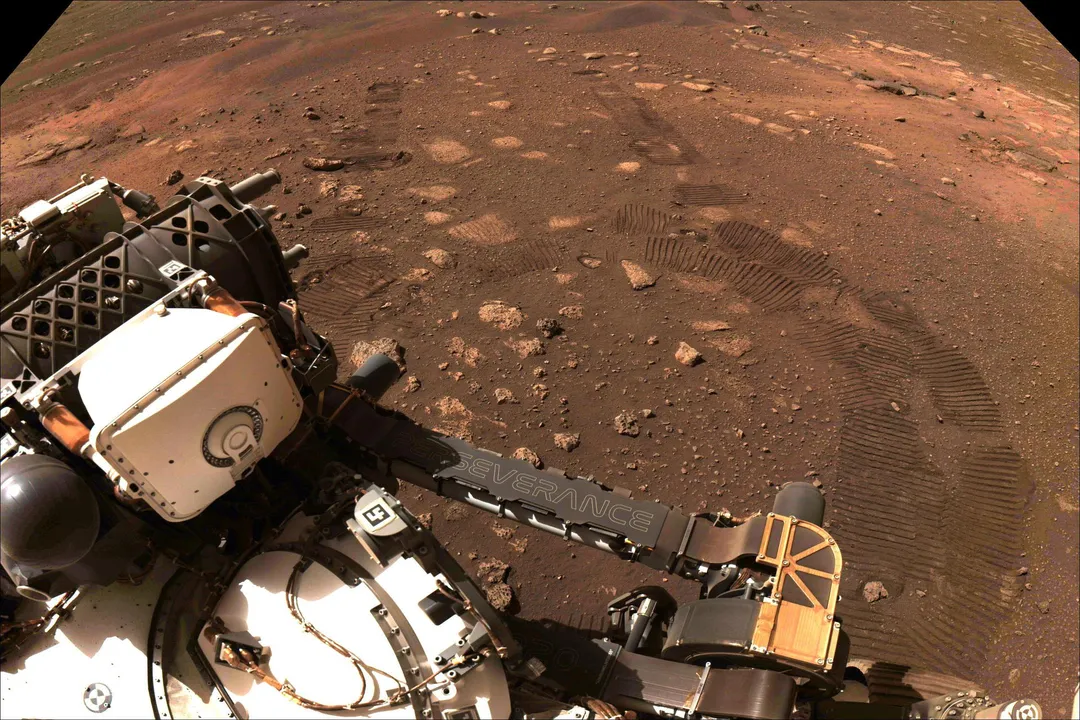
The most visible and functional components are the active and former robotic explorers. These include various landers and rovers, each carrying a unique set of scientific tools designed to analyze the Martian environment, search for signs of past water, and prepare data for future human missions. For example, the successful deployment of these robotic scouts serves as a critical technological demonstration. The fact that a machine can land, survive the thin atmosphere, and transmit data across millions of miles demonstrates a mastery of entry, descent, and landing (EDL) that is the absolute prerequisite for any crewed construction project.
It is important to clarify a common point of confusion for general readers: there are no structures resembling cities, dwellings, or large-scale artificial constructions built by people living on Mars yet. Any claims suggesting otherwise typically stem from misinterpretations of natural geological features or the shadows cast by the existing landers and hardware. What we have built so far are monuments to engineering, not homes for humanity.
# Required Tech

Sending humans to Mars necessitates advancing a suite of technologies far beyond what is required for robotic probes. NASA's preparations involve significant development in several key areas, moving from simple exploration to sustained habitation. These necessary advancements focus on protecting the crew, enabling them to live off the land, and ensuring reliable transit.
One crucial area is In-Situ Resource Utilization (ISRU). While not a physical structure yet, the ability to create materials on Mars is central to building anything substantial. This involves processing Martian resources to create essentials like breathable air, water, and—critically for construction—propellant for the return trip or building materials. Without ISRU, every brick and bolt would have to be launched from Earth, making large-scale construction impossible due to the extreme mass penalty.
Another area of intense focus is ensuring that the transit vehicles and surface habitats can protect the crew from the harsh radiation environment of deep space and the Martian surface. Designing habitats that are shielded, perhaps by burying them under Martian regolith or incorporating advanced composite materials, is a construction challenge unto itself.
Considering the sheer distance, the reliability of these systems is paramount. A breakdown on the Moon allows for a relatively quick rescue or resupply window; a breakdown en route to or on Mars turns a mission failure into a potentially catastrophic scenario. This forces engineers to build redundancy into every system intended for permanent surface use, influencing the design of everything from airlocks to power generation arrays—the first true "built" components of a future base.
# Future Vision
The ambition for building on Mars is sharply defined by the differing approaches of governmental agencies and commercial enterprises. NASA's Artemis program, while focused on the Moon first, lays the groundwork for Mars missions, emphasizing robust, scientifically validated systems and international collaboration for exploration and eventual settlement.
SpaceX, on the other hand, centers its vision on developing the Starship vehicle, which they project will be capable of carrying substantial payloads and a significant number of people to Mars, aiming for the establishment of a self-sustaining city. Their approach emphasizes rapid reusability and massive payload capacity, which directly impacts how quickly and how large the initial constructed elements can be. Where NASA might focus on a small, highly fortified scientific outpost first, SpaceX envisions a faster ramp-up toward a larger population.
To illustrate the scale difference, if we consider the mass required for even a modest early base—say, sufficient life support and radiation shielding for a crew of six for one Martian year—it would require materials measured in the tens, if not hundreds, of tons. A single Starship might carry 100 tons to Mars, meaning that even the initial base construction would consume the entire payload capacity of several, carefully scheduled flights.
An interesting, if purely hypothetical, local context emerges when comparing the required mass. If a small, pressurized habitat module needed for initial survival weighs, conservatively, 20 metric tons, and the crew needs enough supplies and structural reinforcement for one year, we might estimate a total necessary import mass of 50 tons. Given the current state of heavy-lift rocketry, that single-year survival package represents a launch mass equivalent to several fully fueled Saturn V rockets being launched to the Moon (though Starship is designed for much greater efficiency to Mars orbit). This calculation underscores why ISRU is not a luxury but an absolute prerequisite for establishing anything beyond a temporary flag-and-footprints visit.
# Settler Profile
The people who will be responsible for building this new Martian infrastructure will likely be a unique blend of highly specialized professionals. While the ultimate goal might be a diverse city, the initial construction phase demands specific expertise. We are not talking about sending a general cross-section of Earth society initially; we are sending the builders and maintainers.
The initial teams will require engineers with expertise in autonomous systems, robotics repair, closed-loop life support maintenance, and perhaps most importantly, geotechnical work related to radiation shielding and habitat burying. These pioneers must possess extraordinary psychological resilience, given the communication delays and the extreme isolation of being entirely reliant on their own manufactured environment and equipment. They will need to be capable of improvising repairs using local materials where possible, bridging the gap between the initial prefabricated modules brought from Earth and the future construction enabled by ISRU.

# Material Limits
The physical realization of a Martian construction project faces a fundamental constraint: the tyranny of the rocket equation and the cost of launching mass out of Earth's gravity well. Current plans acknowledge that everything cannot be shipped from Earth. This leads directly to the conclusion that all significant, long-term structures must be built in situ.
The initial built elements will likely be prefabricated modules—the "kit" components brought from Earth. These might include the core life support systems, pressurized living quarters, and perhaps initial ISRU processing units. However, the expansion of these modules into a habitable base depends on using Martian resources—the soil, or regolith.
If we imagine a future Martian architect working with a million tons of delivered material budget (a massive, hypothetical amount spread across many flights), the primary decision will be how much mass to allocate to shielding versus purely functional internal structures. Imported mass is precious, suggesting that early construction will involve deploying small, incredibly complex core systems and then rapidly constructing lower-tech, high-mass protective layers (like regolith berms or layered domes) using autonomous or semi-autonomous machines that process the local dirt. This necessity mandates a design philosophy where the most fragile, high-tech components are protected by the least valuable, most abundant local material, making the Martian dirt itself a critical building material.
#Videos
What NASA's Rovers Have Found on Mars - YouTube
Related Questions
#Citations
Humans to Mars - NASA
Mission: Mars - SpaceX
What Type of People Would Live On Mars? : r/space - Reddit
List of artificial objects on Mars - Wikipedia
What is the construction they found on Mars? - Quora
What NASA's Rovers Have Found on Mars - YouTube
Why we explore Mars—and what decades of missions have revealed