Will humans ever explore Jupiter?
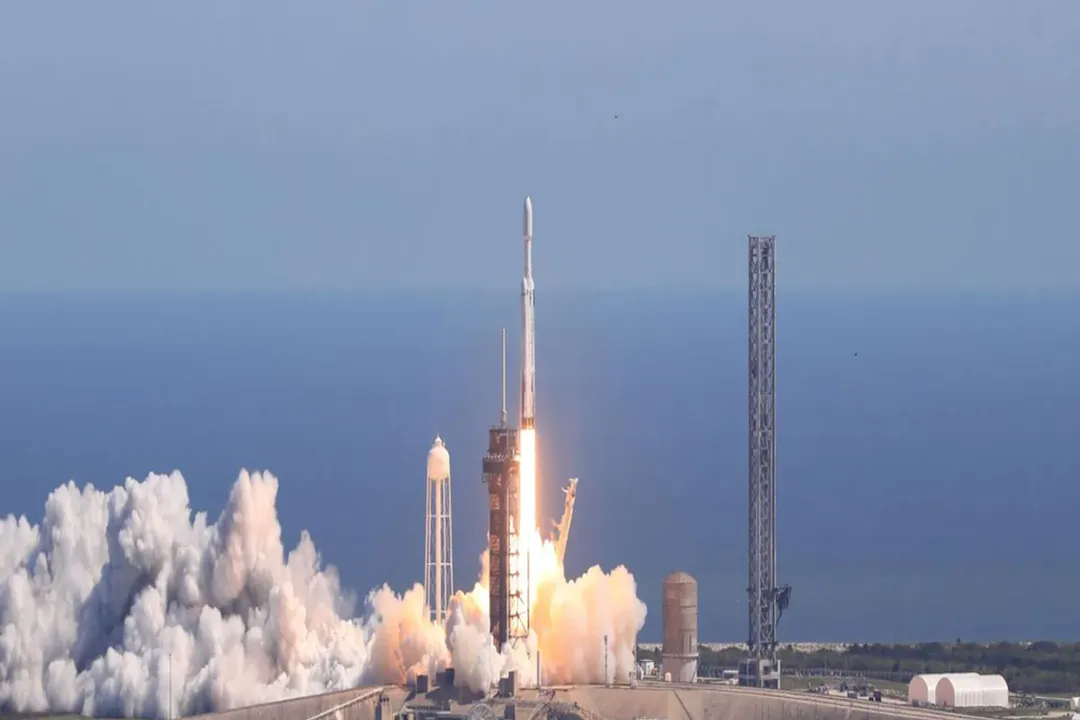
The sheer scale of Jupiter, a world dwarfing everything else in our solar system except the Sun, naturally sparks the imagination about sending humans there. We look up at that banded, churning giant, the king of the planets, and wonder when our boots, or perhaps pressurized suits, might approach its swirling clouds. While robotic probes have diligently charted the Jovian system for decades, charting orbits and peering through intense radiation fields, the step up to sending human beings involves overcoming engineering hurdles that make the trip to Mars look like a weekend jaunt across the neighborhood. The question isn't simply if we can get there; it’s whether the destination itself permits human presence in any meaningful way. [5]
# Gas Giant
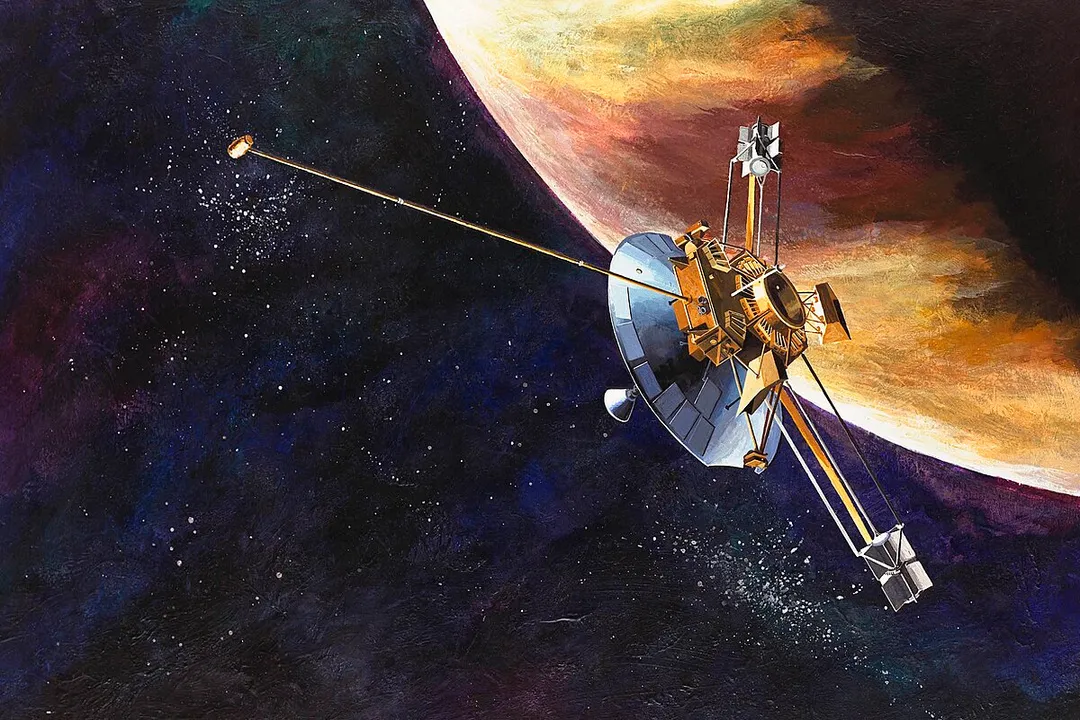
The most immediate and fundamental barrier to visiting Jupiter is its composition. Unlike terrestrial worlds like Mars or the Moon, Jupiter has no solid surface for an astronaut to walk upon or establish a permanent base. [2] It is a gas giant, meaning its mass is primarily composed of hydrogen and helium, which transition from gas to liquid to a denser, perhaps metallic, state deep within its interior under unimaginable pressure. [5] Any spacecraft approaching Jupiter would inevitably sink into the atmosphere, becoming a free-falling probe until the immense pressure crushed it into oblivion. [2]
For a human mission, this lack of a landing site means "visiting" Jupiter cannot mean "landing." A human presence would be restricted to orbiting the planet, perhaps deploying specialized atmospheric probes, or, more likely, focusing on the fascinating moons that orbit this colossal world. [2][5] The concept of a "Jupiter surface base" is purely science fiction because the physics of the planet fundamentally forbids it. [2]
# Extreme Danger
Assuming a mission could be designed to stay aloft in the upper atmosphere or maintain a stable orbit, the environmental dangers surrounding Jupiter are extreme, far exceeding those encountered on any past or planned human mission. Jupiter possesses an incredibly powerful magnetic field, the strongest in the solar system aside from the Sun, which traps vast amounts of charged particles. [5]
This results in radiation belts around the planet that are lethal to humans within hours, if not minutes, without massive shielding. [5] The intensity of this radiation is significantly greater than the environment around Earth or even Mars. [1] The technological requirement for shielding a crew against this continuous bombardment for the duration of a Jupiter mission—which itself would take years due to travel time—demands materials and power sources far beyond current capabilities. [2] Consider the vast difference in challenge: sending humans to Mars requires mitigating radiation exposure primarily during the transit phase and the surface stay. [4] A Jupiter mission requires mitigating lethal radiation constantly while operating in close proximity to the source. [2]
| Comparison Point | Mars Mission (Near Future Target) | Jupiter Orbit Mission (Hypothetical) |
|---|---|---|
| Gravity Well | Relatively shallow (0.38g) | Deep, requires significant propulsive energy |
| Surface Access | Yes (Solid Ground) | No (Gas/Liquid/Metallic Interior) |
| Transit Time | ~6 to 9 months | ~3 to 6 years (One Way) [3] |
| Ambient Radiation | Manageable with current/near-future shielding | Lethal levels requiring meters of specialized mass shielding |
This intense radiation environment presents a significant engineering constraint that must be solved before human presence is even contemplated. It isn't just about faster engines; it requires a fundamental rethinking of spacecraft mass distribution and power generation necessary to maintain effective shielding for the entire crew habitat over the mission duration. [2]
# Robotic Precursors
Humanity’s initial foray into the Jovian system has been, and will continue to be, entirely robotic. Decades of uncrewed missions have laid the foundation for any future human ambition. [6] The Soviet Union's Luna probes began the era of planetary exploration, which led to NASA's Pioneer and Voyager missions that first gave us close-up views of Jupiter and its moons. [6] More recently, missions like Galileo provided long-duration study, and Juno continues to study the planet’s interior structure and magnetosphere. [5]
These robotic explorers teach us volumes about the system's dynamics, gravity assists, and the precise location and intensity of the radiation hazards. [6] Without the data gathered by Galileo and Juno, planning any crewed mission—even to an outer moon—would be sheer guesswork. These robots act as the ultimate pathfinders, mapping out the safe corridors through the most dangerous parts of the system. [6]
# Icy Targets
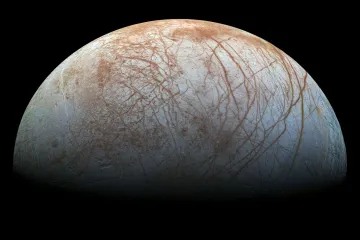
If a human were to travel to the Jupiter system in the coming decades, they almost certainly would not be visiting the planet itself but rather one of its captivating moons. [4][7] The scientific payoff on these satellites is enormous, particularly regarding the search for extant life. [4] Europa, Ganymede, and Callisto are currently the primary focus of future ambitious missions. [4][6]
The Europa Clipper mission, scheduled to launch soon, is specifically designed to perform detailed reconnaissance of Europa, focusing on its subsurface ocean, a potential habitat for life. [4] Another major European Space Agency mission, Juice (JUpiter ICy moons Explorer), is on its way to study Ganymede, Callisto, and Europa, though its primary focus will be Ganymede, the largest moon in the solar system. [6]
The possibility of human missions following these robotic pathfinders is being discussed seriously by scientists. One perspective suggests that individuals born in this decade might witness astronauts visiting Jupiter's moons or even the asteroid belt, implying a timeline that places these achievements perhaps in the latter half of the 21st century or early 22nd century. [7] This focus on the moons is logical; they offer a solid surface, are farther out of the direct line of fire from Jupiter’s harshest radiation belts (especially Ganymede, which has its own magnetic field), and they hold the tantalizing prospect of finding extraterrestrial biology. [4]
# Future Outlook
When considering a human landing on any other planet, the timeline is often discussed in terms of propulsion technology maturation. [3] For Jupiter, the challenge is compounded by the immense distance—Jupiter is about five times farther from the Sun than Mars—meaning travel times are significantly longer, even using advanced propulsion concepts. [3] A round trip to Jupiter using current technology would take well over a decade, a duration that places extraordinary demands on life support recycling and crew psychological health. [1]
If we look at the progression of solar system exploration, the natural sequence seems to be the Moon, then Mars, then the asteroid belt, and then the gas giants and their satellites. [7] A human mission to Jupiter would require propulsion systems far beyond the chemical rockets used for the Apollo missions or even the advanced concepts being developed for Mars missions. We are likely looking at the maturation of nuclear thermal or nuclear electric propulsion systems, or perhaps fusion drives, before a crewed Jupiter orbit becomes an achievable engineering goal. [3]
The notion of landing a spacecraft into Jupiter’s atmosphere, essentially a controlled, very fast plummet, remains a distinct possibility for a purely scientific mission, perhaps carrying advanced sensors that broadcast data until the last possible moment before crushing pressure destroys the probe. [2] However, if the goal is human exploration in the sense of setting foot somewhere, the context shifts entirely to the Galilean satellites. A visitor might spend months orbiting Jupiter, using the planet's immense gravity for trajectory adjustments to hop between Europa and Ganymede, all while shielded heavily within a station positioned in a less intense radiation zone. [2][4] The real technological leap required is not just minimizing trip time, but mastering the closed-loop life support necessary for a multi-year mission far from Earth's resupply lines, which is a prerequisite for any outer solar system destination. [3] Achieving this level of self-sufficiency for a Jupiter system mission would inherently solve many of the problems associated with long-duration Mars missions, making the Jupiter system a potential mid-to-late 21st-century goal once the infrastructure is in place. [7]
#Videos
What Would Happen If Humans Tried To Land On Jupiter - YouTube
Related Questions
#Citations
Ever wonder if humans will make it to Jupiter in our lifetimes? - Reddit
Will astronauts ever visit gas giants like Jupiter?
Is it possible for humans to travel beyond Jupiter in the future? - Quora
Europa Clipper - NASA Science
Exploration of Jupiter - Wikipedia
A history of Jupiter exploration: the journey to Juice - ESA
Babies Born This Decade Could Visit Jupiter's Moons And ... - Forbes
What Would Happen If Humans Tried To Land On Jupiter - YouTube
When will we land on other planets in our solar system? [closed]