Will humans ever be able to land on Venus?

The question of sending humans to Venus, our solar system's second planet, often conjures images of extreme, almost unbelievable hostility, especially when contrasted with the relatively mild aspirations for Mars. While the surface of Venus is often described as hellish, the planet presents a complex tapestry of scientific allure and engineering impossibility for direct human contact. [2][6] The reality of a human landing there hinges less on our desire and more on whether future technologies can conquer conditions that crush and incinerate anything currently known to humanity. [4]
# Surface Extremes

The environment on the Venusian surface makes the Moon seem welcoming and even the bottom of Earth’s deepest ocean trenches appear temperate. Venus holds the distinction of being the hottest planet in our solar system, a consequence of a runaway greenhouse effect. [2] Temperatures there hover around or . [2] To put this into perspective, this heat is hot enough to melt lead. [2] Any equipment or human attempting to stand on that surface would face immediate destruction. [2]
The atmospheric pressure is another insurmountable barrier for a human explorer. At the surface, the atmospheric pressure is approximately 92 times that of Earth at sea level. [2] This is equivalent to the pressure experienced nearly a kilometer deep in Earth's oceans. [2] A human body, unprepared, would be instantly crushed by this immense force. [2] Furthermore, the atmosphere itself is not benign. It is composed mostly of carbon dioxide, with thick, obscuring clouds made of sulfuric acid that continually rain down, though the acid evaporates before reaching the ground due to the heat. [2][5]
It is instructive to consider the brief lifespan of previous robotic efforts. The Soviet Union's Venera landers managed to survive on the surface for short periods, with the longest duration being just over two hours before failure. [5] For an astronaut, whose life support systems would need to withstand such conditions, a "landing" would be measured in minutes, not hours, unless a completely novel material science breakthrough is achieved. [1] Given these factors, a conventional, boots-on-the-ground landing in the near future is practically science fiction, demanding materials science that effectively isolates a human from the environment with zero failure tolerance. [4]
# Venera Legacy
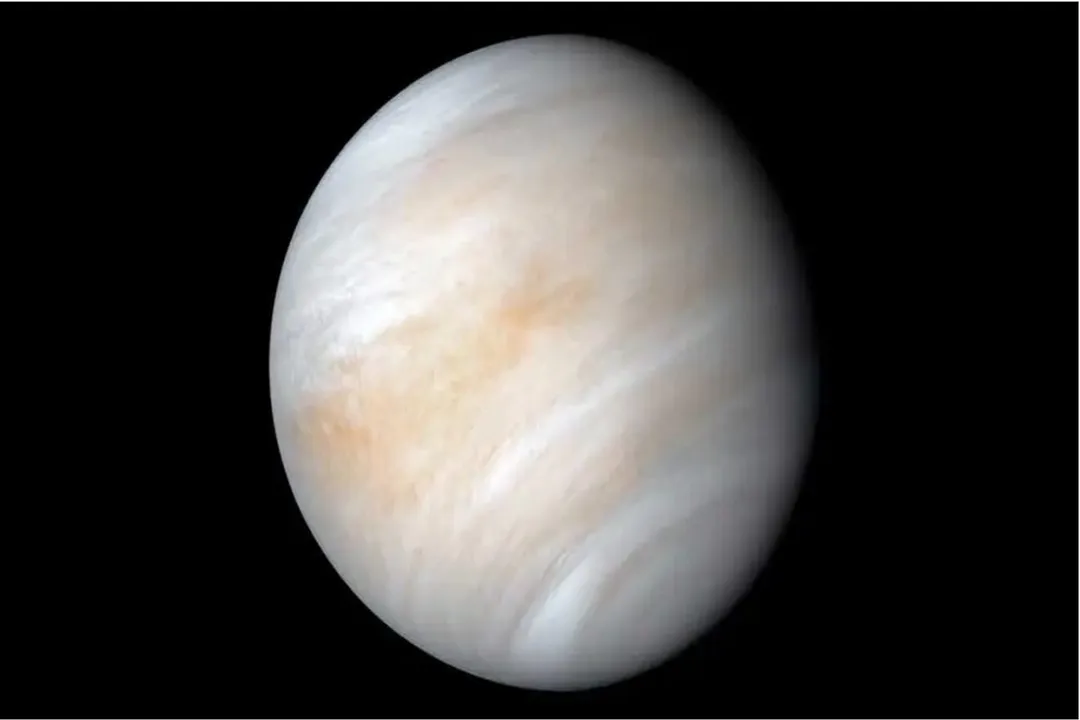
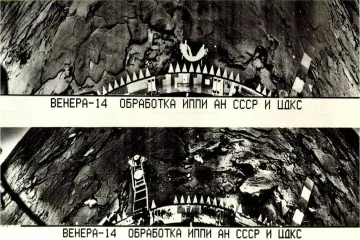
Despite the current limitations, humanity has actually placed objects on the Venusian surface. This feat belongs to the Soviet space program. [5] The Venera program successfully landed multiple probes, transmitting data and even crude images back to Earth before succumbing to the heat and pressure. [5] These missions, which occurred primarily in the 1970s and 1980s, demonstrated that an uncrewed vehicle could survive the descent and operate, albeit briefly. [5] They proved the physical possibility of reaching the surface, but they were engineered for minutes of survival, not for supporting human life for days or weeks. [5] These robotic achievements serve as both an inspiration and a stark warning about the hostility of the environment a human crew would face. [2]
# Mars Comparison
When discussing crewed space exploration, Mars invariably dominates the conversation. Some analysts point out that certain aspects of a Venus mission might be less challenging than a Mars mission, despite the surface being far more deadly. [5] For instance, the travel time to Venus is significantly shorter than the transit time to Mars. [5] Furthermore, Venus is closer to the Sun, meaning solar power generation would be highly efficient, which is a major advantage for any long-term mission architecture. [5]
However, this comparison quickly breaks down when considering surface operations. [5] While Mars has a thin, relatively benign atmosphere (mostly , low pressure, frigid temperatures), Venus has an overwhelming, high-pressure, high-temperature atmosphere. [5] The engineering required to build a habitat on the Martian surface is complex, but the engineering required to build a habitat on the Venusian surface that can last is currently beyond our demonstrated capabilities. [4] Therefore, while the journey to Venus might be quicker, the survivability on the destination surface is infinitely harder than on Mars. [5]
# Atmospheric Haven
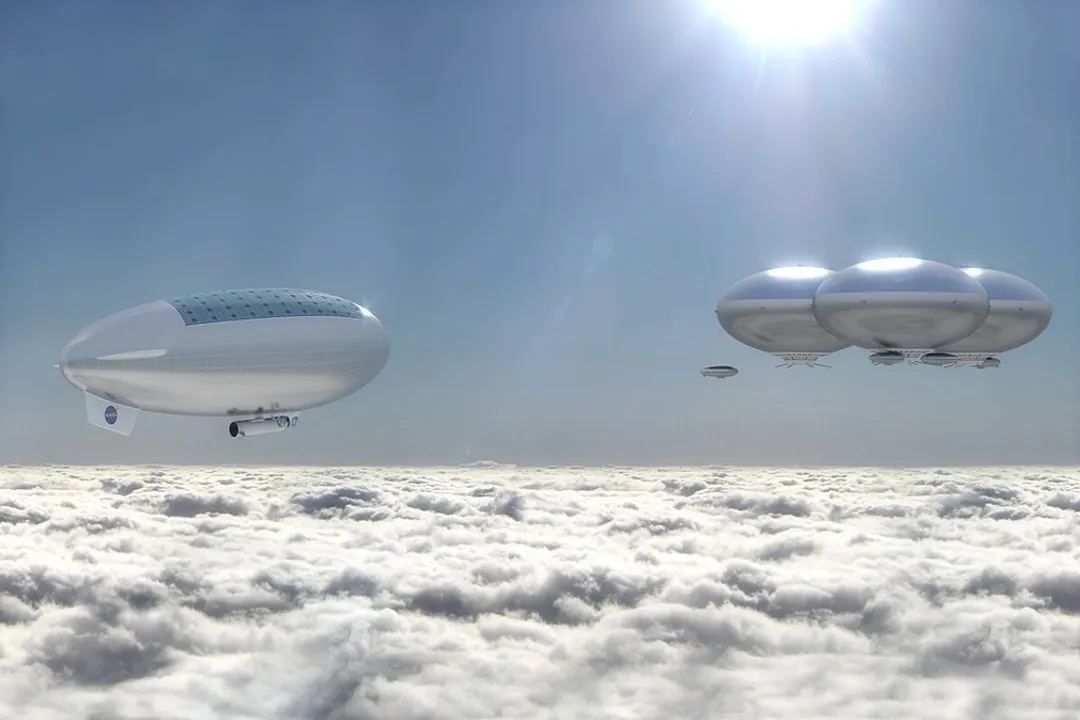
Because the surface presents such an absolute barrier, serious proposals for human missions to Venus center almost entirely on the atmosphere. [6][9] If one ascends about 50 kilometers (roughly 31 miles) above the surface, conditions become surprisingly clement. [3] At this altitude, the atmospheric pressure is only about one Earth atmosphere, comparable to sea level on our home planet. [3] Even more compelling, the temperature drops to a range between and ( and ). [3]
This band, often called the "habitable zone" of Venus, is the primary focus for future human activity. [3][6] It is within this layer that the concept of aeroshells or floating habitats takes hold. [3][9] These structures would be large airships or aerostats, essentially blimps filled with a breathable gas mixture like oxygen and nitrogen, which would be buoyant in the dense atmosphere below. [9] Because the breathable air mixture is a lifting gas in the Venusian atmosphere, the vehicle would naturally float, requiring minimal energy expenditure just to maintain altitude. [9]
This concept dramatically shifts the challenge from surviving a crushing, scorching surface to maintaining a buoyant airship. [6] While building a pressure vessel for the surface would require extreme thickness and cooling systems, an atmospheric habitat only needs to manage internal pressure against the mild external pressure, much like an airplane cabin or a high-altitude balloon. [3] Furthermore, the protection afforded by the atmosphere from solar and cosmic radiation is better than that experienced on Mars, since the habitat would have a significant column of atmosphere above it. [6]
This atmospheric approach is not just a backup plan; it is often presented as the only viable path for sustained human presence on Venus in the foreseeable future. [9] It allows for long-duration stays, scientific exploration of the cloud layers—which contain complex chemistry—and testing grounds for technologies applicable elsewhere. [6]
# Technology Hurdles
Even settling into the atmospheric zone requires solving significant engineering puzzles. The primary threat in the upper atmosphere is not heat or pressure, but chemistry. [2] The environment is saturated with sulfuric acid. [2] Any material used for the envelope of the aerostat or habitat must be highly resistant to this acid over long periods. [6] Developing materials that can maintain integrity against constant acidic exposure for years while remaining lightweight enough to float is a major material science constraint. [3]
Another critical aspect for a floating habitat would be power generation. As noted, being closer to the Sun means solar power efficiency is significantly higher than on Mars. [5] A panel on Venus could receive nearly twice the solar energy that the same panel would receive near Earth or Mars. [5] This inherent advantage simplifies long-duration life support systems, as generating power for atmosphere recycling and temperature regulation becomes less taxing on the physical area required for solar arrays. This efficiency gain is a key differentiator favoring atmospheric Venus over a power-starved Mars base. [5]
Mission architecture also needs to be reconsidered. Unlike Mars, where a lander descends through a thin atmosphere, a Venusian habitat would need to be deployed from orbit, potentially inflated in place, or descended from a high-altitude entry vehicle. [5] The entire mission profile shifts from a direct descent/ascent to an orbital rendezvous and controlled floating deployment. [5]
# Likelihood Assessment
Considering the gulf between the surface environment and the atmospheric potential, the answer to whether humans will ever land on Venus must be split.
Landing on the surface to stay or even for a brief excursion in the foreseeable future—say, the next 50 to 100 years—seems exceptionally improbable. [1][4] The physics of surviving and $92$ bar pressure requires a technological leap that current engineering goals do not yet encompass. [2][5] The engineering difficulty of shielding a human from those conditions, especially considering the need for mass efficiency in space travel, is orders of magnitude greater than that for Martian surface operations. [5]
However, if we redefine "landing" to mean "establishing a sustained human presence in the atmosphere," the probability increases dramatically. [3][9] The atmospheric conditions at are so Earth-like that it has been proposed as a more accessible target for initial crewed planetary exploration than the Martian surface. [5][9] The success of the Venera probes shows we can reach the planet, and the atmospheric physics shows we can float there. [5] This suggests that investment in high-durability, acid-resistant polymers and specialized aerostat fabrics could unlock Venus's skies long before Mars exploration figures out reliable, multi-year radiation shielding for a surface habitat. Thus, while boots on the ground remain a distant dream, astronauts floating above the sulfuric clouds are a much more realistic, near-term objective for human exploration of Venus. [6][9]
#Videos
Why HUMANS Will NEVER Survive on Venus - YouTube
Related Questions
#Citations
How likely is a manned mission to Venus in the near future? - Reddit
What would it be like to stand on the surface of Venus?
Colonization of Venus - Wikipedia
Will humans ever, not now, land on the surface of Venus? - Quora
Would it be easier to put humans on Venus rather than Mars?
Will We Ever Send Humans to Venus? - Smithsonian Magazine
Venus Exploration - NASA Science
Will humans ever land on Venus someday? - Facebook
Why Sending Humans to Venus Is Not as Mad as It Sounds - Medium
Why HUMANS Will NEVER Survive on Venus - YouTube