What planets have humans landed probes on?
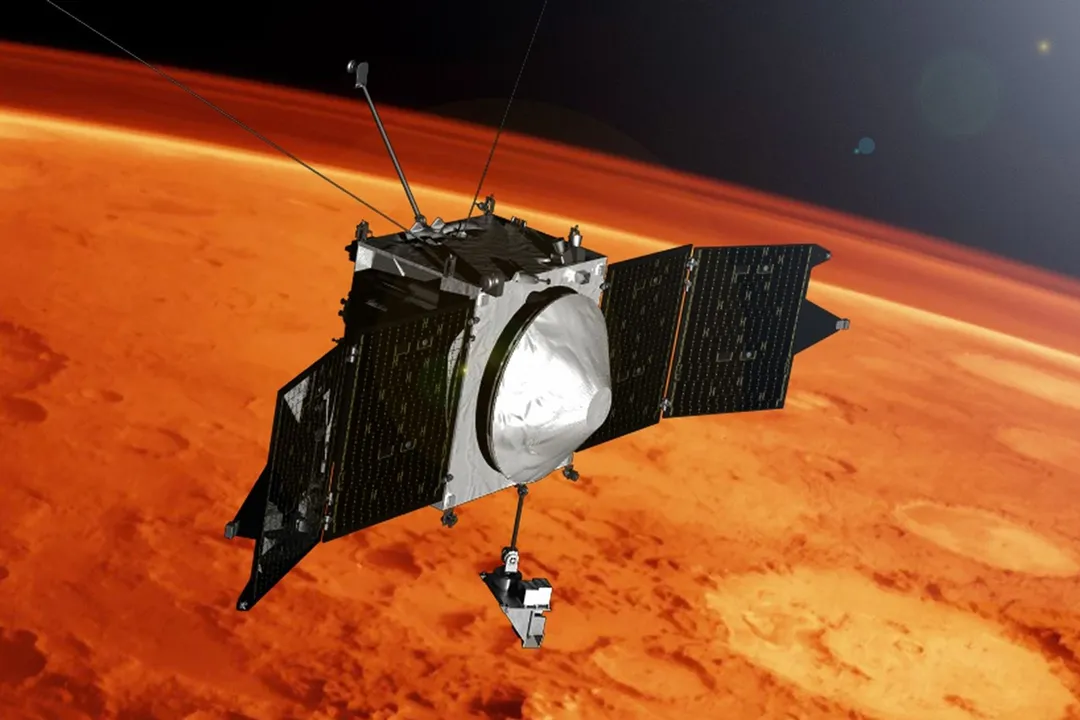
The human endeavor to send robotic envoys beyond Earth has resulted in a surprisingly small number of confirmed landings on the surfaces of other planets within our solar system. While spacecraft have extensively orbited, flown by, and even crashed into numerous celestial bodies, the act of achieving a controlled, soft touchdown on a planetary surface—and surviving long enough to transmit meaningful data—is an elite achievement reserved for only a few worlds. [1][6] The distinction between a flyby, an orbital insertion, a probe intentionally crashing (impactor), and a successful, sustained surface landing is critical when answering which planets have truly hosted human-made devices on their ground. [1][10]
# Terrestrial Worlds
The inner solar system, dominated by rocky bodies, has received the lion's share of landing attempts. Out of the four terrestrial planets—Mercury, Venus, Earth, Mars—only two have ever hosted a successful probe landing.
# Venus The Hot Target
Venus stands as a testament to engineering persistence against truly hellish conditions. It holds the distinction of being the first planet upon which a probe successfully landed and returned data from the surface. [1] These groundbreaking achievements were accomplished by the Soviet Union’s Venera program. [1]
The environment of Venus is arguably the most hostile for electronics in the entire solar system, short of the deep atmospheres of the gas giants. Surface temperatures soar to around 464 degrees Celsius (867 degrees Fahrenheit), hot enough to melt lead, and the atmospheric pressure is immense, crushing objects with a force roughly 92 times that experienced at sea level on Earth. [6]
Between 1970 and 1982, the Venera missions achieved a sequence of increasingly remarkable feats. Venera 7 in 1970 managed a soft landing and transmitted data for 23 minutes, making it the first successful landing on another planet. [1][3] The subsequent Venera 9 and Venera 10 missions provided the first black-and-white images from the Venusian surface in 1975. [1] The zenith of this effort came with Venera 13 and Venera 14 in 1982, which provided the first color panoramic images and operated for over two hours, gathering crucial data on soil composition. [1] The durability of these instruments, designed to withstand extreme heat and pressure, remains an astonishing feat of Cold War-era space technology.
# Mars Robotic Presence
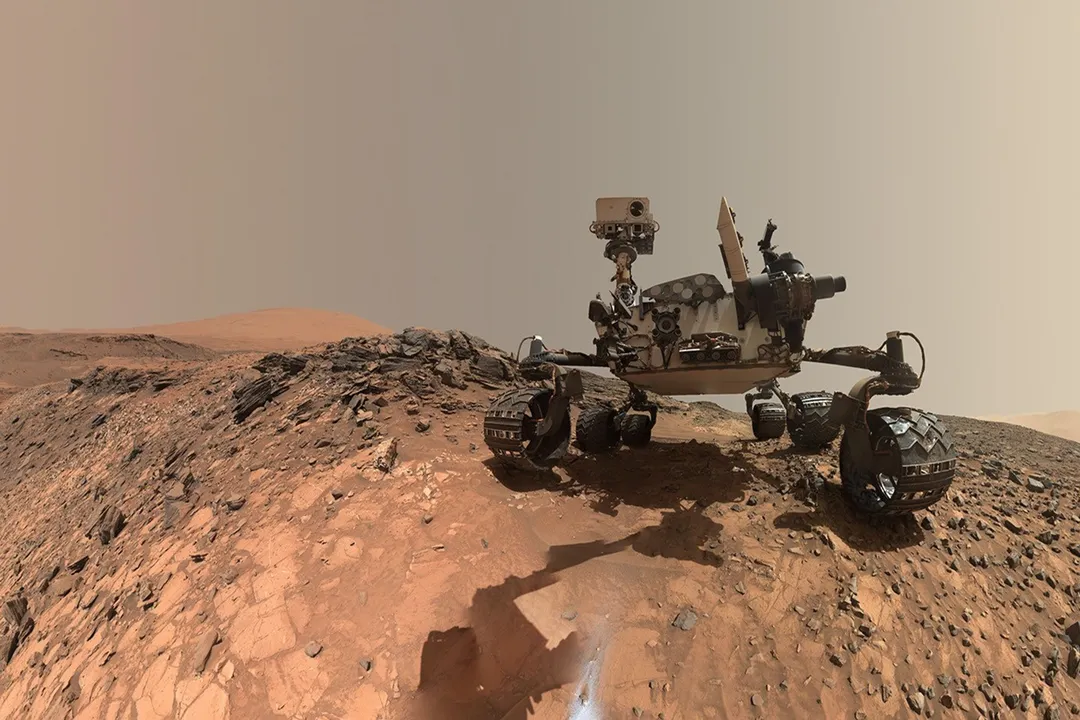
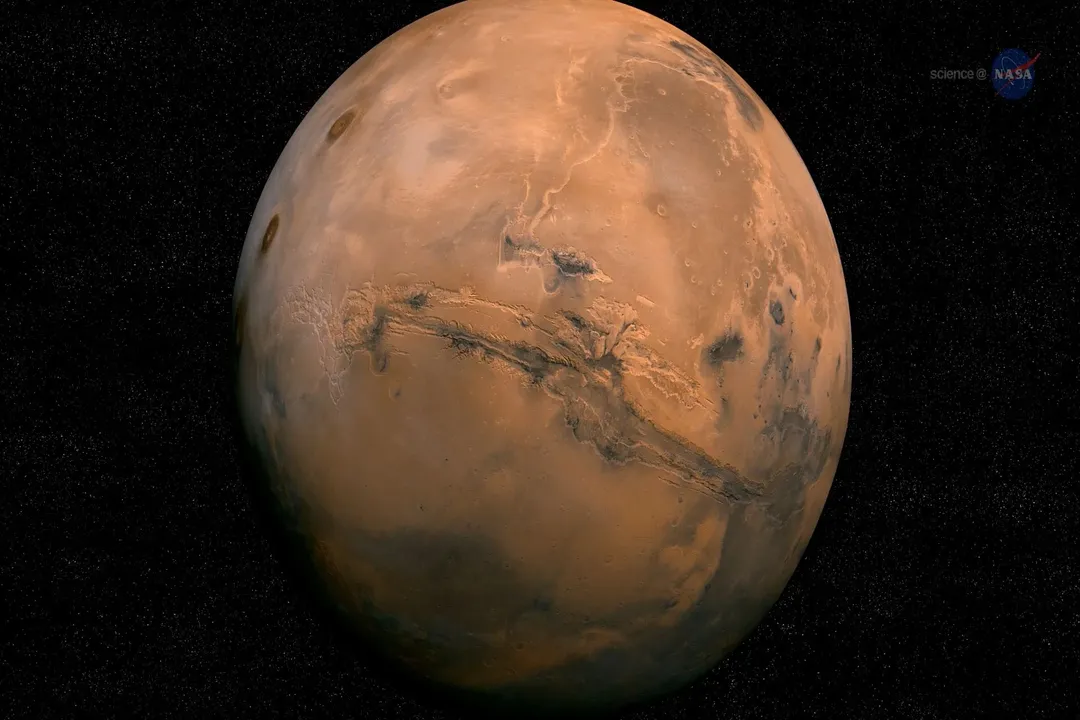
Mars is undoubtedly the most intensely explored planet, primarily because it is the most Earth-like and a prime candidate in the search for past or present extraterrestrial life. [7] Consequently, Mars hosts the highest number of successful soft landings among the planets. [1][9]
Landings on Mars began with the Soviet Mars 2 lander in 1971, although it failed upon impact. [1] The first true success came shortly after with the American Viking 1 lander in 1976, which successfully touched down and operated for over six years, performing detailed meteorological and biological experiments. [1][7]
Since then, numerous robotic explorers have joined the Martian surface population. These missions fall into two main categories: stationary landers and mobile rovers. [2]
- Stationary Landers: Missions like Phoenix (2008) and InSight (2018) settled in one place to study the immediate environment, such as searching for subsurface water ice or measuring seismic activity (marsquakes). [1][7]
- Rovers: These are wheeled vehicles designed for extended traverses. Famous examples include the Sojourner (the first wheeled rover in 1997), Spirit and Opportunity (which vastly outlived their planned missions), and the highly capable Curiosity and Perseverance rovers. [1][7] These mobile labs allow scientists to analyze geology across varied terrain.
It is important to note that while Mars has seen many successful landings, the term "drones or rovers" specifically applied to Mars in some discussions about non-lander craft. [2] The Ingenuity helicopter, associated with the Perseverance mission, is an atmospheric flyer, but its operational success relies entirely on the successful landing of its parent mission. [1]
# Earth and The Terrestrial Count
When tallying the planets we have landed on, the number often cited is three, though this depends heavily on definitions. [4] If we strictly consider other planets, the count is two: Venus and Mars. Earth is, of course, where we launch from, and while numerous probes have impacted its surface (intentionally or otherwise), it is typically excluded from lists of destinations for extraterrestrial landings.
A useful, though perhaps non-standard, way to approach this is to look at the sheer number of successful impacts or landings on rocky bodies. If we look at all bodies receiving soft landings, the list grows beyond planets to include the Moon and several asteroids/comets. [1] However, sticking strictly to the primary planetary bodies in our solar system, the data points firmly to Venus and Mars as the only planets that have successfully hosted a sustained surface presence. [3][6] The near-universal exclusion of Mercury from the landing list is likely due to its proximity to the Sun, leading to extreme thermal management issues even greater than those faced at Venus, combined with a lack of dedicated atmospheric data gathering needs. [6]
# Giant Worlds
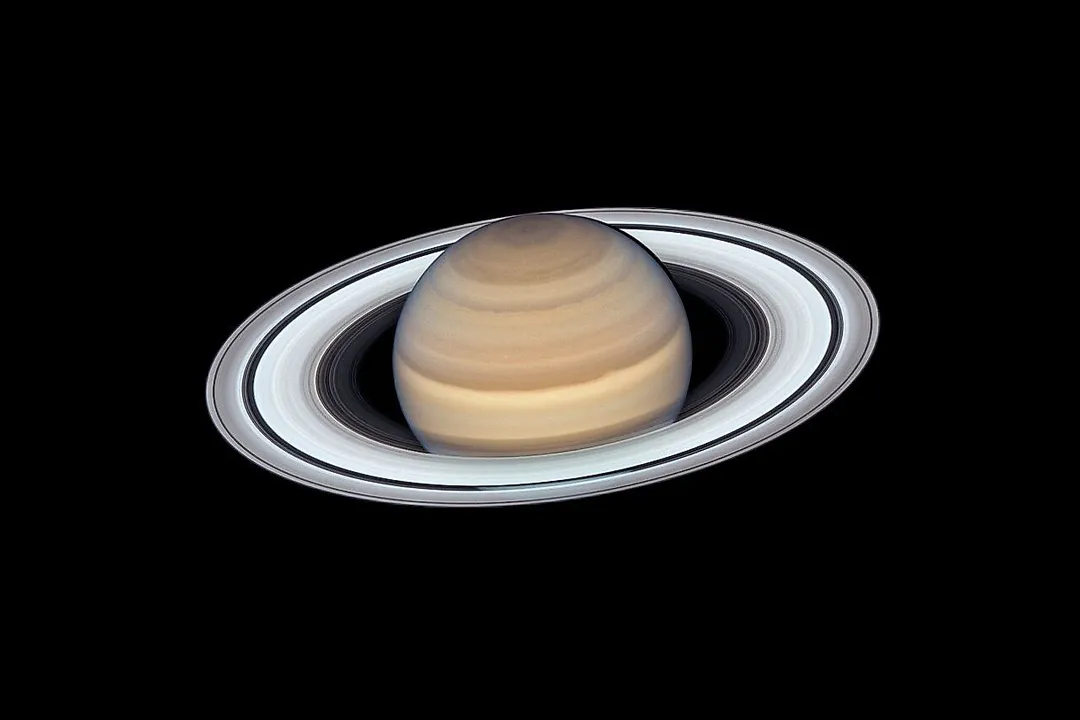
The outer solar system presents an entirely different set of obstacles, meaning successful surface landings on the gas and ice giants are not currently feasible with known technology.
# Gas and Ice Giants
The four largest planets—Jupiter, Saturn, Uranus, and Neptune—are fundamentally different from the inner terrestrial worlds. [5] They lack solid, accessible surfaces in the way Earth or Mars do. Instead, they are characterized by deep, dense atmospheres composed primarily of hydrogen and helium that transition gradually into liquid metallic states under immense pressure. [5]
Sending a probe to land on Jupiter, for instance, would mean penetrating miles of atmosphere until the pressure crushed the craft beyond redemption, long before reaching any theoretical solid core. [5]
Missions to these giants have been limited to orbiters (like Juno at Jupiter or Cassini at Saturn) or atmospheric probes designed to be destroyed by the increasing pressure and heat. A notable example is the Galileo probe, which plunged into Jupiter's atmosphere in 1995. While it transmitted data for about an hour as it descended, its purpose was to study the atmospheric layers, not to land on a surface. [1][5] No probe has successfully achieved a soft landing on any of the four outer planets. [5]
# Comparative Landing Challenges
The success stories on Venus and Mars underscore wildly divergent engineering philosophies dictated by the target environment. This contrast is a fascinating area of study in mission design. [6]
| Target Planet | Primary Environmental Threat | Successful Probe Type | Longest Surface Duration (Approx.) |
|---|---|---|---|
| Venus | Extreme Heat (C) & Pressure ( bar) | Stationary Lander (Venera) | hours 11 minutes [1] |
| Mars | Extreme Cold, Thin Atmosphere, Dust | Rovers & Stationary Landers | Years (e.g., Opportunity years) [1] |
The engineering choice for Venus was robustness—building a heavily shielded lander capable of surviving for a short time. [6] For Mars, the choice has been autonomy and mobility—building resilient electronics that can operate independently for years in a much colder, low-pressure environment where communication lags severely. [2][7] If we could somehow take the InSight seismometer from Mars and place it on the surface of Venus, it would be crushed and melted in seconds, demonstrating the gulf between the two engineering feats. [6]
# Exploration Beyond Planets
While the question specifically asks about planets, the broader catalog of successful soft landings on other solar system bodies is important context for understanding humanity’s reach. [10] The list is heavily weighted toward our Moon, which has seen numerous successful soft and hard landings by multiple nations. [1]
However, uncrewed probes have also achieved landings on smaller, non-planetary bodies, demonstrating capability for precision maneuvering that goes beyond the scope of planetary exploration:
- Asteroids: Japan's Hayabusa2 mission successfully touched down twice on the asteroid Ryugu to collect subsurface samples. [1] NASA's OSIRIS-REx mission also achieved a sample collection maneuver on the asteroid Bennu. [1] While not a "landing" in the sense of long-term residence, these controlled contacts are technical marvels.
- Comets: The European Space Agency’s Philae lander successfully touched down on Comet 67P/Churyumov–Gerasimenko in 2014, though it bounced several times before settling in a shaded spot. [1][10]
These missions prove that the technological barrier is not simply touching down, but surviving the specific conditions of a given body, whether it's the crushing atmosphere of Venus or the low-gravity, icy surface of a comet. [10] The success on Venus remains unique because it required active resistance to thermal and pressure destruction, unlike the relatively benign, albeit cold and dusty, surfaces of Mars or the airless, low-gravity environments of the asteroids and Moon. [6] The continued focus on Mars, as seen by ongoing missions, stems from its potential to answer the most profound question in our solar system exploration: whether life ever arose elsewhere. [7] The few successful planetary landings are, therefore, not just engineering milestones, but vital steps in answering that question.
Related Questions
#Citations
List of landings on extraterrestrial bodies - Wikipedia
Aside from Mars have we landed drones or rovers on any other ...
How many planets have we landed on? - Quora
DID YOU KNOW only 3 planets in our solar system have ever had a ...
Space Probes to the Outer Planets - Historic Spacecraft
Space exploration - Solar System, Probes, Missions | Britannica
Mars - NASA Science
Exploration of the Planets in the Solar System - Let's Talk Science
Planets We Have Sent The Most Missions To - World Atlas
What Other Worlds Have We Landed On? - Universe Today