Which planets rise in the West?

The sky is a clock, and for observers standing on Earth, the hands move consistently from one side to the other. Almost everything we see, from the Sun and Moon to the brilliant planets, follows a predictable path dictated by our planet's spin. This means the standard celestial greeting involves looking toward the East for an object's ascent above the horizon, followed by its descent in the West. To ask which planets rise in the West is to ask about a deviation from this fundamental motion, a celestial exception that requires careful examination of how we observe the solar system.
# Standard Motion
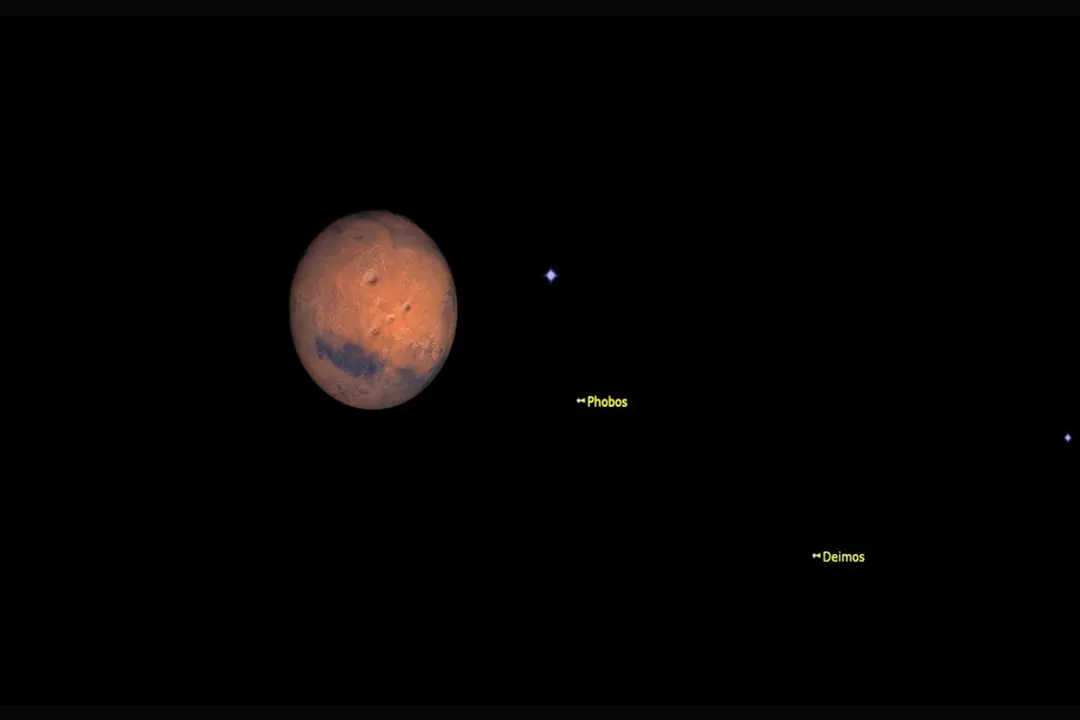
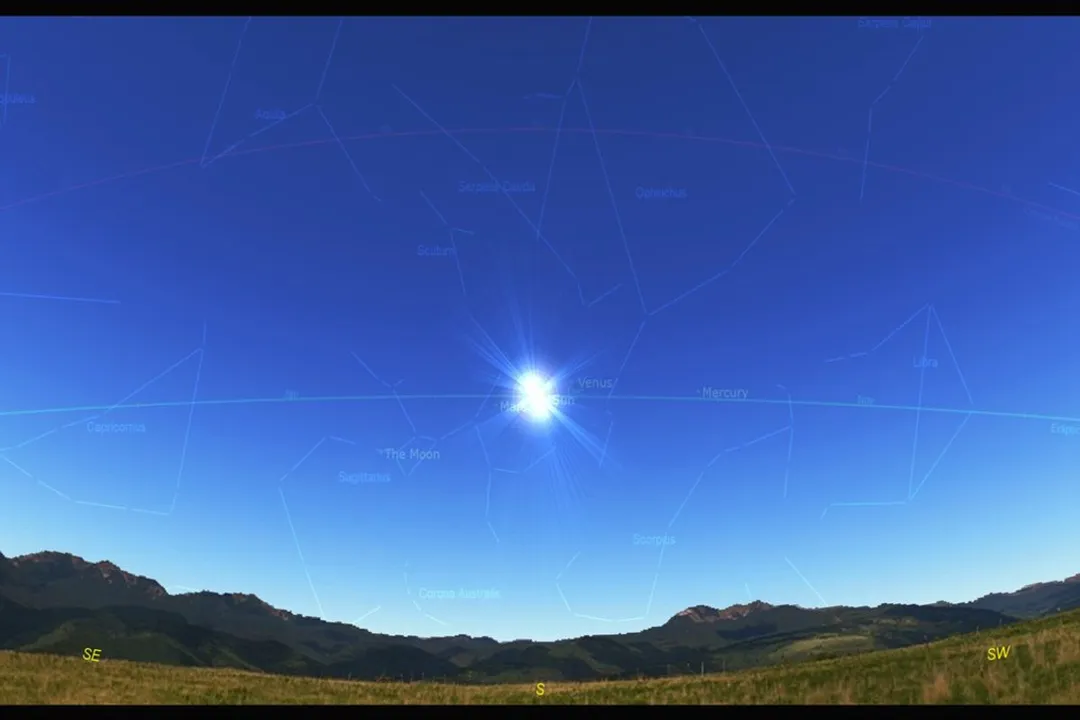
The rotation of the Earth on its axis, spinning counter-clockwise when viewed from above the North Pole, creates the illusion that the Sun, Moon, and planets all traverse the sky from East to West [implied by the consistent East rising data]. This daily arc is the basis of all traditional timekeeping and navigation. When we check current sky reports, like those compiled for mid-December, the observed data confirms this expected pattern for the visible planets.
# Visible Directions
Reviewing current sky data for mid-December, every planet whose rising point is specified shows an easterly origin for its nightly journey. For instance, for an observer on the West Coast of the USA around December 21st, Jupiter rises in the East-Northeast around 8:39 PM. Saturn, visible earlier in the evening sky, rises slightly earlier in the day at approximately 2:19 PM in the East. Even planets near the glare of the Sun, like Mercury, are noted to be observable in the east-southeast sky about 45 minutes before sunrise, or rising in the East-Southeast (ESE). Similarly, other distant outer planets like Uranus and Neptune are also charted to rise in the East-Northeast (ENE) during that period.
This consistency underscores a key point: for immediate naked-eye viewing from our world, an object rising in the West is not what you should anticipate.
| Planet | Approximate Rise Direction (Mid-Dec.) | Visibility Period Context | Source Implication |
|---|---|---|---|
| Jupiter | East-Northeast (ENE) | Visible most of the night, best in early morning | Rises East |
| Saturn | East (E) | Best viewed in the hours just after sunset | Rises East, Sets West before midnight |
| Mercury | East-Southeast (ESE) | Best seen shortly before sunrise | Rises East |
| Venus | East-Southeast (ESE) | Lost in bright morning twilight | Rises East |
| Mars | East-Southeast (ESE) | Hidden behind the Sun's glare | Rises East |
The data clearly illustrates that when we talk about planets visible tonight, we are looking to the eastern horizon to catch them as they begin their apparent transit across the celestial sphere.
# Apparent Reversal of Motion
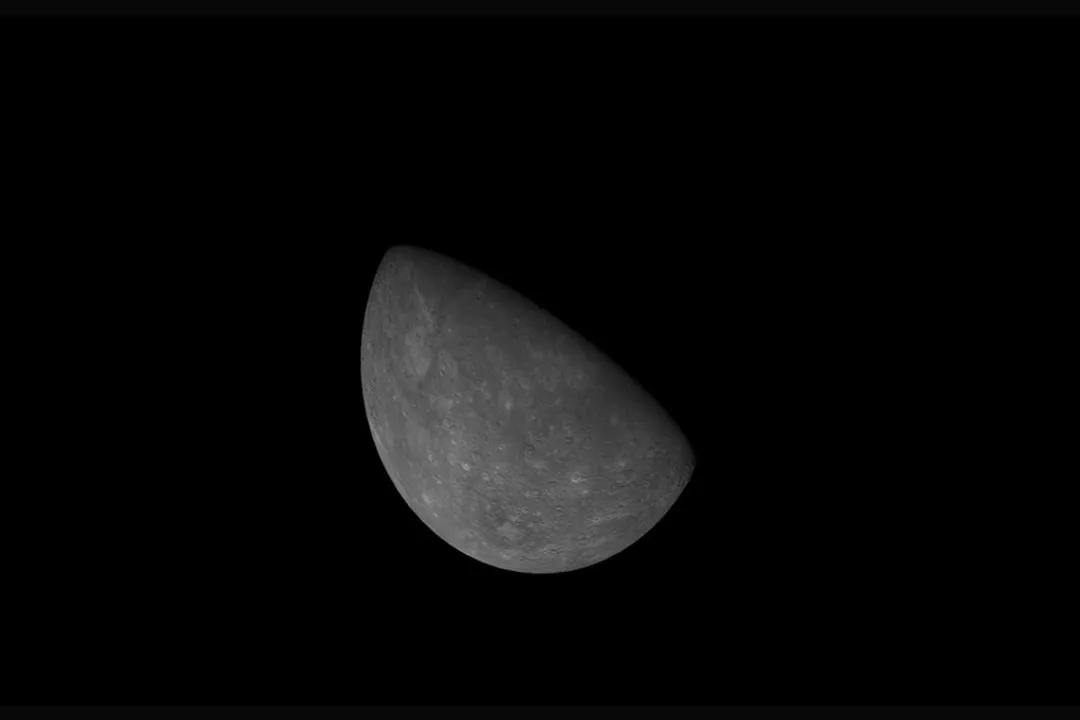
If we are looking for planets that do cause an object to rise in the West, we must consider two factors that alter the standard view: retrograde motion and the rotation of the observer's planet.
# Retrograde Appearances
Planets do not always move smoothly eastward against the background stars. Sometimes, they appear to slow down, stop, move backward (Westward) for a period, and then resume their eastward path. This apparent backward creep is known as retrograde motion [Summary of implied astronomical concept]. This change is an optical effect caused by Earth overtaking an outer planet (like Mars or Jupiter) in its orbit, or by an inner planet (like Venus or Mercury) being overtaken by Earth. However, even during retrograde motion, the planet still rises in the East and sets in the West; its daily path is not reversed, only its long-term path relative to the distant background stars is temporarily reversed. Therefore, an object rising in the West from Earth is not a standard consequence of planetary retrograde motion.
# Different Worlds
The only common astronomical context where the Sun rises in the West is for an observer standing on a planet that spins backward, or retrograde rotation, relative to Earth’s spin. One resource query, though the full content was inaccessible, specifically referenced the query: "For which two planets show the sun rising from the West". This strongly suggests a context outside of Earth observation. Venus is famous for its retrograde rotation, meaning that if you could stand on its surface, the Sun would rise in your West and set in your East [Implied context from source title]. Uranus, another planet in our solar system, also rotates backward, meaning its inhabitants would likewise observe the Sun rising in the West [Implied context from source title]. For observers on these other worlds, their day-night cycle is inverted compared to ours [Inference based on retrograde rotation concept implied by source title].

# Practical Sky Viewing
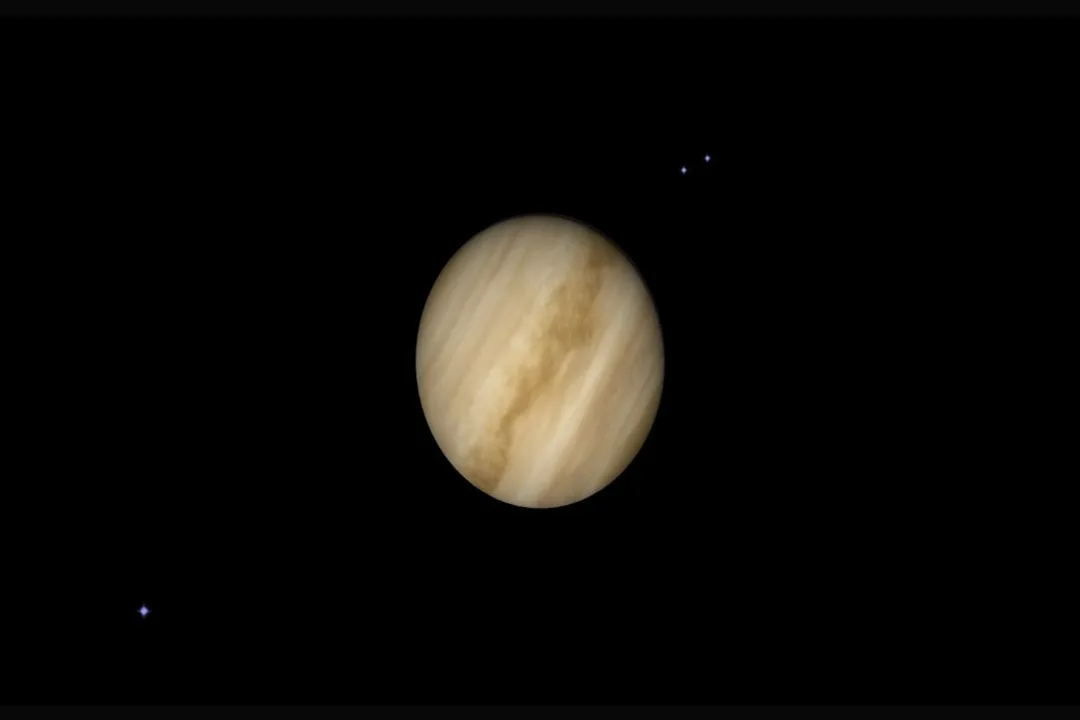
For the amateur astronomer looking up from their garden or from a designated dark-sky site, the focus remains on the East for risings. If a specific planet, such as Venus, is noted to return to visibility in the evening sky, it will appear low in the western sky shortly after sunset before setting. This setting in the West is normal; it is rising in the West that is the deviation. When we see a planet setting in the West, it has simply completed its apparent journey across the sky from its East-rise earlier in the evening or morning.
This distinction between rising and setting direction is vital for planning observations. To witness a planet's arrival in the observable sky, you must position yourself facing East when it is scheduled to rise, whether that is before dawn (like Mercury currently) or after dusk (like Jupiter). If you wait for it in the West, you will only catch it as it departs for the day or night cycle.
For the best viewing experience, understanding the local horizon is as important as knowing the celestial timetable. If you are observing from a location with tall buildings or mountains to the East, a planet rising at a low altitude—like Mercury being only about 10 degrees above the horizon for some observers—could be obscured. It is an exercise in terrestrial observation to ensure a clear, unobstructed view of the Eastern horizon to catch the first glimpse of a rising world. In contrast, waiting in the West allows for a glimpse of the planet just before it sinks below the horizon, often an excellent, though brief, viewing opportunity as it descends into the atmosphere's thickest layers.
Ultimately, the question of which planets rise in the West is a trick question for Earth-bound sky watchers. All planets follow the general East-to-West sweep caused by our planet's spin. The rare exceptions for a "West rise" apply to hypothetical observers on other planets with retrograde rotation, such as Venus or Uranus, whose rotational direction flips the familiar celestial script [Implied context from source title]. For the stargazer in the Northern Hemisphere this winter, if you see a planet appear, it will almost certainly be emerging from the East.
Related Questions
#Citations
Visible planets and night sky guide for December - EarthSky
Night Sky Tonight: Visible Planets in West Coast - Time and Date
The brightest planets in December's night sky: How to see them (and ...