What is the name of a rocky planet?
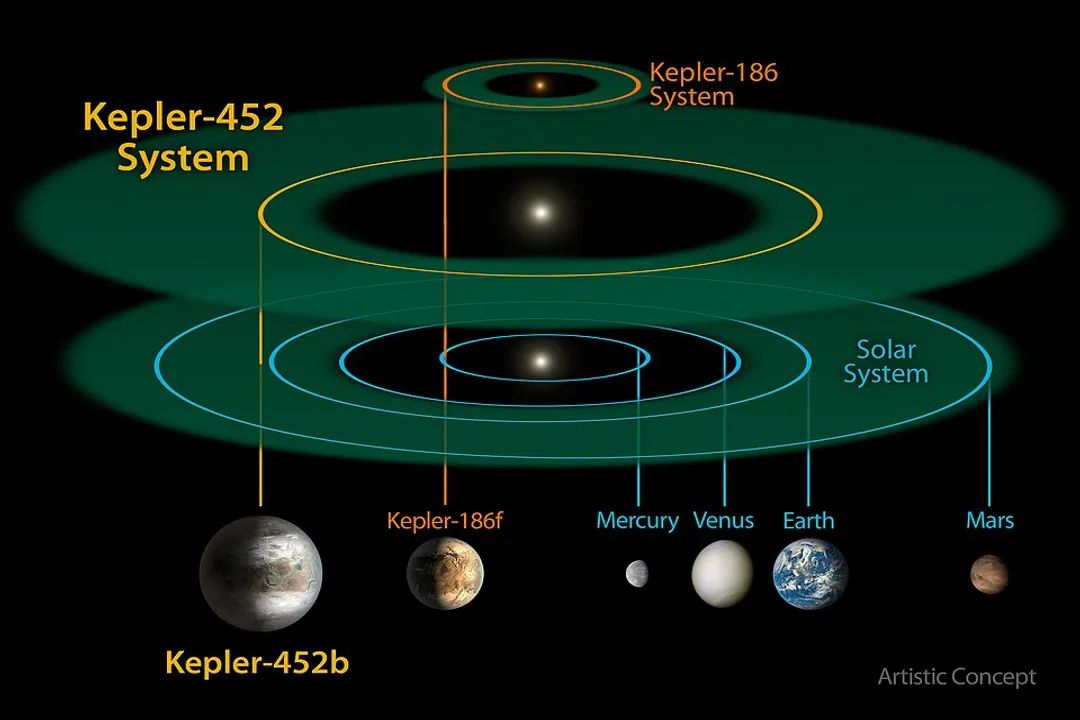
The term used to describe a planet composed primarily of silicate rocks or metals is a terrestrial planet. These worlds are fundamentally different from the gas giants or ice giants found further out in a solar system. In our own Solar System, there are four well-known examples of this rocky classification: Mercury, Venus, Earth, and Mars. The defining characteristic isn't just their composition, but often their structure—they typically possess a solid surface you could stand on, unlike the swirling, deep atmospheres of Jupiter or Saturn.
# Composition Basics
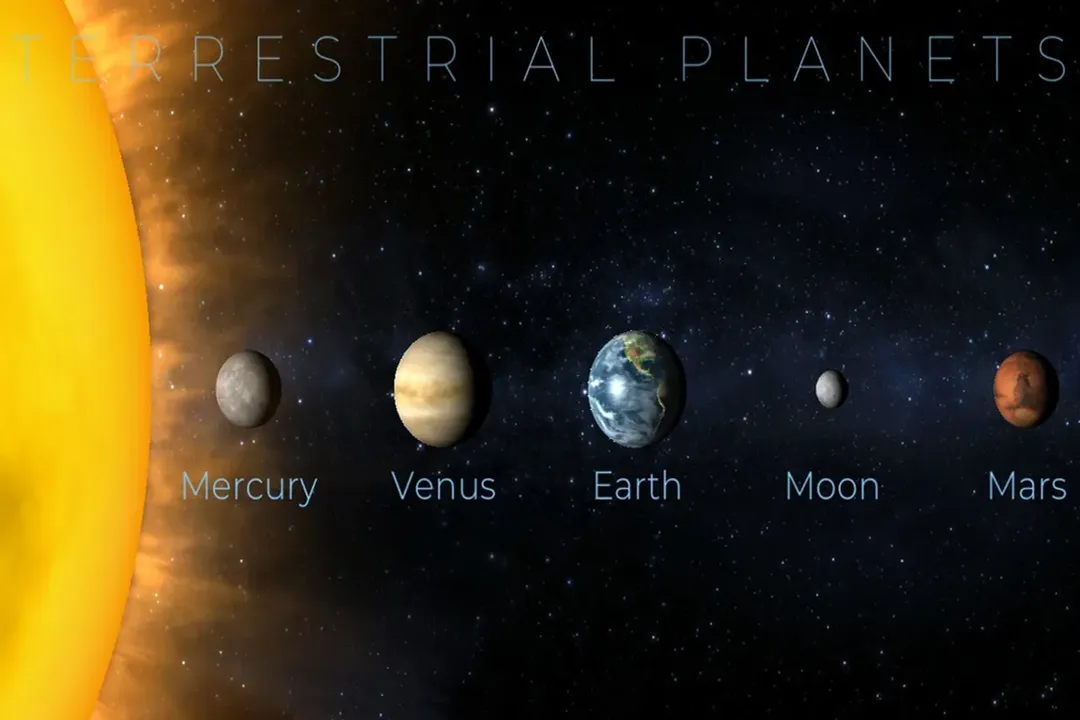
Rocky planets are generally characterized by a dense, metallic core, usually iron or nickel, surrounded by a mantle and crust made of silicate minerals. This structure results in a relatively high overall density compared to the lighter, hydrogen-dominated atmospheres of the giant planets. Furthermore, terrestrial worlds tend to have fewer moons, if any, and generally lack the extensive ring systems visible around the larger, more distant planets. Earth itself is the archetype for this classification, being composed primarily of rock and metal, which gives it its distinct surface features.
# Solar System Examples
The four recognized terrestrial worlds in our solar neighborhood provide a spectrum of conditions for rocky bodies. Mercury, the innermost planet, is small and heavily cratered, bearing the scars of impacts across its solid body. Venus, shrouded in thick, hot clouds, is often cited for its extreme surface conditions. Earth, of course, stands out as the only known body to harbor life, thanks to its unique atmosphere and liquid water, though it shares the fundamental rocky structure of its neighbors. Mars, the last of the inner four, is a cold desert world, yet geological evidence points to a wetter, warmer past on its iron-rich, reddish surface.
# Beyond Our Sun
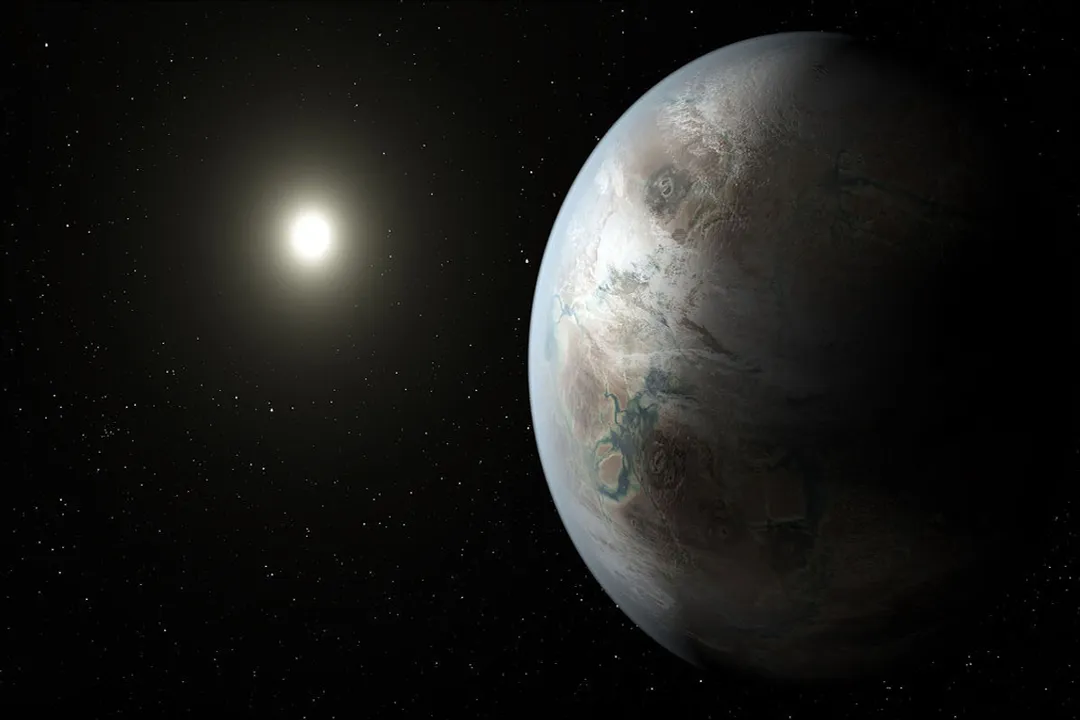
While our four neighbors are familiar, astronomers have confirmed that rocky planets exist around other stars, now collectively termed exoplanets. The Kepler space telescope mission was instrumental in locating numerous candidates, including the first confirmed rocky world found by that mission, named Kepler-20e. This particular world demonstrated that rocky planets could be found orbiting distant stars, though Kepler-20e orbits its star much closer than Mercury orbits the Sun. Another discovery highlighted the capability of ground-based observatories, such as the Keck Observatory in Hawaii, to identify smaller, potentially habitable worlds orbiting Sun-like stars.
# Massive Rock Worlds
As the search for Earth analogs continued, the data returned by the Kepler mission presented worlds much larger than our own but still classified as rocky, often falling into the category of a Super-Earth. These are planets significantly more massive than Earth but lighter than the ice giants.
One fascinating example that challenged existing models was Kepler-10c. Initially, based on its size, scientists suspected it might be a small gas giant, sometimes called a "mini-Neptune". However, subsequent mass measurements and density calculations revealed it was incredibly dense—about 14.5 times the mass of Earth—leading to the conclusion that it was, in fact, a massive rocky planet, jokingly nicknamed "Godzilla". Its density strongly indicated a solid, rocky composition, despite its sheer scale.
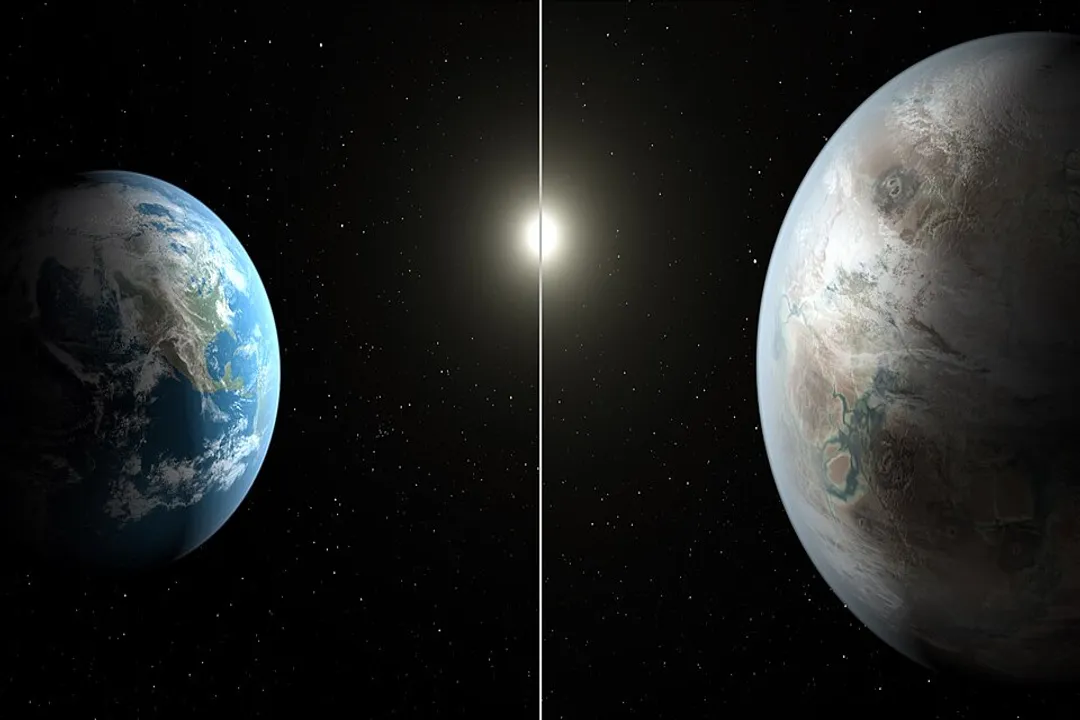
In contrast, Kepler-452b was identified as another potentially rocky world, though it is larger than Kepler-10c in radius—about 1.6 times that of Earth. This planet orbits within its star's habitable zone, meaning the temperature conditions might allow for liquid water on its surface, provided it has a suitable atmosphere. The crucial differentiation between a Super-Earth like Kepler-452b and a gas-dominated world often hinges on that calculated density; if the mass is high but the calculated volume suggests a low-density composition, it points toward an atmosphere-heavy body, whereas high mass combined with high density confirms a large, rocky structure. It’s intriguing to consider that a planet can be nearly a hundred times the mass of Earth, like some of the initial, misidentified candidates, and still primarily be made of rock, suggesting that the sheer abundance of rock-forming material in some stellar nurseries is far greater than previously assumed.
# Earth-Sized Discoveries
While the Super-Earths grab headlines for their size, finding true Earth-sized planets that are also confirmed to be rocky holds a special significance for those studying planetary formation. Kepler-20e, for instance, is actually smaller than Earth, making it one of the smallest exoplanets discovered by the mission at the time of its confirmation. Detecting such a small world at vast distances requires incredibly precise measurements to detect the minuscule dip in starlight as the planet passes in front of its host star.
The challenge in confirming rockiness for these smaller bodies is heightened because the gravitational influence they exert on their star (the radial velocity method) is harder to measure accurately compared to their transit signature. In many cases, if a planet is small enough to be Earth-sized, the initial data might only confirm its size; its true composition—whether it’s ice, rock, or a mixture—requires further, more sensitive follow-up observations to nail down the mass and density. This iterative process, moving from initial transit detection to mass confirmation via other means like the Keck observations, is the standard path to definitively naming a planet as terrestrial.
# The Act of Confirmation
The process of confirming a rocky planet is less about taking a picture and more about meticulous data analysis involving size and mass. When a planet transits, we measure its radius. When we observe its gravitational tug on its star, we measure its mass. Dividing mass by volume gives us density, the key diagnostic tool. If the density is close to that of Earth or Mars, we can be highly confident we are observing a world where silicates and metals dominate the structure.
For a general reader trying to visualize this, consider this thought experiment: If Kepler-10c were placed next to our Sun, it would be nearly the size of Neptune, yet its mass suggests it should be packed solid like a giant marble, rather than being a puffy, gassy sphere. This comparison highlights that the old rules for planet formation based solely on a planet's distance from its star might need revision when we see such large, dense, rocky outliers. The ability to distinguish between a planet that is 14 times the mass of Earth but mostly rock versus one that is only 5 times the mass but mostly hydrogen and helium is what separates simple detection from genuine classification.
#Videos
Rocky Planets - Solar System for Kids - YouTube
Related Questions
#Citations
Terrestrial planet - Wikipedia
Astronomers Find "Mega-Earth," Most Massive Rocky Planet Yet
Terrestrial Planets Are the Rocky Planets of the Solar System
What are the rocky planets? – KS2 Science curriculum - BBC Bitesize
Rocky Planets - Solar System for Kids - YouTube
Monstrous rocky planet nicknamed 'Godzilla of Earths' - The Guardian
NASA's Kepler Mission Discovers Its First Rocky Planet
Rocky planet discovered around one of the galaxy's oldest stars