What surface feature distinguishes terrestrial worlds from gas giants?
Answer
They typically possess a solid surface you could stand on
The defining structural difference between a terrestrial planet and a gas giant lies in the accessibility and nature of its surface. Terrestrial planets, being composed primarily of rock and metal, have attained a state where a solid surface exists beneath their crust, allowing objects or hypothetical observers to stand upon it. Conversely, worlds like Jupiter or Saturn lack such a distinct boundary; they transition gradually through increasingly dense atmospheric layers, meaning there is no defined solid ground to land on, only deepening layers of gas and fluid under immense pressure.
#Videos
Rocky Planets - Solar System for Kids - YouTube
Related Questions
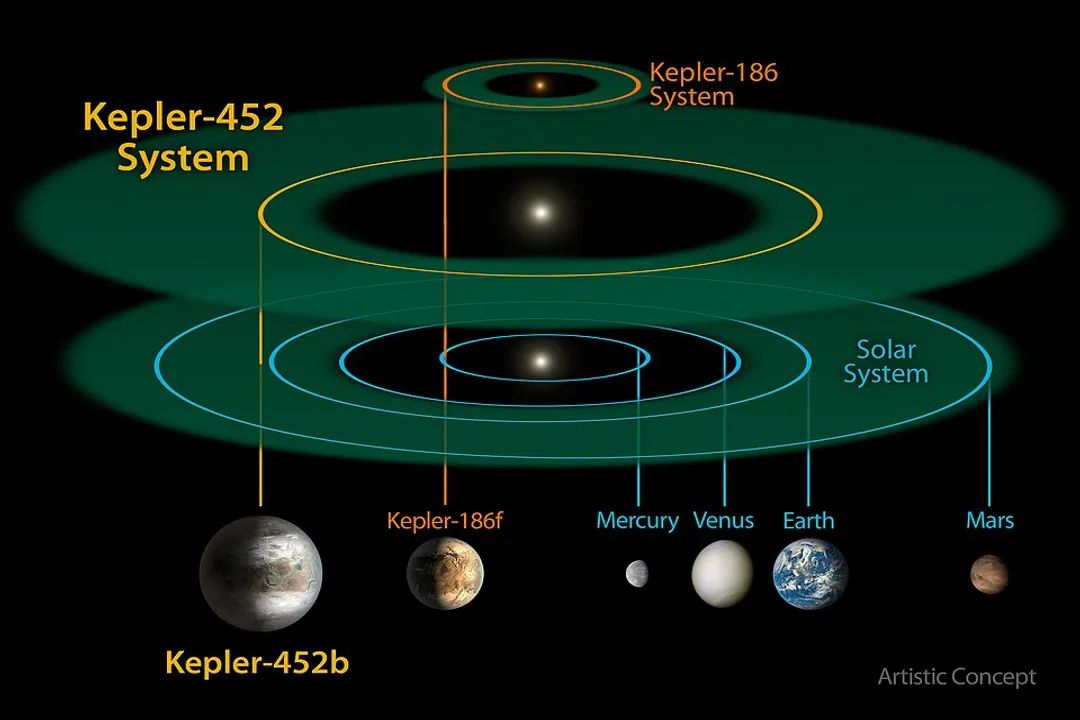
What defines a terrestrial planet's internal composition?What surface feature distinguishes terrestrial worlds from gas giants?What feature distinguishes Venus among the inner four terrestrial worlds?What was Kepler-10c nicknamed due to its high calculated density?What is the critical factor differentiating a Super-Earth like Kepler-452b from a gas giant?What is the key diagnostic tool for confirming a planet is terrestrial via data analysis?Which observation method is harder to utilize for nailing down the mass of an Earth-sized exoplanet?What was the consequence of Kepler-10c's density revealing a massive rocky structure?How does the size of Kepler-20e compare to Earth?What distinction does Earth hold among the four recognized terrestrial worlds in our Solar System?