What defines a rocky planet?
The planets we call rocky are defined primarily by what they are made of, setting them apart from their much larger, gaseous cousins in the Solar System and beyond. These worlds, sometimes referred to as terrestrial planets, are worlds built fundamentally from dense, refractory materials, meaning substances that do not vaporize easily. [1][5] If you picture the inner four planets of our own system—Mercury, Venus, Earth, and Mars—you have the template for what makes a planet "rocky". [1][7]
They are fundamentally different from the gas giants like Jupiter and Saturn, or the ice giants like Uranus and Neptune, which are mostly composed of lighter elements such as hydrogen, helium, or volatile compounds like water, methane, and ammonia. [1][7] The distinction boils down to chemistry and the environment in which they formed.
# Primary Materials
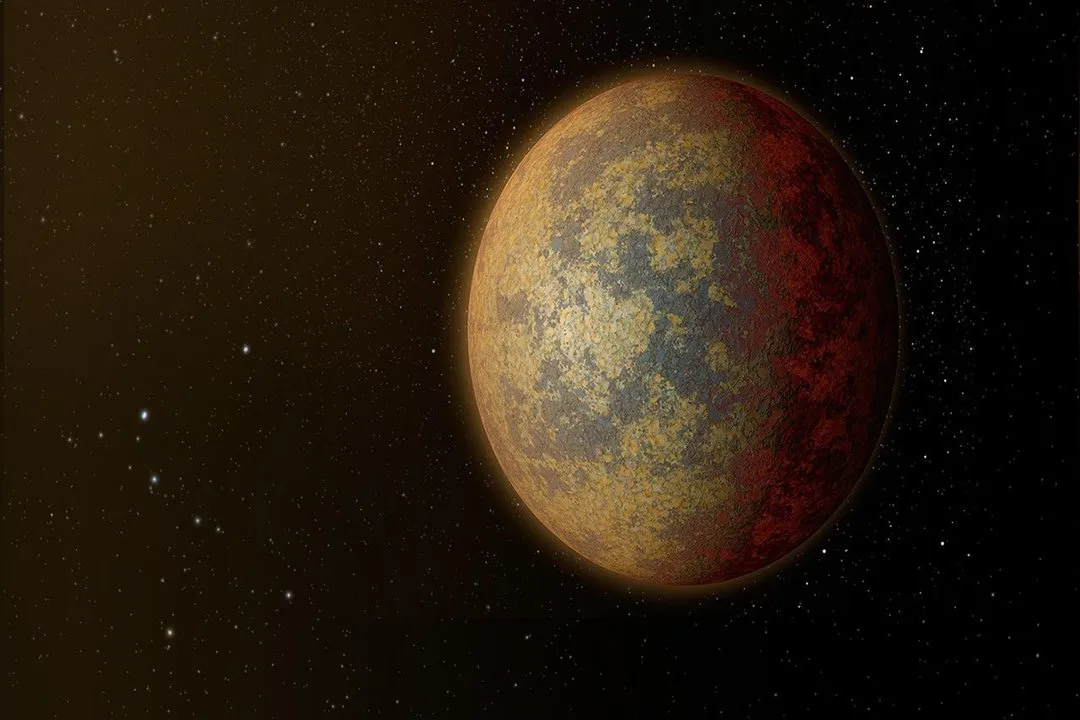
The bulk of a terrestrial planet consists of silicates, which make up rock, and metals, principally iron and nickel. [1][7] This composition results in a high overall density when compared to the giants. [7] While their exact internal structures vary, the general blueprint for these worlds involves distinct layering: a dense, metallic core, surrounded by a silicate mantle, and capped by a crust of rock. [1][7]
Earth is a prime example of this structure, boasting a massive iron-nickel core. [1] Even Mercury, though small, retains a disproportionately large metallic core relative to its size. [7] The presence of a significant solid or molten metal center is a key characteristic distinguishing them from worlds dominated by atmospheric gases or deep oceans of high-pressure hydrogen. [1][9]
Why this specific composition? It traces back to the early history of the Solar System. When the Sun first ignited, the region close to it was far too hot for volatile materials, like water ice or methane ice, to condense into solid form. [9] Only materials with very high melting points, such as rock and metal, could solidify in that intense heat, gathering together to form the initial planetary building blocks. [5][9] This temperature gradient effectively sorted the solar system: rock and metal closer in, and ices further out where the cooler temperatures allowed them to accumulate massive amounts of lighter material. [9]
# Shape Gravity

Every planet large enough will inevitably be pulled by its own gravity into a roughly spherical shape. [5] For terrestrial planets, this process of gravitational settling is a major defining feature of their physical appearance. [5] While they are not perfect spheres—they bulge slightly at the equator due to rotational forces—their global shape is dictated by this dominance of gravity over structural rigidity. [5] Smaller bodies, like asteroids, can maintain irregular, potato-like shapes because their gravity isn't strong enough to overcome the material strength of their rock and metal composition. [5]
# Planetary Neighbors
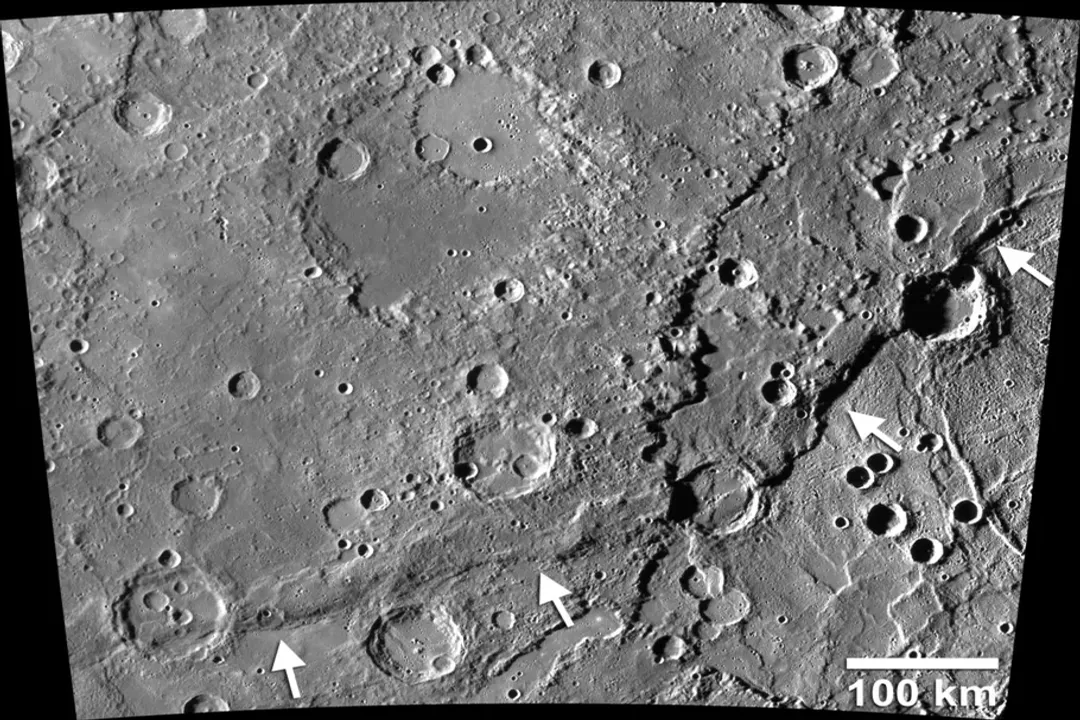
Within our Solar System, the four innermost worlds are the terrestrial planets. [1]
- Mercury: The smallest and innermost, it is heavily cratered and lacks a substantial atmosphere. [7]
- Venus: Often called Earth’s "sister planet" due to its similar size and mass, though its runaway greenhouse effect has rendered its surface incredibly hot. [7]
- Earth: The largest of the terrestrial group, uniquely characterized by the presence of liquid water on its surface and a dynamic, life-supporting atmosphere. [1][7]
- Mars: Smaller than Earth and Venus, Mars is known for its reddish hue due to surface iron oxide (rust) and possesses a thin atmosphere. [7]
Comparing these four reveals variability—Mars is much smaller than Venus, and Mercury is tiny—but the shared fundamental composition of silicates and iron remains the common thread. [7]
# The Size Limit
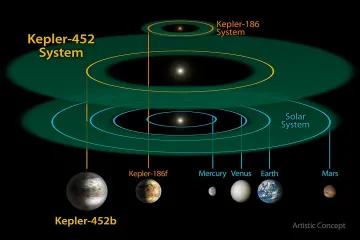
The concept of a "rocky planet" becomes fuzzier when we look at exoplanets, worlds orbiting other stars. Scientists have identified planets slightly larger than Earth, sometimes called "Super-Earths," that are still believed to be predominantly rocky. [4] However, there appears to be a maximum size before a world fundamentally changes its nature. [4]
If a planet gets too massive, even if it started as a collection of rock and metal, its gravity becomes intense enough to pull in and hold onto vast amounts of hydrogen and helium from the surrounding protoplanetary disk while it is still forming. [4] Once this happens, the world transitions from a dense, terrestrial object into a gas dwarf or a "mini-Neptune". [4] This suggests that mass is a secondary, but critical, determinant: a planet must not only start rocky but also remain below a certain mass threshold to retain its terrestrial classification. [4] It's a tipping point where the mechanics of accretion push the object into a completely different chemical class.
Observing this boundary in distant star systems helps astrophysicists test models of planetary formation. For instance, if we find a 1.8 Earth-mass planet that is mostly hydrogen-helium, it implies it formed quickly enough to capture gas before the disk dissipated, even if its core material was initially rocky. [4]
# Density Measurement
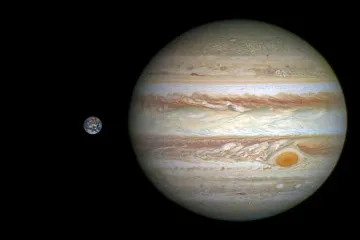
For observers studying exoplanets, the true test of whether a world is rocky isn't just its size (radius) but its density, which requires measuring its mass as well. [1] Since the radius is often determined via the transit method (how much light it blocks), determining the mass requires measuring the wobble it induces on its parent star (radial velocity method). [1]
When scientists calculate the bulk density—mass divided by volume—they gain insight into the internal makeup. [7] A density close to that of Earth (about ) strongly suggests a terrestrial world, meaning a significant portion of its mass resides in a dense core and rocky mantle. [7] Worlds with significantly lower densities are almost certainly dominated by lighter gases or ices, even if they are relatively small, pushing them toward the ice giant end of the spectrum. [7]
Considering the vast array of exoplanets discovered, establishing density is the only way to categorize the many "Super-Earths" and "mini-Neptunes" that fall between the size ranges of our familiar terrestrial planets and our Solar System’s gas giants. [4] A Super-Earth might be an Earth scaled up significantly but still rocky, or it could be a small version of Neptune, possessing a thin rocky core hidden beneath a deep, high-pressure atmosphere. [1][4]
The classification of a rocky planet, therefore, is not just about composition; it is about the dominant material making up the body's volume and mass, an outcome heavily influenced by where and how fast it accumulated material in its stellar nursery. [9] These worlds represent the condensed, heavy remnants of early solar system construction projects. [5]
#Videos
Explore the Solar System: The Rocky Planets - YouTube
Related Questions
#Citations
Terrestrial planet - Wikipedia
Terrestrial - NASA Science
What are the rocky planets? - BBC Bitesize
What could be the biggest Rocky planet in the known universe ...
How the Rocky Planets Got Their Shapes
Why are terrestrial planets rocky? - Quora
[PDF] 1 Terrestrial planets are planets made up of rocks or metals with a ...
Explore the Solar System: The Rocky Planets - YouTube
Terrestrial Planets Are the Rocky Planets of the Solar System