How does clearing the neighborhood define a planet?
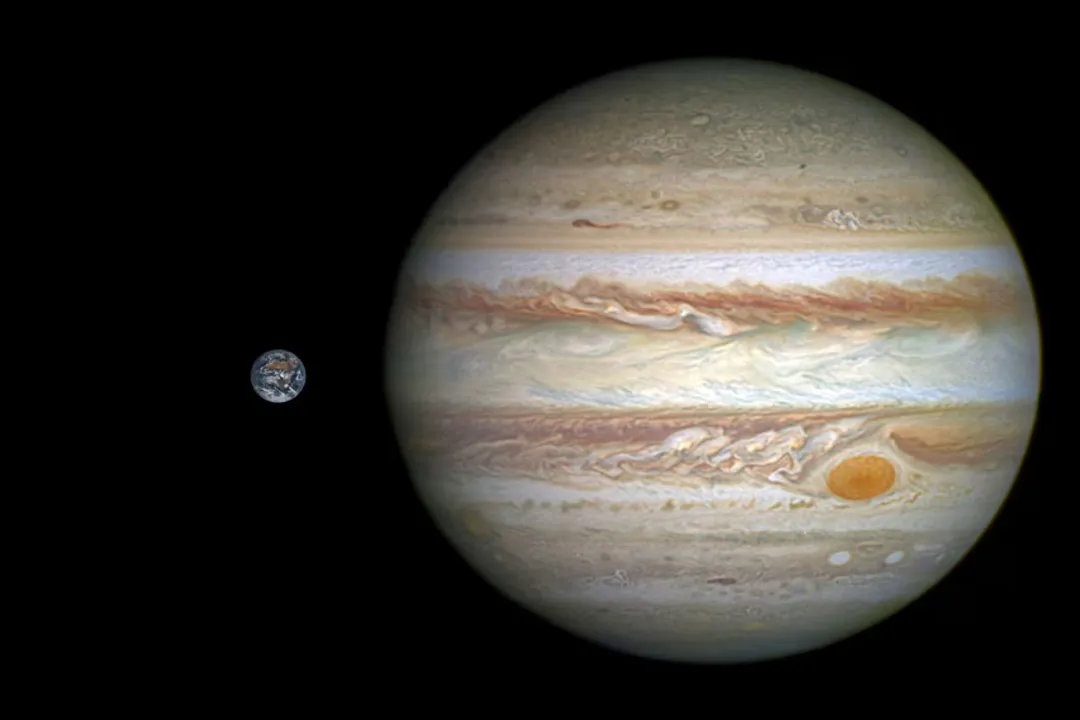
The concept of a celestial body having "cleared the neighborhood" around its orbit is the most critical, and often most contentious, part of the modern scientific definition used to distinguish a planet from a dwarf planet. [2] This criterion moves beyond simply classifying an object based on its shape—being large enough for its own gravity to pull it into a nearly round state, known as hydrostatic equilibrium. [6] Instead, it demands that the object must be the gravitationally dominant entity within its orbital lane throughout the history of the solar system. [2]
# Gravitational Sweep
To clear its neighborhood, an object must have either incorporated or ejected nearly all the other material that shares its orbital path over the age of the solar system. [1][4] Imagine a vast, designated racetrack in space where an object orbits the Sun. If that object is a true planet, by now it should have either swept up (accreted) or flung away the vast majority of smaller debris, asteroids, or planetesimals that started out sharing that same path. [1]
This dominance manifests in two primary ways. First, a planet is usually significantly more massive than any other single body sharing its orbital zone. Second, and more critically, the planet's collective gravitational influence must be so strong that it dictates the motion of the remaining smaller bodies, often locking them into stable, distant co-orbital configurations or sending them spiraling elsewhere. [1] For instance, Jupiter exerts tremendous control over the Asteroid Belt, demonstrating the necessary level of gravitational mastery required by the definition, even if it hasn't absorbed every single piece of rock.
# Defining Dominance
When astronomers and planetary scientists discuss this, they are essentially asking: Is the candidate body so massive relative to everything else in its path that it has shaped the entire region? If an object is surrounded by a swarm of similarly sized or nearly comparable bodies, it has not cleared its neighborhood, regardless of its perfect spherical shape. [4]
Consider the distinction between an object that has cleared its path and one that hasn't. A body like Earth or Jupiter is orders of magnitude more massive than all the other objects orbiting near it combined. If you were to calculate the mass of every other object in Earth's orbital zone and compare that total to Earth's mass, Earth would win by a staggering margin. [5] This stark difference in mass distribution is what the "clearing the neighborhood" standard seeks to capture. [1]
This requirement effectively separates the eight major planets from the myriad of smaller solar system residents. When the International Astronomical Union (IAU) formalized the definition in 2006, this specific criterion was introduced largely to address objects like Pluto. [2] Pluto orbits in the Kuiper Belt, a crowded region populated by many other icy bodies that are themselves relatively large. Because Pluto shares its region and has not gravitationally dominated it, it fails this crucial test. [4]

# Quantitative Measure
While the concept sounds intuitive, applying it consistently across different parts of the solar system requires a more rigorous, mathematical approach. One well-known method developed by astronomer Steven Soter attempts to quantify this gravitational superiority using a parameter often labeled . [5]
Soter’s criterion compares the mass of the candidate body () against the total mass of all other objects sharing its orbital zone. The calculation typically involves taking the mass of the object in question, dividing it by the combined mass of all other objects in its orbital region, and then factoring in the object’s distance from the Sun (represented by the mass of the Sun, ). [5]
If this resulting dominance parameter, , is calculated to be greater than 100, the object is generally considered to have cleared its neighborhood and meets the third criterion for planethood. [5]
Let's look at a simplified comparison based on this idea. While the exact figures vary based on the precise boundary chosen for the "neighborhood," the contrast is stark:
| Celestial Body | Mass Ratio (Planet Mass / Remainder Mass in Zone) | Dominance ( Value Estimate) | Result |
|---|---|---|---|
| Earth | High, far exceeding 100:1 | Very High | Planet |
| Jupiter | Extremely High | Very High | Planet |
| Pluto | Low (less than 1:1, or near 1) | Much Less than 100 | Dwarf Planet |
The fact that Pluto's mass does not significantly outweigh the combined mass of the Kuiper Belt objects sharing its general path is why it falls short. [4][8] This quantitative approach moves the discussion away from subjective visual assessments and grounds it in orbital dynamics. [5]
An interesting point arises when considering the practical application of this dominance parameter to objects in different orbital zones. An object in the main Asteroid Belt might have a smaller value than an object in the outer solar system simply because the density of potential debris is higher in the inner region relative to the mass of the potential planet. In essence, clearing the neighborhood is not an absolute measure of "cleaning everything," but rather a measure of local gravitational supremacy relative to the background population density of that specific orbital zone. [5] This dependence on local context highlights that the definition is dynamically informed, not just geographically fixed.
# Moons and Orbits
The "clearing the neighborhood" rule also indirectly affects the status of large moons. While a body like Ganymede or Titan might be spherically shaped and larger than the planet Mercury, they cannot be classified as planets under the current IAU framework primarily because they orbit another planet, not the Sun directly. [2][8]
However, the dominance concept does sometimes create odd thought experiments when applied in isolation. If one were to use the mass ratio standard without the constraint that the object must orbit the Sun—a non-standard approach but useful for analysis—the situation becomes complicated. For example, if we looked at the Earth-Moon system, the Moon is far too small to have cleared Earth's neighborhood, and Earth is not orbiting the Moon. If the standard were simply "Is the body gravitationally dominant over everything near it?" the Moon would fail because Earth is vastly more massive and dictates the system's center of mass. [8] The requirement that the object must clear the path around the Sun remains central to the definition. [2]
For any body we consider a planet in our own system, its path around the Sun is indisputably clear of comparable mass objects.

# Exoplanet Comparison
The standard causes significant difficulty when applied to exoplanets—planets orbiting stars other than our Sun. When we look at distant star systems, we often detect a planet using the transit method or radial velocity method, which tells us its mass and orbital period. [5] We can confirm it is round, and we know it orbits its star. However, proving that it has "cleared its neighborhood" requires an extremely high level of observational detail about the entire orbital zone, which is often impossible to achieve across light-years of distance. [5]
This gap in knowledge leads to a crucial realization: for Solar System bodies, the IAU definition is definitive because we have centuries of observational data confirming orbital stability and mass distribution. For exoplanets, current scientific consensus tends to default to "planet" if an object is below the mass threshold for deuterium fusion (ruling out brown dwarfs) and orbits a star, assuming that if it is large enough and old enough, it likely did clear its path or that the path itself is stable. [5] This pragmatic approach acknowledges the limits of our current remote sensing capabilities.
The challenge of confirming the orbital dominance for worlds light-years away offers a stark contrast to the rigorous, localized dynamic assessment required for Pluto or Ceres. [5] It suggests that the standard might be an ideal dynamic marker, but a practical filter primarily for differentiating objects within our own relatively well-mapped system. [6]
# Future Definitions
The debate sparked by the 2006 ruling shows that the criteria, particularly the clearing of the neighborhood, remain active areas of discussion among astrophysicists. [2][5] Some researchers argue that focusing too heavily on dynamic clearing leads to arbitrary cutoffs, depending heavily on how far out one draws the "neighborhood" boundary. [5]
One perspective suggests that a simpler definition might be preferable for general use: a celestial body that orbits the Sun and is large enough to be rounded by its own gravity. [6] This removes the dynamic requirement altogether. While this view would reclassify Pluto as a planet, it sacrifices the scientific rigor gained by acknowledging gravitational supremacy. [6] The proponents of the current IAU standard argue that ignoring the dynamic evidence—the clear gravitational hierarchy—renders the term "planet" less meaningful in the context of planetary system formation and evolution. [2]
Ultimately, the criterion of clearing the neighborhood serves as a powerful benchmark of maturity in a planetary system. It separates objects that were significant enough during the chaotic formation period to dominate their space from those that were merely left behind, surviving as large remnants of that early chaos. [1][4] It is the dynamic fingerprint of a truly dominant world.
#Videos
Clearing the neighbourhood - YouTube
Related Questions
#Citations
ELI5: What does "clearing the neighborhood around its orbit" mean.
What is a Planet? - JPL Solar System Dynamics
Clearing the neighbourhood - YouTube
Clearing the neighborhood | Space Wiki | Fandom
Mea culpa: Planet definitions and Earth clearing its orbit
A simpler way to define what makes a planet | University of California
Clearing the Neighborhood | Ready Jet Go! | PBS LearningMedia
Moon is a planet by "Clearing the neighborhood" condition?
What does it mean for a planet to 'clear the neighborhood' around its ...