Besides clearing its neighborhood, what fundamental geometric requirement must a celestial body meet to qualify as a planet under the current IAU framework?
Answer
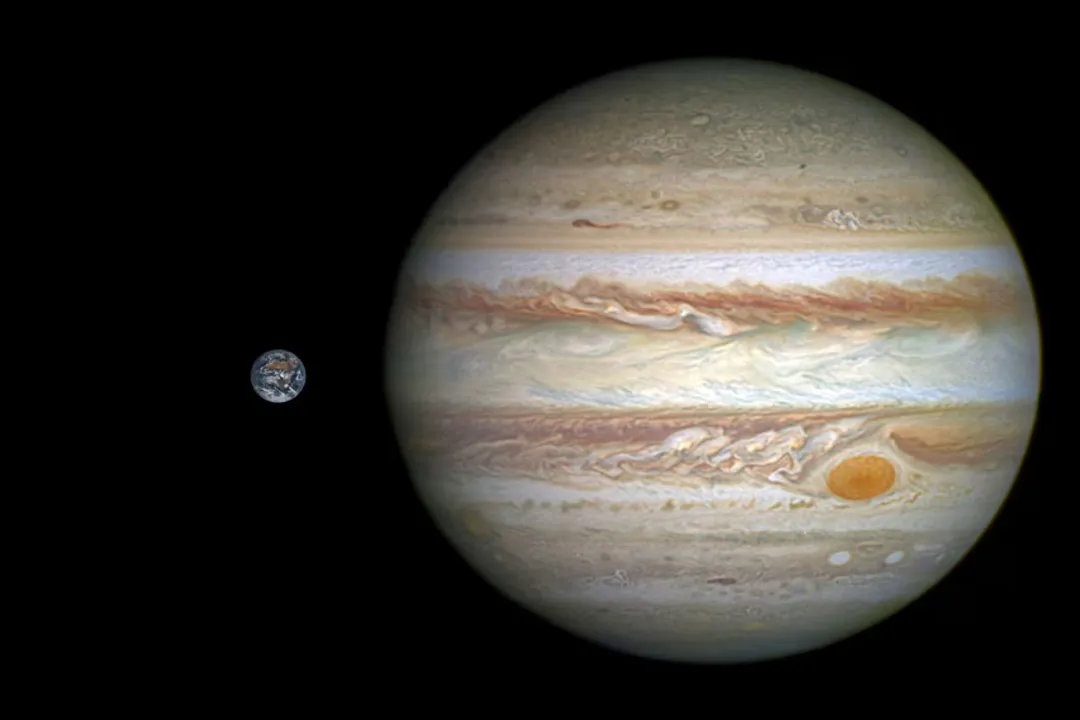
It must be large enough for its own gravity to pull it into a nearly round state (hydrostatic equilibrium).
The modern definition requires two main components: hydrostatic equilibrium (being round) and gravitational dominance (clearing the neighborhood).
#Videos
Clearing the neighbourhood - YouTube
Related Questions
What is the most critical part of the modern scientific definition distinguishing a planet from a dwarf planet?What action must an object take regarding sharing material in its orbital path to clear its neighborhood?In what year did the IAU formalize the definition incorporating the 'clearing the neighborhood' criterion?Why does Pluto fail the 'clearing the neighborhood' test according to the definition?What parameter is used in Steven Soter's method to quantify gravitational superiority for the 'clearing the neighborhood' criterion?What estimated minimum value must the dominance parameter (C) reach for an object to generally be considered to have cleared its neighborhood?Besides clearing its neighborhood, what fundamental geometric requirement must a celestial body meet to qualify as a planet under the current IAU framework?How does a planet's gravitational dominance typically manifest in its orbital zone?Why is applying the 'clearing the neighborhood' criterion difficult when classifying exoplanets?Why are large, spherical bodies like Ganymede or Titan typically excluded from planet classification despite their size?Besides the mass of the candidate body (M), what two elements are factored into Steven Soter's C calculation?What nuance does the text mention regarding the C value when comparing objects in the main Asteroid Belt versus the outer solar system?